DbcultAccessing Vault...
Cult Review
Senior Film Conservator
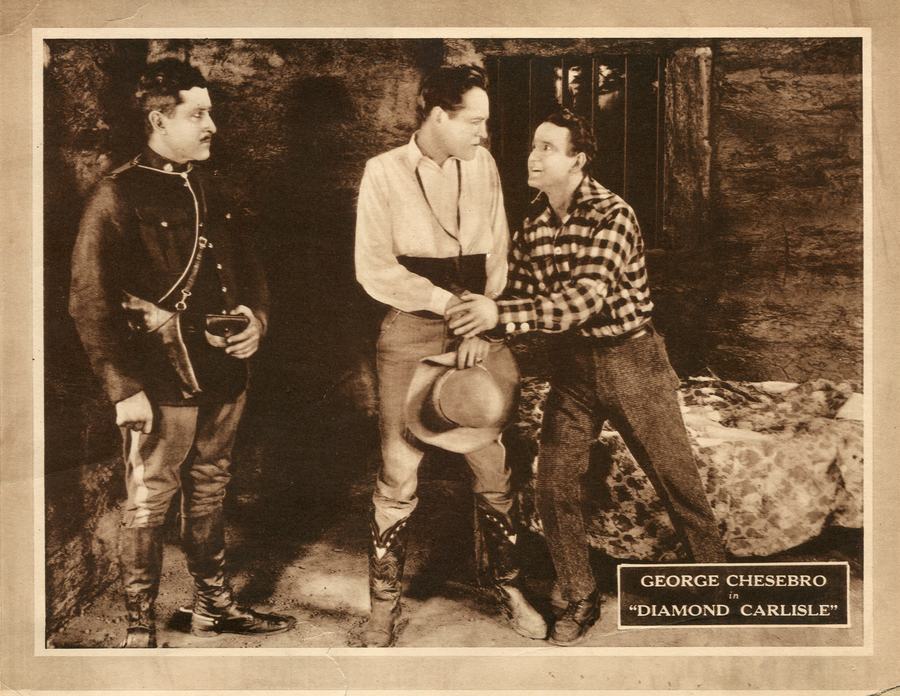
The cinematic landscape of Diamond Carlisle is a complex tapestry woven from the threads of love, deception, and redemption. As the narrative unfolds, the audience is introduced to the enigmatic Diamond Carlisle, a cunning bandit with a penchant for cards, and his accomplice, the ruthless murderer Lopez. Their daring escape from a posse and subsequent journey into Canada sets the stage for a series of events that will challenge the very fabric of Carlisle's being.
The character of Black Meyer, a gambler and saloon-keeper, serves as a catalyst for Carlisle's transformation. Meyer's proposal to utilize Carlisle's card skills to bankrupt Dick Boyd, the owner of a valuable timberland, presents a moral dilemma that will test Carlisle's resolve. As he navigates the intricacies of the situation, Carlisle finds himself drawn to Dick's sister, Mae, and it is this unexpected romance that sparks a profound change within him. The Service Stripes of loyalty and honor that Carlisle once wore are slowly replaced by a newfound sense of purpose and belonging.
The cinematography in Diamond Carlisle is a masterclass in visual storytelling, with the use of lighting and composition creating a sense of tension and unease. The dark orange hues that permeate the film's color palette serve as a reminder of the danger and uncertainty that lurks beneath the surface of Carlisle's world. As the narrative unfolds, the audience is treated to a visual feast of sea blue skies and lush landscapes, which serve as a poignant reminder of the beauty and wonder that exists in the world.
The themes of love and redemption that are woven throughout the narrative of Diamond Carlisle are timeless and universal. The film's exploration of the human condition, with all its complexities and contradictions, is a testament to the power of cinema to capture the essence of the human experience. As Carlisle navigates the treacherous landscape of his own heart, the audience is invited to reflect on the nature of love, forgiveness, and personal growth. The Toby's Bow of fate that binds Carlisle to his destiny is a powerful reminder of the interconnectedness of all things.
The supporting cast in Diamond Carlisle is equally impressive, with standout performances from Peggy Weightman as Mae and Alfred Hewston as Dick Boyd. The chemistry between the leads is palpable, and their performances bring a depth and nuance to the narrative that is nothing short of remarkable. The Den Æreløse of moral ambiguity that surrounds the characters is a testament to the film's ability to challenge the audience's assumptions and biases.
In conclusion, Diamond Carlisle is a film that will leave audiences spellbound and introspective. With its richly woven narrative, complex characters, and thought-provoking themes, this movie is a must-see for anyone who appreciates the art of storytelling. As the credits roll, the audience is left to ponder the implications of Carlisle's journey, and the Judge Not of moral judgment that we often impose on others. The yellow glow of hope that emanates from the film's conclusion is a powerful reminder of the human capacity for growth, forgiveness, and redemption.
The influence of Barb Wire and No Defense can be seen in the film's use of action and suspense to drive the narrative forward. The Darwin of natural selection that governs the world of Diamond Carlisle is a powerful reminder of the enduring power of the human spirit. As the audience is drawn into the world of the film, they are invited to reflect on the Cheerful Givers of kindness and generosity that make life worth living.
The Widow by Proxy of fate that binds the characters together is a powerful reminder of the interconnectedness of all things. The Common Property of human experience that is shared by the characters is a testament to the film's ability to capture the essence of the human condition. As the narrative unfolds, the audience is treated to a visual feast of sea blue skies and lush landscapes, which serve as a poignant reminder of the beauty and wonder that exists in the world.
The Relief of Poland of tension that permeates the film's conclusion is a powerful reminder of the enduring power of the human spirit. The Just Around the Corner of hope that emanates from the film's conclusion is a testament to the human capacity for growth, forgiveness, and redemption. As the audience is drawn into the world of the film, they are invited to reflect on the Les gaz mortels of danger and uncertainty that lurk beneath the surface of human existence.
The How Could You, Caroline? of moral judgment that is imposed on the characters is a powerful reminder of the complexities and contradictions of human nature. The Broadway Bubble of illusion that surrounds the characters is a testament to the film's ability to capture the essence of the human experience. As the narrative unfolds, the audience is treated to a visual feast of sea blue skies and lush landscapes, which serve as a poignant reminder of the beauty and wonder that exists in the world.
IMDb —
1918
Community
Log in to comment.