DbcultAccessing Vault...
Cult Review
Senior Film Conservator
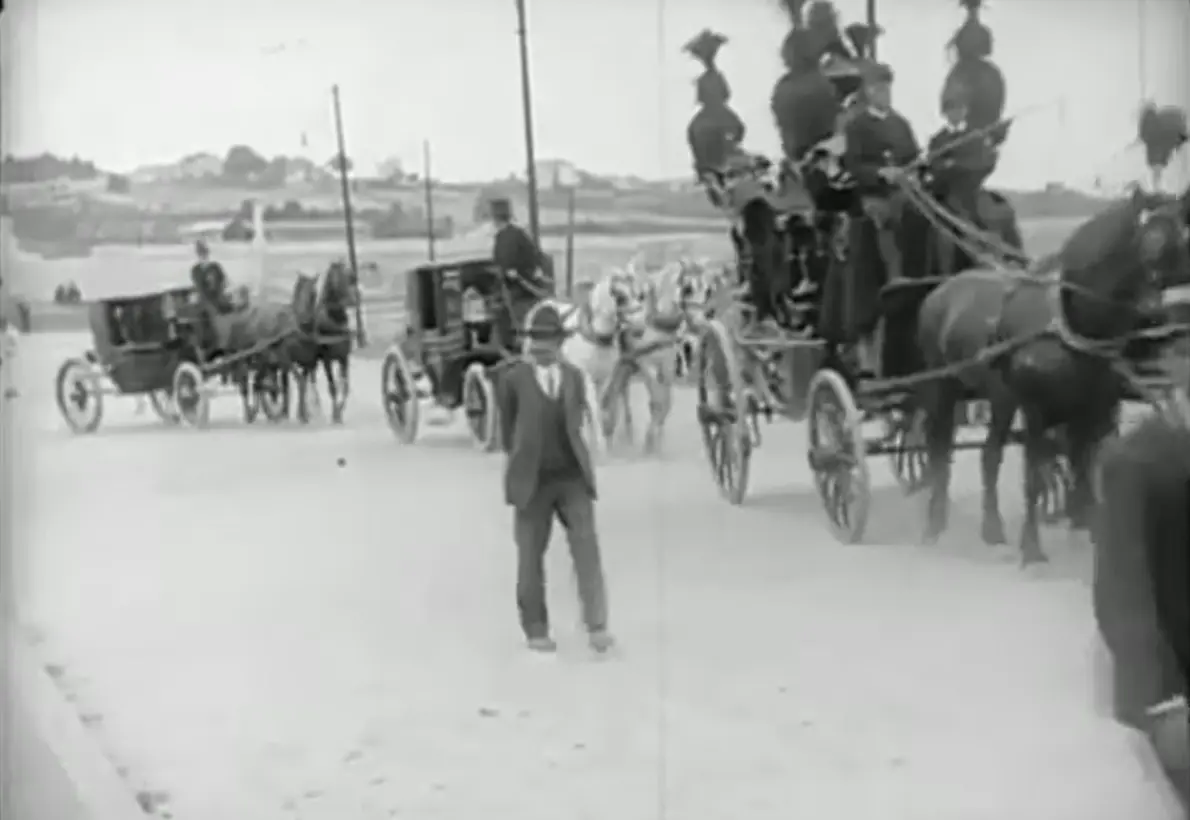
In the annals of early Brazilian cinema, few documents possess the gravitas and sheer sociological weight of Funerais do Comendador Nami Jafet (1923). This is not a film of narratives or scripted arcs, but a raw, archival artery that pumps the lifeblood of 1920s São Paulo directly into the modern viewer's consciousness. To watch this short documentary is to step into a temporal rift, where the smoke of textile mills and the incense of the Maronite Church coalesce into a singular, haunting visual experience. Nami Jafet was more than a businessman; he was a titan of the Syrian-Lebanese diaspora, a man whose influence was woven into the very fabric of the city's industrial revolution. When he passed, the city didn't just mourn; it paused, creating a vacuum that this film seeks to fill with its flickering nitrate images.
The film functions as a stark contrast to the fictionalized dramas of its era. While The Price They Pay (1914) dealt in the currency of moral allegories, Funerais do Comendador Nami Jafet deals in the cold, hard reality of mortality and legacy. There is no artifice here, only the somber documentation of a city’s collective inhale. The lens captures the sheer scale of the event, a turnout that rivals the staged crowds of Hollywood epics, yet carries the heavy, unmistakable scent of genuine reverence.

Visually, the film is a masterclass in the unintended brilliance of early newsreel cinematography. The static camera placements, necessitated by the bulky equipment of 1923, create a sense of monumentalism. We are not participants in the funeral; we are statues on the sidewalk, watching the history of Brazil roll past on wooden wheels. The contrast between the deep blacks of the mourning attire and the sun-bleached facades of the Ipiranga neighborhood creates a chiaroscuro effect that feels almost intentional, as if the director sought to highlight the duality of Jafet’s life—the dark finality of death against the bright, burgeoning future of his industrial contributions.
In many ways, the film’s pacing is a rebellion against the burgeoning obsession with speed in the 1920s. Unlike the frantic energy found in The Speed Maniac (1919), which celebrated the velocity of the modern age, this documentary forces a contemplative deceleration. The slow, rhythmic trot of the horses and the measured gait of the dignitaries create a tempo of profound respect. It is a visual manifestation of the 'long goodbye,' a cinematic space where time is measured not in frames per second, but in the distance covered by a casket.
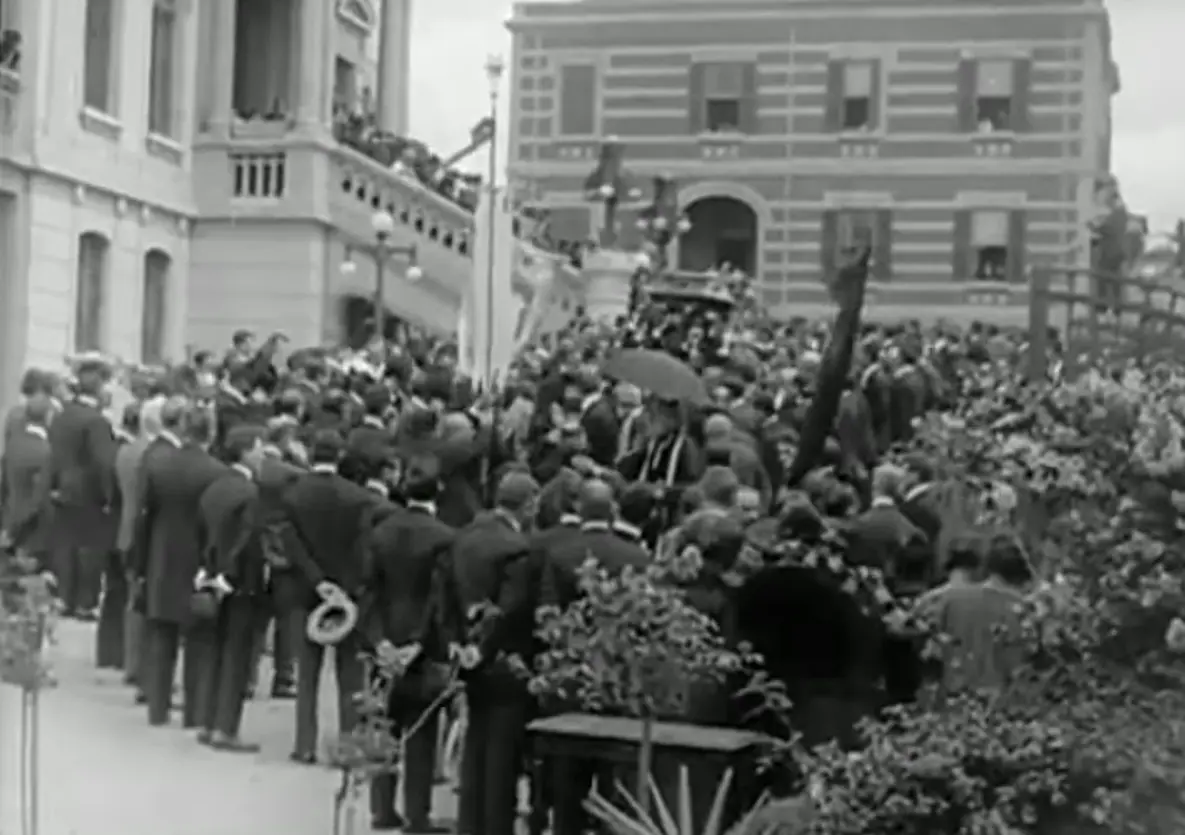
What remains most striking about Funerais do Comendador Nami Jafet is the demographic tapestry it unveils. We see the upper echelons of Paulista society—men in top hats and women in elaborate lace—standing shoulder to shoulder with the very factory workers who fueled the Jafet family's textile dominance. This intersection of classes is a rare sight in early cinema, which often preferred the sanitized environments of films like The Loves of Letty (1919). Here, the social stratification is laid bare, yet momentarily bridged by the shared experience of loss.
The film captures a moment of transition for the Syrian-Lebanese community in Brazil. Nami Jafet was a pioneer, and his funeral served as a public affirmation of his community's success and integration. The sheer volume of people suggests a level of influence that transcended ethnic boundaries. In this sense, the film acts as a companion piece to the themes of social standing and reputation explored in The Auction Block (1917), though it approaches them through the lens of historical fact rather than moralistic fiction. It is a study in how a single individual can become the gravitational center of a metropolitan identity.

When we compare this documentary to the contemporary output of 1923, such as the historical romanticism of The Courtship of Myles Standish, the difference in 'truth' is palpable. While fictional features of the time were busy constructing myths, Funerais do Comendador Nami Jafet was busy deconstructing the myth of the immortal industrialist. The film doesn't need a script because the faces of the mourners provide all the subtext required. The weariness in the eyes of the workers and the stoic grief of the family members offer a psychological depth that even the most talented actors of the silent era, such as those in On the Night Stage (1915), often struggled to replicate without the aid of intertitles.
Furthermore, the film’s lack of a traditional narrative structure allows it to function as a pure visual poem. There is no 'plot' to get in the way of the observation. We see the floral arrangements—so numerous they require multiple carriages—and we understand the weight of Jafet's philanthropy. We see the architecture of Ipiranga, then a burgeoning industrial hub, and we understand the physical legacy he left behind. This is a far cry from the lighthearted social maneuvering seen in Scratch My Back (1920) or the comedic deceptions of Cupid Camouflaged (1918). This is the gravity of history, unadorned and unashamed.

Watching Funerais do Comendador Nami Jafet today is an exercise in haunting. The nitrate flicker gives the impression of a world that is literally burning away as we watch it. This ephemeral quality adds a layer of poignancy to the funeral rites; we are watching a dead man being buried in a dead medium, yet both survive through this act of preservation. The film reminds us of the 'ghostly' nature of cinema, a theme explored in supernatural silents like Die Gespensterstunde (1917), but here the ghost is real. It is the ghost of a city that no longer exists, a social order that has long since evolved, and a man whose name is now more common on street signs than on people's lips.
The preservation of this footage is a miracle of archival science. Without it, Nami Jafet would be a footnote in economic history books. With it, he remains a living, breathing presence—or at least, his absence remains a presence. The film captures the 'winning stroke' of a life well-lived, though far more somberly than the athletic triumphs of The Winning Stroke (1919). It is the final victory of the industrialist: to be remembered in motion, even in the stillness of death.
Ultimately, Funerais do Comendador Nami Jafet is an essential viewing for anyone interested in the roots of Brazilian urbanity. It avoids the moralistic pitfalls of films like The Black Stork (1917) and the legalistic drama of The Law Decides (1916). Instead, it offers a pure, unadulterated look at the end of an era. It is a film about the power of a name, the weight of an empire, and the democratic finality of the grave. As the procession ends and the screen fades to black, the viewer is left with a profound sense of the passage of time. The Comendador is gone, the cameras that filmed him are obsolete, and the city he helped build has transformed beyond recognition, yet for twenty minutes, everything stands still in a magnificent, mournful tribute.
In the landscape of 1920s cinema, where Fasching (1921) celebrated the carnivalesque and Turning the Tables (1919) played with social hierarchies, this documentary stands as a pillar of sobriety. It is a reminder that cinema’s greatest power is not always to entertain, but to remember. For the Jafet family, it was a tribute; for the historian, it is a map; for the cinephile, it is a haunting masterpiece of the real.

IMDb —
1928
Community
Log in to comment.