DbcultAccessing Vault...
Cult Review
Senior Film Conservator
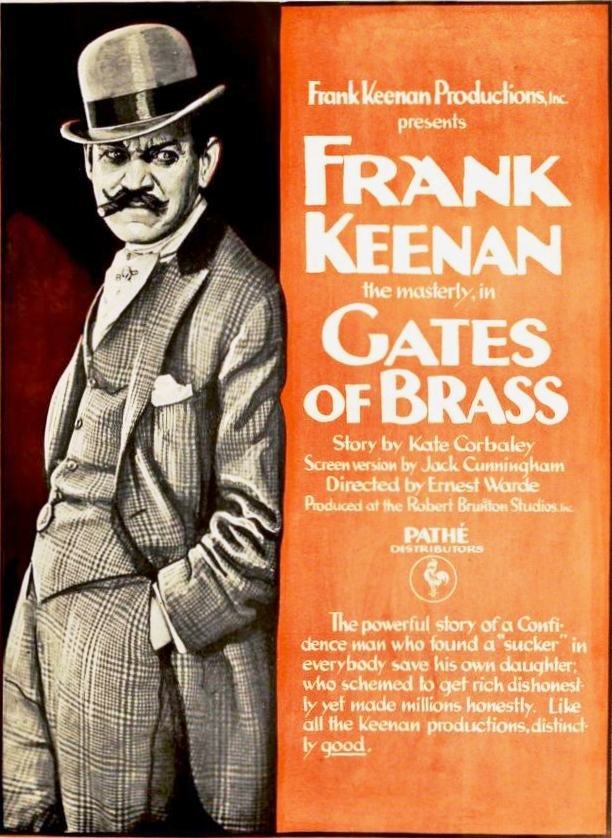
From the shadowy depths of early cinematic storytelling emerges Gates of Brass, a film that, despite its vintage, resonates with a startling prescience, dissecting the corrosive allure of ambition and the elusive nature of redemption. Directed with an understated gravitas and penned by the collaborative genius of Kate Corbaley and Jack Cunningham, this motion picture transcends its era, offering a stark, unflinching look at the moral compromises made in pursuit of affluence and the profound, often irreversible, consequences that follow. It’s a narrative tapestry woven with threads of ethical decay, familial devotion, and the crushing weight of a conscience awakened too late. The film’s enduring power lies not just in its dramatic arc but in its meticulous character study, particularly that of its central figure, Jim Blake, portrayed with compelling nuance by Frank De Loan.
The narrative’s genesis finds us in the bustling, transient world of country fairs and carnivals, where Jim Blake, a man of nimble fingers and sharper wit, hones his craft at the shell game. This seemingly innocuous beginning, a mere sleight of hand designed to separate the unwary from their spare change, serves as a chilling harbinger of the grander, more destructive schemes he would later orchestrate. It’s a fascinating psychological progression, illustrating how minor transgressions can metastasize into monumental ethical breaches when unchecked by moral fortitude. Blake's transformation into the formidable "J. Hatfield Blake", a promoter of fraudulent stock and illusory land deals, marks his ascension into the echelons of white-collar criminality. This new identity, a polished veneer over a morally bankrupt core, allows him to amass a fortune, not merely for personal aggrandizement, but, crucially, to provide a life of unparalleled luxury for his cherished daughter, Margaret. This paternal motivation, seemingly noble on the surface, perversely fuels his descent, cloaking his illicit activities in a distorted sense of duty. The film masterfully portrays this internal conflict, or rather, the lack thereof, as Blake becomes increasingly desensitized to the suffering he inflicts, his gaze fixed solely on Margaret's comfort.
Margaret, brought to life with a delicate strength by Bobbie Mack, initially exists within the gilded cage her father has constructed, oblivious, or perhaps willfully blind, to its foundations. Her world is one of privilege, untainted by the harsh realities of her father's dealings. Her romance with Dick Wilbur, played by Clyde Benson, introduces the first crack in this carefully maintained façade. Dick represents a world of integrity and honest ambition, a stark contrast to Blake’s shadowy empire. The conflict escalates dramatically when Blake's predatory schemes ensnare Dick's father, swindling him out of a staggering $100,000. This act of betrayal shatters the burgeoning relationship, forcing Margaret to confront the true nature of her father's wealth. Her initial, heartbreaking decision to side with Blake, a testament to the powerful, if misguided, pull of filial loyalty, underscores the profound moral dilemma at the heart of the story. It is a moment of profound character definition, revealing the depth of her struggle to reconcile love with morality. This scene, in particular, resonates with the thematic undercurrents of films like Winner Takes All, where personal ambition often clashes with personal relationships, but Gates of Brass delves deeper into the corrosive impact of that ambition on familial bonds.
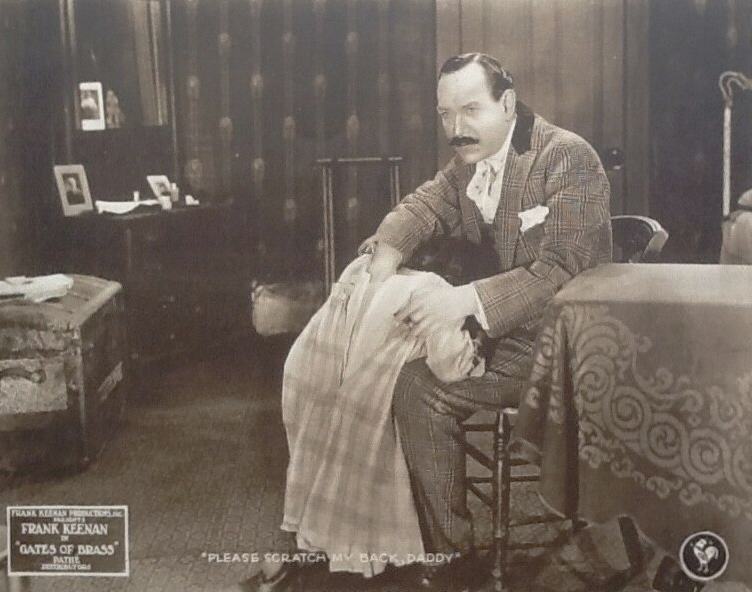
The true turning point for Margaret, however, arrives not through personal loss, but through an encounter that forces her to confront the human cost of her father's avarice. Meeting a poor widow, her babies starving, a direct victim of Blake’s worthless desert land scams, provides a visceral, undeniable indictment of his actions. This stark tableau of destitution, contrasted sharply with her own life of opulence, serves as a moral awakening. It's a moment of profound empathy that transcends the abstract notion of 'wrongdoing' and grounds it in tangible suffering. This pivotal scene, expertly staged, is the catalyst for Margaret's radical departure. Her declaration that she will not return until Blake rectifies his wrongdoings is not merely an ultimatum; it is a desperate plea for her father's soul, a final, unequivocal stand for justice. It's a powerful demonstration of agency, transforming her from a passive recipient of her father's wealth into an active moral force. Her subsequent marriage to Dick Wilbur symbolizes her definitive break from the corrupting influence of her past, forging a new path built on integrity and mutual respect.
Blake, portrayed by De Loan with an evolving complexity, is undeniably shaken by Margaret's unwavering stance. The loss of his daughter, the very purpose for which he had built his empire, forces a painful introspection. It’s a testament to the film’s nuanced writing that Blake’s subsequent actions are not presented as a sudden, miraculous conversion, but rather as a complex blend of guilt, regret, and perhaps, a desperate attempt to reclaim his daughter's affection. His fortuitous, and notably legitimate, oil strike provides the financial means for his atonement. He repays everyone who suffered from his dishonesty, a grand gesture of restitution that, on the surface, appears to be a full circle redemption. Yet, the film subtly questions the true nature of this redemption. Is it genuine moral enlightenment, or merely a transactional act, a desperate attempt to buy back his daughter's love and assuage his own tormented conscience? This ambiguity is one of the film’s most compelling aspects, preventing Blake from becoming a simplistic villain or a fully redeemed hero. His actions, while commendable, do not erase the years of moral decay, leaving him isolated and profoundly melancholic.
The film culminates in a haunting, elegiac sequence on Christmas Eve. Alone in his sprawling, opulent mansion, a monument to both his past transgressions and his superficial 'redemption,' Blake descends into a profound state of despair. His invitation to a motley collection of barroom characters for a drunken dinner is a desperate, pathetic attempt to fill the void of his loneliness, to find some semblance of human connection. What follows is a scene of profound self-destruction and symbolic divestment. At his urging, these newfound 'guests' begin to pilfer his silverware and paintings, stripping his mansion of its material worth, mirroring the stripping away of his own moral foundation over the years. This act of self-sabotage is not a grand gesture of charity, but a final, bitter commentary on the emptiness of material possessions when divorced from genuine human connection and ethical grounding. It’s a scene that echoes the existential angst often found in later European cinema, surprisingly prescient for its time. The continuous drinking, the self-imposed isolation, all paint a portrait of a man consumed by his past, unable to find peace even in the wake of his material restitution. This self-inflicted spiritual exile is a powerful statement on the limits of transactional atonement, hinting that some wounds are too deep to heal simply with money.
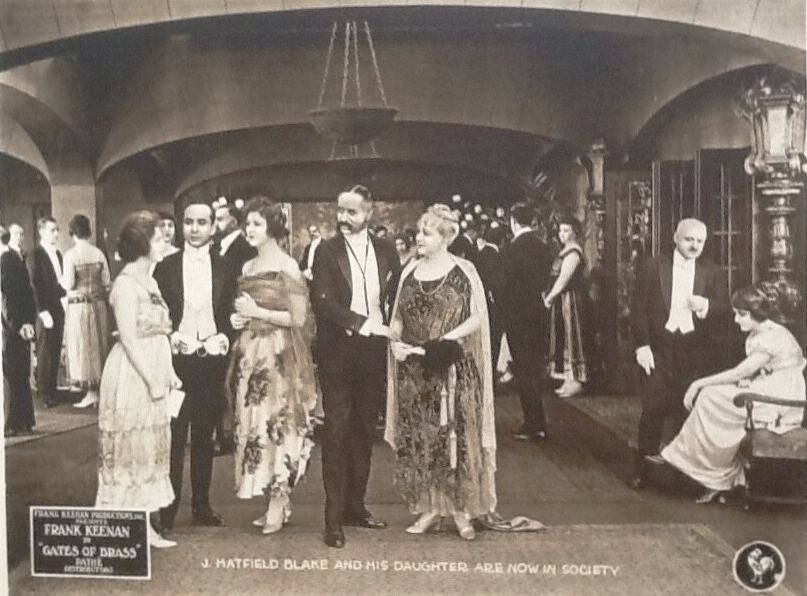
The arrival of Margaret and Dick, full of hope and the intention to surprise Blake, provides the tragic denouement. Their discovery of his lifeless body is a moment of profound pathos, underscoring the irreversible consequences of a life lived without genuine moral compass. It's a stark reminder that some gates, once forged from brass and deceit, can never truly be unlocked, even by the most earnest attempts at reconciliation. Frank De Loan's portrayal of Blake is particularly noteworthy; he imbues the character with a tragic grandeur, making him simultaneously reprehensible and pitiable. Bobbie Mack’s Margaret is the film’s moral heart, her journey from complicity to conviction being the emotional fulcrum. Clyde Benson, as Dick Wilbur, provides a steady, principled counterpoint to Blake’s moral ambiguity, anchoring the narrative with a sense of hopeful integrity. The supporting cast, including Tula Belle, Frank Keenan, and Lois Wilson, contribute effectively to the film’s atmosphere, each playing their part in the intricate web of deceit and consequence.
The screenwriting by Kate Corbaley and Jack Cunningham is remarkably sophisticated for the era. They eschew simplistic moralizing in favor of a nuanced exploration of human nature, demonstrating a keen understanding of the psychological toll of ambition and guilt. The dialogue is crisp, driving the plot forward while revealing character depth. The pacing, while deliberate, never drags, maintaining a steady tension that builds towards the inevitable, tragic conclusion. While specific directorial choices are harder to discern in such an early film without more extensive historical context, the overall narrative flow and emotional impact suggest a skilled hand guiding the production. The film’s themes resonate with a timeless quality, prompting reflection on the true cost of wealth and the enduring power of conscience. One might draw parallels to the existential quandaries presented in films like Appearance of Evil, where moral choices dictate destiny, but Gates of Brass offers a more intimate, character-driven exploration of personal damnation and the elusive nature of peace.
What truly distinguishes Gates of Brass is its refusal to offer easy answers or saccharine resolutions. Blake's 'redemption,' while financially complete, is spiritually hollow. His final act of self-destruction is not a suicide in the conventional sense, but a slow, agonizing dissolution, a final surrender to the loneliness he forged for himself. The film doesn't preach; it observes, allowing the audience to grapple with the complex moral questions it raises. It's a profound cinematic experience that, even after decades, compels viewers to consider the ethical boundaries of ambition and the profound impact of our choices on ourselves and those we love. The very title, Gates of Brass, becomes a powerful metaphor for the impenetrable barriers Blake erects around himself, isolating him from genuine human connection and ultimately leading to his desolate end. The film's legacy lies in its ability to transcend its historical context, offering a universal commentary on the human condition and the enduring struggle between avarice and integrity. It stands as a testament to the power of early cinema to explore complex themes with a depth and sophistication that continues to captivate and provoke thought.
In an era often characterized by simpler narratives, Gates of Brass presents a remarkably nuanced exploration of moral decay and the elusive pursuit of atonement. It’s a film that demands contemplation, inviting audiences to ponder the true meaning of success and the irreplaceable value of an unblemished conscience. The performances, particularly that of Frank De Loan, provide a compelling anchor to this intricate narrative, elevating it beyond a mere cautionary tale. The writing, rich in character development and thematic depth, ensures its place as a significant, albeit perhaps underappreciated, piece of cinematic history. Its examination of a man undone by his own ambition, yet desperate for a daughter's love, resonates deeply, making it a powerful and enduring work that continues to speak to the complexities of the human heart. It is a stark, yet beautiful, portrayal of the inherent tragedy in choosing the ephemeral gleam of brass over the invaluable light of integrity and genuine connection.
IMDb 6.6
1931
Community
Log in to comment.