DbcultAccessing Vault...
Cult Review
Senior Film Conservator
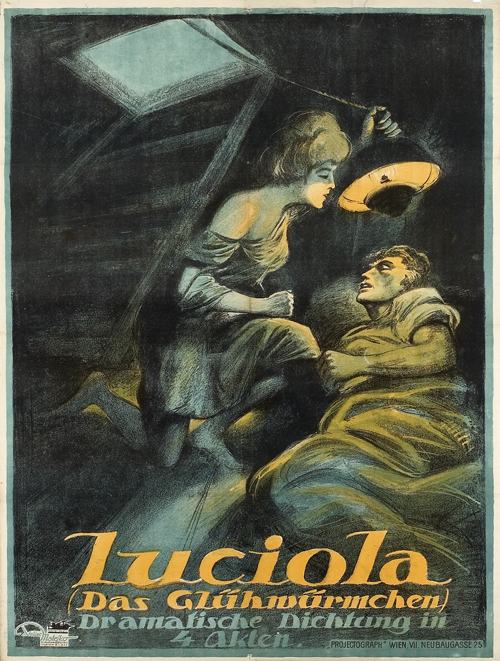
There are films that merely tell a story, and then there are those that etch themselves onto the very fabric of memory, resonating with an almost spectral luminescence long after the final frame flickers into darkness. Augusto Genina’s 'Lucciola' is unequivocally the latter. A silent era marvel, it stands as a testament to the profound emotional depth and visual artistry that cinema could achieve even in its nascent years. To speak of 'Lucciola' is to invoke a sense of nostalgic yearning for a time when narratives unfolded with a deliberate grace, relying on the eloquent language of gesture, expression, and meticulously composed imagery rather than spoken dialogue. It's a film that demands immersion, a surrender to its melancholic beauty, much like being drawn into the delicate dance of a firefly on a summer's eve.
Genina, a director whose prolific output shaped early Italian cinema, here crafts a narrative that is both heartbreakingly intimate and sweepingly grand in its emotional scope. The film introduces us to Lucciola, portrayed with an incandescent vivacity by Emilia Giorgi. Her name, meaning 'firefly,' is no mere coincidence; she embodies a fragile, fleeting brilliance, a spirit that shines brightest against the encroaching shadows of a harsh world. Lucciola is a young woman of humble origins, blessed with an innate grace and an artistic sensibility that draws her into the orbit of a struggling but immensely talented sculptor, Giovanni, played with a compelling blend of passion and despair by Umberto Scalpellini. Their love story forms the tender, beating heart of the film, a pure and innocent affection blossoming amidst the grimy reality of their poverty-stricken existence.
However, this fragile idyll is threatened by the insidious presence of Baron von Reuter, a wealthy and powerful patron, brought to life with chilling aristocratic menace by Paolo Wullmann. The Baron, captivated by Lucciola’s ethereal beauty, sees her not as a woman with agency, but as an object to possess, another exquisite piece for his collection. His desire is not love, but an obsessive, consuming hunger that promises to elevate Lucciola from destitution, yet simultaneously threatens to extinguish her inner light. This classic cinematic conflict—the purity of true love against the corrupting influence of wealth and power—is explored with a nuanced sensitivity that elevates 'Lucciola' beyond a mere melodrama. It becomes a commentary on societal pressures, the impossible choices faced by those on the margins, and the ultimate cost of survival.
The strength of 'Lucciola' lies not only in Genina’s masterful direction but also in the extraordinary performances of its ensemble cast. Emilia Giorgi, as the titular character, delivers a performance of breathtaking vulnerability and resilience. Her eyes, often wide with a mixture of hope and fear, convey volumes. She doesn't just act; she embodies Lucciola's spirit, making her struggles palpable, her joys infectious, and her ultimate sorrow devastating. Giorgi's ability to convey such a complex emotional landscape without uttering a single word is a testament to the power of silent acting at its zenith. One might draw parallels to the expressive power seen in films like The Strange Case of Mary Page, where actresses were similarly tasked with carrying profound narratives through sheer presence and emotional articulation.
Umberto Scalpellini, as the tortured artist Giovanni, provides a compelling counterpoint to Giorgi’s luminescence. His portrayal of a man torn between his artistic integrity, his love for Lucciola, and the desperate need to provide for her, is deeply affecting. The anguish etched on his face, the frustration in his gestures, speak volumes about the artist’s struggle against a world that often values commerce over creativity. The supporting cast, including Helena Makowska, Enrico Roma, and Fernanda Negri Pouget, each contribute to the film’s rich tapestry, creating a believable and vibrant world around the central figures. Franz Sala, Nella Tessieri-Frediani, Mario Saio, Oreste Bilancia, and Francesco Cacace round out this stellar ensemble, each lending credibility to their roles, whether as society figures or the common folk observing the unfolding drama.
Augusto Genina's direction is the invisible hand that guides this cinematic journey, imbuing it with a distinctive artistic flair. His compositions are often breathtaking, utilizing light and shadow to create striking visual metaphors. The contrast between the dark, cramped quarters of the lovers and the lavish, brightly lit halls of the Baron's estate is not merely a stylistic choice but a potent symbolic representation of their disparate worlds. Genina's ability to orchestrate complex crowd scenes, his meticulous attention to mise-en-scène, and his masterful use of close-ups to capture the nuances of emotion are all evident. He understood the language of the camera, transforming it into a poetic instrument.
The screenplay, also credited to Augusto Genina, is remarkably taut and emotionally resonant. Despite the absence of spoken dialogue, the narrative never feels rushed or incomplete. Each plot point builds logically, leading to an inevitable yet profoundly impactful climax. Genina’s writing reveals a deep understanding of human nature, exploring themes of sacrifice, artistic integrity, and the corrupting nature of power with a maturity that belies the film’s early production date. In an era where many films were still finding their footing in terms of narrative sophistication, 'Lucciola' stands out as a remarkably well-constructed and emotionally complex piece. It shares a certain thematic gravity with other silent dramas like The Grasp of Greed, both exploring the moral quandaries induced by avarice and societal pressure, albeit through distinct cultural lenses.
'Lucciola' is more than just a tragic romance; it's a profound meditation on the nature of beauty and its vulnerability. Lucciola, like the firefly, is a creature of fleeting radiance. Her light is enchanting, but also delicate, easily extinguished by the harsh winds of circumstance. The film asks us to consider the price of preserving such beauty, and whether true art can flourish under duress or if it requires a certain freedom to breathe. The class dynamics are starkly drawn, painting a picture of a society where the powerful exploit the vulnerable, and genuine talent is often left to languish in obscurity unless it bends to the will of its benefactors. This social commentary, though subtle, is deeply ingrained in the film's fabric, giving it a timeless relevance that transcends its period setting.
One might compare the film's exploration of a woman's perilous position in society, navigating the desires of powerful men, to the thematic undercurrents found in something like A Prisoner in the Harem, though 'Lucciola' grounds its drama in a more contemporary, European context. The sense of inevitable doom, of a fate sealed by societal expectations and personal sacrifice, also echoes the somber romanticism of films like Obozhzhenniye krylya, where love and despair are often inextricably linked. Genina's film doesn't shy away from the darker aspects of human nature, but it also celebrates the enduring power of love, even if that love is ultimately tragic.
The cinematography in 'Lucciola' is nothing short of exquisite. Genina and his collaborators understood how to manipulate light and shadow to create mood, emphasizing the emotional beats of the story. The use of chiaroscuro is particularly striking, reminiscent of classical painting, lending the film an almost painterly quality. Each frame feels carefully composed, a deliberate artistic choice rather than a mere recording of events. The expressive power of the actors is amplified by these visual choices, allowing their nuanced facial expressions and body language to convey the intricate tapestry of their inner lives. This visual sophistication is a hallmark of the finest silent cinema, and 'Lucciola' stands proudly among them.
The film’s pacing, while deliberate, never drags. Genina masterfully builds tension, allowing the audience to become fully invested in the characters' fates. The emotional crescendos are earned, not forced, making the tragic elements all the more poignant. It’s a testament to the power of pure cinematic storytelling, stripped of dialogue and elaborate special effects, relying instead on the universal language of human emotion and expertly crafted visuals. This approach is what allows films from this era, like The Man from Nowhere, to still captivate audiences today, demonstrating the timeless appeal of well-told stories.
'Lucciola' is a film that lingers, a haunting melody played on the strings of the heart. It's a powerful reminder of the artistic heights achieved during the silent era, and of Augusto Genina's considerable talent as both a writer and director. For those willing to immerse themselves in its unique rhythm, 'Lucciola' offers a deeply moving and visually stunning experience. It's a film that speaks to the universal themes of love, loss, artistic integrity, and the relentless march of fate, all encapsulated within the fragile, incandescent glow of its titular character.
To watch 'Lucciola' today is to embark on a journey back to the very roots of cinematic art, to appreciate a form of storytelling that prioritized visual poetry and emotional authenticity above all else. It's a crucial piece of film history, not just for its place in Italian cinema, but for its enduring power to move and provoke thought. Genina's 'Lucciola' remains a brilliant, if melancholic, firefly in the vast firmament of film, its light still capable of mesmerizing audiences a century later. Its delicate beauty and profound sadness ensure its place as a truly unforgettable work, a testament to the enduring power of the moving image to capture the most fleeting, yet intense, human experiences. The film serves as a powerful counterpoint to the more action-driven narratives of its time, such as The Jungle, proving that quiet drama and emotional depth could be equally compelling. Its poetic nature also stands in contrast to grand historical epics like Julius Caesar, demonstrating that intimate stories can possess monumental impact.
In a world often saturated with noise and spectacle, 'Lucciola' offers a quiet, profound reflection on the human condition. It reminds us that true artistry lies not in bombast, but in the subtle nuances of expression, the careful crafting of a scene, and the ability to evoke deep emotion without a single spoken word. This film, like a treasured artifact, should be rediscovered and celebrated, allowing its gentle, yet potent, glow to illuminate the rich heritage of early cinema. It is a cinematic experience that transcends time, a beautiful and heartbreaking testament to the power of silent storytelling.
IMDb —
1925
Community
Log in to comment.