DbcultAccessing Vault...
Cult Review
Senior Film Conservator
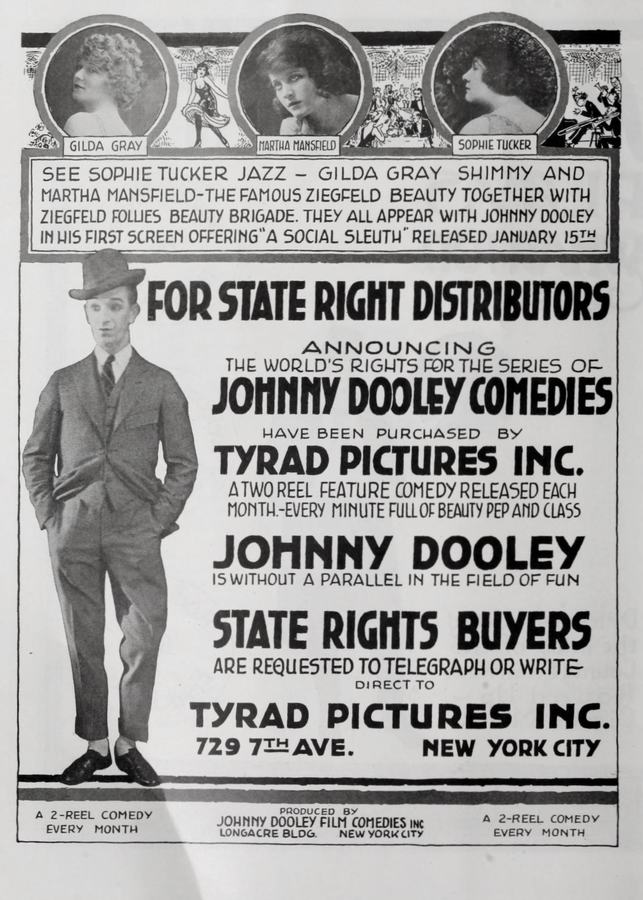
In an era defined by its shimmering facades and unspoken rules, a film like A Social Sleuth emerges not merely as entertainment, but as a piercing anthropological study of human nature under the duress of societal expectation. Tom Bret, the astute writer behind this cinematic gem, masterfully constructs a narrative that transcends the typical whodunit, delving instead into the intricate psychological landscape of the Jazz Age elite. This isn't just a murder mystery; it's a dissection of an entire social stratum, revealing the rot beneath the dazzling veneer of wealth and privilege. From the opening frames, the audience is plunged headfirst into a world where reputation is currency and secrets are deadly, a stark reflection of the period's moral ambiguities.
The film commences with a scene of almost theatrical opulence, a grand soirée at the country estate of Reginald "Reggie" Atherton, a figure as influential as he was morally bankrupt. His sudden, ignominious demise sends ripples of shock and thinly veiled relief through his exclusive circle. The plot, rather than following a linear path, spirals outwards, each character a potential thread in a vast, intricate tapestry of deceit. Johnny Dooley, as Detective Julian Thorne, steps into this maelstrom not with a bludgeon, but with a scalpel, his quiet intensity and keen observational skills immediately setting him apart from the boisterous, often clumsy, detectives of contemporary cinema. His character is a breath of fresh air, a cerebral counterpoint to the more physical investigators of the time, perhaps even a spiritual predecessor to the methodical approach seen in later crime dramas.
Thorne's primary challenge isn't merely to identify a killer, but to decipher the unspoken language of high society. Every gesture, every averted gaze, every carefully chosen word holds a clue. Martha Mansfield, portraying Eleanor Atherton, Reggie's widow, embodies the quintessential society wife – outwardly composed, yet inwardly seething with a lifetime of slights and suppressed fury. Her performance is a masterclass in controlled emotion, a stark contrast to the overt theatrics often seen in silent film. One cannot help but be reminded of the complex female protagonists in films like A Soul Enslaved, where societal constraints often force women into roles of quiet desperation. Mansfield's Eleanor is a woman pushed to the brink, her elegance a fragile shield against a world determined to break her.
The ensemble cast further enriches this complex narrative. Sophie Tucker, as the flamboyant cabaret singer Vivian St. Clair, injects a much-needed dose of raw, unvarnished emotion. Vivian is a force of nature, her financial entanglements with Reggie as tangled as her own public persona. Tucker's vivaciousness is not just for show; it masks a shrewd intelligence and a survivor's instinct. Her character serves as a fascinating foil to Eleanor, representing a different facet of womanhood in the 1920s – one that defied conventions rather than conforming to them. Similarly, Wilna Wilde, as Lady Beatrice Worthington, portrays the stoic matriarch, a bulwark of old money and tradition. Her performance is subtle yet powerful, conveying a deep-seated pride and a willingness to protect her family's name at any cost. Lady Beatrice is a character who understands the power dynamics of her world intimately, and Wilde brings a formidable gravitas to the role. The intricate plotting here, the way various characters are interconnected through secrets and past indiscretions, is reminiscent of the layered storytelling found in The Commanding Officer, where military hierarchy and personal lives intertwine with explosive results.
And then there is Gilda Gray as Lila Fontaine, the enigmatic flapper whose passionate, yet doomed, affair with Reggie makes her an immediate suspect. Gray exudes a captivating allure, her character a whirlwind of youthful recklessness and hidden vulnerability. Lila is the embodiment of the changing times, a symbol of the Jazz Age's liberation, yet also a victim of its excesses and the manipulative men who preyed upon them. Her scenes with Dooley's Thorne are particularly compelling, as the detective attempts to peel back the layers of her carefully constructed rebellion to find the truth beneath. This exploration of a woman's complex relationship with a powerful, flawed man, and the subsequent societal judgment, echoes themes found in Persuasive Peggy, another film that delved into the moral quandaries of its time.
Tom Bret's writing is the undeniable backbone of A Social Sleuth. His script is not content with simple exposition; it uses every interaction, every glance, every carefully worded intertitle to deepen the mystery and enrich the characterizations. Bret understands that true drama often lies in the unsaid, in the subtle manipulations and long-held grievances that fester beneath the surface of polite society. His portrayal of Reggie Atherton, though largely seen through the eyes of others, is brilliant. Reggie isn't just a victim; he's the catalyst, a puppet master whose posthumous influence continues to dictate the actions of those he tormented. This intricate web of past actions dictating present consequences is a hallmark of sophisticated storytelling, elevating the film beyond mere genre fare. It's a testament to Bret's skill that even without a plot provided, his name alone suggests a narrative of depth and complexity. One might even draw parallels to the psychological intensity of The Student of Prague, where inner turmoil drives much of the external conflict.
Johnny Dooley's portrayal of Detective Thorne is particularly noteworthy. He eschews the flamboyant gestures common in silent film, opting instead for a subtle, internal performance. His eyes convey a world of understanding, his stillness a testament to his keen intellect. He is the quiet observer, the outsider who sees everything the insiders miss. This nuanced approach allows the audience to connect with Thorne on a deeper level, making him an empathetic guide through the moral morass of the upper crust. His methodical uncovering of clues, often through psychological insight rather than brute force, sets a precedent for future detective archetypes.
Martha Mansfield, as Eleanor, delivers a performance that is both heartbreaking and chilling. Her initial grief slowly gives way to a steely resolve, revealing a woman who has endured years of emotional abuse and now seeks a perverse form of liberation. Her transformation throughout the film is subtle but profound, making her eventual complicity all the more shocking. It's a performance that speaks volumes without a single word, relying on posture, facial expression, and the careful manipulation of props to convey her inner turmoil. This kind of layered female character, fighting against societal expectations, can also be observed in films like Her Sister, which explored the complex bonds and rivalries between women.
Sophie Tucker, a star in her own right, brings her inimitable stage presence to Vivian St. Clair. She's vibrant, audacious, and utterly magnetic. Yet, beneath the glitz, Tucker allows glimpses of Vivian's vulnerability and her genuine affection for Reggie, complicated by his deceit. Her character is a whirlwind, a splash of vibrant color in a monochrome world, and Tucker plays her with a captivating blend of confidence and underlying insecurity. Wilna Wilde's Lady Beatrice is the embodiment of old-world aristocracy. Her every movement, every stern glance, conveys a lifetime of privilege and a deep-seated belief in the sanctity of her family name. Wilde doesn't just play a character; she embodies an entire social institution, making her actions, however ruthless, understandable within the context of her world. The complex power dynamics between these women, each from a different social sphere but all impacted by Reggie's actions, is a testament to the film's rich character development.
Gilda Gray, known for her 'shimmy' dance, utilizes her physical expressiveness to full effect as Lila Fontaine. She is the restless spirit of the new generation, yet her youthful exuberance is tinged with a tragic naivety. Gray's performance is a poignant reminder of the dangers lurking beneath the surface of the roaring twenties, particularly for young women navigating a rapidly changing moral landscape. Her character's arc, from carefree lover to implicated suspect, is handled with a delicate touch, avoiding caricature and instead presenting a multifaceted individual caught in a web far beyond her understanding. The film, in its depiction of such vulnerable individuals in morally compromising situations, shares thematic resonance with In the Power of Opium, exploring the destructive forces that can consume lives.
The cinematography of A Social Sleuth is equally commendable. The use of shadow and light, particularly in the opulent interiors of the Atherton estate, creates an atmosphere of suspense and claustrophobia. The camera is not merely an observer; it's an active participant, lingering on faces to capture subtle emotional shifts, sweeping through grand ballrooms to emphasize the scale of the social stage, and focusing on telling details that reveal deeper truths. The editing maintains a taut pace, slowly building tension as Thorne uncovers each new layer of deception. The film’s ability to create such a palpable sense of unease and mystery without dialogue is a testament to the power of visual storytelling, a characteristic shared with other masterfully crafted silent films like The Blinding Trail.
The climax, a meticulously orchestrated confrontation at another grand social gathering, is a masterstroke. It mirrors the initial crime scene, bringing the narrative full circle, but this time, the masks are stripped away. Thorne, through a series of incisive questions and astute observations, exposes not a lone killer, but a chilling conspiracy between Eleanor and Lady Beatrice. Their motive: to protect their respective family legacies from Reggie's destructive influence and the impending revelation of a long-buried scandal that threatened to unravel generations of carefully constructed respectability. This revelation underscores the film's central theme: that in certain social strata, the preservation of reputation can be a more potent motivator for murder than passion or greed. The complexity of this conspiracy, involving multiple parties with interwoven motives, rivals the intricate plotting of films like The Cloister and the Hearth, where historical and personal narratives intertwine to drive the drama.
A Social Sleuth is more than just a period piece; it's a timeless commentary on the corrosive effects of unchecked ambition, the suffocating weight of societal expectations, and the lengths to which individuals will go to protect their perceived honor. The film's conclusion, with Thorne's quiet reflection on the nuanced nature of justice in such a world, leaves a lasting impression. It suggests that while the truth may be uncovered, justice is rarely black and white, particularly when entwined with the intricate moral compromises of the powerful. The film’s enduring power lies in its ability to strip away the glamour of an era and expose the raw, often ugly, human drama beneath. It's a film that resonates long after the final fade to black, prompting reflection on the societal structures that continue to shape our lives today.
In its masterful blend of suspense, social commentary, and compelling character studies, A Social Sleuth solidifies its place as a significant work of early cinema. It’s a compelling argument for the enduring power of silent film to convey profound narratives with remarkable depth and emotional resonance. For those who appreciate the artistry of the silent era and narratives that delve beneath surface appearances, this film is an absolute must-see. It's a testament to the fact that compelling storytelling, brilliant performances, and astute direction can transcend time and technological advancements, continuing to captivate and provoke thought for generations. Much like how Beauty and the Rogue captivated audiences with its dramatic flair, A Social Sleuth offers a different, yet equally enthralling, kind of beauty – the beauty of truth revealed in the darkest corners of human experience.
IMDb —
1935
Community
Log in to comment.