DbcultAccessing Vault...
4.4/10
Senior Film Conservator
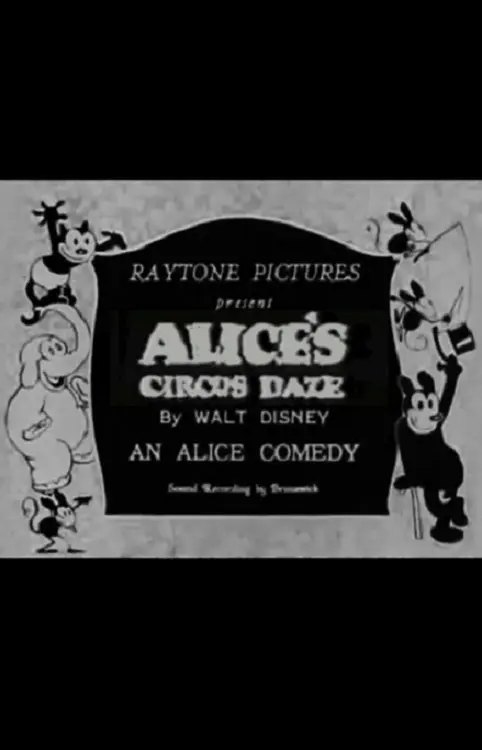
A definitive 4.4/10 rating for a film that redefined the boundaries of cult cinema. Alice's Circus Daze remains a cornerstone of transgressive art.
Is 'Alice's Circus Daze' worth watching today? The short answer is a resounding yes, though with significant caveats that anchor it firmly in its historical moment. This film is an absolute must-see for silent film enthusiasts, animation historians, and those curious about the foundational work of early cinema. However, it will likely prove a challenging, perhaps even tedious, experience for viewers accustomed to modern narrative pacing and sophisticated visual effects.
For a discerning critic, the value lies not just in its entertainment quotient but in its profound historical significance. It's a snapshot, a precious artifact that illuminates the nascent stages of an art form still finding its feet, yet brimming with audacious ambition. It works. But it’s flawed.
This film works because... it represents a pioneering blend of live-action and animation, showcasing the early ingenuity of its creators and the undeniable charm of child star Lois Hardwick. It's a vital piece of cinematic history.
This film fails because... its narrative is exceedingly simple, its technical limitations are evident, and its brevity prevents any meaningful character development or thematic depth.
You should watch it if... you have a deep appreciation for early cinema, animation history, or want to witness the foundational steps that paved the way for decades of animated storytelling. It is not for those seeking complex plots or high-definition spectacle.
The sheer audacity of 'Alice's Circus Daze' is its most compelling feature. Released in an era when cinema itself was still a nascent medium, the ambition to seamlessly blend a live-action child actor with hand-drawn animated characters was nothing short of revolutionary. This isn't just a film; it's a declaration of intent, a bold experiment in visual storytelling that predates the polished sheen of later animation titans. It's easy, in hindsight, to dismiss the rudimentary quality of the animation or the straightforward plot, but to do so is to miss the forest for the trees.
The film, despite its brevity, offers a fascinating window into the creative spirit of early Hollywood. The animation of Julius, Alice's mischievous cat companion, is surprisingly expressive for its time, conveying personality through simple movements and reactions. This interaction between the real and the imagined, particularly in the circus setting, creates a unique, almost dreamlike quality that transcends its technical limitations. It’s a testament to the power of imagination over brute force technology.
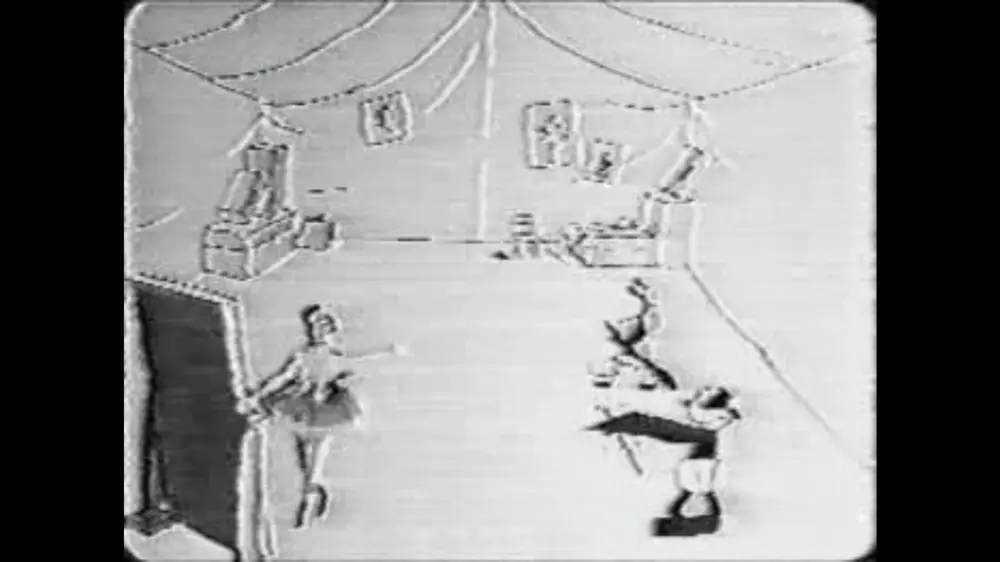
Consider the sequence where Julius and Alice prepare for their tightrope act. The animated chairs, stacked precariously, wobble with a convincing, almost nervous energy that mirrors the tension of a real circus performance. This simple visual gag, combined with Alice's calm demeanor atop the spire of chairs, sets up the eventual fall with an understated comedic brilliance. It’s a masterclass in early visual storytelling, using minimal resources to maximum effect.
While it lacks the narrative sophistication of later animated works like those from the Golden Age of Hollywood, 'Alice's Circus Daze' lays critical groundwork. It demonstrates that the medium could transcend mere novelty, offering a canvas for complex visual gags and genuine character interaction, even if one character was a drawing. This pioneering spirit is what truly elevates it beyond a mere curiosity.
Lois Hardwick, the young actress portraying Alice, is the film's undeniable anchor. In an era before sophisticated special effects, her ability to convincingly interact with an unseen, later-animated character is remarkable. Her performance is natural, unforced, and utterly captivating, especially given the technical demands placed upon her. She doesn't just act *alongside* Julius; she acts *with* him, creating a believable dynamic that sells the illusion.
Her expressions, though subtle, convey a range of emotions, from the concentration required for the tightrope act to the inevitable surprise and perhaps mild amusement at the chaotic climax. There's a particular shot of her atop the stacked chairs, her gaze steady, her posture confident, which speaks volumes about her precocious talent. She embodies the innocent fearlessness of childhood, making Alice a character both relatable and aspirational.
Hardwick's presence is crucial to the film's success. Without her grounded, live-action performance, the animated elements might have felt too detached, too abstract. She provides the human heart, lending weight to the otherwise fantastical premise. Her calm acceptance of the circus environment, even when surrounded by the crude animation of other acts, grounds the entire experience.
It’s a performance that, while brief, hints at the potential of child stars in early cinema, much like her contemporaries in other shorts. Hardwick’s legacy, though perhaps not as widely celebrated as some, is solidified in these early works, showcasing a talent that was both unique and essential to the pioneering efforts of the era.
The directing in 'Alice's Circus Daze,' while constrained by the technology of its time, demonstrates a clear understanding of comedic timing and visual storytelling. The initial scenes, showcasing various circus acts, serve as a gentle build-up, establishing the setting and the playful, slightly chaotic tone. This deliberate pacing allows the audience to settle into the world before the main event.
The focus then shifts to Alice and Julius, highlighting the intricacy and danger of their act. The camera lingers on the precarious stack of chairs, emphasizing the height and the delicate balance. This deliberate staging enhances the tension, making the eventual collapse all the more impactful. The comedic payoff, when Julius carelessly lights his cigar and ignites the rope, is swift and effective, a classic example of cause-and-effect humor.
The tone is consistently light-hearted, even during the moment of peril. There’s no genuine sense of danger, only the delightful anticipation of a pratfall. This is a hallmark of early silent comedies, and it’s executed here with charming simplicity. The director understands that the humor comes from the situation, not from complex dialogue or character arcs. It’s pure, unadulterated slapstick, refined for its era.
The pacing is brisk, as one would expect from a short film. Every shot serves a purpose, moving the narrative forward without unnecessary exposition. This economy of storytelling is a virtue, ensuring that the central gag lands effectively and leaves a lasting impression. It's a lesson in efficiency that many modern filmmakers could still learn from.
The cinematography of 'Alice's Circus Daze' is, by modern standards, rudimentary, yet it achieves its goals with remarkable efficacy. The camera is largely static, capturing the action from a straightforward, observational perspective. This simplicity, however, is not a flaw; it's a necessity and a stylistic choice that allows the hybrid animation to take center stage without distraction.
Framing is key here. The shots are composed to clearly delineate the interaction between Alice and Julius, ensuring that the audience can follow the visual narrative without confusion. When Alice is atop the chairs, the frame often includes enough background to establish the circus environment, but close enough to capture her subtle reactions and the animated antics of Julius. This thoughtful composition ensures clarity in a technically complex endeavor.
The lighting, likely natural or basic studio illumination, is functional, designed to highlight the performers and the animated elements. There are no dramatic shadows or intricate light patterns; the focus is on visibility and the seamless integration of the two visual styles. This practical approach to cinematography underscores the film's pioneering spirit, prioritizing innovation over aesthetic flourish.
Perhaps the most impressive aspect is how the cinematography facilitates the optical trickery. The careful alignment of the live-action plate with the animated cells is a testament to the technical skill involved. While the seams might be visible to a modern, discerning eye, the overall effect for its time would have been nothing short of magical. It's a foundational step towards the more sophisticated composite shots that would define cinematic storytelling for decades to come.
Yes, 'Alice's Circus Daze' is absolutely worth watching today, especially for specific audiences. It offers a crucial look into the origins of animation and the early days of cinematic experimentation. It’s a short, impactful piece of film history that showcases foundational techniques. Viewers interested in the evolution of cinema or animation will find it invaluable. It also provides a charming, albeit brief, performance from child star Lois Hardwick. However, don't expect a modern narrative or high-octane entertainment. Its value is primarily historical and academic, rather than purely for casual enjoyment.
'Alice's Circus Daze' is more than just a forgotten relic; it's a foundational text in the grammar of cinema. Its importance lies not in its ability to compete with modern blockbusters, but in its audacious spirit and its pioneering technical achievements. It’s a testament to the early innovators who dreamed of blending the real with the imagined, a dream that continues to shape our visual landscape today. While its narrative might be as thin as a tightrope, its historical weight is immense.
I'd argue this particular 'Alice' short, while brief, is more pivotal than many feature-length dramas of its time, precisely because it dared to push the boundaries of what film could be. It's a charming, if rudimentary, piece of entertainment that serves as a crucial stepping stone in the development of both animation and composite filmmaking. It's a must-see for anyone serious about understanding where the magic of the movies truly began. Don’t just watch it; study it. Its influence, though subtle, echoes through every animated feature and VFX-laden spectacle that followed, from Sagan om de sista örnarna to modern blockbusters. It’s a quiet revolution in celluloid, a flicker of genius that ignited an industry.
IMDb 6.4
1933
Community
Log in to comment.