DbcultAccessing Vault...
Cult Review
Senior Film Conservator
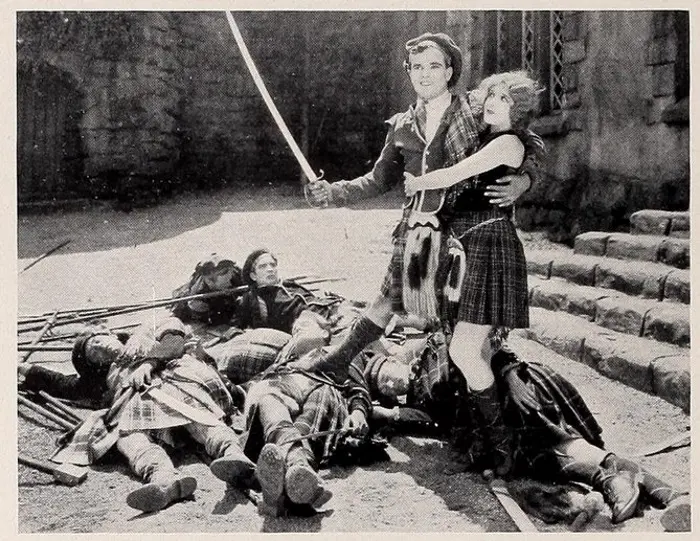
So, is 'Gentlemen Prefer Scotch' worth watching today? Short answer: yes, but with a significant caveat. This film is a delightful, if slight, peek into the comedic sensibilities of the 1920s, offering genuine laughs for those attuned to its particular rhythm. However, it absolutely is not for everyone, especially viewers accustomed to modern pacing and narrative complexity.
This charming, often silly, picture is a must-see for ardent classic film enthusiasts, particularly those with a fondness for early cinema's unique brand of romantic farce. It's a clear miss, however, for anyone seeking a contemporary narrative, deep character studies, or high-octane drama. Manage your expectations, and you might just find a new old favorite.
'Gentlemen Prefer Scotch' arrives on our screens, not as a thunderous cinematic event, but as a gentle, effervescent pop of a champagne cork from a bygone era. It’s a film that asks little of its audience beyond a willingness to indulge in its unpretentious humor and the simple, often exaggerated, joys of early screen comedy. While it may not rewrite the history books, its enduring appeal lies in its earnest performances and a plot that, despite its age, still manages to tickle the funny bone.
At its core, the film is a testament to the enduring power of a good premise: a young woman, Penelope Vance, faking a passion for a drink she despises to win the heart of a man who adores it. This setup, while not groundbreaking even for its time, is executed with a commendable lightness of touch. The writers, Arthur Greenlaw, Sam White, and Harold Tarshis, craft a script that leans heavily on situational comedy and character reactions, rather than sharp dialogue – a wise choice given the transitional nature of cinema in the late '20s.
The film works because of its unwavering commitment to its comedic premise. It doesn't try to be anything more than what it is: a lighthearted romp. The performances, especially from the lead, carry the bulk of the film's charm. It fails because its comedic beats can feel repetitive to modern audiences, and its resolution, while satisfying for the era, lacks any real emotional depth or surprise. You should watch it if you appreciate the historical context of early Hollywood and can find joy in the broad strokes of period-specific humor.
Sally Phipps, as Penelope Vance, is undeniably the heart of 'Gentlemen Prefer Scotch'. Her performance is a masterclass in expressive silent-era acting, even if this film sits on the cusp of the talkie revolution. Phipps possesses a natural charm and a remarkable ability to convey a whirlwind of emotions – from feigned enthusiasm to genuine disgust – with just a tilt of her head or a widening of her eyes. Her physical comedy, particularly during the aforementioned 'tasting event' hosted by Sir Alistair, is genuinely laugh-out-loud funny. One specific moment, where she attempts to discreetly empty her glass into a potted plant, only to be caught by Sir Alistair's stern gaze, is a highlight. Her exaggerated grimaces after each forced sip of Scotch are a comedic goldmine, reminding me of the delightful physical humor found in Pajamas, another forgotten gem of the era.
Nick Stuart, as the earnest Reginald Sterling, plays the charming, if slightly oblivious, love interest with a commendable straightforwardness. His character is the anchor against which Penelope’s comedic antics can truly shine. Stuart doesn't attempt to steal the spotlight, instead providing a solid, romantic foil. His reactions to Penelope's increasingly bizarre behavior are perfectly pitched, conveying a mixture of adoration and mild confusion. It's a performance that understands its place within the comedic structure.
However, the true scene-stealer, despite his gruff exterior, is Tiny Sandford as Sir Alistair MacGregor. Sandford, with his imposing stature and booming presence (even in a film where dialogue might be sparse or newly introduced), embodies the quintessential 'old guard' figure. His portrayal of Sir Alistair is not merely a caricature; there's a certain warmth beneath the sternness, a hint of a man who genuinely believes in tradition and quality. His interactions with Penelope are a highlight, particularly the way his eyes narrow with suspicion, then soften with a grudging respect for her audaciousness. It's a performance that brings to mind the understated gravitas of some characters in Perils of the Rail, though in a vastly different genre.
George Gray, while not given as much screen time as the leads, serves his purpose well. Whether he's playing a rival suitor or a cynical observer, Gray adds another layer to the ensemble, often acting as a catalyst for Penelope's more desperate schemes. His presence, though often fleeting, provides necessary contrast and propulsion to the plot. The chemistry among the cast, while not electric, is certainly amiable, allowing the lighthearted narrative to flow without friction.
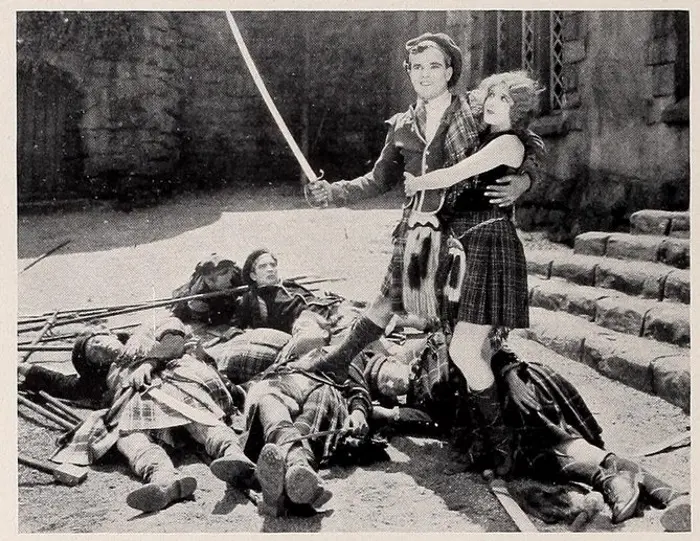
The direction, helmed by an uncredited director (common for many films of this period, especially shorts or B-features), demonstrates a clear understanding of comedic timing for the era. The camera work, while not groundbreaking, is functional and effective. There are numerous well-framed two-shots that highlight the comedic tension between Penelope and Reginald, and wide shots that allow the physical comedy to play out without feeling cramped. One particularly effective sequence involves a chase through a crowded social gathering, where the director uses quick cuts and dynamic camera movements (for its time) to heighten the sense of chaos and Penelope’s desperation to avoid detection. This attention to visual storytelling is reminiscent of the more ambitious sequences in Return to Reason, albeit with a different artistic aim.
Cinematography, while lacking the grand scale of epic features, is competent. The lighting, though standard for the period, effectively creates mood, especially in the more intimate scenes where Penelope is attempting to perfect her 'Scotch face' in secret. There's a particular scene lit by what appears to be a single, soft lamp, casting gentle shadows that lend a touch of vulnerability to Penelope's character. It's a simple effect, but powerful. The set design, featuring opulent ballrooms and cozy, albeit slightly exaggerated, drawing-rooms, perfectly captures the aesthetic of the Jazz Age. The costumes, too, are period-appropriate, with Penelope's flapper dresses and Reginald's impeccably tailored suits adding to the film's visual appeal. The attention to detail in the production design, even if not overly elaborate, grounds the film in its historical context.
The pacing of 'Gentlemen Prefer Scotch' is brisk, a hallmark of early comedies designed to keep audiences engaged. There's little wasted time, with each scene serving to either advance the plot or provide a comedic beat. The tone is consistently light and farcical, never veering into genuine drama or pathos. This unwavering commitment to its comedic tone is both a strength and, for some, a potential weakness. It ensures the film never overstays its welcome, but also means it doesn't linger in the mind long after the credits roll. It’s a film that delivers exactly what it promises, with no pretensions of grandeur.
Absolutely, for the right audience. 'Gentlemen Prefer Scotch' offers a charming escape to the Roaring Twenties. It's a valuable historical artifact and a genuinely funny film for those who appreciate early cinema. Its lighthearted plot and expressive performances make it a pleasant diversion. However, if you prefer modern narrative techniques or fast-paced action, it might not be your cup of tea – or, rather, your glass of Scotch.
One surprisingly modern aspect of 'Gentlemen Prefer Scotch' is its subtle commentary on gender roles and societal pressure. While presented comically, Penelope’s entire struggle revolves around conforming to a masculine ideal of sophistication. It’s a subtext that, for its time, feels remarkably progressive, even if unintentional. She’s not just faking an interest in Scotch; she’s performing a version of womanhood she believes is required to secure a desirable partner. This makes the film more than just a simple farce; it's a gentle satire on the expectations placed upon women in the pursuit of love and status.
I’d also argue that Tiny Sandford's performance here is criminally underrated. While often relegated to supporting or comedic relief roles, his Sir Alistair MacGregor is a masterclass in controlled bluster. He grounds the more outlandish elements of the plot with a believable, if exaggerated, sense of authority. Without him, the film would lose a significant portion of its comedic friction. His ability to convey so much with so little dialogue is truly impressive, a skill often overlooked in the rush to celebrate the more flamboyant stars of the era. It's a performance that, in a fairer world, would be discussed alongside the great character actors of the silent and early sound eras, much like the often-overlooked brilliance in films such as The Fable of the Romantic Mouse.
Moreover, the film's greatest strength, its simplicity, is also its biggest weakness. It works. But it’s flawed. While refreshing in its directness, it occasionally feels *too* simple, leaving one wishing for a slightly richer tapestry of character interaction or a more complex emotional arc. The resolution, while satisfying in a neat, tidy way, feels a little too easy, a missed opportunity to explore the consequences of Penelope's deception more deeply. But then again, perhaps that's not what a film titled 'Gentlemen Prefer Scotch' is supposed to deliver. It’s a confection, not a five-course meal, and judging it as such might be unfair.
'Gentlemen Prefer Scotch' is a charming, if not groundbreaking, slice of 1920s cinematic history. It’s a film that knows exactly what it is: a lighthearted romantic comedy designed to entertain without demanding too much thought. Sally Phipps delivers a memorable performance that anchors the film, supported by a solid ensemble cast, particularly the delightful Tiny Sandford. While its plot might be predictable and its humor occasionally repetitive, its genuine charm and historical significance make it a worthwhile watch for specific audiences.
This isn't a film that will redefine your understanding of cinema, nor will it leave you pondering deep philosophical questions. Instead, it offers a pleasant, unpretentious escape into a bygone era, reminding us that sometimes, all you need is a good laugh and a simple, sweet story. If you approach it with an open mind and a fondness for classic film, you’ll find 'Gentlemen Prefer Scotch' to be a surprisingly enjoyable, if fleeting, pleasure. It’s a cinematic aperitif, not the main course, but a perfectly palatable one nonetheless. A solid 3 out of 5 stars, with an extra half-star for historical value and Phipps's undeniable charisma.
IMDb 7.1
1934
Community
Log in to comment.