DbcultAccessing Vault...
Cult Review
Senior Film Conservator
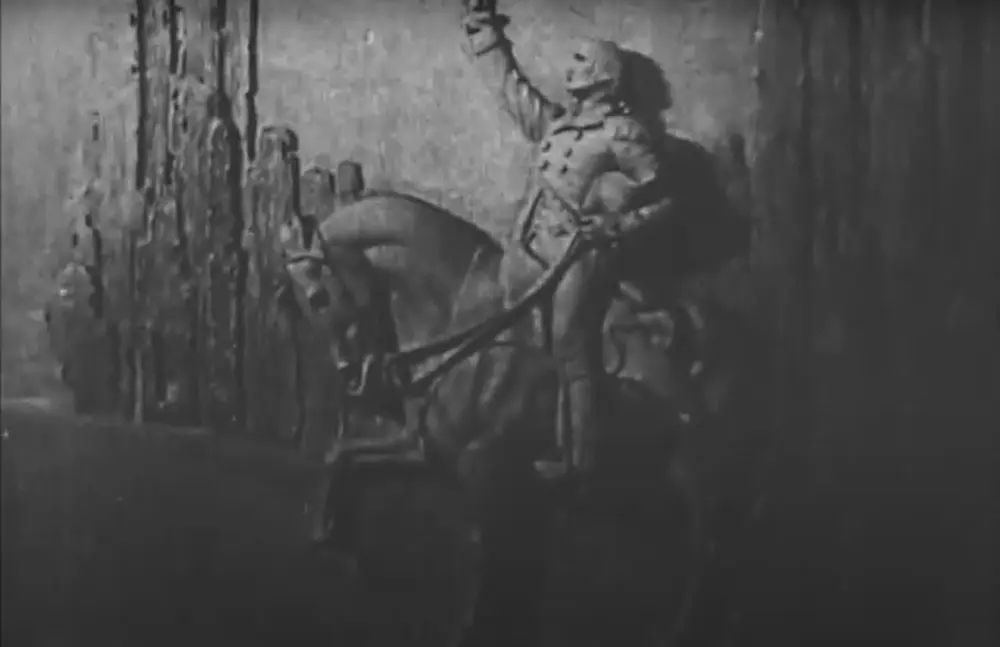
Is “George Washington Modeled in Clay” worth seeking out in the modern era? Short answer: yes, but with significant caveats. This peculiar, almost hypnotic film is an artifact of a bygone era, an experimental piece that defies easy categorization and demands a particular kind of patience from its audience.
It is unequivocally for those with a deep appreciation for early cinema, stop-motion animation, or performance art documented through film. However, it is decidedly not for viewers seeking conventional narrative, fast pacing, or a traditional biographical account of America’s first president.
“George Washington Modeled in Clay” stands as a fascinating curio, a film whose primary subject isn't so much George Washington himself, but the act of creation and destruction, documented with meticulous, almost obsessive care. It’s an exercise in artistic patience, both for the creator, Virginia May, and for the audience.
The film’s simple premise belies a profound exploration of legacy, art, and the very nature of historical representation. It’s a silent, deliberate dance between sculptor and subject, mediated by the unblinking eye of the camera.
This film works because of its singular vision and the sheer artistry of Virginia May’s process. It offers a rare, intimate look at the meticulous craft of sculpture, elevated by the stop-motion technique into something almost spiritual.
This film fails because its lack of conventional narrative and deliberate pacing will alienate many modern viewers accustomed to faster cuts and clear plot progression. Its niche appeal is undeniable.
You should watch it if you are fascinated by the intersection of early film, historical art, and the experimental documentation of creative labor. It’s a valuable piece of cinematic history.
The core of “George Washington Modeled in Clay” rests on sculptress Virginia May’s extraordinary talent and the painstaking process of stop-motion photography. We are invited into her studio, not as passive observers of a finished product, but as witnesses to the very act of artistic genesis and subsequent dissolution. It's a bold choice, placing the spotlight squarely on the labor itself.
The film’s cinematography, while rudimentary by today’s standards, is exceptionally effective in its purpose. Each frame captures a minute alteration to the clay, building a visage of Washington one careful press and pinch at a time. The camera acts as a silent, unwavering chronicler, its static position emphasizing the transformation occurring within the frame. There are no sweeping camera movements or dramatic angles; instead, the focus is entirely on May’s hands and the evolving sculpture.
Consider the subtle shifts in light and shadow across the clay as May works. These aren't just incidental; they are integral to how the sculpture takes form and depth on screen. The film leverages the inherent qualities of the medium to add a textural richness that a simple photograph could not convey. It's a masterclass in how early filmmakers used simple tools to achieve complex artistic goals.
The pacing is, by necessity, incredibly deliberate. Each segment, whether creation or destruction, unfolds with a meditative slowness. This is not a flaw, but a defining characteristic. It forces the viewer to slow down, to observe, to appreciate the granular nature of the work. In an age of instant gratification, this film demands a return to a more contemplative mode of viewing. It's a refreshing, if challenging, counterpoint to contemporary cinema.
The act of destruction is arguably more potent than the creation. To watch a carefully rendered likeness of Washington — a symbol of national identity — slowly crumble, distort, and melt back into an amorphous lump of clay is surprisingly profound. It speaks to the impermanence of all things, even grand historical figures and the art made to immortalize them. This element elevates the film from a mere demonstration to a philosophical statement.
While there is no conventional 'acting' in “George Washington Modeled in Clay,” Virginia May’s presence is central and profoundly performative. Her hands, her tools, and her precision are the true protagonists. The film is a silent testament to her skill, her patience, and her vision. We don't see her face, but her artistic personality shines through every deliberate movement.
The meticulousness of her craft, the way she shapes the clay with such confidence and control, is a performance in itself. It's a physical demonstration of expertise, an almost choreographic display of artistic labor. This is a unique form of screen presence, one that emphasizes skill and process over emotional expression.
One might argue that May’s 'performance' is in the very act of allowing her work to be filmed and then, crucially, destroyed. It’s a vulnerability, a willingness to expose the transient nature of her creations for the cinematic record. This adds a layer of conceptual depth that transcends simple documentation.
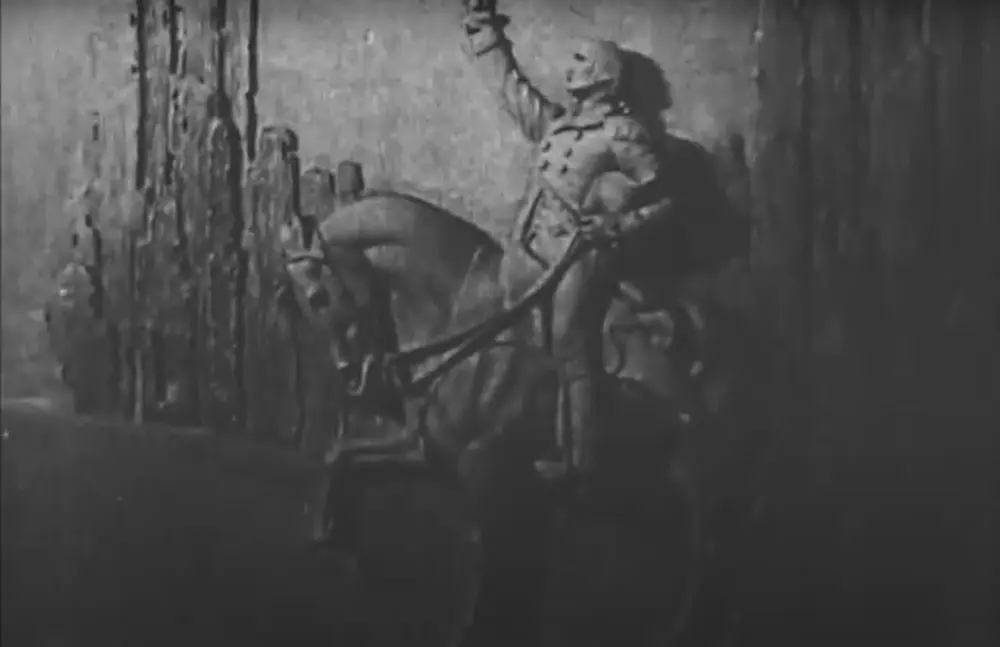
Her choice to recreate famous paintings of Washington, rather than creating original interpretations, is also significant. It suggests a dialogue with existing historical iconography, a reinterpretation through a new medium, and a new process. It's a meta-commentary on art's relationship with history.
The decision to focus on George Washington is not incidental. Washington, as a foundational figure in American history, carries immense symbolic weight. By recreating his image in a medium as tactile and malleable as clay, and then documenting its ephemeral existence, the film subtly interrogates the rigidity of historical representation.
Are these clay portraits more 'real' because they are physically sculpted, even if they are fleeting? Or does their eventual destruction underscore the fact that even the most revered historical figures are subject to interpretation, decay, and the shifting sands of time? This is a surprisingly philosophical film for its humble origins as a potential 'home movie' rental.
The film’s tone is one of quiet reverence mixed with artistic curiosity. There's a respect for the historical subject, but also an experimental spirit that pushes the boundaries of what film could be at the time. It’s neither a dry documentary nor a dramatic narrative; it occupies a unique space in between.
It's easy to dismiss such a film as merely a technical exercise, but that would be a disservice. It’s an early example of how cinema could be used not just to tell stories, but to capture processes, to explore ideas, and to document performance art in a way that no other medium could. It predates many later experimental films, hinting at the vast potential of the moving image beyond pure entertainment.
Comparing it to more traditional films of the era, such as the social commentary of The End of the Road or the dramatic flair of Conflict, highlights its distinctiveness. While those films engaged with contemporary issues or classic storytelling, “George Washington Modeled in Clay” looked inward, at the artistic act itself. This makes it a fascinating outlier, a truly unconventional piece of filmmaking.
Absolutely, but only if you approach it with the right mindset. This is not a film for passive consumption. It demands active engagement, a willingness to appreciate the artistry of a bygone era, and a curiosity about the experimental fringes of early cinema.
It’s a historical document of an artistic process, a proto-stop-motion animation, and a quiet meditation on legacy. For film students, art historians, or anyone fascinated by the evolution of visual media, it offers profound insights into the possibilities that early filmmakers explored.
The film’s influence might not be direct or widely acknowledged in mainstream cinema, but its spirit of experimentation and meticulous documentation can be seen as a precursor to countless animation techniques and performance art films. It’s a foundational piece, even if obscure.
“George Washington Modeled in Clay” might not be a household name, nor will it likely ever be. Yet, its quiet contribution to the tapestry of cinema is profound. It demonstrates that even in its nascent stages, film was a medium capable of more than just telling stories or documenting events in a straightforward manner. It could capture the essence of creation, the passage of time, and the very act of artistic labor.
This film is a testament to the ingenuity of early filmmakers and artists who saw the potential of the moving image to transcend mere representation. It's a reminder that sometimes, the most powerful cinematic experiences come from the simplest, most focused concepts. It works. But it’s flawed.
It’s a peculiar little gem, a piece of history that invites us to slow down and appreciate the meticulous work of hands and the fleeting beauty they create. It’s a film that asks us to reconsider what we define as 'watching' and to embrace the quiet power of observation. Its significance lies not in broad appeal, but in its unique and enduring artistic statement.
“George Washington Modeled in Clay” is a fascinating, if challenging, piece of cinematic art that deserves to be seen by those with a specific interest in the history of film, animation, or performance art. Its deliberate pace and experimental nature make it unsuitable for mainstream audiences, but its artistic merit and historical significance are undeniable. It's a testament to the power of meticulous documentation and the profound beauty found in the cycle of creation and destruction. Highly recommended for cinephiles and art historians; approach with an open mind and a patient spirit.
IMDb —
1917
Community
Log in to comment.