DbcultAccessing Vault...
6.4/10
Senior Film Conservator
A definitive 6.4/10 rating for a film that redefined the boundaries of cult cinema. Germ Mania remains a cornerstone of transgressive art.
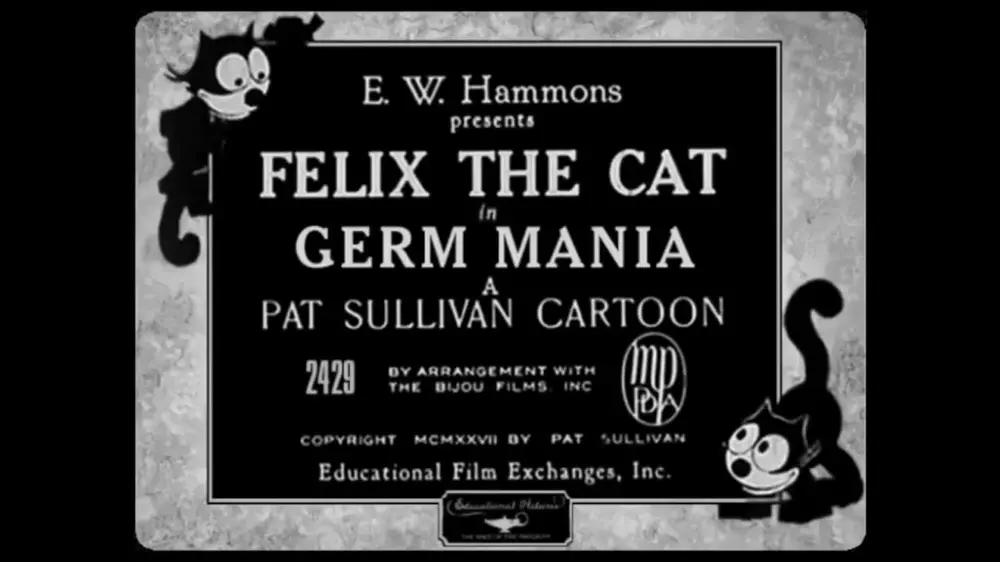
So, is Germ Mania worth watching today? Short answer: yes, but with a significant caveat. This early animated short is an intriguing historical artifact, a delightful peek into the nascent stages of a medium that would define a century, yet it demands a certain patience and appreciation for its era.
It's a film for silent cinema enthusiasts, animation historians, and those who appreciate whimsical, abstract storytelling. It is emphatically not for viewers seeking complex narratives, sophisticated animation by modern standards, or sustained emotional depth. Its charm lies in its simplicity and sheer imaginative premise.
This film works because of its audacious, utterly charming premise, presenting a world within a world that feels both fantastical and oddly relatable. The concept of microscopic life having human-like concerns – golf and romance – is a stroke of genius that elevates it beyond a mere technical exercise.
This film fails because its brevity and the rudimentary nature of early animation mean it cannot fully explore the delightful possibilities of its own setup. The narrative is thin, by necessity, and the visual gags, while inventive for their time, might feel simplistic to contemporary eyes.
You should watch it if you are fascinated by the origins of animation, appreciate the quirky humor of early cinema, or are simply curious about Otto Messmer's foundational contributions to the art form. It's a foundational text, not a blockbuster.
Germ Mania is an exercise in pure, unadulterated imagination. The plot, as simple as it is, serves as a brilliant springboard for visual comedy. We are introduced to Felix, a laboratory worker, whose routine inspection of test tubes uncovers an unexpected microcosm of activity. It’s not just inert bacteria he finds, but anthropomorphic ‘Golf germs’ and ‘Love germs’ living out their tiny, yet dramatically significant, lives.
The film’s central conceit – that these minuscule beings possess personalities, hobbies, and romantic aspirations – is what truly sets it apart. The ‘Golf germs’ are depicted as miniature sports enthusiasts, perhaps teeing off with microscopic clubs on an imagined putting green within the glass. The ‘Love germs,’ meanwhile, are consumed by their affectionate pursuits, oblivious or indifferent to the sterile scientific environment around them.
Felix’s intrusion, his giant eye peering down, is met not with fear or curiosity from the germs, but with palpable annoyance. This inversion of expectation, where the subjects of scientific study are more bothered by the scientist than awed by him, is a stroke of comedic brilliance. It’s a playful subversion that speaks volumes about the film’s whimsical tone.
This premise, while slight, is remarkably fertile. It invites us to consider the unseen worlds around us, to imagine the intricate dramas unfolding on scales imperceptible to the human eye. It’s a testament to the power of early animation to conjure entire universes from the simplest of drawings and concepts. The film doesn't preach; it simply presents a charming, absurd reality.
While 'Writers' is left blank in the provided context, the undeniable stylistic fingerprint of Otto Messmer, the credited cast member and a pioneer of early animation, is all over Germ Mania. Messmer, often celebrated for his seminal work on Felix the Cat, brings a similar blend of simple, effective character design and fluid, gag-driven animation to this short. His influence is felt in the way the germs convey emotion – their exaggerated eye rolls, their indignant postures, their frantic romantic gestures – despite their minimalist forms.
The 'acting' in Germ Mania isn't about nuanced facial expressions or complex character arcs; it's about kinetic energy and symbolic gestures. A 'Golf germ' might throw its tiny club down in frustration, or a 'Love germ' might embrace its partner with an almost operatic flourish, all rendered with Messmer’s characteristic clarity. This economy of movement and expression is a hallmark of the silent era, where every frame had to communicate without dialogue.
Messmer's genius lay in his ability to imbue inanimate or abstract concepts with distinct personalities. He understood that simple shapes, animated with intention, could evoke laughter, sympathy, or annoyance. In Germ Mania, this is evident in how clearly we understand the germs' emotional states, despite their tiny scale and lack of dialogue. It’s a masterclass in visual storytelling, proving that sometimes, less is indeed more.
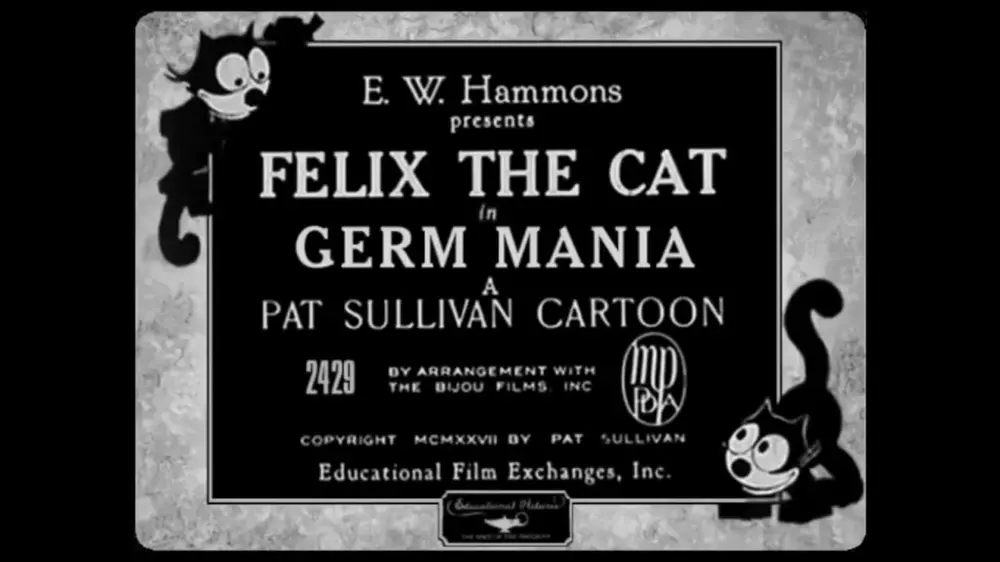
It’s easy to dismiss these early shorts as mere curiosities, but Messmer's work, including Germ Mania, laid vital groundwork. He was not just drawing moving pictures; he was crafting a language for a new art form, exploring its unique grammar and syntax. His influence on subsequent animators is immeasurable, even if this particular short remains lesser known than his feline icon.
The 'cinematography' of Germ Mania, in the traditional sense, is limited by its animated nature, yet it thrives on the visual language inherent to silent film. The camera acts as Felix’s eye, providing close-ups of the test tubes that magnify the microscopic drama within. This deliberate framing creates a sense of voyeurism, drawing the audience into the secret lives of these minuscule characters.
The animation itself is rudimentary by today's standards – often jerky, with frames that might skip or hold for longer than expected. However, this simplicity is also its strength. The clear lines and uncluttered backgrounds allow the focus to remain squarely on the antics of the germs. There's a raw, unpolished charm to it, a directness that modern, hyper-detailed animation sometimes lacks.
Consider the 'set design' within the test tube: how does one depict a golf course for germs? Or a romantic rendezvous? Messmer likely used sparse, suggestive lines and shapes – a tiny flag for a hole, perhaps, or a heart for the lovers. This minimalist approach forces the audience to engage their own imagination, filling in the blanks and becoming active participants in the storytelling.
Compared to other silent shorts like El eclipse del sol, which might rely on more conventional narrative structures, Germ Mania leans into pure, abstract visual comedy. It shares a spirit with early experimental films, pushing the boundaries of what moving images could represent. The film’s visual gags are broad and immediate, designed to elicit a quick laugh from an audience accustomed to vaudeville and slapstick. The contrast between Felix’s serious scientific demeanor and the germs’ frivolous pursuits is a visual joke in itself, expertly deployed.
The pacing of Germ Mania is brisk, as is typical for silent shorts of this era. There’s no time for lengthy exposition or drawn-out character development. The film gets straight to the point, establishing its premise and delivering its gags with efficiency. Each visual beat, from Felix’s initial discovery to the germs' annoyed reactions, is delivered with a snappy rhythm designed to keep the audience engaged.
The tone is overwhelmingly whimsical and lighthearted. There’s no underlying menace or deep philosophical message; it’s pure, unadulterated fun. The humor derives from the sheer absurdity of the situation – germs playing golf and falling in love. This playful approach makes the film incredibly accessible, even today, provided one adjusts their expectations for the medium.
The comedic timing, though often simple, is effective. The cut from Felix’s curious face to the close-up of the indignant germs highlights the central conflict and the humor in the mismatch of scale and priorities. It’s a classic comedic setup: the serious world colliding with the trivial, revealing the inherent humor in both.
One might even argue that the film, in its own peculiar way, foreshadows later animation's ability to create entire, believable worlds with their own internal logic, no matter how outlandish. It works. But it’s flawed. Its brevity, while a strength for pacing, also limits its potential for deeper comedic exploration.
Absolutely, Germ Mania is worth watching today, especially for those with an interest in film history or animation. It serves as a fascinating historical document, showcasing the inventive spirit of early cinema and the foundational techniques that would evolve into the sophisticated animation we know now. It offers a unique glimpse into the creative mind of Otto Messmer, a true pioneer.
However, it's crucial to approach it with the right mindset. This isn't a film that will offer a profound narrative experience or stunning visual effects by modern standards. It's a brief, charming, and historically significant piece that will appeal most to those who appreciate the quirks and limitations of its era. It's a reminder of where it all began, a testament to pure imaginative spark over technical prowess.
An unconventional observation: Germ Mania, despite its lightheartedness, subtly comments on human egocentrism. Felix, the scientist, assumes his world is the only one that matters, only to find his subjects are living rich, self-contained lives entirely independent of his gaze. It's a playful jab at our anthropocentric view, suggesting that even the smallest, most overlooked elements of our world might harbor complex, if miniature, dramas. It challenges the viewer to consider the 'other' perspective, even if that 'other' is a golf-playing germ.
Germ Mania is more than just a fleeting curiosity; it's a foundational flicker in the grand tapestry of animation. While it won't resonate with every viewer, its audacious premise and Otto Messmer's unmistakable touch make it a vital piece of cinematic history. It’s a testament to the power of a simple idea, executed with the pioneering spirit of its time. It’s not a film to be passively consumed; it’s one to be studied, appreciated, and admired for its sheer inventive spark. Seek it out if you dare to peer into the microscopic origins of animated genius. It’s a quiet triumph, a whisper of what was to come, and a charming reminder that even the smallest stories can hold immense historical weight.
IMDb —
1917
Community
Log in to comment.