DbcultAccessing Vault...
Cult Review
Senior Film Conservator
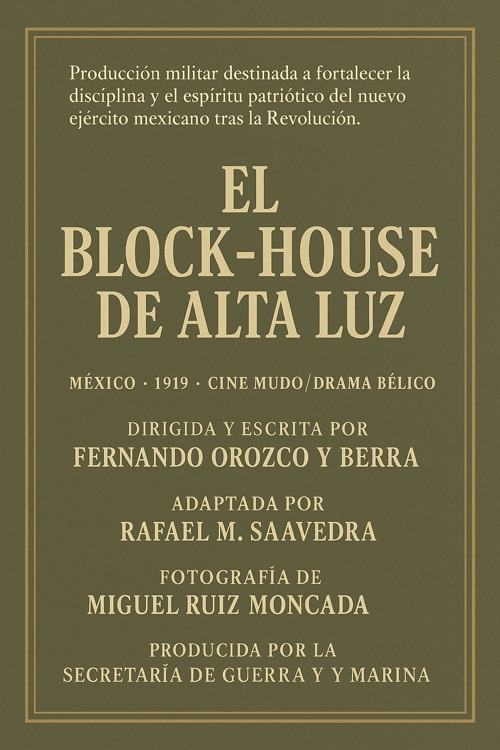
The cinematic landscape is rife with tales of dystopian futures and isolated outposts, yet few manage to distill the profound dread and existential questioning of such settings with the singular intensity of "El Block-house de Alta Luz." This isn't merely a film; it's an experience, a slow-burn descent into the psychological abyss that peels back layers of manufactured reality to expose the raw, pulsating core of human vulnerability and the enduring, often terrifying, quest for truth. From its opening frames, we are plunged into a world defined by absence – the absence of verdant life, the absence of open skies, the absence of certainty. The screen becomes a window into a future both bleak and breathtaking, where the titular Block-house stands as a defiant, yet enigmatic, monument to humanity's last stand against an unseen, omnipresent threat.
The narrative unfurls in a post-cataclysmic era, where the remnants of civilization huddle in fortified enclaves, forever shadowed by 'The Gloom' – an amorphous, environmental blight that has rendered the outside world uninhabitable. Towering above this desolation, El Block-house de Alta Luz is more than just a structure; it is a symbol, a colossal beacon radiating an artificial, yet vital, light that is believed to ward off the encroaching darkness. This beacon, a testament to human ingenuity and desperation, forms the crucible for a quartet of remarkable performances that anchor the film's profound emotional weight. The claustrophobic interiors, bathed in a perpetual, sterile luminescence, become a character in themselves, a silent observer to the unraveling psyches within.
The visionary direction crafts an atmosphere of pervasive unease, utilizing every inch of the frame to convey the characters' profound isolation and the oppressive nature of their existence. The cinematography is nothing short of masterful, employing a palette dominated by stark contrasts – the blinding white of the Block-house's interior against the inky blackness of the exterior, punctuated by the piercing, almost alien glow of the 'alta luz' itself. Long, lingering shots of the desolate landscape, occasionally glimpsed through reinforced windows, serve as chilling reminders of the world they have lost and the dangers that lurk just beyond their fortified sanctuary. The camera often adopts a voyeuristic stance, observing the subtle shifts in facial expressions, the nervous fidgeting, the silent accusations that pass between the crew members, drawing the audience into their escalating paranoia. One might find thematic echoes of the confined psychological tension seen in films like The Bottle Imp, where supernatural isolation drives characters to their breaking points, though "El Block-house" grounds its torment in a more tangible, yet equally insidious, technological and environmental dread.
The use of light, true to the film's title, is not merely functional but symbolic. The 'high light' is initially presented as a source of salvation, a technological marvel holding back the apocalypse. Yet, as the narrative progresses, it transforms into something more ambiguous, even menacing. Its constant, unblinking presence begins to feel less like a guardian and more like a surveillance tool, a silent judge, or perhaps, a blinding obfuscation. The interplay of shadow and light within the Block-house's labyrinthine corridors mirrors the characters' internal struggles – moments of clarity giving way to periods of profound uncertainty, much like the flickering anomalies of the beacon itself. This visual language is consistently compelling, turning the Block-house into a character as complex and multifaceted as its human inhabitants.
The ensemble cast delivers performances of astonishing depth and nuance. Flora Islas Chacón, as Commander Elena Vargas, anchors the film with a portrayal of steely pragmatism and quiet desperation. Her Elena is a woman burdened by the weight of leadership, her every decision a precarious balance between maintaining order and succumbing to the creeping doubt. Chacón conveys volumes with subtle shifts in her gaze, a tightening of the jaw, or the almost imperceptible tremor in her voice, revealing the immense internal conflict beneath her composed exterior. She embodies the archetype of the resilient leader, reminiscent of characters grappling with desperate circumstances, a thematic thread that, in a vastly different context, might be seen in the struggles for survival depicted in Southern Pride, albeit without the same overt historical or social commentary.
José Rubio's Dr. Mateo Ríos is a masterclass in controlled cynicism. As the Block-house's archivist, Mateo is the keeper of forgotten histories, his intellect a sharp weapon against the comfortable lies of their present. Rubio imbues Mateo with a weary intelligence, a man whose exposure to the vastness of human knowledge has rendered him deeply skeptical of any singular truth. His performance is a constant counterpoint to Elena's rigid adherence to protocol, their intellectual sparring providing some of the film's most compelling dramatic moments. The way he meticulously sifts through digital detritus, his eyes reflecting the ghostly glow of ancient data, speaks volumes about his quiet, relentless pursuit of understanding.
Eduardo Urriola, as the young technician Kael, serves as the audience's surrogate, his initial wide-eyed idealism slowly eroding into a gnawing suspicion. Urriola beautifully captures Kael's journey from innocent curiosity to a determined, albeit terrified, seeker of truth. His youthful energy, initially a breath of fresh air in the oppressive environment, gradually transforms into a restless anxiety as he uncovers discrepancies and hidden protocols. Kael's arc is particularly poignant, representing the universal human desire to understand one's place in the world, even when that understanding threatens to shatter everything. His vulnerability makes him profoundly relatable.
Perhaps the most enigmatic performance comes from Rutila Urriola as Dr. Anya Sharma. Sharma is a quiet storm, her reclusive nature and clandestine botanical experiments shrouding her in an aura of unsettling mystery. Urriola's portrayal is subtle yet potent, conveying a deep, unsettling knowledge that she keeps carefully guarded. Her character embodies the film's central enigma, her actions suggesting a profound, perhaps terrifying, connection to The Gloom and the light itself. Her presence is a constant, low hum of suspense, making every one of her understated gestures or cryptic remarks resonate with profound implications. The sense of an unseen, possibly malevolent, force at play, channeled through an enigmatic figure, brings to mind the pervasive dread found in films like Mystic Faces, where the supernatural or unknown casts a long, psychological shadow.
At its core, "El Block-house de Alta Luz" is a profound exploration of truth versus deception, and the lengths to which institutions (and individuals) will go to maintain a comforting, yet ultimately fragile, illusion. The Block-house itself, with its 'alta luz,' is the ultimate metaphor: a towering beacon of hope that slowly reveals itself to be a potential instrument of control, a blinding light designed not to illuminate, but to obscure. The film brilliantly dissects the psychology of isolation, showing how prolonged confinement and the constant threat of an unseen enemy can erode trust, foster paranoia, and ultimately force individuals to confront their deepest fears and prejudices. This psychological unraveling, driven by the very environment designed for protection, is a testament to the film's narrative sophistication.
The narrative also delves into the nature of power and authority. Elena, as commander, represents the established order, her conviction a bulwark against chaos. Yet, as Mateo and Kael uncover inconsistencies, and Anya's research hints at a darker truth, her authority is challenged, forcing her to question the very foundations of her belief system. This internal struggle for the characters, to reconcile official narratives with emerging evidence, resonates deeply in an age saturated with information and misinformation. The film doesn't offer easy answers, instead opting for a nuanced portrayal of how difficult it is to dismantle deeply ingrained beliefs, even when confronted with undeniable facts.
Furthermore, the film subtly touches upon environmental themes, albeit through a dystopian lens. 'The Gloom' is an abstract, terrifying consequence of past actions, a constant reminder of humanity's destructive potential. The Block-house’s mission to contain or repel it suggests a desperate attempt at redemption, or perhaps, a perpetuation of a cycle of control. This dystopian premise, where a manufactured 'solution' might be worse than the 'problem' it purports to solve, offers a chilling commentary on our relationship with technology and nature. The film's ability to weave such complex ideas into a compelling, character-driven narrative is one of its greatest strengths.
The sound design of "El Block-house de Alta Luz" is an unsung hero, meticulously crafting an auditory landscape that amplifies the film's pervasive sense of dread. The hum of machinery, the distant, almost imperceptible thrum of the 'alta luz,' the subtle creaks and groans of the massive structure – all combine to create a constant, low-frequency tension. Moments of absolute silence are expertly deployed, making the sudden intrusion of a strange signal or a character's sharp intake of breath all the more impactful. The score, spare and atmospheric, avoids grand orchestral swells, instead opting for minimalist electronic textures and dissonant harmonies that underscore the psychological unraveling without ever becoming intrusive. It's a testament to the filmmakers' understanding that true horror often lies in what is suggested, rather than explicitly shown.
The pacing is deliberately measured, a slow burn that allows the tension to build organically, mirroring the gradual erosion of the characters' sanity. This isn't a film reliant on jump scares or rapid-fire plot twists; instead, it meticulously lays out clues, allowing the audience to piece together the terrifying puzzle alongside the characters. Each revelation, no matter how small, lands with significant impact, contributing to a mounting sense of unease. This patient narrative approach might be challenging for viewers accustomed to faster-paced thrillers, but it ultimately rewards patience with a deeper, more resonant emotional and intellectual experience. In its methodical uncovering of a hidden truth, one might draw a very loose, thematic parallel to the investigative drive in The Girl Philippa, where secrets are gradually unveiled, though the genre and execution are vastly different.
"El Block-house de Alta Luz" stands as a formidable achievement in contemporary dystopian cinema. It is a film that demands active engagement, inviting viewers to ponder complex questions about surveillance, manufactured reality, environmental collapse, and the inherent human drive to seek truth, even when that truth is profoundly unsettling. While its grim subject matter and deliberate pacing might not appeal to all audiences, those who appreciate thoughtful, character-driven science fiction and psychological thrillers will find themselves richly rewarded. The film doesn't offer easy answers or convenient resolutions; instead, it leaves a lingering sense of disquiet, a potent reminder of the fragility of perceived reality and the enduring power of a lie.
The legacy of films that explore hidden societal dangers, like the metaphorical 'drug terror' in Cocaine Traffic; or, the Drug Terror, finds a modern, existential echo in "El Block-house de Alta Luz," shifting the focus from overt societal corruption to the more insidious, systemic deception that can underpin an entire civilization. The Block-house is not just a place; it is an idea, a philosophy, a monument to humanity's capacity for both resilience and self-deception. The film's conclusion, without revealing specifics, is a masterful stroke of ambiguity, forcing the audience to grapple with the implications of the unveiled truth long after the credits roll. It is a testament to the power of cinema to provoke, to challenge, and to illuminate the darkest corners of the human psyche.
Ultimately, "El Block-house de Alta Luz" is a triumph of atmospheric storytelling and profound thematic resonance. It solidifies its place as a crucial entry in the canon of thought-provoking science fiction, urging us to question the lights we follow and the truths we choose to believe. Prepare to be unnerved, captivated, and left contemplating the nature of your own reality long after the 'high light' has faded from the screen.

IMDb —
1933
Community
Log in to comment.