DbcultAccessing Vault...
6.1/10
Senior Film Conservator
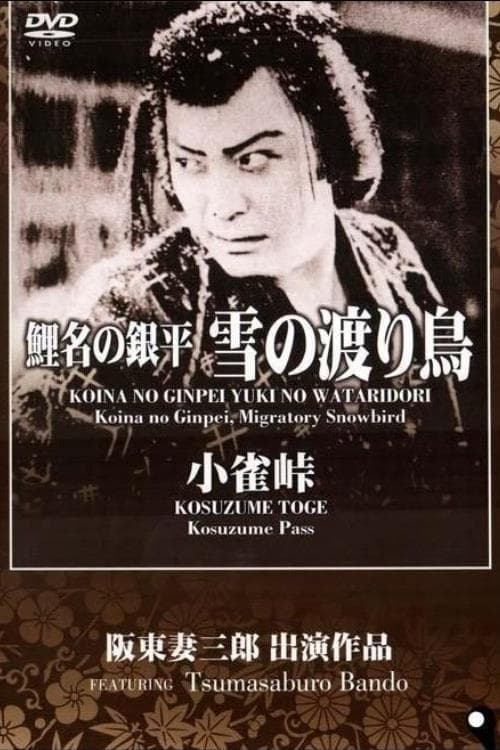
A definitive 6.1/10 rating for a film that redefined the boundaries of cult cinema. Kosuzume tôge remains a cornerstone of transgressive art.
In the annals of early Japanese cinema, certain films stand as towering monuments, not merely for their technical prowess but for their profound thematic resonance and artistic audacity. Kosuzume tôge, a cinematic tapestry woven by the masterful hand of Rokuhei Susukita, is unequivocally one such work. More than a mere period drama, it functions as a searing indictment of moral decay, a poignant exploration of individual resilience against systemic corruption, and a visually arresting meditation on the very soul of a warrior in an era teetering on the precipice of change. Its narrative, while rooted in the specificities of feudal Japan, possesses a universality that transcends time and geography, inviting contemporary audiences to ponder questions of justice, loyalty, and the price of true honor.
The film introduces us to Kageyama, portrayed with a compelling blend of stoicism and simmering rage by the incomparable Hataya Ichikawa. Ichikawa, a luminary of the stage and screen, imbues Kageyama with a gravitas that belies the character's profound personal humiliation. Stripped of his ancestral lands and cast out from the Shogun's court, Kageyama's disgrace is not a consequence of his own failing but the insidious machinations of Lord Izumi. Shinpei Takagi's portrayal of Izumi is a study in calculated malevolence, a villain whose ambition is as boundless as his capacity for treachery. The central MacGuffin, the fabled "Dragon's Eye" katana, serves as more than just a plot device; it is the physical manifestation of Kageyama's lost honor and the spiritual anchor of his clan. Izumi's covetous gaze upon it signifies his desire not just for power, but for the very essence of legitimacy he so flagrantly lacks. The sword, therefore, becomes a symbol of a purity that Izumi can never truly possess, only usurp.
The titular Kosuzume Pass is not merely a geographical location but a character in itself, a labyrinthine gauntlet of natural beauty and hidden dangers. Susukita's direction transforms the rugged landscape into a crucible for Kageyama's spirit, reflecting the internal turmoil and external threats he faces. The cinematography, even in its silent era limitations, manages to evoke a palpable sense of isolation and grandeur, with sweeping vistas contrasted against claustrophobic encounters. It's a journey reminiscent of the epic struggles seen in films like Maciste und die Javanerin, where the hero's physical odyssey mirrors a deeper, spiritual quest, though Kageyama's path is marked by a more somber, introspective tone. The perils of the pass, both environmental and human, force Kageyama to confront not only his enemies but also the very limits of his endurance and conviction.
It is within this crucible that Kageyama encounters Koharu, a character of immense complexity brought to life by the nuanced performance of Yoshiko Tanaka. Koharu is far from a simplistic damsel; she is a geisha, yes, but one whose past is entangled with Izumi's web of deceit, making her both a potential ally and a figure of suspicion. Tanaka masterfully conveys Koharu's dualities – her outward grace masking an inner resilience and a deep-seated knowledge of the court's dark underbelly. Her initial interactions with Kageyama are fraught with tension, a dance of guarded trust and unspoken secrets. Their evolving relationship, an unlikely alliance forged out of shared desperation, adds a crucial layer of human connection to what might otherwise have been a solitary tale of vengeance. It’s a delicate interplay of human vulnerability, somewhat akin to the intricate emotional tapestry found in Camille, albeit with a distinctly Japanese sensibility regarding duty and societal roles.
The ensemble cast of Kosuzume tôge is nothing short of exceptional, a testament to the era's reliance on expressive physicality and profound emotional conveyance without dialogue. Hataya Ichikawa's Kageyama is a study in controlled passion. His movements are precise, his gaze piercing, communicating volumes with a mere tilt of the head or a subtle clenching of the jaw. He embodies the samurai ideal, yet hints at the profound disillusionment beneath the surface. His performance allows the audience to feel the weight of his lost honor and the arduous nature of his quest for redemption. It's a masterclass in silent acting, relying on an almost choreographic precision to convey inner turmoil and unwavering resolve.
Yoshiko Tanaka, as Koharu, provides a captivating counterpoint. Her portrayal is multifaceted, evolving from an enigmatic figure to a woman of profound courage and moral clarity. She navigates the treacherous landscape of court intrigue and personal danger with an understated strength that makes her character deeply empathetic. Tanaka's ability to convey complex emotions through gesture and facial expression makes Koharu an unforgettable presence, a woman who challenges the traditional passive roles often assigned to female characters of the period. Her performance, much like that of the titular character in The Woman with Four Faces, showcases a remarkable versatility and depth.
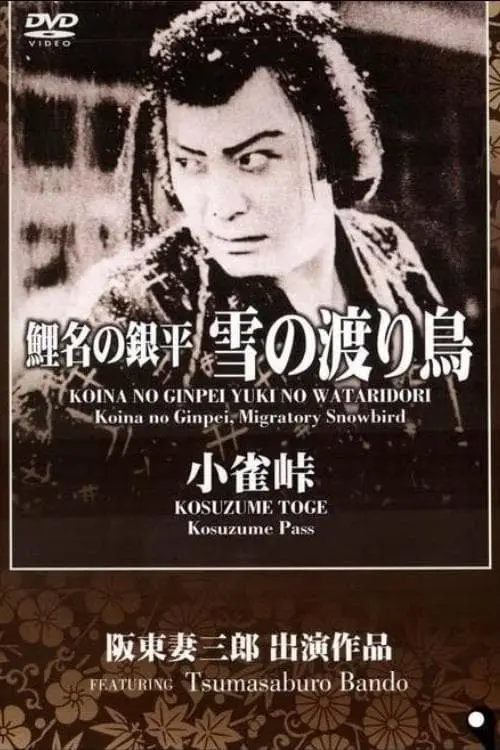
The antagonists are equally compelling. Tsumasaburō Bandō, as the formidable ronin Goro, is a force of nature. Bandō, renowned for his chanbara roles, brings a visceral intensity to Goro, making him a truly terrifying adversary. His sword-fighting sequences are executed with brutal efficiency, each movement conveying a sense of deadly purpose. Goro is not merely a henchman; he is a reflection of the brutal, unforgiving world Kageyama inhabits, a man whose loyalty is bought, but whose skill is undeniable. His presence elevates the action sequences from mere spectacle to integral parts of the narrative, highlighting the sheer physical stakes of Kageyama's struggle. Even Tokizō Nakamura and Koebi Ichikawa, in their supporting roles, contribute to the rich tapestry of characters, each etching distinct impressions through their focused performances, demonstrating the depth of talent prevalent in this era of filmmaking.
Rokuhei Susukita's script is a masterclass in weaving complex thematic threads into a compelling narrative. Beyond the surface-level quest for revenge, Kosuzume tôge delves into profound philosophical questions. What truly constitutes honor when the very institutions meant to uphold it are corrupt? Is justice attainable when power dictates truth? Kageyama's journey is not just about retrieving a sword; it is about reclaiming an ideal, about proving that integrity can still exist in a world consumed by greed and deceit. The film subtly critiques the rigidity of the samurai code when faced with moral ambiguity, hinting at the societal shifts that would eventually lead to the decline of the samurai class. This introspective quality sets it apart from more straightforward action narratives and aligns it more closely with the existential dramas of its time, perhaps even sharing a spiritual kinship with the psychological depth explored in El otro, though through entirely different cultural lenses.
The pacing of the film is deliberate, allowing moments of quiet contemplation to punctuate exhilarating action sequences. This measured approach enables the audience to fully absorb the emotional weight of each scene, to understand the motivations driving the characters, and to appreciate the intricate political machinations at play. The narrative builds steadily, each encounter and revelation adding another layer to the overarching conspiracy, culminating in a climax that is both visually spectacular and emotionally devastating. The film avoids simplistic resolutions, instead opting for an ending that is both cathartic and sobering, reflecting the harsh realities of its historical context.
Susukita's directorial vision is evident in every frame. He utilizes the limitations of silent cinema not as hindrances but as opportunities for creative expression. The visual storytelling is paramount, with meticulous attention paid to mise-en-scène, framing, and symbolic imagery. The use of natural light and shadow, particularly in the scenes set within the Kosuzume Pass, creates a moody, atmospheric backdrop that enhances the drama. Close-ups are employed sparingly but effectively, drawing the audience into the characters' inner worlds during moments of intense emotion. The action sequences are choreographed with a dynamic fluidity that was remarkably advanced for its time, showcasing the brutal elegance of samurai combat without glorifying violence. Instead, it underscores the deadly seriousness of Kageyama's predicament, making the stakes feel incredibly real.
Comparatively, while films like Roll Along or the Keystone Comedies relied on broad physical comedy, Kosuzume tôge crafts its emotional impact through subtle visual cues and the power of suggestion. It’s a testament to the director's skill that a narrative so rich in detail and psychological depth can be conveyed so effectively without spoken dialogue. The film's aesthetic choices contribute significantly to its timeless appeal, proving that powerful storytelling transcends technological advancements. The visual poetry of the film, from the sweeping landscapes to the intimate duels, leaves an indelible mark, making it a feast for the eyes and a stimulant for the mind.
Kosuzume tôge is more than just a historical artifact; it is a vibrant, living piece of cinematic art that continues to resonate with audiences who appreciate profound storytelling and exceptional craftsmanship. Rokuhei Susukita, with the invaluable contributions of his stellar cast and crew, crafted a film that stands proudly alongside the greatest works of its era. It is a film that demands attention, rewards contemplation, and leaves a lasting impression on the viewer's psyche. Its exploration of honor, betrayal, and redemption remains as relevant today as it was upon its initial release.
In an age where cinematic novelty often overshadows enduring quality, revisiting Kosuzume tôge serves as a powerful reminder of the foundational strengths of filmmaking: compelling characters, a tightly constructed plot, and a profound emotional core. It's a journey into the heart of a warrior, a testament to the human spirit's capacity for resilience, and an undeniable masterpiece of Japanese silent cinema. While other films like För sin kärleks skull might explore the nuances of romantic love, Kosuzume tôge delves into the equally potent and complex facets of duty and personal sacrifice, making it an essential viewing experience for any serious cinephile. Its legacy is not just in its historical significance, but in its ability to captivate and move generations of viewers, cementing its place as an indelible part of global cinematic heritage.

IMDb 6.1
1925
Community
Log in to comment.