DbcultAccessing Vault...
5.2/10
Senior Film Conservator
A definitive 5.2/10 rating for a film that redefined the boundaries of cult cinema. Van and Schenck 'the Pennant Winning Battery of Songland' remains a cornerstone of transgressive art.
Is Van and Schenck 'the Pennant Winning Battery of Songland' worth watching today? Short answer: yes, but with significant caveats. This isn't a film designed for casual Friday night viewing; it’s a vital historical artifact, a snapshot of vaudeville's transition into the sound era, and a testament to the raw appeal of early 20th-century performers.
This film is unequivocally for historians, researchers, and devout fans of early cinema and American popular music. It is decidedly NOT for those seeking modern narrative, sophisticated cinematography, or even a typical 'movie' experience as we understand it today. Approach it as a time capsule, not a contemporary entertainment.
The advent of sound in cinema was a seismic shift, forever altering the landscape of filmmaking and performance. Before synchronized dialogue and music became commonplace, early sound shorts like Van and Schenck 'the Pennant Winning Battery of Songland' were experimental, audacious endeavors. They were attempts to bridge the gap between the live, ephemeral experience of vaudeville and the reproducible, permanent medium of film.
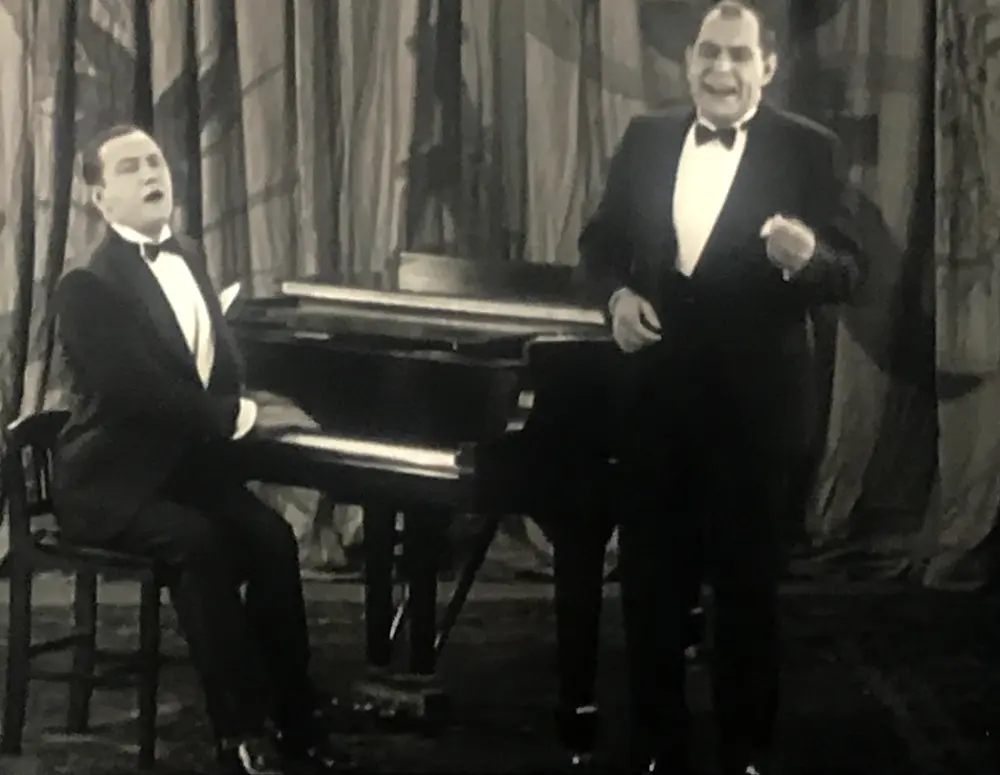
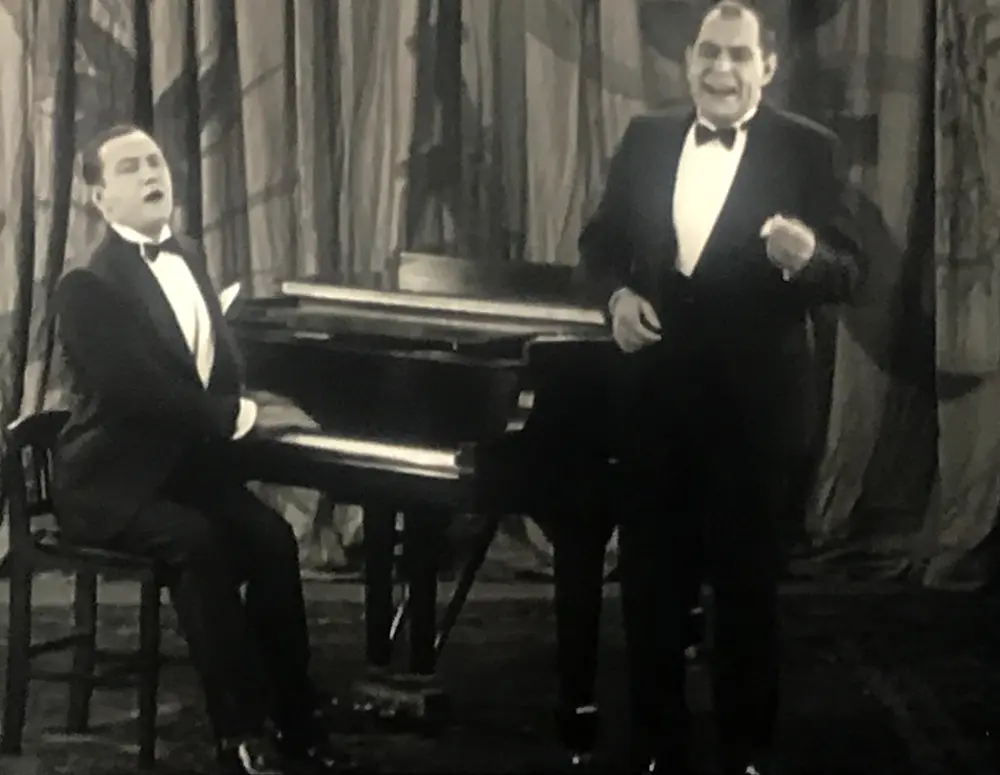
Gus Van and Joe Schenck, a duo celebrated as 'the Pennant Winning Battery of Songland,' were titans of the vaudeville circuit. Their presence in this early sound short speaks volumes about their popularity and the industry's desire to capture proven crowd-pleasers. For a brief, precious few minutes, we are granted a direct window into their stagecraft, their vocal interplay, and the simple, unadorned charm that made them stars.
"To understand the future of cinema, one must sometimes look to its most rudimentary beginnings, where the magic was less in illusion and more in the sheer act of capture."
The plot, as provided, is stark: 'Gus Van and Joe Schenck sing a few songs with piano accompaniment.' This brevity belies the depth of what such a performance meant then, and what it represents now. There is no narrative arc, no character development, no dramatic tension. Instead, the film is a pure exercise in performance capture.
Van and Schenck stand before the camera, delivering their numbers with a practiced ease that only comes from countless hours on stage. Their 'acting,' if one can call it that, is entirely rooted in their vaudeville personas. It’s an outward, engaging style, designed to project to the back row of a large theater, not for the intimate gaze of a camera lens. This distinction is crucial for appreciating the film.
What truly shines through, even in the primitive sound recording, is their vocal synergy. Gus Van, often the baritone, and Joe Schenck, typically the tenor, perfected a blend that was both rich and clear. Their timing was impeccable, a hallmark of professional vaudeville duos. Each song is delivered with a polish that suggests a deep understanding of audience engagement, even if the 'audience' here is an inanimate camera.
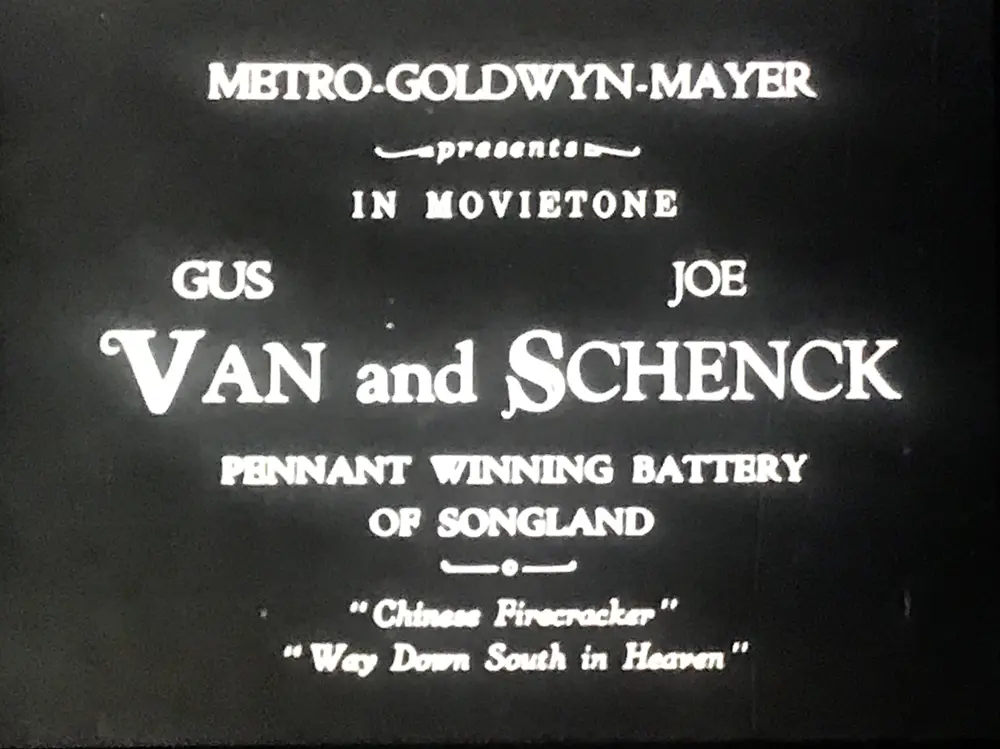
Their stage presence, though limited by the static camera, is palpable. There’s a natural rapport between them, a subtle exchange of glances, a shared smile that hints at years of performing together. This isn't just two men singing; it's a partnership in full swing, a well-oiled machine of musical entertainment. The piano accompaniment, while simple, provides a solid foundation, allowing their voices to take center stage.
One might observe Van occasionally gesturing, perhaps a slight lean into the microphone, or Schenck tapping his foot to the rhythm. These small, human touches are what elevate it beyond a mere recording. They are communicating, not just singing.
To speak of 'directing' in a modern sense for such a film is almost anachronistic. The 'director's' role here was primarily that of an archivist: positioning the camera, ensuring the performers were centered, and capturing the sound. There are no sweeping camera movements, no dramatic close-ups, no intricate mise-en-scène. The frame is static, a proscenium arch for the cinematic stage.
The cinematography is equally rudimentary. Lighting is functional, designed to illuminate the performers evenly rather than create mood or shadow play. The background is sparse, almost certainly a plain studio set, designed to not distract from the main event: the performers themselves. This simplicity, however, is not a flaw but a reflection of the era's technological limitations and artistic priorities. The goal was fidelity of sound and image, not artistic flourish.
Consider the contrast with later, more narratively driven films of the era, such as A Daughter of the Law or The Girl of the Golden West, which, even in their silent forms, prioritized visual storytelling. Here, the story is the song, and the visuals are merely the vehicle for its delivery.
The pacing is dictated by the songs themselves. Each number flows into the next without much interruption, creating a continuous, unhurried performance. There's no dramatic build-up or sudden shifts in tempo. It's a steady stream of entertainment, much like a segment of a live vaudeville show. The tone is consistently upbeat, charming, and professional, reflecting the duo's established stage personas.
They exude a cheerful confidence, a friendly demeanor that would have resonated with audiences seeking lighthearted escapism. There's an undeniable warmth emanating from their performance, a genuine enjoyment of their craft that transcends the grainy footage and crackling audio.
Yes, for very specific reasons. This film is a crucial piece of early cinematic history. It allows us to hear, rather than just imagine, the voices and performance styles of vaudeville legends who shaped American popular culture. It's a direct link to a bygone era of entertainment.
However, it's not 'entertaining' in the contemporary sense. There's no plot, no character development, and the technical quality is primitive. It serves as a historical document, a window into the evolution of sound film and the transition of stage performers to the screen. For anyone interested in the roots of American music, comedy, or cinema, it’s an invaluable, albeit brief, viewing experience. It works. But it’s flawed by modern standards.
This film works because it captures authentic, influential performers at a pivotal moment in technological history. It fails because it offers almost no narrative or visual sophistication, which are now standard expectations. You should watch it if you are a film historian, a musicologist, or simply fascinated by the raw, unfiltered beginnings of sound cinema.
My most unconventional observation about Van and Schenck 'the Pennant Winning Battery of Songland' is how its very mundanity becomes its greatest strength. In an age where every frame is meticulously crafted, every sound engineered, this film’s raw, unpolished nature feels radical. It’s not trying to be anything more than what it is: a recording.
Yet, in that simplicity lies a profound power. It forces us to confront the essence of performance, stripped of all cinematic artifice. It's a stark reminder that before CGI and complex narratives, the human voice and a charismatic presence were enough to enthrall. This film is a testament to the enduring appeal of pure, unadorned talent, captured at the very moment technology began to make such capture possible.
Van and Schenck 'the Pennant Winning Battery of Songland' is not a film in the conventional sense, but rather a vital historical document. It offers an unparalleled, if brief, auditory and visual window into a pivotal moment in entertainment history: the transition of vaudeville's stars to the burgeoning medium of sound film. Its rudimentary technical qualities and lack of narrative are not flaws to be judged by modern standards, but rather characteristics that underscore its profound historical importance.
For those with a deep appreciation for the origins of cinema, the evolution of popular music, or the sheer, unvarnished talent of early 20th-century performers, this short is an absolute must-see. It's a reminder that sometimes, the greatest value lies not in what a film shows us, but in what it preserves. It’s a foundational text for understanding where we came from, and for that alone, it earns its place in the canon. While it may not thrill, it certainly educates and illuminates.
Community
Log in to comment.