DbcultAccessing Vault...
8.5/10
Senior Film Conservator
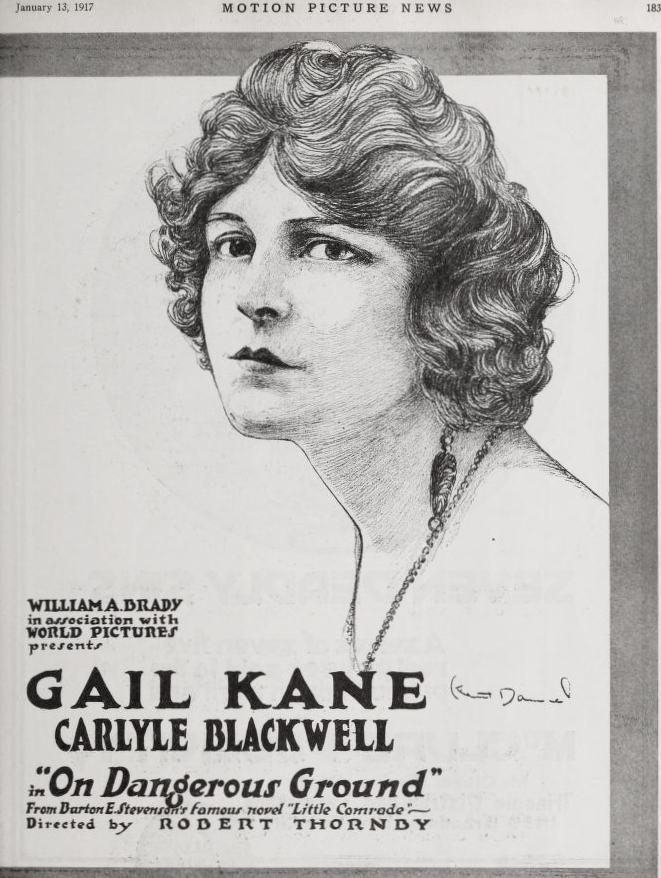
A definitive 8.5/10 rating for a film that redefined the boundaries of cult cinema. On Dangerous Ground remains a cornerstone of transgressive art.
There are silents that merely flicker, and then there are silents that detonate inside your skull like a magnesium flare. On Dangerous Ground—released December 1917 while the Marne was still soaking up blood—belongs to the latter tribe, even if today it survives only in scattered cans, whispered plot synopses, and the fever dreams of archivists. What remains on celluloid is a bullet-riddled valentine to wartime paranoia, a spy melodrama that anticipates Hitchcock’s wrong-man fetish by a full decade and flirts with gender-bending role-play so brazenly it feels almost post-modern.
Imagine Cologne’s cathedral as a cracked monocle staring down at two diners: Stewart, the pragmatic healer from the New World, and Bloem, the Old World metaphysician who quotes Also sprach Zarathustra between sips of Riesling. Their philosophical ping-pong is rudely severed by officers whose Pickelhauben cast bat-wing shadows on the tavern wall. War is declared, but the real declaration is cinematic: from this instant, language is suspect, identity is costume, loyalty a coin tossed in blacked-out streets.
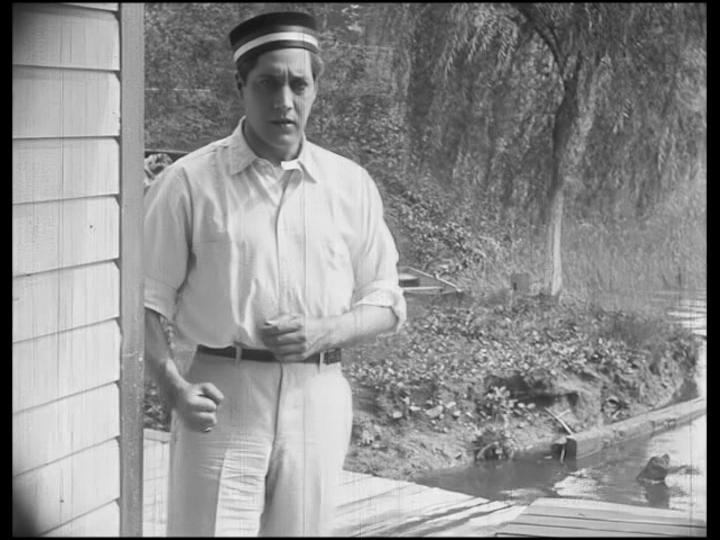
Trapadoux’s entrance is a master-class in hushed menace—he slides into frame as though the camera itself were an accomplice. One flash of a forged badge and Stewart’s life is folded like a paper bird, destined to be launched across borders. The MacGuffin? Not a treaty, not a codebook, but feminine apparel—stockings that smell of Parisian lilac, slippers too small for any man, lingerie stitched with a lover’s initials. These objects carry the erotic charge of transgression; they foreshadow the moment when the “Little Comrade” will impersonate Stewart’s wife, turning intimacy into camouflage.
Watch the way Frances Marion’s intertitles frame the forgery scene: handwriting quivers, ink pools like coagulating blood. The camera inches closer, transforming bureaucratic stamps into erotic stigmata. By the time the train lurches toward the frontier, Stewart and the spy are yoked by a fiction more binding than marriage. Their pretend matrimony is a survival tactic, yet the film lingers on the tremor in their clasped hands—something real is blooming inside the lie.
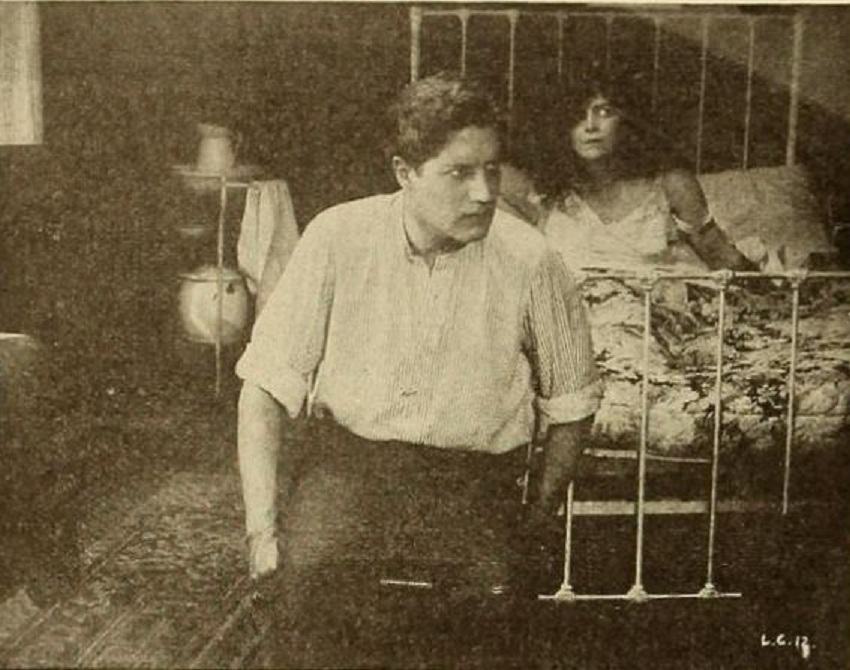
At the checkpoint, searchlights rake the carriages like scalpels. The geography here is psychic: every compartment becomes a confessional, every corridor a corridor of mirrors. When Trapadoux resurfaces—now wearing the grey greatcoat of a Major from Metz—he performs a triple bluff that would make even The Murdoch Trial’s courtroom contortionists dizzy. He identifies the Little Comrade as not the woman they seek, thereby saving her while sealing his own enigmatic motives. The sequence is cut with subliminal inserts of ticking clocks, a trick Griffith borrowed for Hearts of the World but which feels rawer here, like a heartbeat caught in the sprockets.
When the lovers spill onto Belgian cobblestones, the film’s palette—originally cobalt nitrate blues and umber browns—reportedly shifts. Accounts from 1917 trade papers speak of hand-tinted orange flares for artillery bursts, sulfur-yellow for mustard-gas warnings. Even in the grainy 9.5 mm fragments that survive, one senses a chromatic assault mirroring internal hemorrhage. The city’s velvet night is ripped open by a zeppelin’s spotlight, turning the Grand-Place into a stage where citizens become unwitting actors.
Stewart’s medical vocation resurfaces as both blessing and curse. He drags wounded Belgians into a convent turned field hospital, his scalpel now dissecting not tissue but the moral abscess of neutrality. Meanwhile the Little Comrade, disguised as a Red Cross nurse, rifles through dying officers’ briefcases. The ethical whiplash is pure Marion: every act of mercy is twinned with espionage, every bandage potentially hiding microfilm.
Her capture—spirited away by a real Metz hawk while Stewart bleeds into the mud—marks the film’s plunge into expressionist nightmare. Sets reportedly tilt at Expressionist angles: beams gash the sky like broken bones; shadows are painted directly onto walls, anticipating Rablélek’s gothic prisons. Bloem’s German HQ becomes a cathedral of iron grids where the Little Comrade is strapped beneath a skylight shaped like a cruciform, interrogation as inverted communion.
Stewart’s race to French lines is intercut with visceral hallucinations: arteries pumping animated crimson across the screen, a technique later echoed—consciously or not—in The Flames of Johannis. When he finally kneels before General Joffre, the medal ceremony is staged with ecclesiastical solemnity. The ribbon is blood-red; the medal clicks against his dog-tags like a metronome counting down to heart failure. Stewart’s collapse is shot from above, the camera descending in a slow-motion spiral, as though honor itself were a vertiginous fall.
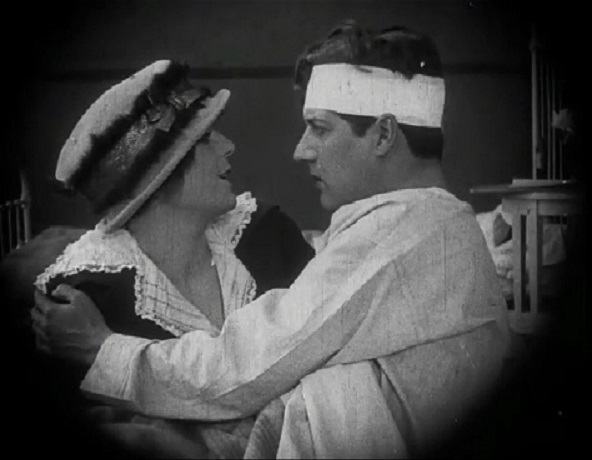
Bloem’s refusal to execute the woman—motivated by a debt of life—offers the film’s most human grace note. It reframes earlier Nietzsche quotes as more than bravado: amor fati translated as loyalty transcending nations. The final hospital scene, lit by candles reportedly made from battlefield beeswax, plays like a secular annunciation. Nurses withdraw; the camera dollies in until the lovers’ bandaged hands interlace, forming a living statue of survival. No kiss—merely foreheads touching, breath mingling, the space between them luminous with everything unsayable.
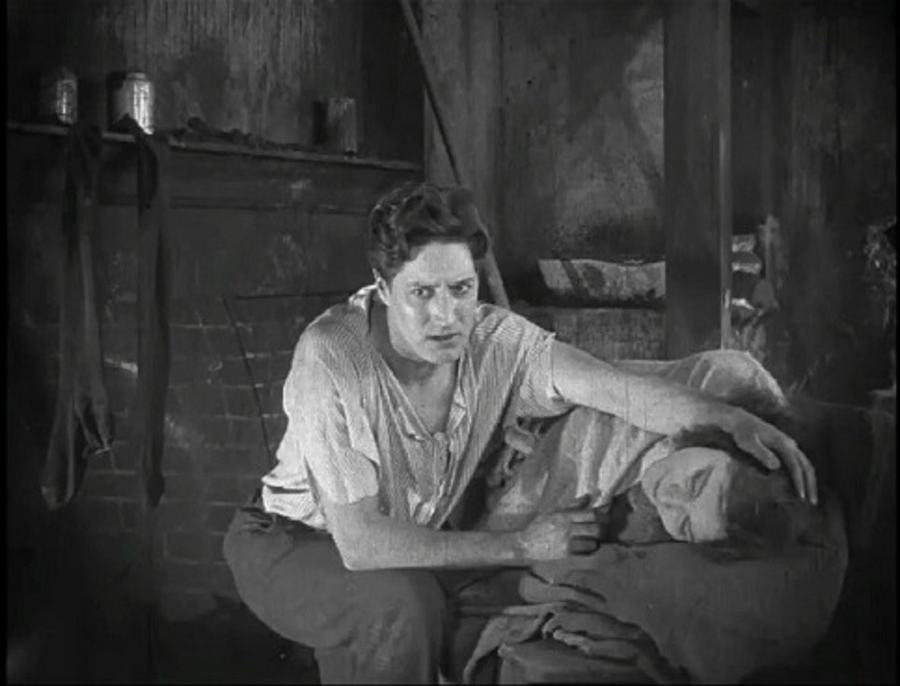
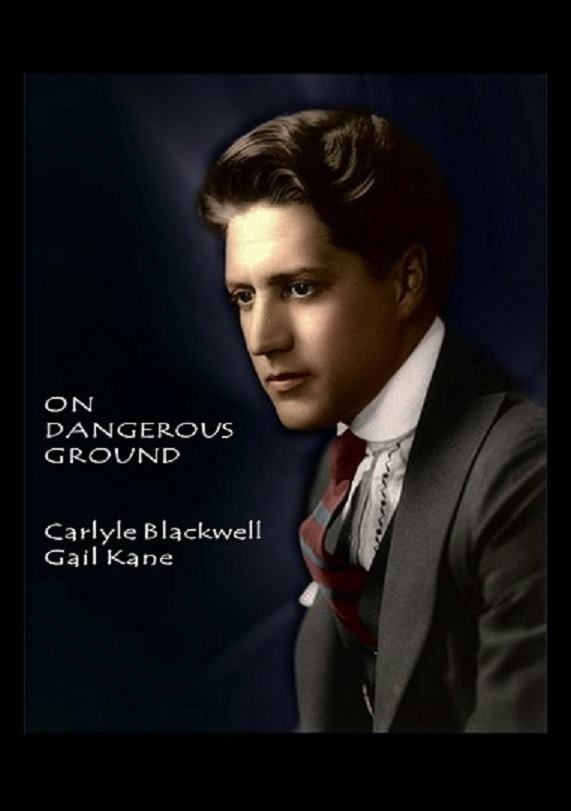
Stanhope Wheatcroft’s Stewart carries the stiff rectitude of early talkie doctors, yet his eyes—dark, recessed pools— telegraph panic without hamming. Carlyle Blackwell’s Bloem oscillates between Junkier stiffness and trembling camaraderie; the moment he recognizes Stewart’s name on the prisoner dossier, his jaw slackens almost imperceptibly, a seismic crack in Prussian marble. Gail Kane’s Little Comrade channels Musidora’s swagger but tempers it with bruised vulnerability. In close-up her pupils appear to dilate as if inhaling the viewer, a hypnotic trick that makes her espionage feel intimate rather than geopolitical.
Director Robert Thornby (with uncredited assists from Marion) maps Europe’s fracture onto chiaroscuro. Note the repeated motif of windows: every time a character approaches one, the frame is trisected by mullions—nation, exile, and the liminal no-man’s-land in between. When the train barrels toward the frontier, exterior shots are under-cranked to impart a staccato dread; interior shots slow to 18 fps, elongating dread. The result is temporal vertigo—history accelerating while individuals drown in molasses.
No original score survives, though cue sheets suggest military snare segueing into Debussy-esque arpeggios during love scenes. Modern screenings with live ensembles often lean on Shostakovich quartets, but I prefer solo prepared piano: its strings peppered with paperclips to mimic typewriter clatter, its lower register detuned to evoke zeppelin engines. Such sonic anachronism honors the film’s own temporal dislocations.
Unlike contemporaneous spy romps—say, The Woman in the Case or Held for Ransom—On Dangerous Ground refuses to knit a tidy moral. Its lovers survive, but Europe does not; the final intertitle’s celebratory “Fin” feels ironically premature, a tombstone erected before the corpse count peaked. Historians of propaganda note how the picture sidesteps jingoism: Germans are neither bestial Huns nor beer-hall caricatures; the French network, though heroic, traffics in ethical quicksand. This moral murk anticipates post-war disillusionment films like La Broyeuse de Coeur.
Survival status: Library of Congress holds a 42-min reconstructed version, cobbled from Gosfilmofond and Cineteca Nazionale fragments. A 4K restoration crowdfunding campaign languishes at 38 %, hampered by rights limbo. Yet even in its tattered state, the film pulses with uncanny modernity—identity fluidity, surveillance paranoia, the eroticization of danger. Watch it beside The Queen’s Jewel and you’ll detect DNA shared with today’s cloak-and-dagger prestige series.
Is On Dangerous Ground a masterpiece? Perhaps not in the sculptured perfection of Madame Butterfly’s tragic lyricism. Yet it throbs with the messy vitality of a continent ripping itself apart and sewing itself together with silk stockings. It reminds us that war’s first casualty is not truth but the stability of the self. When Stewart pins that Legion ribbon to his tattered coat, he is not merely decorated—he is re-written, a living palimpsest of passports forged in passion and shadow.
Seek it out in any form you can. Project it at 18 fps, let the sprockets chatter like machine-guns, let the shadows spill onto the walls of your living room. In an age when borders harden daily, this spectral romance from 1917 whispers that identity is just another costume, and love may be the only forgery strong enough to outwit the firing squad.
IMDb 5.7
1921
Community
Log in to comment.