DbcultAccessing Vault...
Cult Review
Senior Film Conservator
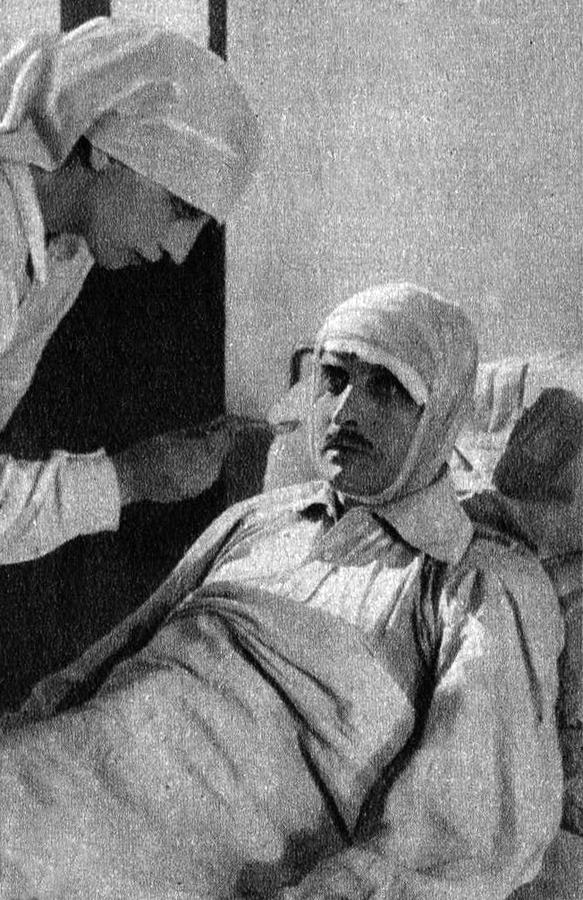
In the pantheon of early French cinema, certain works flicker with a luminosity that transcends their physical age, and De la coupe aux lèvres is undeniably one such artifact. Directed by the often-underappreciated Guy du Fresnay, this 1920 production is not merely a relic of the silent era; it is a sophisticated exploration of the human condition that utilizes the visual language of its time to articulate anxieties that remain strikingly contemporary. To watch this film today is to witness a bridge between the theatrical artifice of the 19th century and the burgeoning psychological realism that would soon define the medium.
Du Fresnay’s directorial hand is characterized by a meticulous attention to spatial dynamics. He understands that in a silent medium, the environment must speak where the actors cannot. The interiors in this film are not just sets; they are psychological landscapes. The heavy drapes, the ornate furniture, and the stark shadows cast by primitive lighting rigs create an atmosphere of claustrophobia that mirrors the characters' social entrapment. While many American films of the period, such as The Money Mill, focused on the frantic energy of capitalist pursuit, Du Fresnay lingers on the stillness of the French parlor, finding drama in the micro-expressions of his leads.
The cinematography utilizes a primitive but effective form of chiaroscuro. By manipulating light to isolate Armand Tallier in moments of moral crisis, the film achieves a level of intimacy that was rare for 1920. Tallier’s performance is a masterclass in restraint. Unlike the exaggerated gesticulation common in early silents, he employs a subtle shifting of the eyes and a tightening of the jaw that conveys more than a thousand title cards ever could. He presents a man whose nobility is constantly at odds with his circumstances, a theme that resonates with the domestic struggles seen in A Doll's House.
Marguerite Madys brings a different energy to the screen. Her presence is ethereal, yet grounded by a palpable sense of longing. In the narrative economy of the film, she represents the 'cup'—the elusive vessel of happiness that remains just out of reach. Her interactions with Paul Capellani provide the film’s emotional core, creating a friction that drives the plot toward its inevitable, somber conclusion. Madys avoids the tropes of the 'damsel in distress,' instead portraying a woman navigating a minefield of societal norms with a quiet, desperate intelligence. Her character’s trajectory reminds one of the vulnerability found in The Waif, though Madys operates within a much more rigid class structure.
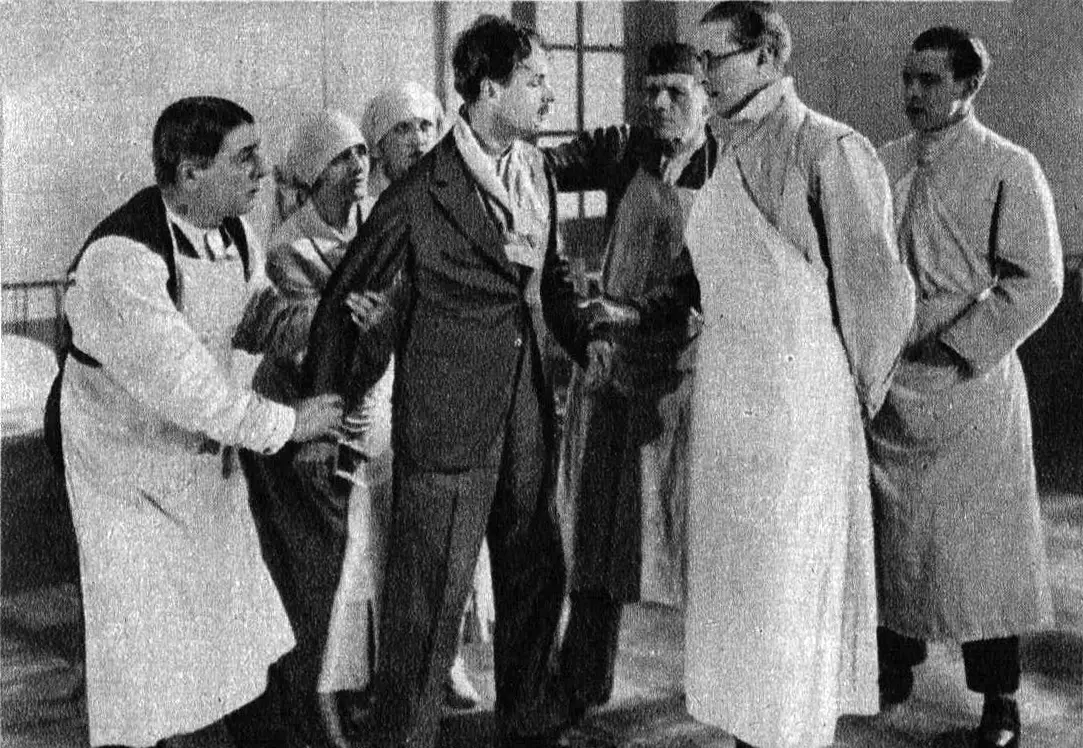
One cannot discuss 1920 French cinema without acknowledging the shadow of the Great War. While De la coupe aux lèvres is not a war film, the exhaustion of the era permeates every frame. There is a sense that the old world is crumbling, yet the new one has not yet been born. This liminal space is where the characters reside. The film’s obsession with the 'slip'—the failure to achieve one’s goals despite being on the precipice of success—is a direct reflection of the collective trauma of a generation that saw its future decimated. It shares a certain fatalistic DNA with Scandinavian works like Et Syndens Barn, where the sins of the past and the pressures of the present collide with devastating force.
The screenplay by Du Fresnay himself is remarkably lean. He trusts the audience to interpret the subtext of the social gatherings and the clandestine meetings. The pacing is deliberate, allowing the tension to simmer. It lacks the populist bombast of something like Judith of Bethulia, opting instead for a chamber-drama intensity that anticipates the French poetic realism of the 1930s. The film asks difficult questions about the cost of social mobility. Is the pursuit of a higher status worth the sacrifice of one’s authentic self? The answer provided is a resounding, bittersweet 'no.'
Technically, the film displays a sophisticated use of tinting. Sepia tones for the domestic interiors transition into cold blues for the exterior night scenes, creating a visceral sense of temperature and mood. The editing, while linear, utilizes the 'Kuleshov effect' intuitively, cutting between the longing gazes of the protagonists and the objects of their desire—be it a letter, a piece of jewelry, or a distant horizon. This visual rhyming elevates the film from a mere melodrama to a piece of visual poetry.
In comparison to the rugged Americanism of High Pockets or the cultural explorations of His Birthright, De la coupe aux lèvres feels intensely European—insular, intellectual, and deeply concerned with the weight of history. It does not offer the easy catharsis of Winning Grandma or the theatrical comedy of The Earl of Pawtucket. Instead, it demands that the viewer sit with the discomfort of unresolved longing.
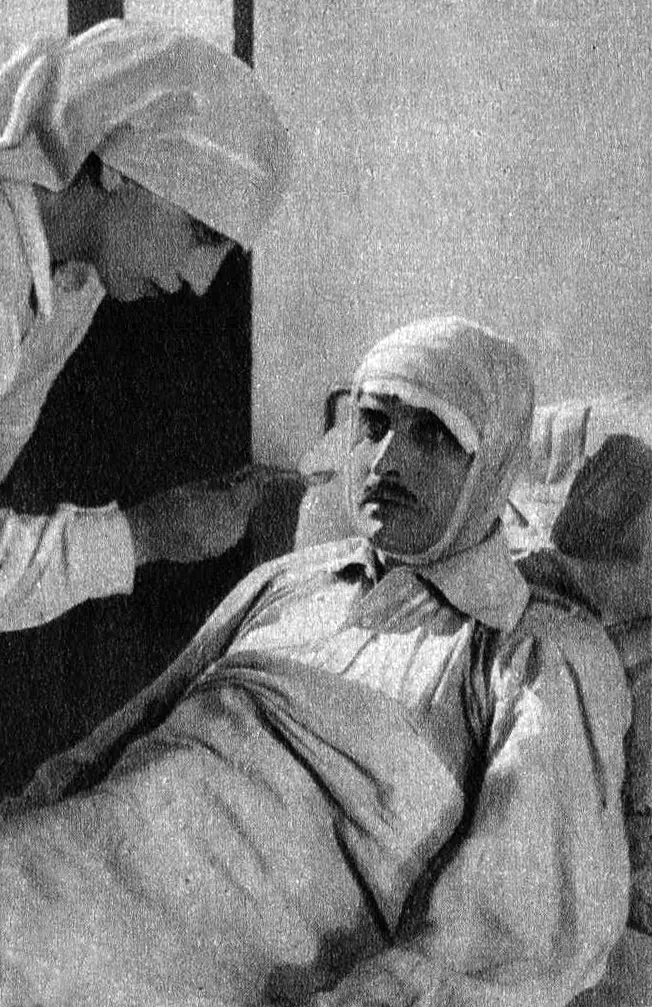
The supporting cast, led by the reliable Paul Capellani, provides a sturdy framework for the central trio. Capellani, a veteran of the screen, brings a gravitas that anchors the more flighty elements of the romance. His presence represents the 'lip' in the film’s title—the barrier that prevents the cup from being tasted. The chemistry between the actors is palpable, achieved through a shared understanding of the film’s rhythmic requirements. They move through the frames with a choreographed precision that suggests they are puppets of a destiny they cannot control, a motif similarly explored in The Galley Slave.
There is a sequence midway through the film, involving a formal dinner party, that stands as a highlight of silent era social satire. Du Fresnay uses close-ups to highlight the hypocrisy of the guests—the gluttony, the whispered gossip, and the cold appraisal of the protagonist’s worth. It is a scene that could have easily fit into the socio-political critique of Barbarous Mexico, albeit in a much more refined, continental setting. The contrast between the opulent table and the emotional starvation of the characters is striking.
As we analyze the film from a century’s distance, its relevance hasn't waned. The struggle to bridge the gap between our intentions and our outcomes is a universal human experience. Du Fresnay’s work serves as a reminder that the 'slip' is often where the most profound truths of our lives are found. While it may lack the technical polish of later sound films, it possesses an emotional honesty that is frequently absent in modern blockbusters. It doesn't need the spectacle of St. Elmo or the intricate plotting of Hazel Kirke to make its point. It relies on the power of the image and the truth of the performance.
The film’s conclusion is a masterstroke of restraint. There are no grand speeches, no swelling orchestras—only the quiet realization of loss. It is a moment of pure cinema that resonates long after the final frame has faded. For those interested in the evolution of French film, or for those who simply appreciate a story told with profound empathy and visual flair, De la coupe aux lèvres is an essential viewing experience. It is a haunting, beautiful reminder that life is lived in the transitions, in the breath between the cup and the lip, and in the silent spaces where our truest selves reside. Like Imar the Servitor, it examines the servant-master dynamic of fate, ultimately suggesting that we are all, in some way, at the mercy of forces far greater than our own will.
This review was penned by a dedicated cinephile with a penchant for the forgotten corners of film history. In a world of digital noise, the silence of Guy du Fresnay speaks volumes.
IMDb —
1924
Community
Log in to comment.