DbcultAccessing Vault...
Cult Review
Senior Film Conservator
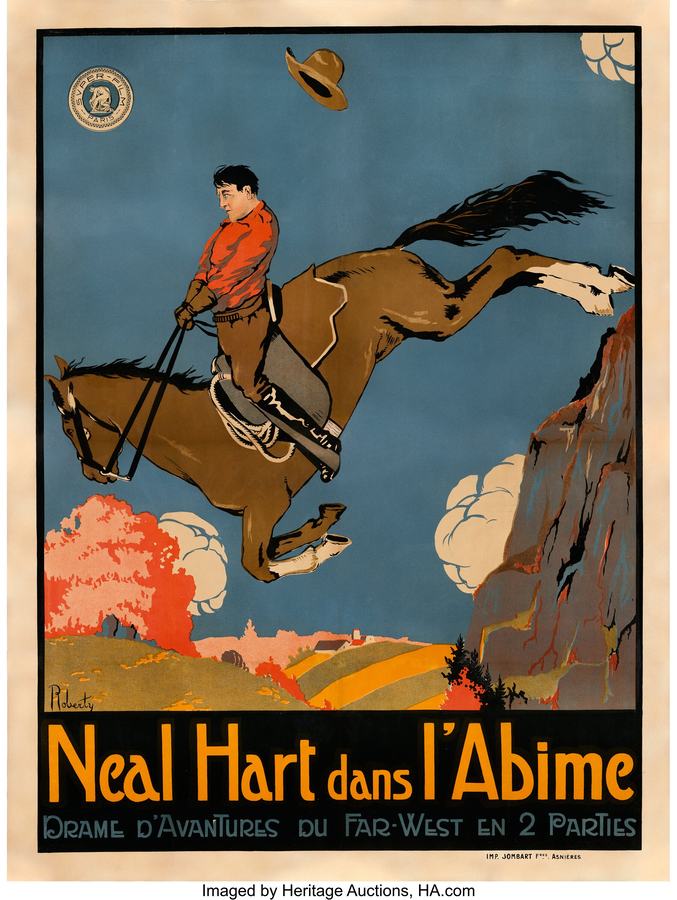
The year 1921 stands as a pivotal juncture in the evolution of American cinema, a time when the visual language of the Western was shedding its melodramatic infancy and adopting the rugged, muscular prose of the frontier. Amidst this transition, Get Your Man emerges not merely as a genre piece, but as a fascinating study in character-driven suspense. Directed with a keen eye for the spatial dynamics of the wilderness, this film showcases Neal Hart at the zenith of his screen presence. While many contemporary audiences might gravitate toward the slapstick energy of Billy Blazes, Esq., Hart’s work offers a more somber, deliberate exploration of the lawman’s psyche.
The plot, penned by the collaborative efforts of Tom J. Hopkins and Henry Christeen Warnack, avoids the simplistic tropes of the white-hat-versus-black-hat dichotomy. Instead, it presents a protagonist who understands that to catch a wolf, one must occasionally don the pelt. Buck Wilson, portrayed by Hart with a parsimonious use of gesture that anticipates the stoicism of Gary Cooper, is a Marshal who operates on the periphery of the law he represents. His mission to infiltrate Wolf Dean’s gang is a narrative gambit that requires a level of psychological fortitude rarely seen in the early 1920s Western landscape.
One of the most compelling sequences in the film occurs not during a shootout, but around a card table. In the silent era, the tension of a poker game had to be conveyed through the flickering of eyes, the tightening of a jaw, and the rhythmic flow of the edit. When Buck Wilson loses his money to Wolf Dean, it is a masterclass in performative deception. We see Wilson’s feigned frustration, a mask that hides the cold, analytical precision of a hunter setting a trap. This scene serves as the film’s narrative fulcrum, shifting the story from a pursuit to an infiltration.
Unlike the urban sophistication found in It Happened in Paris, the setting here is sparse and utilitarian. The saloon is a microcosm of the lawless territory, a place where fortunes are lost and moral compromises are brokered. The cinematography captures the smoke-filled atmosphere with a surprising depth of field, emphasizing the isolation of the characters within their own strategic machinations. The contrast between the open vistas of the claim-jumping sites and the claustrophobic interiors of the outlaw hideouts heightens the sense of impending peril.
When we look at the broader cinematic landscape of the era, Get Your Man occupies a unique space. It lacks the overt theatricality of Comrade John, yet it possesses a grit that makes it more relatable than the stylized heroics of its peers. There is a sense of verisimilitude in the way the claim-jumping is depicted—not just as a crime, but as a violation of the burgeoning social contract of the West. The film touches upon themes of property and identity that were also being explored in different contexts in films like The Stepping Stone or the more existential Det finns inga gudar på jorden.
The inclusion of Collette Forbes provides a necessary emotional anchor. While female roles in early Westerns were often relegated to the 'damsel in distress' archetype, Forbes brings a quiet resilience to her performance. Her interactions with Hart’s Wilson suggest a world of unstated history and future possibilities, adding layers to a script that might otherwise have remained purely procedural. This nuance is reminiscent of the character work seen in Out of the Shadow, where the interplay between light and darkness is both literal and metaphorical.
The direction of Get Your Man (often attributed to the writers or uncredited hands in various archives) shows a sophisticated understanding of the Western’s visual grammar. The use of natural light in the outdoor sequences creates a stark, high-contrast look that mirrors the moral clarity Wilson seeks to restore. The editing is brisk, particularly during the claim-jumping sequences, which are choreographed with a frantic energy that prefigures the modern action sequence. Unlike the more leisurely pace of The Hayseeds Come to Sydney, this film never loses its narrative momentum.
Furthermore, the film’s treatment of the antagonist, Wolf Dean, played with a menacing charm by Charles Brinley, is noteworthy. Dean is not a caricature of evil but a rational actor in a lawless land. He is a businessman whose commodity is theft. This pragmatic approach to villainy makes the stakes feel higher; Wilson isn't just fighting a 'bad man,' he's fighting a system of exploitation. This thematic depth is something one might expect from a more overtly social drama like Judge Not, yet it finds a comfortable home here in the guise of a Western.
Neal Hart remains one of the most underrated figures of the silent era. His physicality was his greatest asset; he moved with the grace of a man who spent more time in the saddle than on a stage. In Get Your Man, his performance is a rebuttal to the overly expressive 'face-acting' common in the period. He allows the camera to find the emotion in his stillness. This approach provides a fascinating contrast to the more flamboyant style of L’illustre attrice Cicala Formica or the comedic timing required in Reilly’s Wash Day.
The film also benefits from its writers' backgrounds. Tom J. Hopkins and Henry Christeen Warnack were craftsmen who understood the necessity of a tight structure. Every scene in Get Your Man serves the dual purpose of advancing the plot and deepening the characterization. There is no 'filler,' no unnecessary diversion into the comedic subplots that often bloated silent features like The Fotygraft Gallery. Instead, we are given a lean, efficient narrative that respects the audience's intelligence.
To fully appreciate Get Your Man, one must view it through the prism of its contemporaries. While Via Wireless explored the encroaching modernity of technology, Hart’s film remains rooted in the primal conflicts of the earth. It shares a certain thematic kinship with Une histoire de brigands in its fascination with the outlaw lifestyle, yet it maintains a distinctly American perspective on the inevitability of the law. Even when compared to the social commentary of The Penny Philanthropist, Get Your Man stands out for its visceral commitment to its genre roots.
The film’s climax, where the 'jumped' claim becomes the site of a final reckoning, is a stunning piece of action filmmaking. The choreography of the horses, the dust-choked atmosphere, and the final confrontation between Wilson and Dean are handled with a precision that belies the primitive equipment of the era. It is a reminder that the essence of cinema—movement, conflict, and resolution—was fully formed even a century ago.
In the digital age, where we are inundated with high-definition spectacles, there is a profound beauty in the grainy, flickering frames of a film like Get Your Man. It captures a world that was already vanishing when the cameras started rolling—a world of vast distances and personal codes of honor. The film is a testament to the power of the silent image to convey complex moral dilemmas without the need for a single spoken word.
The relationship between Buck Wilson and the men he hunts is a dance of mutual recognition. They are all products of the same harsh environment, separated only by the choices they make. This nuance elevates the film above the standard 'B-Western' fare of the time, such as Red, White and Blue Blood. It is a work of genuine artistic merit that deserves to be discussed alongside the better-known classics of the silent era.
Ultimately, Get Your Man is more than just a story about a Marshal and a gang of thieves. It is a meditation on the nature of duty and the personal cost of justice. Neal Hart’s Buck Wilson is a hero for the ages—not because he is invincible, but because he is willing to lose everything, including his reputation, to do what is right. In an era of cinematic giants, this film proves that even the quietest voices can leave the most lasting echoes. The craftsmanship of Hopkins and Warnack, combined with Hart’s indelible presence, ensures that this 1921 gem remains a vital chapter in the history of the American West on film.
As we look back at the cinematic landscape of a century ago, we find that the themes of Get Your Man—betrayal, redemption, and the search for order in a chaotic world—are as relevant today as they were in the silent theaters of 1921. It is a film that rewards close viewing, offering a glimpse into the soul of an era that defined the American mythos. Whether you are a scholar of silent film or a casual fan of the Western, this is a journey into the heart of the frontier that should not be missed.
IMDb —
1916
Community
Log in to comment.