DbcultAccessing Vault...
Cult Review
Senior Film Conservator
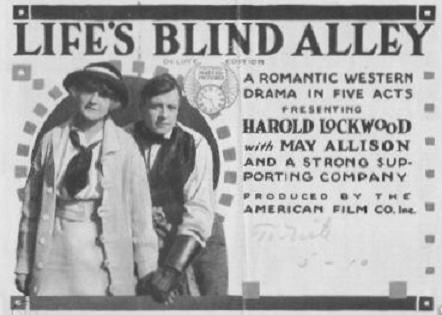
The silent era is frequently mischaracterized as a period of binary moralities and melodramatic simplicity, yet Tom Ricketts’ 1916 opus, Life's Blind Alley, stands as a staggering refutation of such reductive thinking. This is a film that breathes the stale air of disappointment, a narrative that replaces the expected triumphs of the frontier with a psychological stalemate that feels remarkably modern. In an age where cinema was still finding its feet, Ricketts dared to explore the architecture of regret, building a house of cards that collapses not into a heap, but into a permanent, suffocating structure of social obligation.
At the center of this vortex is Walt Landis, portrayed with a brooding, stolid intensity by William Tedmarsh. Landis is the quintessential self-made man who discovers that material success is a hollow vessel when devoid of legacy. His desire for Helen Keating (May Allison) isn't merely romantic; it is an acquisition, a final piece of the ranching puzzle. When Helen chooses the dissolute Fred Sherwood (played with a convincing, greasy charm by Harold Lockwood), the film pivots from a standard romance into something far more acerbic. The introduction of Rose McKee through a letter found in a box of collars is a stroke of narrative genius that highlights the transactional and often desperate nature of early 20th-century companionship.
This "collars and correspondence" subplot serves as a poignant commentary on the industrialization of intimacy. Much like the protagonists in David Harum, the characters here are bartering for a sense of belonging in a world that views them as mere units of production. Rose is not a savior; she is a reaction to a void. Her marriage to Walt is a contract signed in the ink of loneliness, a theme that Ricketts explores with a visual austerity that mirrors the harsh landscapes of the American West.
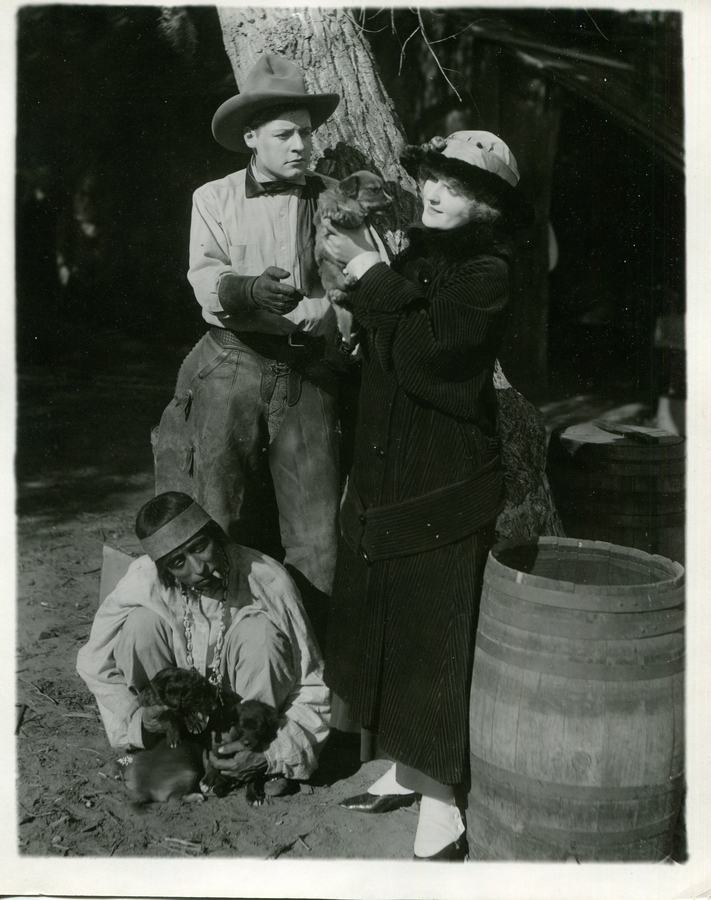
The narrative engine truly ignites when the four principals are confined to the claustrophobic limits of the Landis ranch. This is where Ricketts’ direction shines, utilizing the space to heighten the friction between the two couples. The "therapeutic" exile intended to cure Fred’s laziness instead becomes a breeding ground for a strange, cross-pollinated infidelity. The irony is thick: the industrious Walt finds himself tempted by the very woman who rejected his stability, while the neglected Rose finds solace in the arms of a man whose only talent is his lack of ambition.
In comparing this to the atmospheric tension found in Judith of the Cumberlands, one notices a shift from external tribal conflict to internal psychological warfare. Life's Blind Alley doesn't need a feud to generate stakes; it relies on the quiet, agonizing realization that one has married the wrong person. The flirtation between Helen and Walt is particularly venomous. It is born of boredom and spite, a far cry from the star-crossed lovers usually depicted in this era’s output. It reminds the viewer of the moral ambiguity seen in The Iron Ring, where the bonds of matrimony are less a sanctified union and more a set of rusted shackles.
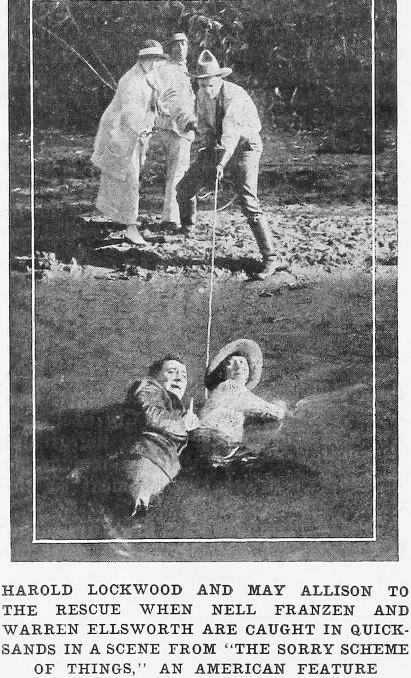
The film’s most famous sequence—the quicksand rescue—is a masterclass in suspense and moral inquiry. As Rose and Fred are literally being consumed by the earth, Walt and Helen stand as silent spectators to their own potential liberation. For a few agonizing seconds, the film asks the audience: What is the price of a second chance? The hesitation on their faces is more terrifying than the physical danger of the mire. It is a moment of pure, unadulterated darkness that predates the nihilism of film noir by decades.
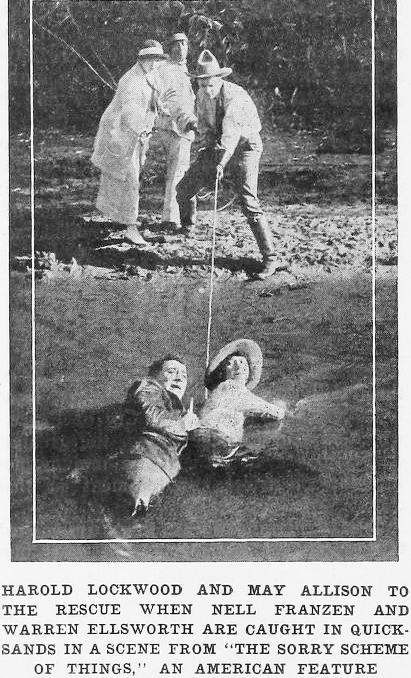
This sequence serves as a physical manifestation of the "blind alley" mentioned in the title. Throughout the film, characters seek exits from their self-imposed prisons, only to find that every path leads back to the same wall. The rescue, when it finally comes, is not an act of grace; it is an act of weary duty. They save their spouses because they lack the courage to be monsters, yet they are condemned to live as ghosts. This lack of catharsis is what elevates the film above contemporary works like Bristede Strenge, which often sought more traditional resolutions for their tortured protagonists.
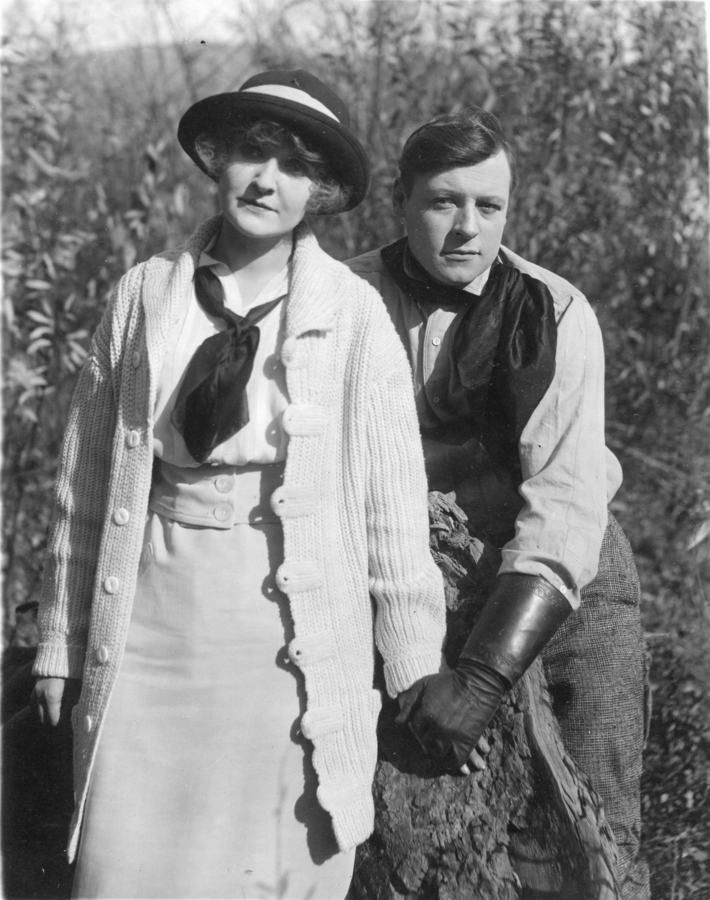
May Allison and Harold Lockwood were one of the screen's great early duos, but here, their chemistry is weaponized against the audience's expectations. Allison’s Helen is not a damsel, but a catalyst for discord, her performance layered with a restless energy that suggests a mind trapped in a body meant for socialite frivolity. Lockwood, usually the hero, leans into Fred’s pathetic nature, making his eventual romance with Rose feel like a desperate huddle between two drowning people rather than a grand passion.
The cinematography, though limited by the technology of 1916, makes exceptional use of natural light and the oppressive vastness of the ranch. The interiors are shadowy and cramped, emphasizing the domestic trap, while the exteriors, particularly the quicksand flats, feel like an alien landscape where human morality has no jurisdiction. It is a visual language of isolation that shares a kinship with God and the Man, where the environment itself acts as a judge and jury for the characters' transgressions.
We must consider the context of the film's release. In 1916, the American divorce rate was climbing, and the rigid structures of Victorian morality were beginning to fray under the pressure of modernity. Life's Blind Alley captures this cultural anxiety with surgical precision. It asks whether a woman should remain in a marriage that offers no spiritual or emotional nourishment, a question also posed with varying degrees of radicalism in Should a Woman Divorce?. However, Ricketts’ film is more pessimistic; it suggests that even if one could escape, the scars of the attempt would render the subsequent freedom meaningless.
The film also touches upon the class dynamics of the era. Fred’s laziness is presented as a moral failing, but it is also a symptom of his displacement. He is a man of the city, or at least of leisure, thrust into a world of manual labor and rugged individualism. His failure to adapt is contrasted with Walt’s stoic work ethic, yet the film refuses to reward Walt for his virtue. In the end, Walt’s hard work only earns him the privilege of supporting a wife who doesn't love him and a partner who resents him. This subversion of the American work ethic is a daring move for a film of this vintage.
Looking back from a century’s distance, Life's Blind Alley feels less like a relic and more like a premonition. It anticipates the domestic dramas of the 1950s and the psychological thrillers of the 1970s. While films like Intrigue or Stage Struck focused on the glamour and peril of external adventures, Ricketts found a more profound terror in the quiet ticking of a clock in an unhappy home.
The ending is perhaps the most haunting aspect of the entire production. There are no grand speeches, no reconciliations, and no tragic deaths to provide a clean break. The characters simply return to their lives. The "blind alley" is not a dead end where one stops; it is a circular path where one continues to walk without hope of progress. It is a sophisticated, albeit bleak, conclusion that demands much from its audience. It refuses to offer the easy comfort of a moral lesson, opting instead for the cold reality of endurance.
Life's Blind Alley is a vital piece of cinematic history that deserves a modern reappraisal. It eschews the flamboyant theatrics of A Mexican Mine Fraud for a grounded, visceral exploration of human frailty. It is a film about the choices we make when we think no one is watching, and the lives we lead when we realize we are stuck with those choices. For fans of silent cinema, it is an essential viewing experience; for students of human nature, it is a sobering mirror.
Rating: A Masterpiece of Melancholy
Note: For those interested in further explorations of the "fallen man" trope in silent cinema, I highly recommend checking out The Deserter or the Danish classic Uden Fædreland for a comparative look at how different cultures handled the theme of social exile during this period.
IMDb 6.2
1930
Community
Log in to comment.