DbcultAccessing Vault...
7.2/10
Senior Film Conservator
A definitive 7.2/10 rating for a film that redefined the boundaries of cult cinema. Getting Gertie's Goat remains a cornerstone of transgressive art.
To approach Getting Gertie's Goat is to step into a time capsule of pure, unadulterated cinematic velocity. This isn't merely a relic of the silent era; it is a meticulously calibrated machine of comedic timing that leverages the burgeoning language of film to explore the timeless friction between generational authority and youthful impulse. While contemporary audiences might initially dismiss the 'elopement' trope as a quaint vestige of a bygone moral landscape, the film’s execution reveals a subversive undercurrent that rivals the psychological depth found in weightier dramas like Crime and Punishment. Here, the 'crime' is the subversion of paternal will, and the 'punishment' is a series of escalating physical calamities.
The film centers on a young couple, portrayed with a frantic, wide-eyed charm by James Harrison and Vera Steadman. Their chemistry is not built on dialogue—which was, of course, an impossibility—but on a synchronized physical vocabulary. In the early 1920s, the 'Christie Comedies' style was beginning to distinguish itself from the chaotic 'pie-in-the-face' antics of Mack Sennett, opting instead for situational irony and character-driven stakes. This film is a quintessential example of that evolution, presenting a narrative that feels more structured than the dreamlike drift of Sleeping Beauty, yet remains tethered to the visceral thrills of the chase.
The pivot point of the entire plot is the Judge, played with a delightful, crusty pomposity by Lincoln Plumer. In the pantheon of silent film antagonists, the Judge represents more than just a disapproving father; he is the literal embodiment of the Law. When he inadvertently comes into possession of the marriage license, the thousand-dollar bankroll, and the steamer tickets, he isn't just holding paper and currency—he is holding the couple's autonomy. This thematic weight elevates the film beyond simple slapstick, echoing the social pressures observed in Bespridannitsa, where economic and legal structures dictate the boundaries of romantic freedom.
The thousand-dollar bankroll, in particular, serves as a fascinating MacGuffin. In 1923, this was a staggering sum, representing not just a honeymoon, but an entire future. The way the camera lingers on these items—the 'Holy Trinity' of the elopement—highlights the material stakes of the farce. It creates a sense of desperation that justifies the heroine's radical next move: the fire scare.
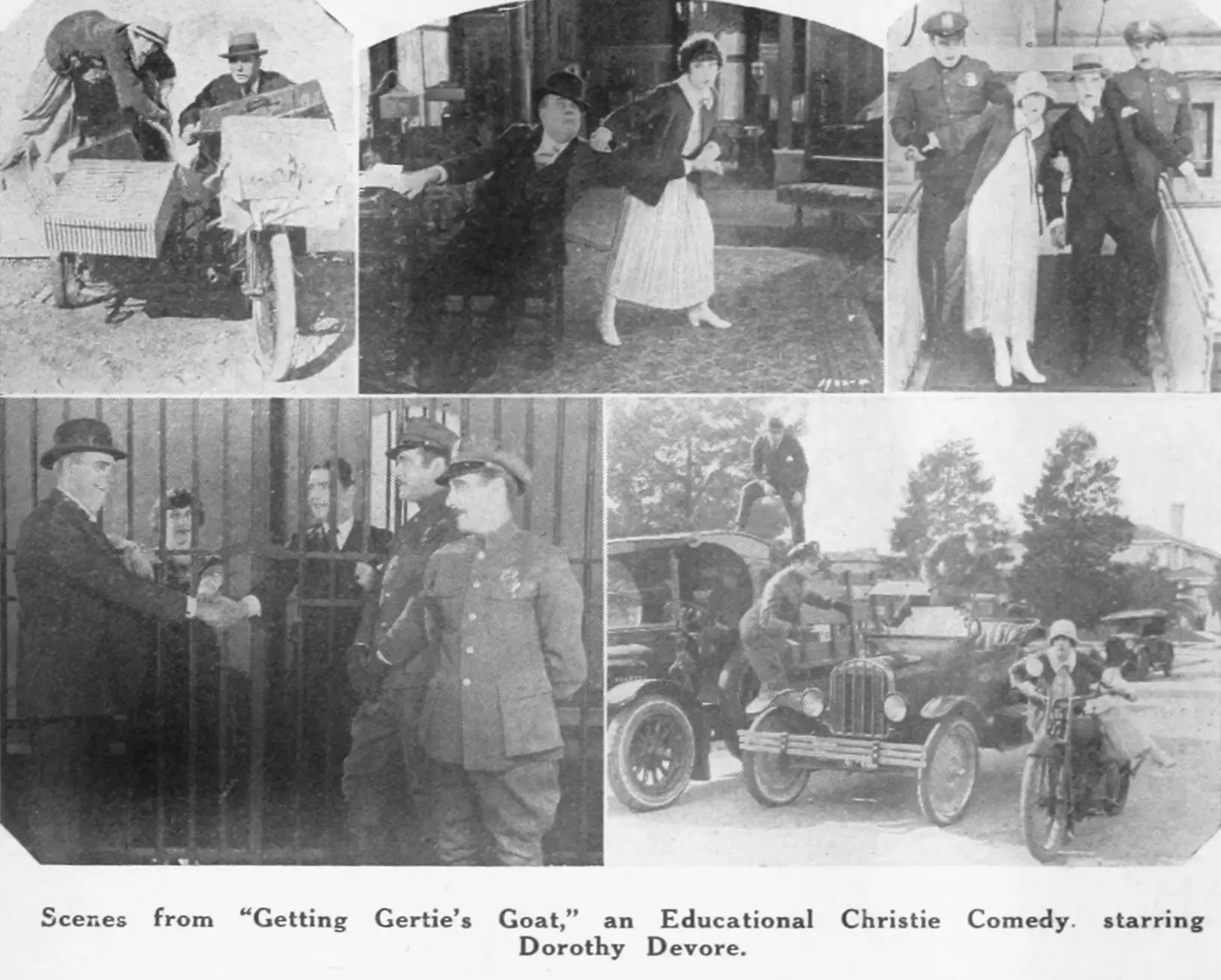
Vera Steadman’s character, Gertie, is the true engine of the film’s second act. Eschewing the 'damsel in distress' archetype often found in films like The Battle of Life, Gertie takes a proactive, almost Machiavellian approach to reclaiming her agency. The sequence where she initiates a fire scare in the courtroom is a masterclass in editing and set design. The transition from the orderly, somber environment of the court to a cacophony of panic is handled with a rhythmic precision that mirrors the internal anxiety of the characters.
The visual gag of the 'fire'—which is more of a smoke-filled ruse—allows for a brilliant display of physical comedy from the supporting cast, including Billy Bletcher and Babe London. The way the Judge scrambles to protect his dignity while the courtroom dissolves into anarchy provides a satisfying reversal of power. It is a moment of pure carnivalesque subversion, where the high is brought low, and the marginalized (the young couple) seize the opportunity to reclaim what is rightfully theirs.
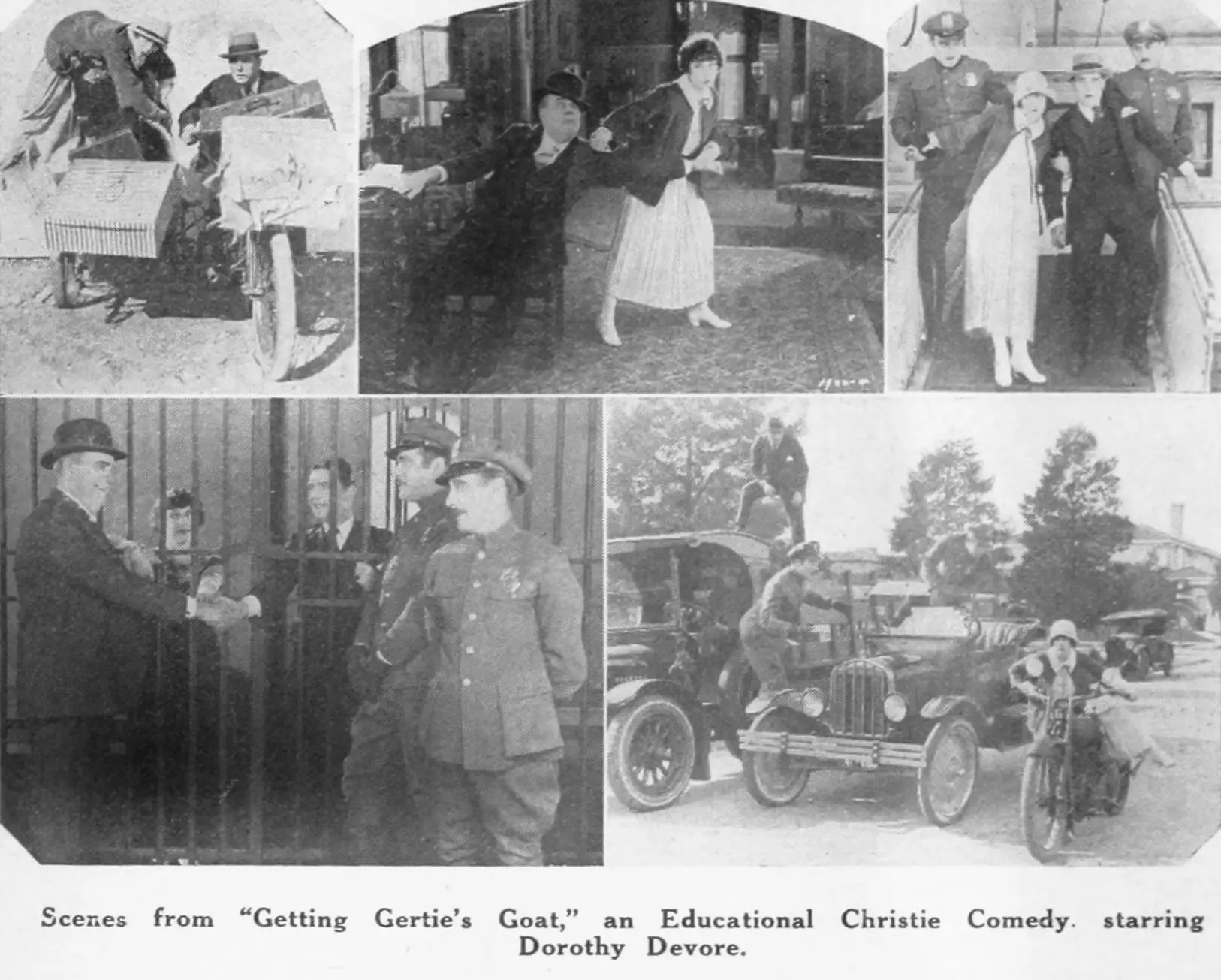
If the courtroom scene is the film’s intellectual peak, the motorcycle chase is its visceral soul. The 'motorcycle with bathtub attachment' is one of those quintessentially silent-era inventions—a piece of mechanical absurdity that feels like something out of a Dadaist manifesto. As Harrison and Steadman blast toward the steamer, the bathtub sidecar becomes a character in its own right, bouncing and swaying with a life of its own. This sequence captures the same spirit of adventure and technical peril seen in early ethnographic or travel films like Nankyoku tanken katsudô shashin, though obviously played for laughs rather than historical record.
The cinematography during the chase is surprisingly sophisticated for its time. The use of low-angle shots to accentuate speed and the rhythmic cutting between the pursuing parties and the disappearing steamer creates a genuine sense of urgency. It’s a reminder that even in the early 20s, filmmakers understood how to manipulate the viewer's pulse. The stakes are high: the steamer represents a clean break from the past, a voyage to a new life that mirrors the escapist fantasies prevalent in Pitfalls of a Big City.
The film’s most brilliant narrative twist occurs at the very moment of supposed victory. Reaching the steamer with all their stolen goods intact, the couple realizes they have forgotten the most essential detail: the marriage itself. This pivot from high-octane action to existential realization is a stroke of genius. It reframes the entire preceding struggle as a pursuit of the 'symbols' of marriage rather than the 'state' of marriage. In this regard, the film touches upon themes of social performance similar to Polly with a Past, where the appearance of a social status is often more difficult to maintain than the status itself.
The frantic dash back to the city introduces the final character in this comedic play: the irate traffic cop. In a beautiful piece of structural symmetry, the couple must once again confront a figure of authority. However, instead of fleeing the law, they must now beg the law to bind them. The traffic cop, played with a wonderful blend of annoyance and bewilderment, becomes the unlikely priest of their union. This resolution is far more satisfying than the tragic conclusions of films like Obryv, offering a harmonious reconciliation between individual desire and social order.
When comparing Getting Gertie's Goat to its contemporaries, such as Temporary Marriage or Paa slaget 12, one notices a distinct lightness of touch. While other films of the era were grappling with the heavy-handed moralism of the post-war period, this film leans into the absurdity of modern life. It embraces the chaos of the city, the unreliability of technology, and the malleability of social institutions. Even the Judge, for all his bluster, is ultimately revealed to be a victim of circumstance rather than a true villain.
The inclusion of cast members like Felix Valle and Dorothy Devore ensures that every frame is populated with faces that were, at the time, the gold standard for comedic timing. Devore, in particular, though in a smaller role here, brings a spark of the 'flapper' energy that would soon come to define the decade. The film exists at a crossroads between the Victorian sensibilities of the 19th century and the burgeoning liberation of the 20th, much like the thematic tension in The Woman on the Index.
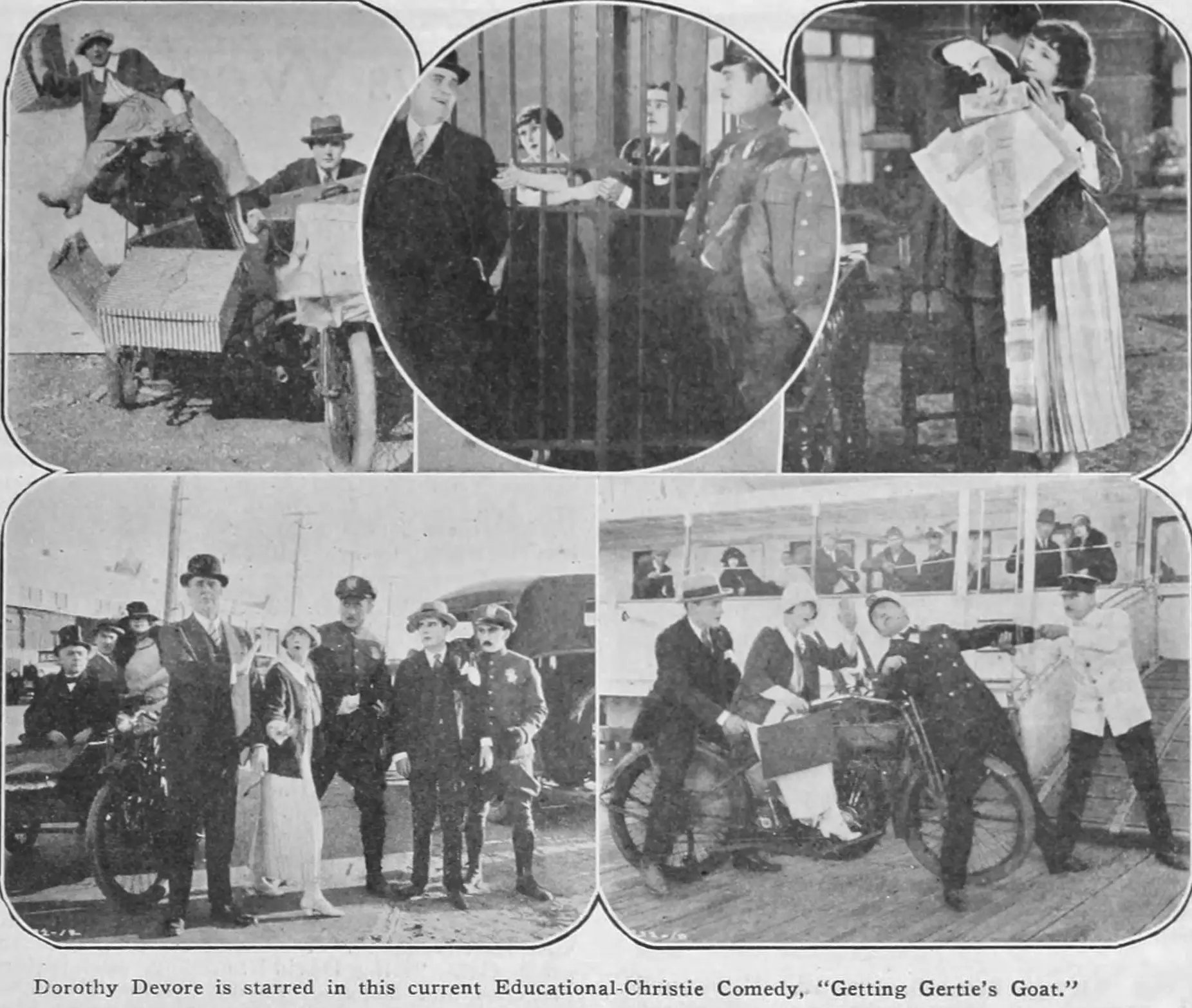
From a technical standpoint, the film is remarkably clean. The restoration efforts (for those lucky enough to see modern prints) reveal a sharp eye for composition. Director Walter Graham, who also served as the writer, demonstrates a keen understanding of the 'rule of threes' and the way physical space can be used to generate tension. The courtroom set is designed with multiple exits and levels, allowing for a choreographed chaos that feels both spontaneous and deeply rehearsed.
The use of intertitles is sparse but effective. Rather than relying on text to explain the plot, the film trusts the actors' faces. James Harrison’s expressions of sheer terror as he navigates the bathtub motorcycle are universal, requiring no translation. This visual literacy is what allows the film to transcend its specific historical moment. It shares a certain 'universal' comedic DNA with international works like En defensa propia, proving that the language of the 'chase' and the 'scare' is a global currency.
Why does a film like Getting Gertie's Goat still resonate? Perhaps because it captures the frantic energy of being young and in love against the world. It’s a film about the ingenuity required to navigate a world designed by and for 'The Judge.' It’s about the realization that even when you have the money and the tickets, you still need to find a way to make the union official within the eyes of the very society you’re trying to leave behind.
In the grand tapestry of 1920s cinema, it might not have the epic scale of Die Herrin der Welt 2. Teil, but it possesses a concentrated potency that is often lost in longer features. It is a sprint, not a marathon. It demands your attention, rewards your observation, and leaves you with a lingering sense of the sheer joy of movement. It is a testament to the power of the short-form comedy to explore complex human dynamics through the simple act of a girl, a boy, a judge, and a motorcycle bathtub.
Ultimately, the film is a celebration of the 'ingenious daughter.' Gertie is the hero we need—someone who can see the absurdity of the law and use a simple fire scare to turn the tables. She is the spiritual sister to the many resilient women of silent cinema, from the tragic figures in O Segredo do Corcunda to the courtroom defendants in On Trial. In the end, Gertie doesn't just get the goat; she gets the life she chose, on her own terms, with a little help from a traffic cop and a very fast motorcycle.
A revitalizing dose of silent-era adrenaline. Getting Gertie's Goat is a masterclass in how to build a narrative out of pure motion and escalating irony. It is essential viewing for anyone interested in the roots of the modern rom-com and the evolution of the action-chase sequence. Don't let the 'goat' in the title fool you—this is a sophisticated, high-speed romp that holds up nearly a century later.
IMDb 6.7
1923
Community
Log in to comment.