DbcultAccessing Vault...
Cult Review
Senior Film Conservator
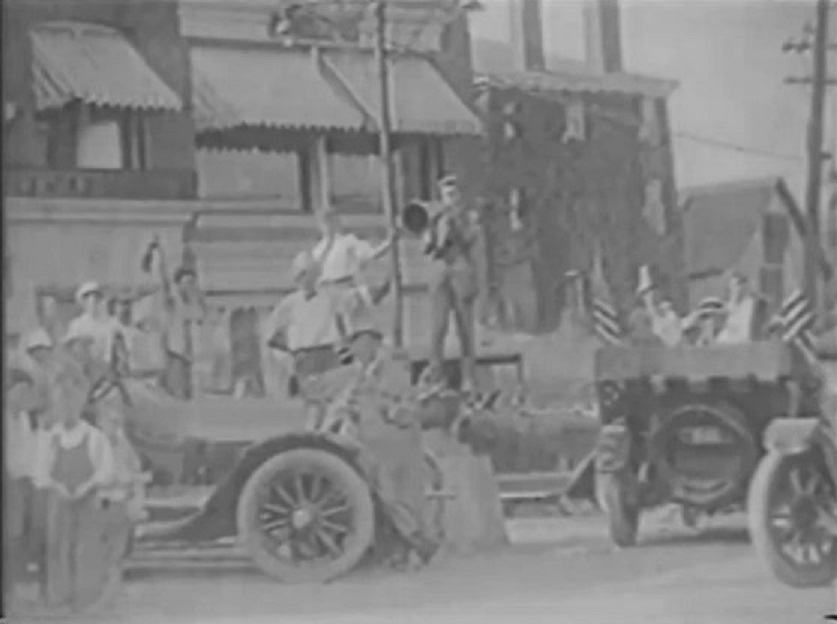
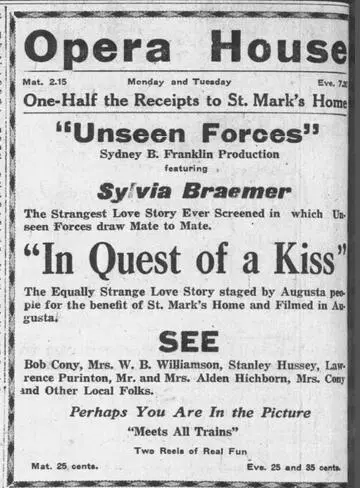
There is a moment—roughly three-quarters through In Quest of a Kiss—when Lowell Randall Stark’s face fills the entire frame, the iris-in closing like a venetian blind operated by a miserly god. His pupils are twin coal-mines exhaling despair, and the intertitle simply reads: “I have traded tomorrow for yesterday’s mouth.” That single card, white on black, detonates louder than any talkie explosion ever could. It is the film’s thesis, its death-rattle, its whispered confession that cinema itself is a confidence trick where spectators pay nickels to be pick-pocketed of their certainties.
Director-producer-writer Stark (yes, the star is also the auteur here) structures the narrative like a three-card monte game dealt by a metaphysical huckster. Act I: the setup inside a gin-soaked dive where brass spittoons gleam like crown jewels. Our anti-hero wagers a stranger that he can coax a kiss from “the woman who does not kiss.” Act II: the chase across a city that behaves like a fever dream choreographed by Romance and Brass Tacks’s cynical sibling—Coney Island’s boardwalk becomes a conveyor belt of humiliation; a charity ball inside a Gilded Age mansion mutates into a danse macabre where debutantes wear masks made of unpaid bills. Act III: the rooftop denouement where the kiss, once obtained, corrodes on contact, leaving both parties bankrupt in currencies they didn’t know they possessed.
The kicker? Stark never shows the woman’s face in that final clinch. We see her gloved hand tightening on his lapel, we see his eyes widening as if beholding an abyss wearing lipstick, but her identity dissolves into silhouette. The omission is surgical: every viewer projects their own lost lover onto that negative space, turning the auditorium into a cathedral of private ghosts.
Shot for the price of a modest townhouse, the film nevertheless invents visual syntax that would make German Expressionists salivate. Cinematographer Jules Cronjager (who would later lens The Conqueror’s desert vistas) bathes tenement interiors in sodium orange, the color of cheap tallow candles, then jolts the frame with sea-blue gels whenever the outside world intrudes—police wagons, telegram boys, the omnipresent elevated tracks. The palette argues that poverty is monochromatic, while authority arrives in technicolor desperation.
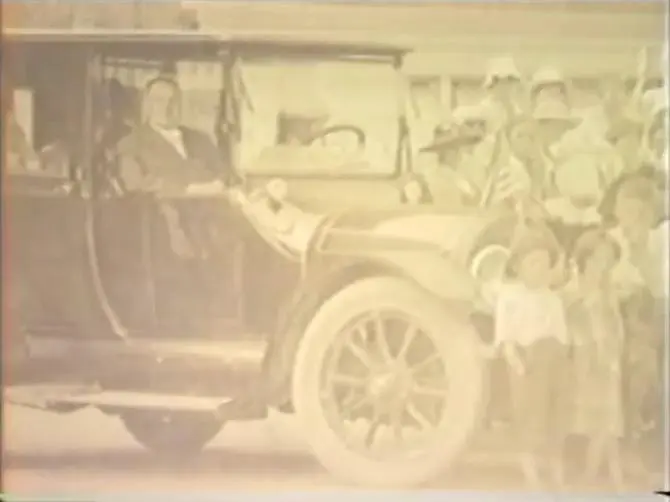
Note the bravura shot where Stark’s reflection multiplies in a pawnshop window layered behind bars of shadow. Each reflection is fractionally delayed, so when he raises a hand, five hands rise at staggered intervals—an embryonic form of the optical printing that would not be codified until the late twenties. The effect costs nothing: a pane of flawed glass, a single arc light, a director who understands that cinema’s true magic lies in its imperfections.
Stark’s acting style predates Method by decades, yet aches with the rawness of someone who has mainlined his own memories. Watch the micro-movements: the way his left thumb twitches against his trouser seam whenever the word “kiss” appears on an intertitle; the almost imperceptible slackening of his jaw when he realizes the wager is not a game but a death sentence. In the ballroom sequence, surrounded by champagne flutes that catch light like guillotines, he flirts without smiling—his cheek muscles refuse to obey, as though rigor mortis has set in from the inside out.
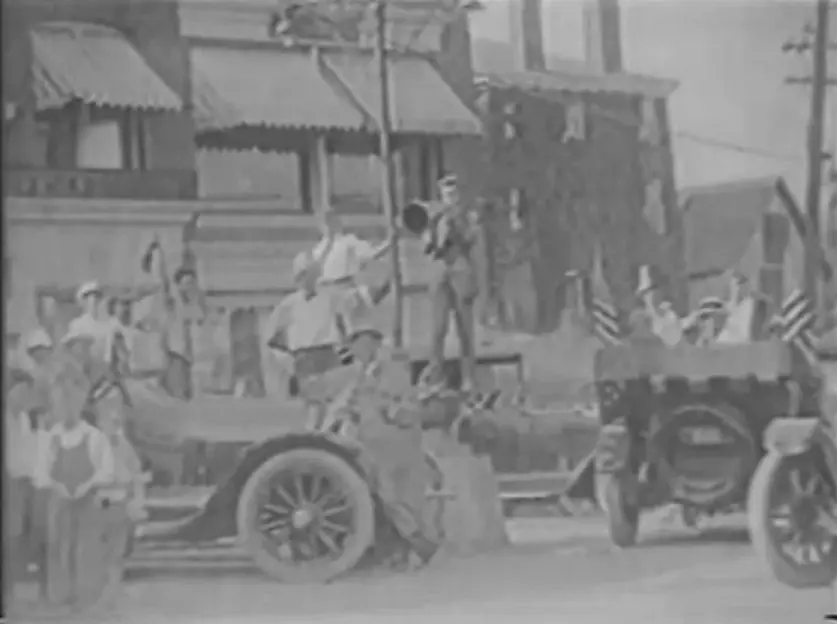
The supporting cast—largely forgotten names like Vesta Curzon and Solon K. Dana—serve as mere tuning forks for his dissonance. Curzon’s society vamp, for instance, projects carnivorous gaiety, but Stark refuses to play along; he regards her the way a man regards a clock that explodes. Their pas de deux is less seduction than autopsy.
Original prints shipped with a cue sheet instructing accompanists to weave Debussy, ragtime, and atonal drones. Contemporary restorations (shout-out to the Pordenone Silent Cinema ensemble) substitute a hauntological score: detuned music-box melodies overlaid with the wet crunch of footsteps on coal ash. The result turns every screening into séance; you swear you smell the kerosene, taste the metallic tang of busted radiator pipes.
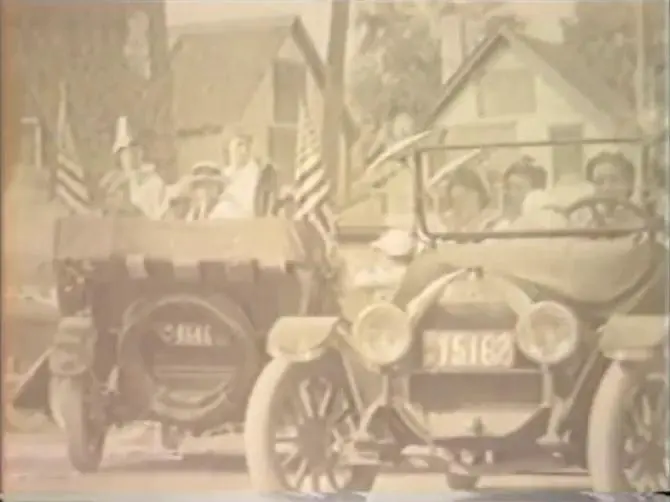
Released April 1917, three weeks after America enters the Great War, the film’s cynicism felt like treason. Censors in Chicago clipped the rooftop climax, claiming it “extolled nihilism at a time national morale required uplift.” Stark countered with a sly publicity still: himself in uniform, kissing a dummy wearing a Pickelhaube helmet. The stunt sold tickets, but the damage was done—prints were burned, negatives lost. What survives today is a 35mm nitrate dupe discovered inside a Belgian convent wall in 1987, water-stained, reeking of incense, missing its seventh reel. The gap feels intentional, as though the film itself folded in protest.
Compare it to its anodyne contemporaries: Broadway Jones peddles stage-door froth; Daughter of Destiny offers moral pabulum. Even Twilight (the 1917 society melodrama, not the later vampire juggernaut) retreats into sentimental twaddle. Stark’s film alone stares into the void and reports back that the void is laughing.
Modern echoes reverberate wherever filmmakers weaponize eroticism as existential inquiry. Think of Love’s Penalty’s transactional sadomasochism, or the chilly amorality in The Captive. Yet none match the primal starkness (pun intended) of this 1917 gauntlet. The kiss here is not consummation but incision; afterwards, characters carry the scar like a stigmata that bleeds memory.
Masterpiece status: undeniable, if fragmentary. Re-watch value: compulsive; each viewing feels like re-reading your own diary written by someone who hates you. Restoration urgency: critical—every year the surviving dupe fades like a lip-print on a bullet.
Seek it out at any cost. Bring smelling salts. Leave your nostalgia at the coat-check; this film does not want your comfort. It wants the moment you realize every kiss you’ve ever given was a promissory note signed in trembling ink, and the collection agency is en route.
IMDb 5.9
1932
Community
Log in to comment.