DbcultAccessing Vault...
Cult Review
Senior Film Conservator
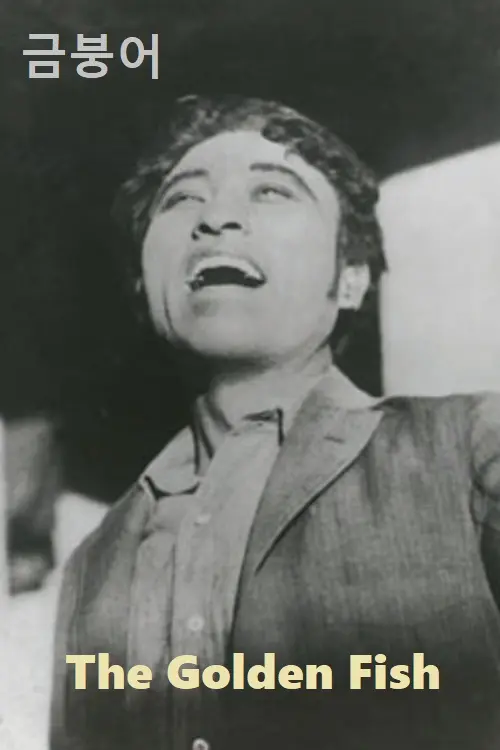
Is Geumbungeo worth watching today? Short answer: yes, but with significant caveats. This film is an absolute must for cinephiles who appreciate deliberate pacing, profound emotional subtext, and a narrative that trusts its audience to interpret silence. However, those seeking fast-paced plots, explicit dialogue, or grand dramatic arcs will find its quietude frustrating, perhaps even tedious.
It demands patience, offering a meditative experience rather than a conventional story. This is a film for those who find beauty in the unsaid, and power in the lingering gaze.
At its core, Geumbungeo is a masterclass in minimalist storytelling. The premise is deceptively simple: a husband, played with heartbreaking subtlety by Woon-gyu Na, grapples with the sudden absence of his wife, Il-seon Shin, after a quarrel. What could easily devolve into melodrama is instead elevated into a profound exploration of human connection and the void left by its disruption. The film doesn't tell you; it shows you, often through lingering shots of empty spaces and the husband's solitary routines.
The film works because it understands the weight of domestic silence. It recognizes that the most impactful emotions often reside beneath the surface of everyday life. The director’s decision to strip away exposition forces the audience to engage actively, to read between the lines, and to feel the husband’s desolation as if it were their own.
This film fails, however, because its deliberate pace, while artistically commendable, occasionally veers into stagnation. There are moments where the silence feels less like an artistic choice and more like a narrative vacuum, testing the limits of even the most patient viewer. It requires a specific kind of engagement that not every audience member is willing or able to give.
You should watch it if you are prepared for a contemplative experience, if you are drawn to films that prioritize mood and character introspection over plot mechanics, and if you believe that a story can be told just as powerfully through a character's gaze as through their words.
The directorial choices in Geumbungeo are nothing short of audacious. The camera often acts as a silent observer, allowing scenes to unfold without intrusive cuts or excessive movement. This creates a sense of voyeurism, drawing us intimately into the husband's isolated world. Consider the extended sequence where he simply prepares and eats a meal alone; the framing emphasizes the vast, empty space at the table, a stark visual representation of his loneliness. This isn't just slow cinema; it's an exercise in visual empathy.
The cinematography, though understated, is remarkably evocative. The lighting often feels naturalistic, almost documentary-like, yet it manages to imbue the mundane settings with a profound sense of melancholy. Shadows play a crucial role, often enveloping the husband, mirroring his internal state. The aquarium, a central motif, is consistently shot with a quiet reverence, its inhabitants swimming in their contained world, oblivious to the human drama unfolding beside them, yet reflecting its quiet desperation. The way light catches the water, the almost hypnotic movement of the fish, serves as a recurring visual metaphor for the husband's trapped emotions.
"The most impactful emotions often reside beneath the surface of everyday life, and Geumbungeo understands this implicitly."
One surprising observation is how the film effectively makes the absence of the wife a tangible presence. Her ghost lingers in every empty chair, every untouched object, every silent corner of the house. The director doesn't need flashbacks or exposition to convey this; the negative space speaks volumes. It's a directorial triumph that turns what isn't there into the most powerful character.
The success of Geumbungeo hinges almost entirely on the performances, particularly that of Woon-gyu Na. His portrayal of the heartbroken husband is a masterclass in restraint. Every subtle shift in his gaze, every slump of his shoulders, every hesitant movement conveys a world of pain and longing. He doesn't need dramatic monologues; his face, his posture, and his interactions with the inanimate objects around him tell the entire story. The scene where he simply stares into the aquarium, a slight tremor visible in his hand, is more powerful than any tearful outburst could have been. It’s a performance that reminds me of the quiet intensity seen in films like Crainquebille, where character depth is built through meticulous observation.
While Il-seon Shin's screen time as the wife is limited, her presence is deeply felt. Her return in the finale is not a grand, dramatic event but a quiet, almost tentative re-entry. Her expression, a mixture of apprehension and subtle relief, perfectly complements Na's weary acceptance. The reconciliation is handled with such delicate realism that it feels earned, not forced. It's a testament to both actors' ability to convey complex emotions with minimal outward expression.
The supporting cast, including Bong-chun Yun and Gae-myeong Hong, are sparingly used, but their brief appearances serve to further emphasize the husband's isolation or to provide fleeting moments of external reality that highlight his internal struggle. Their roles are less about character development and more about providing context to the central emotional void.
The pacing of Geumbungeo is undeniably slow. This is not a film for the impatient. It unspools with the deliberate rhythm of life itself, allowing moments to breathe, to linger, to settle. This meditative pace is both its greatest strength and its most significant hurdle for a modern audience. It forces you to slow down, to observe, and to reflect alongside the protagonist. For some, this will be an enriching experience, a rare opportunity to disconnect from the frantic pace of daily life and immerse themselves in a different kind of narrative.
For others, particularly those accustomed to the rapid-fire editing and plot-driven narratives prevalent in contemporary cinema, this deliberate slowness will be a point of frustration. I’ve heard many dismiss it as 'boring,' and while I vehemently disagree, I understand the sentiment. It demands a different kind of viewing contract. This film is more akin to a visual poem than a traditional story, prioritizing atmosphere and emotional texture over plot progression.
The tone throughout is one of profound melancholy, tinged with a persistent thread of hope. It never fully descends into despair, thanks to the subtle hints of the wife’s eventual return. This balance is delicately maintained, preventing the film from becoming overly bleak. It’s a testament to the directorial vision that such a simple story can sustain such a complex emotional landscape.
The aquarium in Geumbungeo is far more than just a prop; it functions as a potent symbol. The goldfish, confined yet serene in their glass world, mirror the husband's own emotional confinement. He watches them with a quiet intensity, perhaps seeing in their repetitive movements a reflection of his own stagnant existence. The act of feeding them, a routine task, becomes a profound act of care and connection in an otherwise empty world. It’s one of the few things that seems to ground him, a small pocket of responsibility and life amidst the overwhelming void.
This symbolism isn't heavy-handed; it's woven subtly into the fabric of the film. The water, the glass, the silent creatures – all contribute to an atmosphere of quiet contemplation and introspection. It’s a brilliant choice, providing a consistent visual anchor for the husband’s internal state without ever needing to articulate it verbally. This deep reliance on visual metaphor is a hallmark of truly intelligent filmmaking, elevating the simple plot into something far more resonant.
Absolutely, but only if you are prepared for a specific cinematic experience. Geumbungeo is not for everyone. It is a slow burn. It relies on visual cues and emotional subtext. Dialogue is minimal. The plot unfolds gradually. If you appreciate art house cinema, silent narratives, and profound character studies, then yes, it's highly recommended. If you prefer fast-paced action or explicit plot points, you will likely find it challenging.
Here’s a breakdown of what works and what doesn't in Geumbungeo:
"Geumbungeo is not merely a film to be watched; it is an experience to be felt, a quiet meditation on the resilience of the human heart."
Geumbungeo is a challenging but ultimately rewarding film. It works. But it’s flawed. Its deliberate pace is a double-edged sword, capable of both deep immersion and profound frustration. Yet, for those willing to surrender to its rhythm, it offers a rare glimpse into the quiet devastation of loneliness and the fragile beauty of reconciliation. It’s a film that lingers long after the credits roll, not for its explosive plot, but for its haunting emotional resonance and the indelible image of a man and his fish, silently navigating the currents of sorrow and hope.
This isn't just a film about a couple; it's a poignant reflection on the spaces we inhabit, the memories we carry, and the unspoken language of love. It’s a testament to the power of cinema to evoke profound feeling through the most understated means. While it won't be everyone's cup of tea, for discerning viewers, Geumbungeo is a quiet triumph, a film that dares to ask you to simply be present, and in doing so, offers a truly unforgettable emotional journey. It deserves to be seen, pondered, and discussed, much like a classic such as Poor Butterfly, for its sheer emotional bravery.

IMDb —
1920
Community
Log in to comment.