DbcultAccessing Vault...
Cult Review
Senior Film Conservator
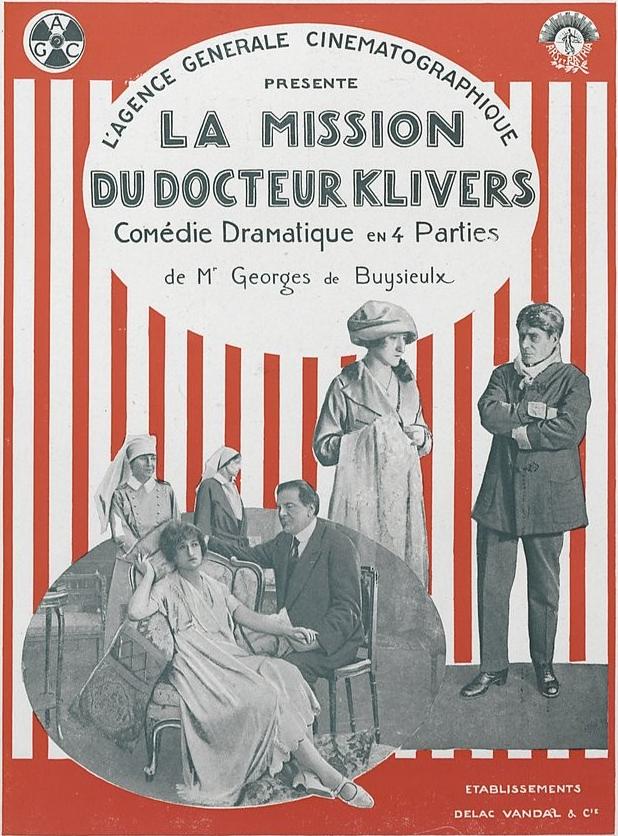
To gaze upon La mission du Docteur Klivers is to witness the very moment cinema shed its swaddling clothes and began to grapple with the complexities of the human psyche and the geopolitical shadows of the early 20th century. Released in 1913, a year that stood precariously on the precipice of global upheaval, this Pierre Bressol production is far more than a relic of the silent era; it is a sophisticated precursor to the modern techno-thriller, anchored by a performance from Jean Toulout that remains hauntingly resonant today.
In the nascent years of the 1910s, the grammar of film was still being written. While many directors were content with the theatrical proscenium, Bressol sought a more intimate connection with the viewer. In La mission du Docteur Klivers, he utilizes space not merely as a stage, but as a psychological extension of the protagonist's internal conflict. The laboratories are not just rooms filled with beakers and coils; they are crucibles of moral choice. Unlike the more overt melodrama found in The Yellow Traffic, Bressol opts for a slow-burn tension that rewards the patient observer.
The film’s pacing is remarkably deliberate. It eschews the frenetic slapstick or the simplistic morality plays common in its contemporary milieu, choosing instead to dwell in the gray areas of scientific responsibility. This nuance is where the film finds its strength, positioning the 'mission' not as a heroic quest, but as a heavy, perhaps even cursed, obligation. The visual language, though limited by the technology of 1913, achieves a striking chiaroscuro effect in its interior scenes, suggesting a world where light and truth are constantly being encroached upon by the dark.
Jean Toulout, a titan of early French cinema, provides the film with its emotional spine. In an era often criticized for its 'telegraphic' acting—where every emotion was signaled with a broad gesture—Toulout’s restraint is revelatory. His Klivers is a man of immense gravity, his eyes conveying a weary intelligence that suggests he has seen the potential for both salvation and catastrophe in his work. This performance stands in stark contrast to the more flamboyant villainy seen in Beneath the Czar, offering a proto-realism that feels startlingly modern.
The chemistry between Toulout and Olga Demidoff provides the film's necessary pathos. Demidoff does not play a mere damsel in distress; she represents the human cost of the scientific and political machinations at play. Her presence softens the intellectual coldness of the plot, grounding the high-stakes espionage in a relatable human tragedy. When they share the screen, the frame feels dense with unspoken history, a testament to the power of pure visual storytelling.
The theme of the 'mission' is central to the film’s identity. In the early 20th century, the figure of the scientist was often portrayed with a mixture of reverence and fear—a modern Prometheus. La mission du Docteur Klivers dives headlong into this dichotomy. Is Klivers’ discovery a gift to humanity or a tool for the state? This ambiguity mirrors the anxieties of 1913 France, a nation caught between the optimism of technological progress and the looming threat of the Great War. It shares a thematic kinship with The Grasp of Greed, though it swaps financial avarice for the more dangerous currency of intellectual power.
The film’s narrative structure is surprisingly complex for its time. It utilizes subplots involving Pierre Bressol’s own character and Jean Dulac to create a web of surveillance and counter-surveillance. This layering of perspectives prevents the film from becoming a linear slog, instead creating a sense of claustrophobia. The viewer, like Klivers, feels watched, judged, and trapped by the very mission that was supposed to provide a sense of purpose.
When placed alongside other works of the period, the sophistication of La mission du Docteur Klivers becomes even more apparent. While Brændte vinger explored the domestic and romantic fallout of social choices, Bressol’s work pushes into the public and political sphere. It lacks the whimsical charm of Puppy Love, but in its place, it offers a gritty, almost cynical worldview that feels far more grounded in the reality of its time. Even when compared to the rugged individualism of An Odyssey of the North, Klivers stands out for its focus on the urban, the institutional, and the systemic.
The film also avoids the escapism of Wild and Woolly. There are no easy victories here. The resolution of the mission is fraught with compromise, leaving the audience with a sense of unease rather than triumph. This commitment to a somber, realistic tone is what elevates the film from a mere genre exercise to a work of genuine artistic merit.
One cannot discuss this film without acknowledging the technical prowess involved in its production. The cinematography by the uncredited camera operators of the era shows a burgeoning understanding of depth and composition. The use of doorways and windows to frame action creates a 'film within a film' effect that emphasizes the themes of observation and secrecy. The sets, while theatrical, are meticulously detailed, providing a sense of place that is often missing from the more generic productions of the early silent era.
The editing, too, shows a sophisticated grasp of rhythm. The transitions between the doctor’s internal reflections and the external threats are handled with a fluidity that belies the primitive equipment of the time. There is a specific sequence involving a clandestine meeting that utilizes cross-cutting to build tension in a way that would become a staple of the espionage genre decades later. It is this forward-thinking approach to the medium that makes La mission du Docteur Klivers a vital study for any serious cinephile.
In the final analysis, La mission du Docteur Klivers is a monumental achievement of early narrative cinema. It successfully bridges the gap between the short, observational films of the 1900s and the epic, character-driven dramas of the 1920s. It treats its audience with respect, offering a plot that demands attention and a moral landscape that refuses to provide easy answers. Jean Toulout’s performance remains a masterclass in subtlety, and Pierre Bressol’s direction proves that even in the infancy of the art form, there were visionaries who understood the power of the moving image to explore the deepest recesses of the human condition.
As we look back from a century’s distance, the film serves as a poignant reminder of the fragility of peace and the heavy burden of progress. It is a cinematic time capsule that captures the soul of an era, wrapped in the guise of a thrilling mission. For those willing to look past the absence of sound and the flicker of the celluloid, there is a profound and moving experience waiting in the shadows of Dr. Klivers’ world.

IMDb 4.5
1925
Community
Log in to comment.