DbcultAccessing Vault...
Cult Review
Senior Film Conservator
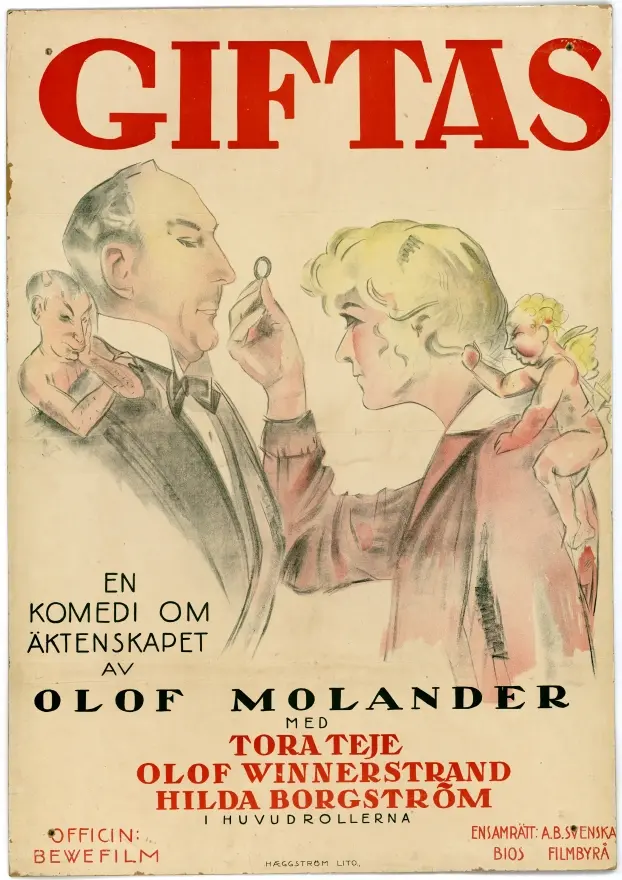
Is Per-Axel Branner's 1926 adaptation of August Strindberg's 'Giftas' worth your time in today's cinematic landscape? Short answer: yes, but with significant caveats that demand a particular kind of viewer. This early Swedish drama, steeped in the social anxieties of its era, offers a fascinating, if sometimes ponderous, look at the clash between entrenched marital norms and nascent feminist ideology. It is a film for those who appreciate meticulous character studies and historical examinations of societal shifts, not for viewers seeking modern pacing or unambiguous resolutions.
This film works because of its unflinching commitment to exploring the psychological erosion of a seemingly perfect marriage. It doesn't shy away from the discomfort of ideological conflict.
This film fails because its thematic messages, while potent, can occasionally feel didactic, a common pitfall when adapting overtly polemical source material like Strindberg.
You should watch it if you are drawn to period dramas that provoke thought, appreciate nuanced performances over rapid plot development, and are interested in the cinematic portrayal of early feminist discourse.
"Giftas" (meaning "Married") plunges us into a world of idealized domesticity, painting a picture of Captain Paul Rosenkrans (Olof Winnerstrand) and his wife Signe (Margit Manstad) as the epitome of marital bliss. Their six years together are presented as an unbroken continuum of affection, a sanctuary from the world's complexities. This initial portrayal, almost saccharine in its perfection, is crucial; it establishes the baseline from which Signe's world will be irrevocably altered.
The catalyst for this transformation arrives in the formidable shape of Annie Behrman (Tora Teje), a suffragette and an old friend of Signe's. Annie is not merely a character; she is a force of ideological nature, having authored a book that critiques marriage as a form of female subjugation. Her ideas, radical for the era, begin to seep into Signe's consciousness during Paul's absence. What starts as polite conversation soon morphs into an insidious re-evaluation, as Annie's arguments strip away the romantic veneer from Signe's cherished union.
Branner, adapting Strindberg, meticulously charts this psychological unraveling. We witness Signe's internal struggle, her loving memories of Paul clashing with Annie's stark intellectual pronouncements. The film doesn't present a sudden conversion but a gradual erosion of certainty, a quiet revolution brewing beneath a placid surface. This slow-burn approach to character development is one of its most compelling aspects, demanding patience but rewarding it with a deep dive into the human psyche under ideological pressure.
Per-Axel Branner's direction is characterized by a restrained elegance, a necessity when dealing with material as emotionally charged and intellectually dense as Strindberg's. He understands that the true drama of "Giftas" unfolds not in grand gestures, but in the subtle shifts of expression, the lingering gazes, and the unspoken tensions that permeate Signe's domestic space. Branner often utilizes thoughtful framing, juxtaposing Signe's isolated figure against the backdrop of her once-comforting home, now a potential prison in her mind.
Consider, for instance, the scenes where Signe is alone after Annie's visits. Branner doesn't resort to dramatic monologues. Instead, he allows the camera to hold on Margit Manstad's face, her eyes betraying a profound internal conflict – a flicker of doubt, a shadow of unease. This visual storytelling, relying on the power of the performer and the intimacy of the close-up, speaks volumes without uttering a single word. It’s a testament to Branner’s understanding of early cinema's capacity for psychological depth, a far cry from the more bombastic approaches seen in some contemporaries like What Happened to Jones.
The pacing, while deliberate, serves the narrative's psychological focus. This isn't a film that rushes to its conclusions; it invites the viewer to inhabit Signe's headspace, to experience her journey of re-evaluation in real-time. This might challenge modern audiences accustomed to faster cuts and more overt plot progression, but it’s an intentional choice that underscores the gravity of Signe's predicament.
The strength of "Giftas" rests heavily on its central performances, particularly that of Margit Manstad as Signe. Manstad delivers a masterclass in subtlety, portraying a woman whose inner world is slowly being shattered. Her initial portrayal of a blissfully content wife is utterly convincing, making her subsequent descent into doubt and disillusionment all the more impactful. There's a particular scene where she observes her husband's everyday habits – perhaps his boisterous laugh or his casual command – and Manstad's eyes, once full of adoration, now register a nascent critical distance. It's a powerful transformation conveyed with remarkable nuance.
Olof Winnerstrand as Paul Rosenkrans, while given less internal turmoil to portray, perfectly embodies the unwitting, well-meaning patriarch. His performance is key to understanding the film's central conflict; he is not a villain, but a product of his time, genuinely loving yet oblivious to the undercurrents of discontent his wife is experiencing. Winnerstrand's Paul is robust, charming, and utterly blind to the ideological shifts occurring around him, making his eventual bewilderment all the more poignant.
However, the standout performance, for its sheer force, comes from Tora Teje as Annie Behrman. Teje imbues Annie with an almost revolutionary zeal, her delivery sharp, her gaze unwavering. She is the embodiment of the new woman, intellectually fierce and unapologetically challenging the status quo. While Annie's character sometimes borders on being a mouthpiece for Strindberg's polemics, Teje's conviction ensures she remains a compelling, if somewhat one-dimensional, figure. Her presence electrifies every scene she's in, providing the necessary friction for Signe's transformation. It is a performance that, while theatrical, perfectly captures the fervor of early feminist activism.
The visual language of "Giftas" is understated yet effective. The cinematography, while not overtly flashy, contributes significantly to the film's tone. Interiors are often shot with a sense of quiet containment, emphasizing Signe's world as initially safe, then increasingly claustrophobic. The use of natural light, or its cinematic approximation, creates an intimate atmosphere, drawing the viewer into the private spaces of the Rosenkrans' home.
Production design subtly underscores the narrative. The comfortable, well-appointed home initially represents stability and warmth. As Annie's ideas take root, these very furnishings, once symbols of domestic contentment, begin to feel heavy, perhaps even oppressive. There isn't a dramatic shift in decor, but rather a change in how these spaces are perceived through Signe's evolving perspective. The contrast between the confined domestic sphere and the implied vastness of the intellectual world Annie represents is a powerful, unspoken visual metaphor.
Yes, "Giftas" is absolutely worth watching today, especially for specific audiences. It offers a unique window into the social and intellectual ferment of the early 20th century. The film's exploration of marital dynamics, gender roles, and the impact of radical thought remains surprisingly resonant.
It serves as a valuable historical document, showcasing how complex themes were tackled in the silent era. For students of film history, feminist studies, or Strindberg's work, it's essential viewing. However, its deliberate pacing and sometimes theatrical acting style might be a barrier for casual viewers.
At its heart, "Giftas" is a profound meditation on power dynamics within marriage. Strindberg, through Branner, dissects the idea of love as a potentially blinding force, obscuring the underlying inequalities. The film posits that even a loving union, if built upon unspoken assumptions of female subservience, is inherently flawed. Annie Behrman's character, while perhaps a bit of a caricature, serves as the uncompromising voice of this critique, forcing both Signe and the audience to confront uncomfortable truths.
The film's most striking thematic achievement is its portrayal of a woman's awakening not as an external rebellion, but as an internal, intellectual shift. Signe's journey is a quiet storm, a testament to the power of ideas to dismantle even the most deeply ingrained beliefs. It’s a subtle yet potent exploration of agency, even when overt actions are limited by societal constraints. This makes it a more nuanced and psychologically interesting work than some of its more overtly melodramatic contemporaries like The Price of Silence.
One could argue that the film, in its depiction of Annie Behrman's rather uncompromising rhetoric, inadvertently critiques the zealousness of certain ideologies as much as it critiques the patriarchy. Annie, in her unwavering conviction, leaves little room for the complexities of human emotion, suggesting that intellectual liberation, if pursued too rigidly, might inadvertently destroy genuine connection. This is a debatable point, but it adds another layer to the film's intellectual texture.
"Giftas" is a challenging, yet ultimately rewarding, piece of cinematic history. It's not an easy watch, nor is it designed to be. It works. But it’s flawed. Per-Axel Branner’s adaptation of Strindberg’s searing social commentary holds up as a powerful character study, driven by Margit Manstad's exceptional portrayal of a woman caught between deeply ingrained societal expectations and the intoxicating allure of intellectual liberation. Its slow burn pace might deter some, but for those willing to invest in its psychological depth, it offers a fascinating, enduring critique of marital and societal structures. It reminds us that even nearly a century later, the questions it poses about love, freedom, and personal agency remain strikingly relevant. Seek it out if you dare to question the foundations of domestic bliss.
IMDb —
1934
Community
Log in to comment.