DbcultAccessing Vault...
Cult Review
Senior Film Conservator
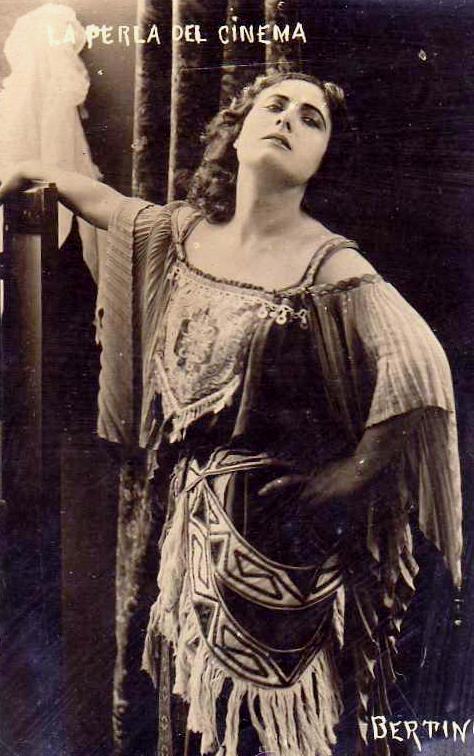
Stepping back into the flickering glow of the early 20th century, where the very language of cinema was still being forged, one encounters a work of profound emotional resonance and visual artistry: La perla del cinema. This silent masterpiece, starring and penned by the incomparable Francesca Bertini, transcends mere historical artifact to offer a timeless meditation on ambition, vulnerability, and the often-brutal alchemy of fame. It is a film that, even in its wordless grandeur, speaks volumes about the human condition, the intoxicating allure of the silver screen, and the sacrifices demanded by the spotlight. Bertini, a titan of early Italian cinema, not only graces the screen with her magnetic presence but also crafts a narrative that is both deeply personal and universally resonant, cementing her legacy as a formidable creative force.
At its core, La perla del cinema is the harrowing yet ultimately redemptive saga of Stella, a young woman whose raw, untutored talent and captivating beauty catch the discerning eye of Baron Valerius, a film director of immense vision but equally immense ego. Valerius, portrayed with a sinister charm by Gustavo Serena, sees in Stella not just an actress, but a canvas upon which to project his grand artistic ambitions. He meticulously polishes her, transforming her into 'The Pearl of Cinema,' a moniker that soon becomes both a crown and a cross. The film brilliantly juxtaposes the dazzling public image of Stella – the tragic heroine, the romantic ideal – with the crushing reality of her private life, a life increasingly dictated by Valerius's possessive control. Her performances, celebrated for their authentic pathos, are ironically fueled by the very real sorrow and disillusionment she experiences off-screen, a poignant commentary on the blurred lines between art and life.
Bertini's script, a testament to her keen understanding of human psychology, delves into the insidious nature of emotional manipulation. Valerius’s affections are conditional, his praise a means to further his own ends, leaving Stella isolated amidst her burgeoning fame. This dynamic is not unlike the thematic explorations of power and vulnerability seen in films like The Game of Three, though La perla del cinema frames it within the specific, nascent context of the film industry. The narrative introduces Marco, a humble but observant cameraman played by Carlo Benetti, whose quiet devotion stands in stark contrast to Valerius's flamboyant tyranny. Marco represents an unadulterated admiration for Stella's true self, a love untainted by the demands of the camera or the machinations of the studio. His silent support becomes a crucial anchor for Stella as she grapples with the escalating pressures and betrayals that threaten to shatter her spirit. The film builds towards a dramatic crescendo, a moment of profound reckoning where Stella must reclaim her agency, not just as an artist, but as a woman, breaking free from the gilded cage her fame has become.
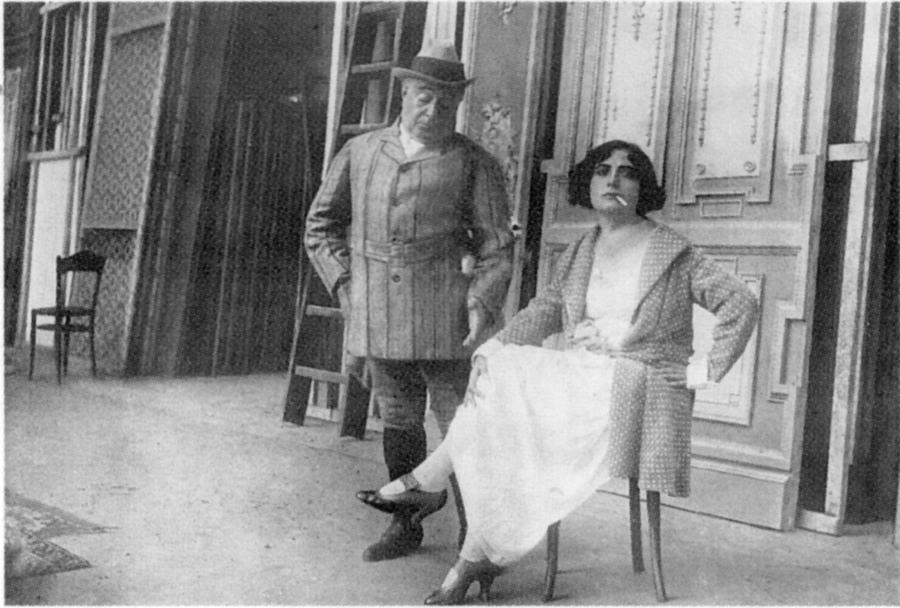
Francesca Bertini's performance as Stella is nothing short of transcendent. Her eyes, often swimming with unshed tears or blazing with defiant resolve, convey an entire spectrum of human emotion without the aid of dialogue. Her gestural vocabulary is precise, eloquent, and deeply expressive, a masterclass in silent film acting. It’s impossible to separate the artist from her creation here; Bertini, who wrote the screenplay, imbues Stella with a lived-in authenticity that suggests a profound personal connection to the character's struggles. She understands the precarious balance between the public persona and the private torment, the vulnerability inherent in baring one's soul for the camera. This kind of self-aware portrayal of a 'star' within the narrative itself is remarkably modern for its time, anticipating later meta-narratives in cinema.
Bertini's writing is equally commendable. The script is taut, focusing on character development and emotional arc with an incisive clarity. She avoids gratuitous melodrama, instead opting for a more nuanced exploration of Stella's psychological journey. The pacing is deliberate, allowing the audience to fully immerse themselves in Stella's emotional landscape, to witness her gradual disillusionment and eventual reawakening. Her contribution as a writer elevates La perla del cinema beyond a mere vehicle for her star power, transforming it into a significant work of early cinematic authorship. One might draw parallels to the powerful female leads and their complex internal lives in films like Filibus, but Bertini’s Stella offers a different kind of strength, one born from endurance and artistic integrity rather than overt action.
The supporting cast of La perla del cinema provides a robust framework for Bertini's central performance. Gustavo Serena, as Baron Valerius, is a revelation. He embodies the sophisticated villain with a chilling subtlety, his charm a deceptive veneer over a calculating and ruthless ambition. His gestures are grand, his expressions intense, yet there's an underlying coldness that makes his character truly menacing. Serena's portrayal is crucial in establishing the oppressive atmosphere Stella finds herself trapped within, making her eventual rebellion all the more impactful. His performance evokes the kind of compelling antagonist found in dramas such as The Closed Road, where moral ambiguity drives much of the conflict.
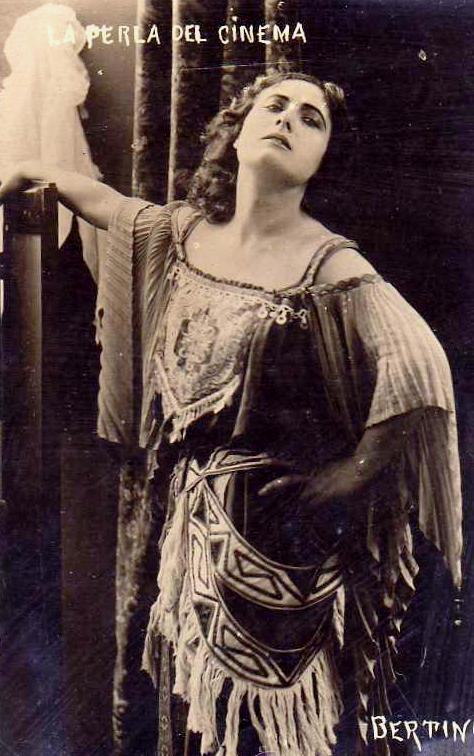
Carlo Benetti, as the earnest cameraman Marco, offers a much-needed counterpoint to Valerius’s darkness. His performance is understated, marked by quiet dignity and a profound empathy. He communicates volumes through subtle glances and gentle gestures, representing hope and genuine affection in a world otherwise consumed by artifice and self-interest. The love triangle, while a common trope, feels fresh and vital here due to the contrasting energies of Serena and Benetti. Giuseppe de Liguoro and Camillo De Riso, though perhaps in less prominent roles, contribute significantly to the film's rich tapestry. De Liguoro might play a seasoned, perhaps cynical, industry veteran, offering Stella glimpses of the broader, often harsh, realities of the business, while De Riso could embody a rival or a further complication in Stella's professional life, adding layers to the cut-throat world of early filmmaking. Alfredo De Antoni likely rounds out the cast as a minor but memorable figure, perhaps a loyal assistant or a fleeting obstacle, each actor contributing to the overall verisimilitude of this cinematic world.
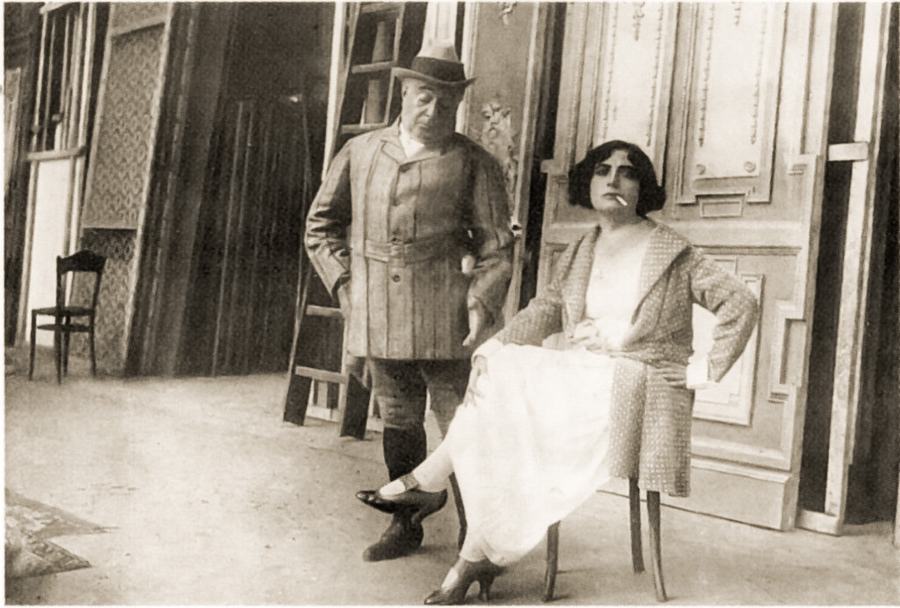
The technical prowess displayed in La perla del cinema is remarkable for its era. The cinematography, while adhering to the conventions of silent film, often achieves moments of breathtaking beauty and dramatic impact. The use of natural light, the careful framing of Bertini's expressive face, and the dynamic compositions within the studio sets all speak to a sophisticated visual language. Close-ups are employed judiciously, amplifying the emotional intensity of Stella's internal struggles. The set designs, whether depicting opulent drawing rooms or the bustling, chaotic environment of a film studio, are richly detailed, immersing the audience in the period. Costumes are not mere adornments; they are integral to character, reflecting Stella's journey from a simple girl to a glamorous star, and later, perhaps, to a more understated, authentic self. The visual storytelling is so compelling that it transcends the absence of spoken dialogue, relying instead on the universal language of human expression and cinematic artistry. This commitment to visual narrative parallels the detailed world-building seen in films like The Heroine from Derna, where every frame contributes to the overarching story.
The direction, likely overseen by Bertini's collaborative spirit, maintains a consistent tone, balancing moments of high drama with quieter, introspective scenes. The editing, though perhaps less frenetic than modern cinema, is effective in building suspense and pacing the emotional beats of the story. The film’s ability to conjure such a vivid and emotionally charged world without sound is a testament to the ingenuity and artistry of early filmmakers. It reminds us that cinema, at its purest, is a visual medium, capable of conveying profound truths through images alone. The innovative use of light and shadow to create mood, the careful blocking of actors to convey power dynamics, and the subtle shifts in perspective all contribute to a rich and immersive viewing experience. One can appreciate how these techniques paved the way for more complex narratives, much like how The Rights of Man: A Story of War's Red Blotch utilized visual storytelling to convey its powerful message.
Beyond its captivating plot, La perla del cinema resonates with a multitude of profound themes. It is, first and foremost, a searing indictment of the exploitative aspects of the burgeoning film industry. Stella's journey highlights how talent can be commodified, how dreams can be leveraged, and how personal identity can be subsumed by a manufactured public image. The film questions the very nature of stardom, asking what price one pays for adoration and whether genuine artistic expression can survive the relentless machinery of commercialism. This theme of individual struggle against societal or industrial pressures is a recurring motif in cinema, seen even in later, darker works like Der Fund im Neubau - 2. Teil: Bekenntnisse eines Mörders, albeit in a different context.
Another central theme is the search for authenticity. Stella's struggle to reconcile her public persona with her true self, to find genuine love amidst manipulative affections, speaks to a universal human desire for integrity. The film suggests that true worth lies not in the glitter of fame, but in the steadfastness of one's character and the purity of one's heart. The contrast between Valerius's superficial charm and Marco's quiet sincerity underscores this point with powerful clarity. It's a journey of self-discovery, of shedding the expectations of others to embrace one's own truth. The film's exploration of love, both its destructive and redemptive forms, adds another layer of emotional complexity, reminding us that even in the most glamorous settings, the human heart remains susceptible to both profound joy and searing pain. This emotional depth is akin to the raw human experiences depicted in The Way of the World.
In the pantheon of silent cinema, La perla del cinema stands as a vital and enduring work. It not only showcases the prodigious talent of Francesca Bertini but also serves as a crucial document of early filmmaking's artistic and industrial landscape. Its influence can be felt in subsequent portrayals of stardom's dark side, and its sophisticated narrative techniques laid groundwork for future cinematic storytelling. While films like Scotland might offer grand historical narratives, La perla del cinema proves that intimate, character-driven dramas can possess equal, if not greater, emotional impact. It shares a certain dramatic intensity with works such as Hamlet, Prince of Denmark in its exploration of profound personal turmoil, albeit through a distinctly modern lens. The film's ability to create a compelling world with limited resources is a testament to the creativity of its makers, much like the resourceful storytelling found in The Riddle of the Tin Soldier.
Its exploration of female agency and the challenges faced by women in male-dominated industries also places it ahead of its time, a theme that resonates through films like The Dancing Girl. Bertini's dual role as writer and star grants the film an unparalleled authenticity in depicting the inner life of a female artist. The film's legacy lies not just in its technical achievements or its powerful performances, but in its enduring relevance. The questions it poses about the nature of fame, the pursuit of authenticity, and the resilience of the human spirit remain as pertinent today as they were over a century ago. It's a film that speaks across generations, reminding us of the timeless power of storytelling and the enduring allure of the cinematic dream. Its narrative complexity and emotional depth align it with other significant works of the era, such as La falena and The Heights of Hazard, all contributing to the rich tapestry of early cinema.
Watching La perla del cinema today is not merely an act of historical appreciation; it is an immersive experience that transports the viewer into a world of raw emotion and burgeoning artistic innovation. It is a film that challenges, moves, and ultimately inspires, solidifying its place as a veritable 'pearl' in the vast ocean of cinematic history. Its narrative echoes with the timeless struggles of ambition and heart, making it a compelling watch for anyone interested in the foundational works of film, akin to the enduring appeal of Old Brandis' Eyes or the dramatic tension of The Bridge of Sighs.
IMDb 6.2
1930
Community
Log in to comment.