DbcultAccessing Vault...
Cult Review
Senior Film Conservator
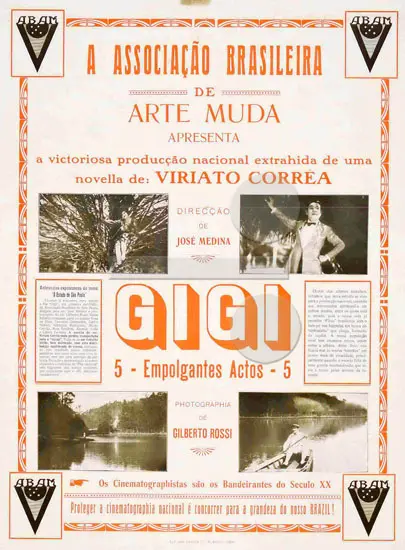
Is Gigi, Canuto Mendes de Almeida’s early 20th-century Portuguese silent film, worth watching today? Short answer: yes, but with significant caveats that demand a particular kind of viewer. This film is a fascinating, if sometimes frustrating, artifact that offers a window into a specific moment in cinematic history.
It is unequivocally for cinephiles, historians, and those with a deep appreciation for the silent era's unique narrative rhythms and performance styles. If you thrive on dissecting early filmmaking techniques, understanding cultural contexts through film, or simply enjoy the expressive power of a well-executed silent performance, then Gigi holds considerable value. However, it is decidedly NOT for the casual viewer accustomed to modern pacing, sound, or sophisticated narrative structures. Those seeking quick gratification, clear resolutions, or dialogue-driven character development will find its deliberate cadence and reliance on visual storytelling a challenge.
The world of early Portuguese cinema is, for many, an uncharted territory. Gigi emerges from this obscurity as a testament to the universal themes that transcended national borders even in cinema’s infancy. Directed by Canuto Mendes de Almeida and penned by the same, this film, while not as widely recognized as some of its European contemporaries like Das Eskimobaby, carves out its own niche through sheer earnestness and a surprisingly intimate character study.
At its core, Gigi is a coming-of-age story, a familiar trope, yet handled with a certain delicate touch that feels distinctly Portuguese. The film navigates the treacherous waters of social class and romantic entanglement with a visual vocabulary that, while occasionally clunky, often achieves moments of striking beauty. It’s a narrative that speaks to the pressures placed upon young women in that era, a theme that resonates even today, albeit in different forms.
In silent cinema, acting is less about dialogue delivery and more about the visceral communication of emotion through gesture, posture, and facial expression. The cast of Gigi, led by Albertina Rodrigues, largely rises to this challenge, delivering performances that range from subtly nuanced to overtly theatrical.
Rodrigues, as Gigi, is the film's undeniable anchor. Her eyes, often wide with innocence or brimming with unshed tears, carry the weight of the narrative. There’s a particular scene where Gigi, dressed in an unfamiliar opulent gown for a society ball, catches her reflection. Rodrigues conveys a potent mix of wonder, discomfort, and dawning realization of her new identity, all without a single intertitle. It’s a masterclass in silent screen emoting, drawing the viewer into her internal struggle.
António Vale, playing the older, powerful suitor, projects an authoritative presence that is both magnetic and slightly menacing. His restrained gestures often speak volumes, hinting at a complex interior beneath a veneer of aristocratic composure. Contrast this with Carlos Ferreira's portrayal of the earnest, struggling suitor, whose youthful exuberance and raw vulnerability provide a crucial emotional counterpoint. While Ferreira’s performance occasionally veers into an almost cartoonish distress, it’s effective in highlighting Gigi’s dilemma.
The supporting cast, including Albertina Rodrigues and Muniz Galvão, provides a solid foundation, each contributing to the rich tapestry of early 20th-century Portuguese society. Their interactions, though brief, establish the social dynamics Gigi must navigate. The way Rosa de Maio, as Gigi's aunt, carries herself—a blend of severe grace and thinly veiled ambition—is particularly memorable, defining the societal expectations Gigi is meant to embody.
Canuto Mendes de Almeida’s direction is a fascinating study in early cinematic ambition. While some sequences betray the technical limitations of the era, others demonstrate a surprising command of visual storytelling. His use of close-ups, especially on Gigi’s face, is effective in drawing the audience into her emotional turmoil, a technique that would become a staple of cinematic language.
The film's cinematography, while not groundbreaking by today's standards, exhibits a keen eye for composition. The opulent interiors of the aristocratic homes are captured with a sense of grandeur, contrasting sharply with the simpler, more intimate settings of Gigi’s earlier life. One particularly striking shot features Gigi standing alone on a grand staircase, the vastness of the hall dwarfing her figure, visually underscoring her isolation and the enormity of the world she has entered. It's a simple shot, but powerfully symbolic.
However, the pacing is undeniably a challenge. There are moments where the camera lingers for what feels like an eternity, perhaps a consequence of needing to convey complex emotions without dialogue, or simply a reflection of the era's slower narrative rhythm. This deliberate pace, while offering ample time to absorb the visual information, can test the patience of a modern audience. It requires a different kind of engagement, a willingness to slow down and observe.
Gigi, like many films of its time, leans heavily into melodrama. The emotional stakes are consistently high, and characters often express their feelings with an intensity that borders on the operatic. This is not a criticism, but an observation of the film’s chosen tonal register. The dramatic flourishes, while sometimes feeling overblown, were integral to engaging audiences who were still learning the visual grammar of film.
The film’s tone shifts between lighthearted buoyancy in its opening scenes, depicting Gigi’s innocent life, to a more somber, contemplative mood as she grapples with her predicament. This transition, while not always seamless, effectively communicates Gigi’s journey from carefree youth to a more burdened maturity. The narrative structure, following a classic rise-and-fall arc, is predictable but effective in building emotional resonance.
The use of intertitles, while sparse, is generally well-judged, providing necessary exposition and character thoughts without overpowering the visual storytelling. They act as signposts, guiding the audience through the emotional landscape rather than dictating it. This balance is crucial for a silent film's success, and Gigi largely achieves it.
Beyond its technical merits and performance triumphs, Gigi offers a rich thematic tapestry. It explores themes of social mobility, the commodification of women in marriage, and the eternal conflict between duty and desire. Gigi's journey is a microcosm of a societal struggle, a young woman's fight for agency in a world that seeks to define her.
It’s a surprisingly candid look at the gilded cage of aristocratic life, suggesting that wealth and status often come at the cost of personal freedom and genuine happiness. This is not a groundbreaking revelation, but its portrayal through the lens of early Portuguese cinema gives it a unique cultural flavor.
The film's lasting impact, while perhaps not reaching the global consciousness of a The Eternal Magdalene or a Sans famille, lies in its contribution to understanding the diverse landscape of early international cinema. It reminds us that compelling stories and talented artists existed far beyond the major studios, quietly shaping the art form in their own corners of the world.
One might argue that its obscurity is its most fascinating quality, inviting a sense of discovery for those willing to seek it out. It challenges the notion that only the most widely distributed films hold historical value. That’s a debatable point, but one I firmly stand by when considering films like Gigi.
Gigi is a film that demands patience and a specific kind of appreciation, but it ultimately rewards the intrepid viewer with a window into a fascinating, bygone era of cinema. It works. But it’s flawed. Its strengths lie in its deeply felt performances, particularly that of Albertina Rodrigues, and its ability to convey universal human emotions through a purely visual medium. While its pacing and adherence to melodramatic conventions might alienate some, its historical significance and quiet charm make it a valuable piece of cinematic archaeology.
For those willing to embrace its unique rhythm and silent eloquence, Gigi is more than just a relic; it’s a heartfelt narrative that speaks to the enduring power of film to capture the human condition. It’s a compelling argument for the continued preservation and study of lesser-known international silent films, proving that even in obscurity, there are stories that deserve to be seen and understood. Don't expect a modern blockbuster, but rather a reflective, almost meditative experience.
IMDb 6.5
1926
Community
Log in to comment.