DbcultAccessing Vault...
Cult Review
Senior Film Conservator
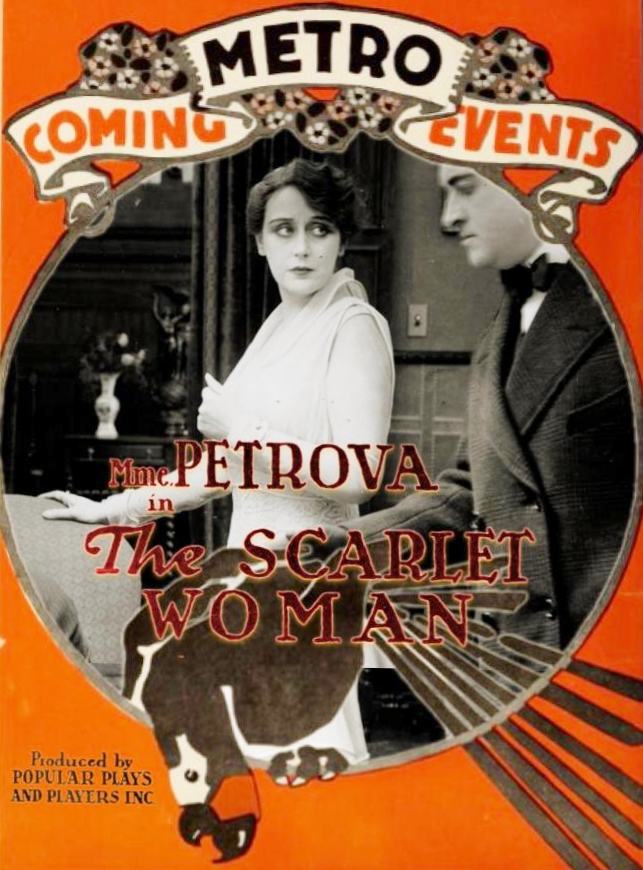
To witness The Scarlet Woman is to step into a sepia-toned nightmare of Edwardian morality, a film that dissects the fragility of the social contract with the precision of a surgeon and the cynicism of a jaded beat reporter. Released in 1916, this Aaron Hoffman-penned drama stands as a towering monument to the "fallen woman" subgenre, yet it distinguishes itself through a visceral exploration of systemic corruption that feels uncomfortably prescient. Unlike the more fantastical elements found in The Monster and the Girl, this narrative is rooted in the gritty, transactional reality of New York’s legal and financial corridors. It is a world where virtue is not its own reward, but rather a currency to be spent in the pursuit of survival.
The film opens with a sequence of harrowing tension. Hanlin Davis, portrayed with a frantic, sweating desperation, represents the archetypal victim of the Gilded Age's speculative mania. His position as vice-president of a bank provides the ultimate camouflage for his fiscal transgressions, but as the stock market fluctuations turn against him, his psychological veneer cracks. The robbery of his own bank is staged with a claustrophobic intensity that echoes the moral entrapment seen in The Stain. When the inevitable confrontation occurs, the resulting murder is not presented as a calculated act of malice, but as the spasmodic reflex of a cornered animal. This initial sin sets the stage for a much larger, more insidious investigation into the nature of guilt and the uneven distribution of its consequences.
If Davis is the catalyst, then District Attorney Hastings is the true engine of the film’s tragedy. Played with a chilling, predatory suavity, Hastings embodies the rot at the heart of the American judicial system. His proposal to Thora—an exchange of legal leniency for sexual submission—is a moment of profound cinematic ugliness that strips away the romanticism often associated with silent-era melodrama. This is not the grand villainy of The Last of the Mafia; it is a banal, bureaucratic evil. Hastings does not twirl a mustache; he simply uses his office as a hunting ground. The film bravely suggests that the man tasked with upholding the law is, in fact, the most lawless figure in the room.
Olga Petrova, as Thora, delivers a performance that transcends the standard tropes of the era. While many of her contemporaries relied on hyperbolic gesticulation, Petrova utilizes a restrained, haunting physicality. Her transformation from the dutiful, desperate wife to the hardened "scarlet woman" is a masterclass in nuanced character progression. When Davis, upon his release, denounces her with a sanctimonious fury, Petrova’s expression of shattered disbelief is a searing indictment of the patriarchal double standard. She becomes a ghost haunting the bright lights of Broadway, a figure of "void heart and conscience" only because the world has systematically hollowed her out. This portrayal shares a DNA with the tragic protagonist of Anny - en gatepiges roman, where the environment acts as an inescapable cage.
The middle act of the film plunges us into the "sporting element" of New York nightlife. Here, the cinematography captures the garish, hollow glamor of the cafes and the desperate energy of those who have been discarded by polite society. The introduction of Robert Blake, the wealthy reformer, provides a necessary counterpoint to the nihilism of Hastings. Blake represents the burgeoning progressive movement of the early 20th century, yet even he is portrayed with a certain fragility. His investigation into Hastings’ graft is not just a quest for justice, but a collision course with Thora’s past. The narrative tension here is expertly calibrated; we root for Blake’s success even as we fear the inevitable revelation that will destroy his idealized vision of Thora.
One of the most fascinating aspects of Hoffman’s script is the character of Paula Gordon. Unlike the overtly corrupt Hastings, Paula operates within the upper echelons of society, weaponizing her reputation to manipulate those around her. Her alliance with Hastings is born of mutual blackmail, a dark mirror to the marriage of convenience seen in The Manxman. Paula’s attempts to sabotage Thora and Blake’s marriage are fueled by a toxic blend of jealousy and self-preservation. She is the "woman who knows too much," and she uses that knowledge as a bludgeon. The scenes where she gaslights Thora into returning to the "life of the street" to save Blake are among the most psychologically harrowing in the film.
The visual language of The Scarlet Woman utilizes locations as moral signifiers. The factory where Thora seeks refuge after her marriage collapses is a grim, industrial purgatory—a stark contrast to the opulence of the Broadway cafes. This dichotomy highlights the limited options available to women of the era: either the soul-crushing labor of the industrial machine or the soul-crushing performance of the "scarlet woman." The film’s refusal to shy away from the squalor of Thora’s existence in the factory adds a layer of social realism that was often absent in contemporaneous works like The Man from Home or the more lighthearted A Regiment of Two.
As Robert Blake descends into a "melancholy weakling" state following the revelation of Thora’s past, the film examines the toll that societal expectations take on men as well. Blake’s inability to reconcile his love for Thora with the stigma attached to her name is a poignant reflection of the rigid moral codes of 1916. His ultimate realization—that Thora’s "sin" was actually an act of monumental selflessness—serves as the film’s emotional climax. The reunion is not a simple happy ending; it is a hard-won reconciliation that requires both characters to reject the judgment of the world. In this regard, it feels more sophisticated than the resolution of The Bigger Man, offering a more nuanced view of forgiveness.
Directorially, the film makes effective use of shadow and depth. The scene where Hastings confronts the newlyweds is a masterpiece of blocking, with Hastings looming like a gargoyle over the domestic bliss he is about to shatter. The intertitles are sharp and literate, avoiding the flowery sentimentality that plagued many silent scripts. The pacing, while deliberate, never feels sluggish, as the narrative move inexorably toward its tragic-then-triumphant conclusion. It captures the same sense of historical weight found in Sangue blu or Severo Torelli, yet it feels distinctly American in its obsession with money, power, and reputation.
The Scarlet Woman remains a vital piece of cinematic history because it refuses to provide easy answers. It suggests that the true "scarlet" stain is not on the woman who sacrifices herself, but on the society that demands the sacrifice and then punishes her for it. Through the lens of Olga Petrova’s unforgettable performance and Aaron Hoffman’s biting screenplay, the film survives as a potent critique of institutional hypocrisy. Whether compared to the rural struggles of The Heart of the Blue Ridge or the urban cynicism of The New Adventures of J. Rufus Wallingford, this film stands apart as a dark, shimmering jewel of the silent era. It is a story of a woman who was driven into the street by the very men who claimed to be her protectors, and her eventual journey home is a victory not just for her, but for the possibility of a more compassionate world.
This review is part of our ongoing series on the silent masterpieces of 1916. For more analysis of early cinema, explore our archives.
IMDb 6.5
1934
Community
Log in to comment.