DbcultAccessing Vault...
6.1/10
Senior Film Conservator
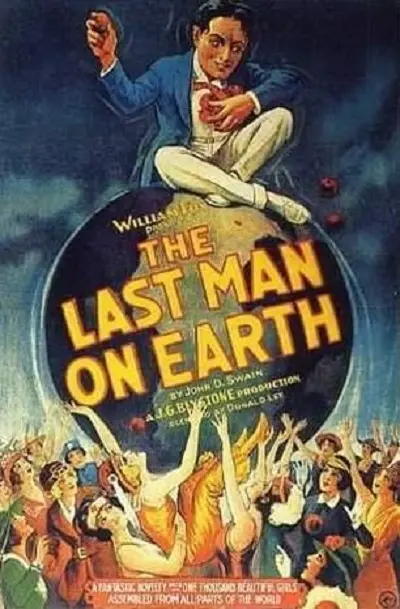
A definitive 6.1/10 rating for a film that redefined the boundaries of cult cinema. The Last Man on Earth remains a cornerstone of transgressive art.
To witness The Last Man on Earth is to step into a fever dream of 1920s speculative fiction. Directed with a surprising sense of pacing, this film operates as a satirical mirror, reflecting the anxieties of an era grappling with the burgeoning suffrage movement and the shifting dynamics of post-war society. Unlike the gritty realism found in contemporaneous dramas like The Easiest Way, this production leans heavily into the grotesque and the whimsical, creating a world where the biological rarity of the male sex transforms the protagonist into a living relic.
The screenplay, penned by Donald W. Lee and John D. Swain, utilizes the 'masculitis' plague not merely as a plot device for cheap laughs, but as a scalpel to dissect the nature of desire and social utility. When we first encounter Elmer Smith in the 1940 prologue, his rejection by Hattie is framed as a personal tragedy of the highest order. It is the classic catalyst for the hermit archetype, a trope explored with varying degrees of intensity in films like The Snarl. However, the film quickly pivots into a broader sociological commentary as the timeline leaps into the 'future' of 1950.
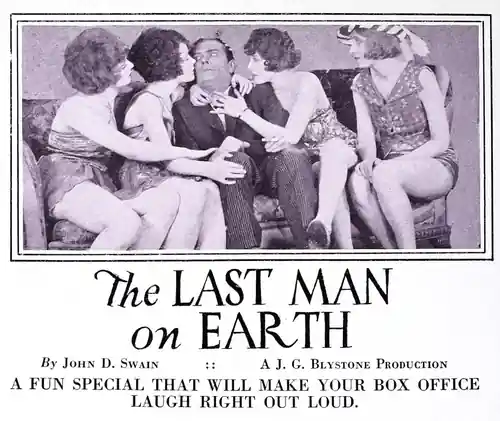
The visual world-building of the 1950 setting is a masterclass in silent film ingenuity. We see a society entirely managed by women—senators, boxers, and street sweepers—all portrayed with a blend of slapstick energy and genuine authority. The presence of Anita Garvin and Martha Mattox provides a formidable backbone to this new world order. The film avoids the trap of making the all-female society a utopia or a dystopia; instead, it presents it as a functional, albeit desperate, reality. The desperation, of course, stems from the looming extinction of the species, a stakes-raising element that gives the comedy its necessary edge.
The discovery of Elmer in the woods by a group of female hunters is staged with the frantic energy of an adventure serial, reminiscent of the high-stakes pursuit in Plunder. Yet, the tone remains firmly comedic. Elmer is not a hero in the traditional sense; he is a prize. The sequence where he is brought back to Washington D.C. and put up for auction is perhaps the film's most biting critique of commodification. Here, the male body is scrutinized, bid upon, and fought over with the same ferocity that men in 1924 might have displayed at a high-stakes poker game or a horse race.
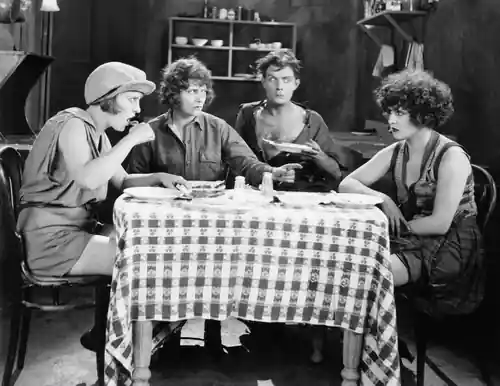
Earle Foxe delivers a performance that balances the physical comedy of Buster Keaton with a genuine sense of existential weariness. As Elmer, he is perpetually bewildered, a man who sought only to be left alone with his heartbreak, now forced to be the focal point of global obsession. His chemistry with the vast ensemble cast, including Grace Cunard and Marie Astaire, is palpable even through the grainy texture of the silent medium. The film uses his singular status to highlight the absurdity of romantic pursuit when the power dynamics are so violently skewed.
In many ways, Elmer’s journey parallels the emotional fragility seen in Broken Bubbles, where the protagonist is haunted by a past that no longer fits the present. Even as he is surrounded by millions of women who would grant him any wish, he remains fixated on the woman who rejected him. This psychological detail elevates the film from a mere 'what-if' scenario into a character study about the nature of obsession. Is Elmer truly in love, or is he simply clinging to the only thing that remains from the world he once knew?

The cinematography of The Last Man on Earth utilizes the limited technology of the era to create a sense of scale. The crowd scenes, featuring hundreds of extras, are choreographed with a precision that emphasizes the 'man-starved' frenzy of the populace. The use of intertitles is sparse but effective, allowing the visual storytelling to carry the weight of the narrative. This is a stark contrast to the more dialogue-heavy stage adaptations of the time, proving that the film's writers understood the unique strengths of the visual medium.
When comparing the film's structure to other silent works like Nancy from Nowhere, one notices a more aggressive approach to genre-bending. It is at once a romance, a sci-fi epic, and a farcical comedy. The pacing rarely flags, even during the more introspective moments in Elmer's cabin. The transition from 1940 to 1950 is handled with a narrative confidence that respects the audience's ability to bridge the gap between the character's motivation and the global catastrophe.

This film stands as a fascinating precursor to later sci-fi explorations of the 'last person on earth' theme. While later iterations like 'I Am Legend' would take a more horrific or somber tone, the 1924 version finds the inherent humor in the situation. It suggests that even in the face of species-wide extinction, human vanity, jealousy, and romantic stubbornness will persist. The film's conclusion, which brings Elmer's journey full circle, is both satisfying and slightly cynical, suggesting that even a man worth millions can still be a fool for love.
In the broader context of silent cinema, The Last Man on Earth is an essential viewing for those interested in the evolution of social satire. It lacks the heavy-handed moralizing found in films like Die Teufelskirche, opting instead for a light-hearted but persistent questioning of the status quo. The cast, from the young Buck Black to the seasoned Earle Foxe, contributes to a cohesive and entertaining experience that transcends the limitations of its time.
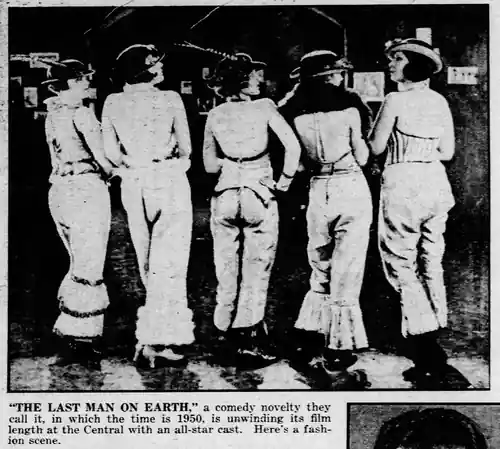
Ultimately, the film is a testament to the creativity of Donald W. Lee and the Fox Film Corporation. By taking a simple premise—a world without men—and filtering it through the lens of a rejected lover, they created a narrative that is both grand in scope and intimate in its emotional resonance. It is a work that deserves a place in the pantheon of early speculative cinema, right alongside the more frequently cited masterpieces of the era. Whether viewed as a comedic romp or a serious piece of social commentary, The Last Man on Earth remains a compelling, vibrant, and utterly unique piece of film history.
As we look back from a modern perspective, the film's 'future' of 1950 seems quaint, yet its observations on human nature remain strikingly relevant. The desire to be valued, the pain of rejection, and the absurdity of fame are universal themes that Foxe and his cast mates bring to life with undeniable charm. It is a cinematic artifact that continues to intrigue, amuse, and provoke thought nearly a century after its initial release.
IMDb 6.2
1922
Community
Log in to comment.