DbcultAccessing Vault...
Cult Review
Senior Film Conservator
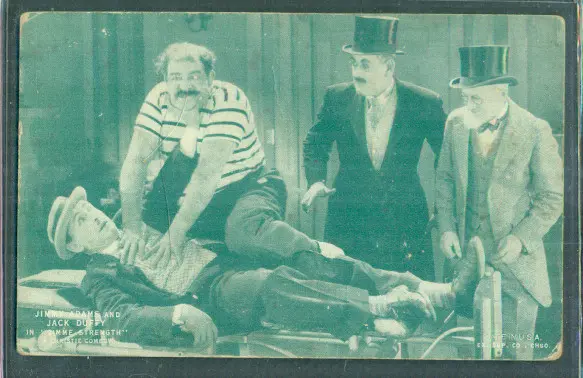
Does Gimmie Strength still pack a comedic punch after a century of cinema? Short answer: yes, provided you have an appetite for the frantic, occasionally mean-spirited physicality that defined the silent era's B-unit shorts.
This film is a must-watch for historians of the 'newspaper movie' subgenre and fans of high-energy slapstick, but it will likely alienate modern viewers who find the mockery of mental health or 'violent' medicine uncomfortable. It works. But it’s flawed.
1) This film works because the escalation of the 'treatments' creates a genuine sense of panic that transcends simple stunt work, making Jimmie’s desperation palpable.
2) This film fails because the final reveal—that the doctors are actually patients—is a tired trope even by 1920 standards, rendering the middle act’s stakes somewhat hollow in retrospect.
3) You should watch it if you enjoy the kinetic energy of films like Mighty Like a Moose or if you want to see the roots of the 'lunatics running the asylum' cinematic motif.
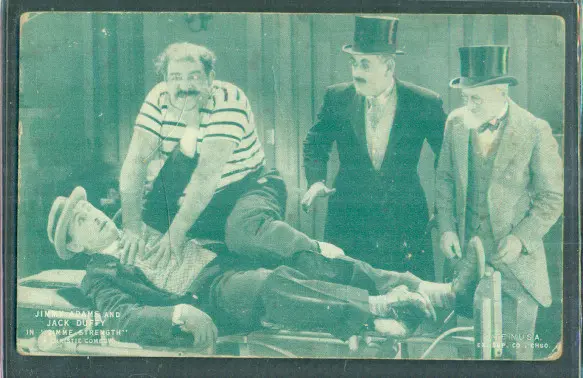
The setup of Gimmie Strength is classic silent-era cynicism. Jimmie isn't a hero; he’s a failure. Having already committed a 'grave error' in reporting, he is a man with nothing left to lose. This desperation is the engine of the film. Unlike the more whimsical protagonists found in A Youthful Affair, Jimmie is driven by the pure, terrifying need for a paycheck.
When the editor calls him back into the office as a mangled reporter is carried out on a stretcher, the film sets a dark tone. It suggests that the news industry is a meat grinder. The photograph of 'Soapy Bill' is the MacGuffin, but the real story is Jimmie’s willingness to subject himself to physical annihilation for a byline. This reflects a recurring theme in 1920s shorts where the working man is constantly under siege by his own ambitions.
The core of the film is the sequence of the four 'doctors.' In the 1920s, medical science was in a state of flux, with 'new' treatments like chiropractic and electrotherapy entering the mainstream. Gimmie Strength weaponizes these trends for comedy. The scene where Jimmie is 'twisted into more curves than a pretzel' is the standout moment of physical comedy. It’s not just a stunt; it’s an expression of the era’s anxiety toward manipulative physical therapy.
The hypnotism segment is perhaps the weakest, relying on exaggerated facial expressions that feel dated compared to the more visceral steam cabinet sequence. In the cabinet, we see Jimmie nearly roasted alive, a moment of high-stakes slapstick that rivals the dangerous stunts seen in A One Cylinder Love Riot. The visual of Jimmie running down a hallway while still wearing the massive steam cabinet is the film’s most iconic and absurd image.
Directorially, the film is standard for its time, focusing on wide shots to capture the full range of physical movement. However, the pacing is relentless. Once Jimmie enters the sanitarium, the film refuses to breathe. Every 'doctor' is given just enough time to establish their specific brand of madness before the next one takes over. This prevents the gag from becoming stale, a common issue in longer shorts like The Mystery of No. 47.
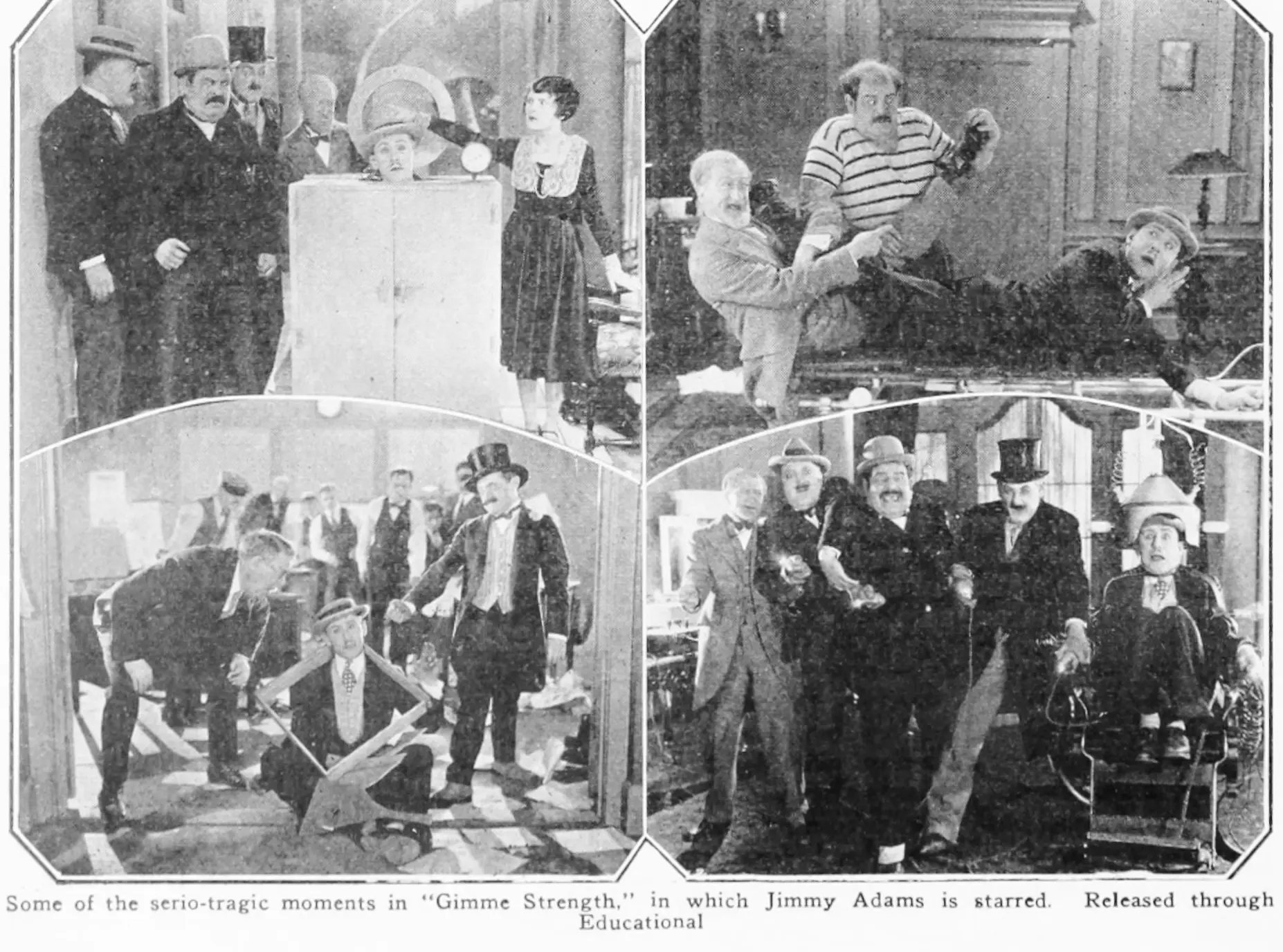
The lighting is flat, which was typical for low-budget comedies, but it serves the purpose of keeping the action clear. We need to see every contortion of Jimmie’s body and every manic glint in the 'doctors' eyes. The ensemble cast, including Kalla Pasha and Billy Engle, perform with a synchronized chaos that suggests a high level of rehearsal despite the seemingly improvised nature of the brawls.
Yes, Gimmie Strength is worth watching for its historical value and its sheer, unbridled energy. It captures a specific moment in time when the fear of modern medicine and the ruthlessness of the tabloid press collided. While it lacks the emotional depth of The Miracle of Life, it succeeds as a pure adrenaline shot of physical theater.
If you are a fan of the 'comedy of errors' where the protagonist is essentially a human ping-pong ball, this film will satisfy. It is a lean, mean, and frequently painful look at what a man will do to keep his job.
Pros:
- Inventive use of medical props for gags.
- High-energy performance by William Irving.
- Sharp satirical edge regarding the newspaper industry.
- Short runtime ensures the jokes don't overstay their welcome.
Cons:
- Relies on a predictable 'twist' ending.
- Some of the 'treatments' feel repetitive by the third act.
- The female lead, Molly Malone, is underutilized compared to her roles in My Girl Suzanne.
Gimmie Strength is a visceral reminder of the era when comedy was a contact sport. It doesn't have the grace of Chaplin or the architectural precision of Keaton, but it has a manic, desperate soul that is uniquely its own. It is a film about the survival of the fittest—or at least the survival of the most flexible. While the romance at the end feels like a tacked-on necessity to satisfy the audience, the journey through the sanitarium is a dark, hilarious ride. It isn't a masterpiece, but it is a fascinating artifact of a time when the world was just as confused by 'new science' as Jimmie is. Watch it for the pretzel-twist; stay for the reminder that your job could always be worse.
IMDb 5.8
1920
Community
Log in to comment.