DbcultAccessing Vault...
8/10
Senior Film Conservator
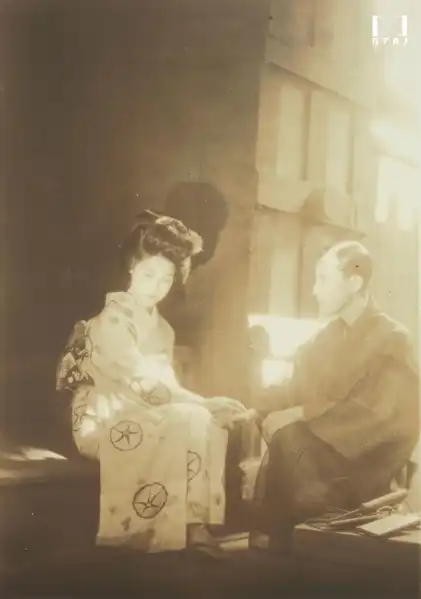
A definitive 8/10 rating for a film that redefined the boundaries of cult cinema. Gion matsuri remains a cornerstone of transgressive art.
Is this worth watching today? Only if you have a high tolerance for grainy black-and-white footage and people talking in hushed tones. If you like seeing how Kyoto looked nearly a century ago, you’ll find it pretty neat. If you want a fast-paced thriller, you will absolutely hate this.
I sat down with this one thinking it would be this big, sweeping epic because of the title. It’s really not. It’s more like a series of small rooms and back alleys where people are worrying about money or their reputation.
The sound of the flutes in the background is constant. Sometimes it’s nice, but other times it’s so high-pitched it kind of makes your teeth ache. It’s very atmospheric, I guess, but man, it really lingers.
The movie starts and you’re just there, in the middle of the prep for the big festival. It doesn't explain much. You just have to figure out who is related to who while they walk around in heavy kimonos.

There is this one shot of a woman looking through a bamboo screen that is actually really striking. The lighting hits her face just right, and for a second, you forget you're watching something from 1933. It feels like she’s looking right at you, which is a bit spooky.
The crowd scenes are the best part. You can tell they just filmed real people on the street sometimes. One guy in the background of a parade shot looks directly at the camera and looks so confused. I wonder if he ever saw the movie.
The acting is a bit all over the place. Tokihiko Okada has this very expressive face, but sometimes he looks like he’s in a completely different movie than everyone else. He has this modern energy that makes the other actors look like they are made of wood.
I found myself getting distracted by the sets. The houses look so thin, like you could knock them over with a sneeze. It adds to that feeling that the characters' lives are a bit fragile, though I might be reading too much into it.

It reminds me a little of the mood in Dirnentragödie, where everything feels a bit trapped. But instead of a dark city street, it’s this bright, noisy festival that nobody seems to be actually enjoying.
Mizoguchi (who co-wrote this) has this way of making you feel sorry for everyone. Even the characters who are being jerks seem like they just can't help it. It’s not as polished as his later stuff, but you can see the pieces starting to fit together.
The middle of the film drags. Like, really drags. There’s a conversation about a debt that seems to go on for twenty minutes in the same room. I think I checked my watch twice during that part.
If you’ve seen Manon Lescaut, you might recognize that heavy melodrama vibe. It’s that style where every emotion is dialed up to eleven, even if the actors are barely moving their bodies.

Probably not. It’s more of a curiosity. It’s like finding an old diary in an attic; some parts are fascinating and other parts are just someone complaining about their neighbors.
I liked the ending, mostly because it doesn't try to wrap everything up in a neat little bow. It just sort of fades out while the festival continues. Life goes on, the flutes keep playing, and you’re left wondering if any of those people ever found what they were looking for.
It’s a quiet experience. If you’re in the mood for something that feels like a ghost of a film, give it a go. Just make sure you have some tea or something, because it’s a slow burn.
One weird thing—I’m pretty sure I saw a dog run across the back of a scene and then disappear into a wall. Probably just a weird edit, but it made me laugh. Small mistakes like that make these old movies feel more human.
It’s definitely better than something like Youthful Cheaters, which feels way more dated in its logic. This one at least has some soul to it, even if the print is falling apart.
IMDb 8
1926
Community
Log in to comment.