DbcultAccessing Vault...
Cult Review
Senior Film Conservator
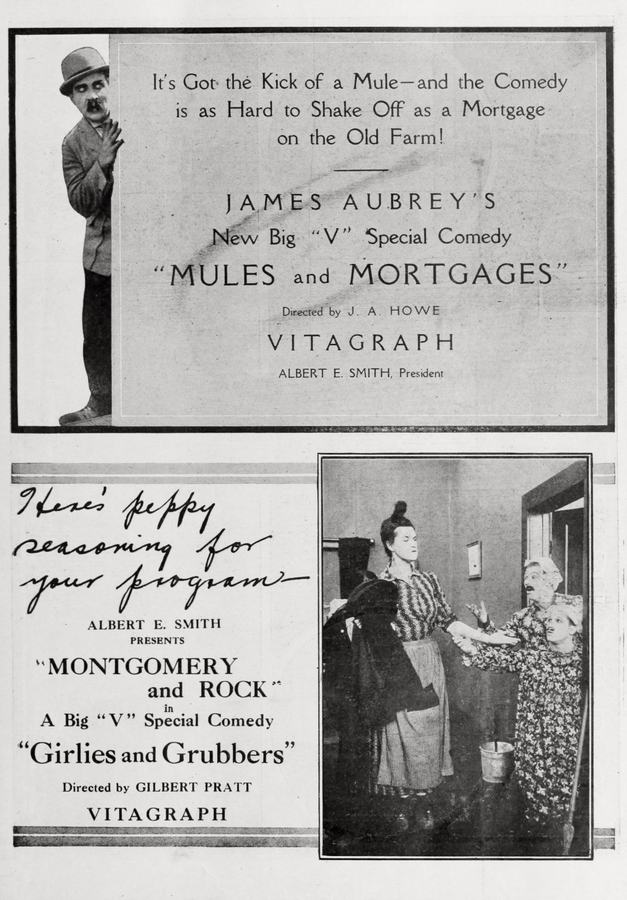
The early 20th century, particularly the vibrant period of the 1920s, served as a fertile ground for cinematic escapism, a time when the silver screen became a grand canvas for narratives that blended aspiration with absurdity. Among the myriad offerings of this era, Girlies and Grubbers emerges as a quintessential example of the silent comedy machine at its most effervescent and uninhibited. It’s a film that doesn't merely tell a story; it orchestrates a symphony of situational humor, a ballet of physical gags, and a masterclass in the art of the farcical crescendo. The genius lies in its simplicity, yet its execution is anything but. This is a world where societal lines are not just blurred but actively trampled upon by the sheer audacity of its protagonists, inviting audiences to revel in the delightful anarchy of a carefully constructed deception that inevitably unravels in the most spectacular fashion.
At its heart, Girlies and Grubbers is an exploration of identity, both genuine and fabricated, and the profound comedic potential that arises when these two collide. We are introduced to the authentic aristocracy in the form of the Honorable Mike O'Flannigan, the Duke of Dublin, and the Honorable Patrik O'Toole, the Count of Cork. These are figures of genteel bearing, traversing the countryside with an air of dignified purpose, their journey punctuated by the pleasant anticipation of visiting the nieces of their esteemed friend, Barney. Their presence establishes a benchmark of authenticity, a societal ideal against which the subsequent chaos will be measured. They represent the established order, the very fabric of respectability that is about to be comically, yet thoroughly, shredded.
In stark contrast, operating on the fringes of this gilded world, are Monty and Rock, two individuals whose circumstances are decidedly less regal. They are the quintessential 'grubbers' of the title, grappling with the ignominy of overdue rent and the indignity of a landlady who, with pragmatic ruthlessness, confiscates their only presentable attire. This act of seizure, mundane as it may seem, becomes the inciting incident for a chain of events that catapults them into a realm far beyond their station. Stripped of their clothes, and by extension, their meager social standing, they are forced into a desperate gamble. Their solution is as audacious as it is ill-conceived: a raid on a second-hand clothes dealer, where they procure suits from unsuspecting mannequins. The irony, a core component of the film's humor, is brilliantly layered: these very suits, symbols of their newfound, albeit false, elegance, were originally stolen from none other than the Duke and Count themselves, having made a circuitous journey through the hands of a common thief. This narrative thread, where the tools of deception are ironically sourced from the very victims, is a stroke of comedic genius, setting the stage for an inevitable and utterly uproarious confrontation. It subtly comments on the fluidity of possessions, and by extension, identity, in a world where appearances can be so easily manipulated. The transformation of Monty and Rock into 'Beau Brummels' – at least outwardly – is a visual delight, a testament to the power of costume in crafting an illusion.
With their stolen finery providing a thin veneer of respectability, Monty and Rock embark on their grand deception, presenting themselves to Barney's nieces as the esteemed Irish noblemen. The nieces, innocent and perhaps a little star-struck, fall prey to the charade, extending an invitation to a local cafe. This seemingly innocuous social engagement becomes the crucible for the film's most elaborate set-piece of comedic tension. The cafe scene is a masterclass in escalating stakes and physical comedy. As Monty and Rock, playing their roles with a mixture of bravado and underlying panic, confront a bill that far exceeds their non-existent funds, the tension becomes palpable. The film brilliantly captures the silent agony of these two imposters, trapped between maintaining their facade and facing utter humiliation. The introduction of 'Joe' (likely one of the two, or a close associate, a common trope in early cinema to blur individual identities within a comedic duo), who resourcefully, if illicitly, procures money from a 'drunk' patron, adds another layer of frantic ingenuity. However, this desperate act is observed by a watchful waiter, a figure of authority in this social arena, who promptly confiscates the purloined cash. This moment of apparent defeat is swiftly overturned by Monty's quick-witted, almost balletic, pickpocketing of the waiter, replacing the money with a salt cellar. The audience is treated to a silent gasp of relief, only for it to be comically dashed by the 'drunk's' dog, a loyal if unwitting agent of chaos, who retrieves the salt cellar and returns it to its master. This sequence, a microcosm of the entire film's energy, exemplifies the intricate choreography of silent slapstick, where every gesture, every facial expression, and every prop contributes to the comedic effect. The waiter's dawning realization of the trick, his furious pursuit of the two imposters, is a classic silent film chase, propelled by indignant rage and the sheer absurdity of the situation. It’s a scene that could easily stand alone as a short film in its own right, a testament to the writers Earl Montgomery and Joe Rock's understanding of comedic pacing and visual storytelling.
As Monty and Rock are unceremoniously ejected from the cafe, the plot threads begin to converge with a delightful inevitability. The genuine Mike and Pat, having finally located and recognized the nieces, are engaging them in conversation, setting the stage for the film's central confrontation. The return of the disheveled, yet still defiant, Monty and Rock to the cafe, only to find their aristocratic counterparts already there, sparks a brilliant explosion of comedic confusion. The silent screen, with its reliance on exaggerated gestures and facial expressions, perfectly conveys the dawning horror on the imposters' faces and the bewildered recognition on the part of the real Duke and Count. This moment of unmasking is not merely a plot point; it's a comedic explosion, an unraveling of the entire carefully constructed deception. The ensuing confrontation, hinted at by Mike and Pat initiating 'something,' signifies a shift from subtle deception to overt conflict, a promise of impending physical comedy. This kind of escalating tension, where the comedic stakes continually rise, is a hallmark of effective farce. For instance, in films like Getting Mary Married, while different in premise, the comedic resolutions often involve a similar rapid-fire escalation of misunderstandings and a quick-witted, if chaotic, resolution. The sheer discomfort of the imposters, caught red-handed, provides a rich vein of humor, amplified by the aristocratic indignation of the real noblemen.
The film then accelerates into a full-blown melee, a delightful descent into anarchic chaos. In their frantic attempts to evade the now thoroughly enraged Duke and Count, Monty and Rock stumble into another improbable encounter: the landlady and the second-hand clothes dealer. These peripheral characters, previously instrumental in setting up the initial deception, now become active participants in the unfolding pandemonium, having 'suspended business for pleasure,' a humorous nod to the magnetic pull of a good brawl. The ensuing 'melee where everyone is hitting someone else' is classic silent film slapstick, a visceral, unchoreographed dance of punches, shoves, and tumbling bodies. It’s a moment of pure, unadulterated physical comedy, where the logic of the narrative momentarily dissolves into a joyous celebration of unbridled pandemonium. These scenes often drew immense laughter from audiences, offering a cathartic release through exaggerated violence, a stark contrast to the often more nuanced social comedies of the era. The sheer energy and commitment of the performers, particularly Joe Rock and Earl Montgomery, would have been crucial in selling the believability of such a chaotic sequence. It’s a testament to their comedic timing and physical prowess that such a scene could be both utterly nonsensical and profoundly entertaining.
Amidst this swirling vortex of blows and bewilderment, Monty, with a surprising display of cunning, manages to extricate himself from the fray. His priority, remarkably, remains the safety of the nieces, whom he escorts to a waiting car. The discovery of Rock already ensconced within the vehicle adds another layer of comedic timing, a tacit acknowledgment of their shared predicament and their instinct for self-preservation. Just as they are poised for escape, the true Mike and Pat, having 'cleaned up' the crowd – a delightful euphemism for having emerged victorious from the brawl – burst forth, their faces contorted with a mixture of anger and vengeance. The final chase, a staple of silent cinema, begins. The car speeds away, carrying the quartet of fugitives, their faces peering back through the rear window at their enraged pursuers. This closing image is iconic: the two pairs, one fleeing, one pursuing, perfectly encapsulating the relentless, cyclical nature of comedic conflict. It leaves the audience with a lingering sense of exhilaration, a satisfying conclusion to a truly wild ride. The film's ending, a high-octane pursuit, mirrors the kind of dynamic action seen in other comedies of the era, where the resolution often involved a frantic dash for freedom or a climactic confrontation. This sense of urgency and perpetual motion is a key element that kept silent film audiences enthralled.
The performances of Joe Rock and Earl Montgomery are central to the film's success. Their comedic chemistry, a blend of physical agility and expressive pantomime, carries the narrative through its various twists and turns. As writers, they crafted a screenplay that understood the mechanics of silent comedy: the importance of visual gags, the power of escalating stakes, and the timeless appeal of characters caught in situations far beyond their control. Their ability to convey anxiety, desperation, and audacious confidence without a single spoken word is a testament to their craft. The film, in many ways, reflects the spirit of the 1920s: a period of dramatic social change, where traditional hierarchies were being challenged, and the pursuit of pleasure and personal gain often took precedence. The idea of two 'grubbers' successfully impersonating 'girlies' (or rather, attracting 'girlies' through impersonation) and dukes speaks volumes about the era's fascination with upward mobility and the blurring of class distinctions. While not a direct social commentary in the vein of a film like Who Pays?, which often delved into more serious societal issues, Girlies and Grubbers uses its comedic lens to playfully poke fun at established norms. It’s a celebration of the underdog, even if that underdog is a scoundrel. The film’s enduring charm lies in its commitment to pure, unadulterated entertainment, a quality that transcends the decades. It doesn't aspire to profound intellectual insights, but rather to the simple, joyous act of making its audience laugh, a goal it achieves with remarkable success. The visual storytelling, characteristic of the period, relies heavily on exaggerated gestures and facial expressions, a language universally understood and appreciated. This is a film that could be screened today, and despite the absence of dialogue, its narrative clarity and comedic timing would still resonate with modern audiences, a true mark of its timeless quality. The energy, the pace, and the sheer audacity of its plot make it a delightful piece of cinematic history, reminding us of the foundational power of visual storytelling and the enduring appeal of a good, honest laugh.
In the grand tapestry of silent cinema, Girlies and Grubbers holds its own as a vibrant, energetic piece of comedic artistry. It's a film that, through its intricate plot of mistaken identities, its riotous cafe scene, and its climactic brawl and chase, encapsulates the very essence of silent slapstick. The contributions of Joe Rock and Earl Montgomery, both in front of and behind the camera, are undeniable, crafting a narrative that is both meticulously planned and wonderfully chaotic. The film’s ability to weave together disparate elements – stolen clothes, aristocratic tours, desperate grifters, loyal dogs, and furious pursuits – into a cohesive and utterly hilarious whole is a testament to its creative prowess. It serves as a delightful reminder of an era when storytelling was often communicated through exaggerated movement and expressive faces, proving that laughter, indeed, needs no words. The film's legacy lies in its pure entertainment value, a testament to the universal appeal of a well-executed farce. It invites viewers to suspend disbelief and simply revel in the absurdity, a quality that ensures its place as a charming, if often overlooked, gem of early cinematic comedy. The sheer joy derived from watching the meticulously choreographed chaos unfold, from the initial deception to the final, frantic escape, is what makes Girlies and Grubbers a truly memorable experience. It is a film that captures the exuberance and inventiveness of its time, a rollicking ride that proves the enduring power of a good laugh.
The intricate dance between the genuine and the counterfeit, the rich and the poor, is a narrative device as old as storytelling itself, yet Girlies and Grubbers injects it with a fresh, frenetic energy that is distinctly early 20th century. The film doesn't just present a series of gags; it builds a world where the consequences of one absurd decision ripple outwards, creating an ever-expanding circle of comedic complications. The sheer audacity of Monty and Rock to not only steal clothes but to then use them to impersonate the very people they were stolen from is a narrative hook that immediately engages the audience. This kind of brazenness, often seen in characters like those in The Shimmy Gym where physical comedy drives much of the plot, highlights the era's appreciation for characters who pushed boundaries, even if those boundaries were societal norms. The film's humor is derived not just from the visual gags, but from the psychological tension of the imposters constantly on the verge of exposure. Every interaction, every social situation, becomes a minefield they must navigate with a precarious blend of bluff and improvisation. This underlying tension elevates the slapstick, giving it a dramatic backbone that makes the eventual explosions of physical comedy all the more satisfying. The film is a vibrant snapshot of a bygone era, yet its core comedic principles remain timeless, making it a valuable piece for anyone interested in the evolution of cinematic humor.
Consider the subtle yet effective characterizations: the dignified, if somewhat oblivious, Mike and Pat; the quick-witted, desperate Monty and Rock; the no-nonsense landlady; the opportunistic second-hand dealer; and even the unwitting, loyal dog. Each plays a crucial role in the comedic machinery, their interactions fueling the escalating chaos. The film avoids one-dimensional caricatures, instead presenting characters who, despite their comedic roles, feel grounded enough for their predicaments to resonate. The sheer physicality required of silent film actors is on full display here. Every gesture, every facial contortion, every slap and stumble had to convey emotion and narrative without the aid of dialogue. Joe Rock and Earl Montgomery, as both performers and writers, demonstrate a profound understanding of this unique art form. They choreograph not just the plot, but the very movements of their characters, turning a simple cafe visit into a theatrical spectacle of near-disaster and ingenious escape. The film's ability to maintain a rapid pace without sacrificing clarity is another testament to its well-crafted structure. Each scene flows seamlessly into the next, building momentum towards the riotous climax. This relentless forward motion is a hallmark of successful silent comedies, designed to keep audiences engaged and entertained from start to finish. It’s a testament to the enduring appeal of pure, unadulterated comedic storytelling, executed with precision and panache, reminding us that sometimes, the simplest stories, told with the most elaborate physical humor, are the most profound in their ability to evoke genuine laughter. The film is a joyous romp, a testament to the power of visual comedy and the timeless appeal of characters who dare to dream, however illicitly, beyond their station.
IMDb 6.2
1932
Community
Log in to comment.