DbcultAccessing Vault...
4.3/10
Senior Film Conservator
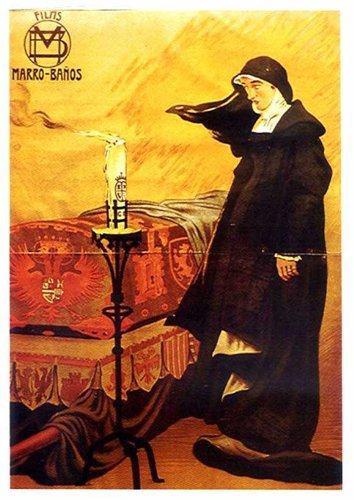
A definitive 4.3/10 rating for a film that redefined the boundaries of cult cinema. Locura de amor remains a cornerstone of transgressive art.
Picture, if you will, a nitrate strip sizzling inside a hand-cranked projector in a draughty Barcelona salon, 1909: the audience, top-hatted and mantilla-draped, gasps as a queen’s mind unspools in monochrome staccato. Locura de amor is less a period curio than a scalpel—110 years old yet still surgically sharp—dissecting how patriarchal spectacle weaponizes intimacy. It predates Hitchcock’s “gaslight” by decades, yet every frame vibrates with the same malignant wattage.
Director Ricardo de Baños, moonlighting from his day job as royal-court cinematographer, hijacks the iconography of majesty itself. He floods torchères upward so that cheekbones become daggers; he cross-cuts between Juana’s hallucinated trysts and Felipe’s very real conquests, making us wonder which cruelty is more lethal—delusion or deceit. The camera lingers on José Argelagués’s Felipe like a lover it secretly loathes: velvet doublet unlaced just enough to reveal the serpent-coil of collarbones, eyes glinting with the lazy menace of a house-cat tormenting a vole.
Where contemporaries such as Life and Passion of Jesus Christ relished biblical pageantry, Locura weaponizes Catholic baroque against its own institutions. Altars loom like guillotines; incense clouds become interrogation lamps. In one chiaroscuro tableau, Juana kneels before a retable whose polychrome Virgins seem to purse their lips in collective disapproval—heresy by way of female desire.
The film’s tinting strategy deserves its own dissertation. Domestic scenes drip with amber that sours into bile-green the moment Felipe enters; Juana’s imprisonment is drenched in cold cyan that feels decades ahead of The Corbett-Fitzsimmons Fight’s stark monochrome realism. You half expect the celluloid to hiss like a match head dunked in water.
Joaquín Carrasco’s Felipe is not the moustache-twirling cad of textbook history; he’s something more insidious—an influencer avant la lettre, curating his cruelty for maximum courtly buzz. Watch the way he adjusts his pearl earring while Juana raves: a micro-gesture that says observe how her frenzy burnishes my power. Opposite him, Elvira Fremont’s Juana performs hysteria as though it were a slow-motion striptease of dignity, peeling away layer after layer until what remains is raw, glittering need.
The supporting cast orbit like toxic planets: José Durany’s archbishop measures Juana’s pulse with fingers still dripping chrism, a reminder that the Church dispenses both salvation and diagnosis. Together they form a tableau vivant of institutional complicity that feels eerily predictive of 21st-century social media pile-ons.
De Baños alternates between languorous 30-second takes—time enough for Juana’s paranoia to ferment—and smash-cuts so abrupt they feel like slaps. One match-cut leaps from a candle snuffed in Felipe’s chamber to the sudden extinguishing of Juana’s eyes in close-up; continuity be damned, the ember of her sanity gutters out between frames. Compared to the static tableaux of 69th Regiment Passing in Review, this is proto-Soviet montage with a Spanish dagger between its teeth.
Contemporary exhibitors accompanied the reel with live habanera bands or, in seedy Madrid barrios, solo accordionists wheezing out Asturian laments. Today, when viewed on 4K restoration with a judiciously minimalist score—think glass harmonica and distant church bells—the film mutates into an echo chamber of unspoken accusations. Each creak of the projector becomes Juana’s ribcage cracking under the weight of crown and crucifix alike.
Shot barely a year after Spain’s catastrophic defeat in the Spanish-American War, Locura exhales imperial melancholy. The court’s gilt ceilings look brittle, as though gilded grief might flake off at any moment. Felipe’s Flemish velvet is imported, a subtle nod to the Habsburg gold hemorrhaging out of Iberian coffers. Juana’s madness, then, doubles as a national psychosis: an empire mourning its potency, projecting its dread onto the body of a queen.
For decades the film survived only in fragments until Filmoteca Española stitched a 67-minute print from two decaying negatives discovered in a disused monastery in Ávila. Cue cinephile Twitter exploding into GIF threads of Juana’s sideways glance—now repurposed as a reaction meme for toxic-ex flashbacks. Meanwhile, flamenco choreographers borrow Fremont’s hand-flutter, looping it into avant-garde ballets about gendered surveillance. Even Pedro Almodóvar name-checked the picture in his 2021 masterclass: “Locura taught me that melodrama is politics wearing perfume.”
MUBI rotates a restored scan every March during its “Mad Women of History” sidebar; Criterion Channel offers an academic 2K with optional commentary by historian Dr. María López-Fernández. Physical media gluttons can hunt the out-of-print Sesión Barroca Blu-ray, which sandwiches the film between Faust and Don Quijote—a triple bill of Spanish soul-sickness.
Viewing Locura de amor in our age of curated Instagram personas and weaponized gossip feels like staring into a dark mirror smeared with kohl and tears. The flickering image of a queen, gaslit into oblivion by husband, church, and state, reverberates through every Reddit relationship thread where some stranger asks, “Am I the drama?” The film’s ultimate horror lies not in Juana’s madness but in the realization that Felipe’s methodology—love as spectacle, fidelity as public-relations—has merely upgraded its operating system. We no longer need stone towers; digital thrones suffice.
So let the hand-crank spin. Let the cyan shadows devour the amber glow. And when the screen plunges into black, notice how the silhouette of your own reflection lingers like a crown you never asked to wear.
IMDb 6.2
1918
Community
Log in to comment.