DbcultAccessing Vault...
7/10
Senior Film Conservator
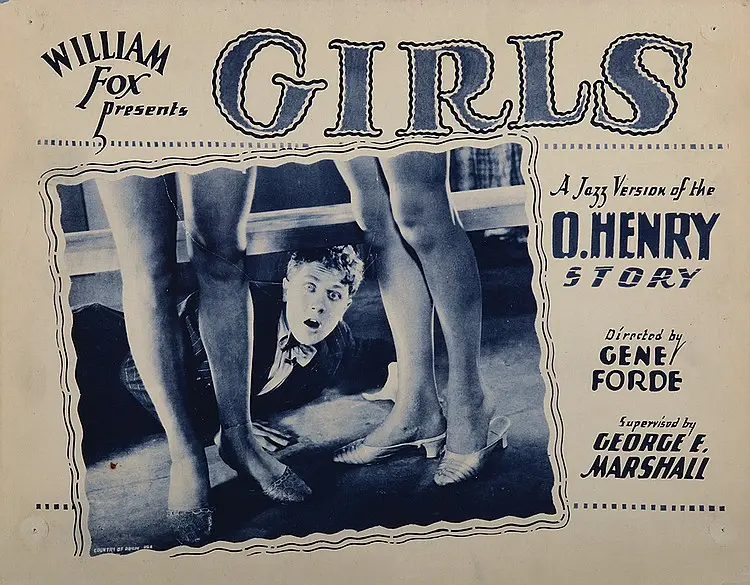
A definitive 7/10 rating for a film that redefined the boundaries of cult cinema. Girls remains a cornerstone of transgressive art.
Short answer: yes, but primarily for those who treat cinema as a time capsule rather than a modern entertainment vehicle. If you are looking for the high-octane slapstick of Keaton or the refined pathos of Chaplin, you might find this O. Henry adaptation a bit too lightweight for your palate.
This film is for the silent film historian, the O. Henry enthusiast, and those who enjoy the specific aesthetic of 1920s 'college humor' magazines brought to life. It is absolutely NOT for viewers who demand fast-paced narrative arcs or those who are easily frustrated by the dated gender politics of the pre-Code era.
1) This film works because it captures the frantic, slightly predatory energy of 1920s youth culture before the Great Depression soured the mood.
2) This film fails because its central conflict—a man who hasn't been kissed—feels remarkably thin even for a silent-era short, lacking the slapstick rigor of contemporary masterpieces.
3) You should watch it if you want to see Sally Phipps at the height of her flapper appeal or if you are tracking the evolution of the American 'rom-com' trope.
The premise of Girls (1927) hinges on a concept that feels alien today: the public shaming of a man for his romantic inexperience. In the 1920s, the 'college movie' was a burgeoning genre that often focused on athletes and socialites. Here, we get the inverse.
Richard Walling plays Tom Drake with a stiff, nervous energy that perfectly encapsulates the 'Kissless Wonder' persona. He is the antithesis of the era's 'Sheik' archetype. When the campus finds out about his lack of experience, the reaction is treated with the gravity of a scandal, much like the social tensions found in Young Mrs. Winthrop.
One specific scene in the campus quad stands out. As Tom walks by, groups of students whisper and point, the intertitles translating their mockery with a sharp, O. Henry-esque wit. It’s a moment that highlights the cruelty of youth, a theme that remains surprisingly relevant even if the specific 'sin' has changed.
The film treats Tom’s virginity (or at least his kiss-less state) not as a moral virtue, but as a social disability. It is a problem to be solved by the community. This collective obsession with one man's private life creates a narrative tension that is both absurd and oddly compelling.
Sally Phipps, as Louise Anna, is the true engine of this film. While Walling is the reactive element, Phipps is the proactive force. She embodies the 'New Woman' of the 1920s—decisive, energetic, and unafraid to take the lead in romantic matters.
Her performance is a masterclass in silent film gesturing. She doesn't just walk; she marches. When she decides to 'solve' Tom’s problem, her expressions shift from pity to a business-like determination that is genuinely funny.
Compare her energy to the more dramatic tones found in True Blue. Phipps is playing for laughs, but there’s a layer of social commentary beneath her flapper exterior. She represents the shift in power dynamics that was occurring in the real world at the time.
The interaction between the two leads is the film's strongest asset. In the scene where Louise Anna first attempts to corner Tom for the 'remedial' kiss, the physical comedy is top-notch. Walling’s retreat and Phipps’ advance create a rhythmic back-and-forth that feels like a dance.
As an O. Henry adaptation, the film carries a certain expectation of irony. O. Henry’s stories are famous for their 'sting in the tail,' and while this film is a straightforward comedy, it retains that sense of situational irony.
The irony here is that the more the campus tries to 'fix' Tom, the more they reveal their own superficiality. The film subtly suggests that the 'Kissless Wonder' might be the only sincere person in a sea of performative collegians. It is a critique hidden in a confection.
This irony is similar to what we see in Balloons, where simple objects or labels take on outsized importance. In Girls (1927), a kiss is never just a kiss; it is a social validation, a rite of passage, and a punchline all at once.
The writers manage to keep the pace brisk, which is necessary for a story with such a thin premise. By the time the third act rolls around, the 'Kissless Wonder' label has transformed from a badge of shame into a catalyst for total campus chaos.
1927 was a pivotal year for cinema. While the world was marveling at the technical heights of German Expressionism or the epic scale of American westerns, small comedies like this were the bread and butter of the industry.
The cinematography in Girls (1927) is functional but effective. It lacks the haunting shadows of The House of Mystery, opting instead for high-key lighting that emphasizes the bright, optimistic world of the American university.
The use of close-ups is particularly notable. When the camera lingers on Tom’s terrified face as Louise Anna approaches, we see the influence of the evolving grammar of film. These shots allow the audience to connect with the character's internal panic in a way that stage acting never could.
The production design is a nostalgic dream. From the pennants on the walls to the specific cut of the sweaters, the film is a visual encyclopedia of 1920s youth culture. It feels authentic because it was contemporary, not a historical recreation.
Girls (1927) is worth watching for anyone interested in the roots of the modern romantic comedy. It provides a fascinating look at how social labels were constructed and dismantled in the early 20th century. While it may not be a technical marvel, its charm is undeniable.
The film is a light, breezy experience. It does not demand deep intellectual labor. Instead, it invites the viewer to laugh at the absurdity of social expectations. It is a minor work, but a delightful one.
Girls (1927) is a charming, if slight, relic of a bygone era. It works. But it’s flawed. The film succeeds as a character study of a social outcast, but it occasionally trips over its own simplicity. Richard Walling and Sally Phipps make for an engaging pair, providing enough spark to keep the 'Kissless Wonder' from becoming a bore.
Ultimately, the film is a fascinating look at the 'peer pressure' of the 1920s. It suggests that the desire to fit in is a universal human condition, whether it's 1927 or 2024. If you have an hour to spare and a love for the flicker of the silent screen, give it a look. It’s a trifle, but it’s a well-made one.
IMDb —
1915
Community
Log in to comment.