DbcultAccessing Vault...
Cult Review
Senior Film Conservator
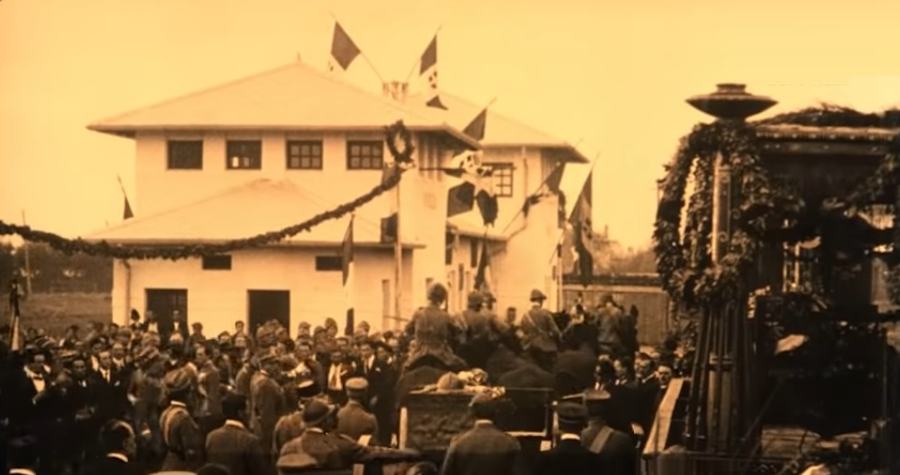
Gloria: Apoteosi del soldato ignoto is not a film in the conventional sense; it is an act of remembrance etched in celluloid. The absence of dialogue, the deliberate pacing, the stark black-and-white imagery—all conspire to evoke a collective mourning that transcends time. This is a film that does not entertain but implores viewers to witness, to bear silent testimony to the anonymity of sacrifice. The procession of the Unknown Soldier, a ritual steeped in military precision and national symbolism, becomes here a metaphor for the human condition: each individual life reduced to a nameless echo in the cacophony of history.
The Italian Film Federation and the Cinema Phototechnical Union, the architects of this visual elegy, employ a documentary style that is both clinical and poetic. The camera lingers on details—a soldier’s weathered face, the hilt of a sword clutched in salute, the flutter of a flag over an unmarked grave—that transform the abstract into the intimate. This is not the war of headlines or battlefields but the war of memory, of the quiet grief that lingers long after the guns have fallen silent.
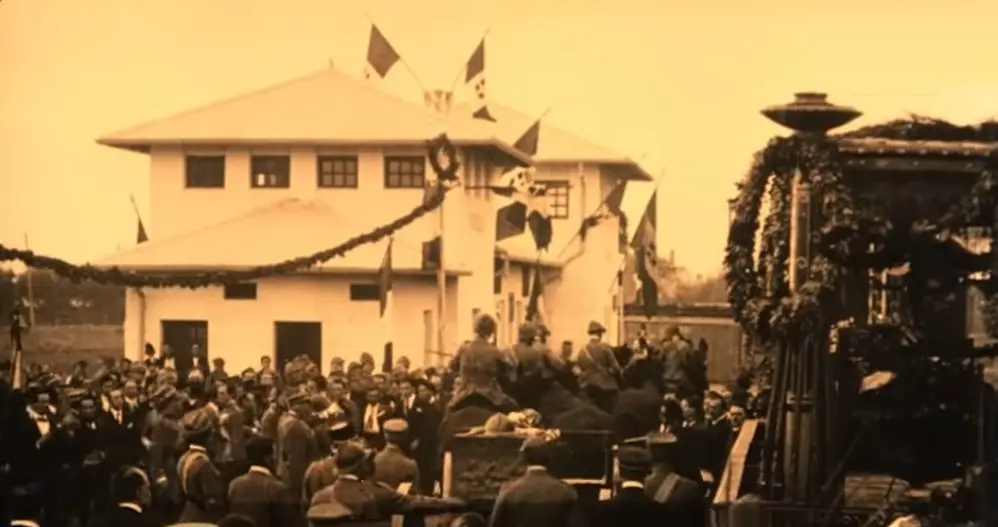
What elevates Gloria beyond mere archival footage is its ability to universalize the Italian context. The Unknown Soldier, though a national symbol, becomes a global archetype. His anonymity mirrors the countless lives lost in wars past and present, their stories unrecorded, their names unspoken. The film’s power lies in its refusal to romanticize. There is no valorization of conflict here, only a stark acknowledgment of its cost. The procession, with its measured steps and solemn music, is a counterpoint to the chaos of war, a ritual to impose order on the disorder of loss.
The absence of a cast or credited writers is not a limitation but a feature. The focus is unambiguously on the subject itself, the act of collective remembrance. This approach evokes parallels with other silent tributes to war’s collateral damage, such as Milestones of Life, which similarly captures the fragility of human endeavor against the backdrop of historical forces. Yet Gloria distinguishes itself through its minimalist aesthetic and unflinching attention to the banality of grief. It is a film that trusts the viewer to infer meaning from the visual, much like The Vicar of Wakefield, which explores moral ambiguity through narrative restraint.
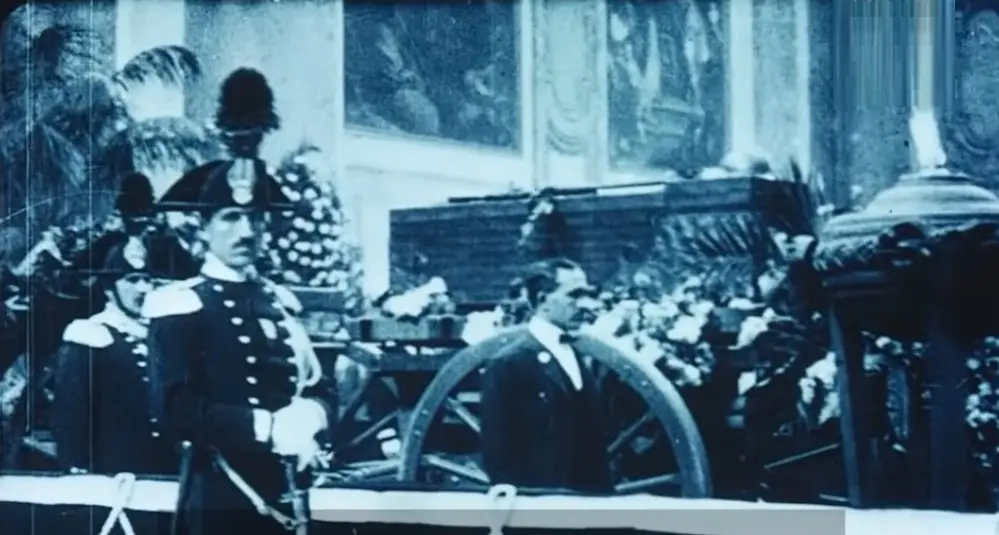
The film’s composition is a masterclass in visual storytelling. Wide-angle shots of the procession emphasize its grandeur, while close-ups of individual faces—some tear-streaked, others stoic—humanize the collective. The interplay of light and shadow, particularly in scenes of the coffin being carried through the city, creates a chiaroscuro effect reminiscent of Baroque art. This technique underscores the duality of mourning: a public display of unity and a private confrontation with personal loss.
One cannot ignore the political undercurrents. The Unknown Soldier’s veneration, while ostensibly a gesture of respect, also serves a nationalistic purpose. In the interwar period, Italy was keen to forge a cohesive identity, and such rituals were tools of statecraft. However, Gloria avoids propagandistic overtones by focusing on the ritual’s emotional and spiritual dimensions. It is here that the film finds kinship with Doch isterzannoy Pol’shi, which, though rooted in a different historical context, similarly interrogates the interplay between memory and ideology.
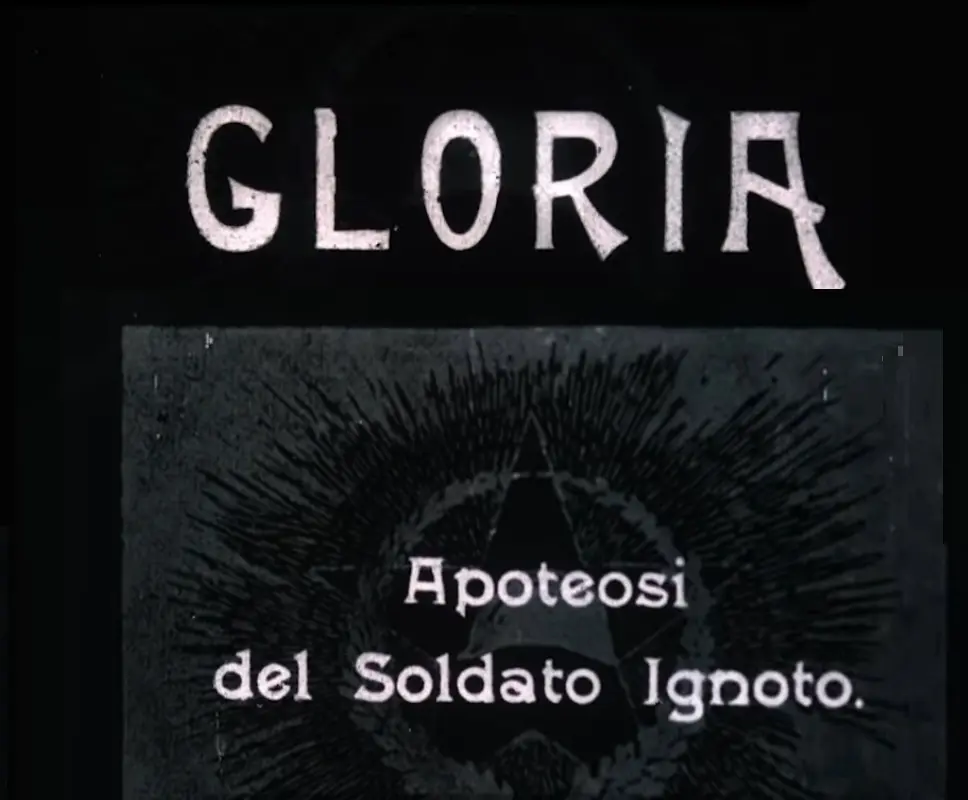
The documentary’s pacing is deliberate, almost meditative. There is a sense of ritual in every frame, as if the camera itself is part of the procession. This slow rhythm allows the viewer to absorb the weight of the event, to linger on the details that might otherwise escape notice. The effect is akin to walking through a war memorial, where each name on a cenotaph becomes a personal story. In this regard, Gloria shares thematic DNA with The Purple Dress, which uses minimalist narrative to explore the intersections of personal and collective trauma.
Critics may argue that the film’s lack of narrative structure renders it inert, a series of images without emotional throughline. Yet this is precisely its strength. Gloria does not seek to entertain or provoke; it exists to honor. Its power lies in its restraint, in the spaces it leaves empty. The viewer is left to fill those voids with their own reflections, a testament to the film’s trust in its audience. This approach recalls the work of Le lys du Mont Saint-Michel, which also employs silence and stillness to evoke reverence.
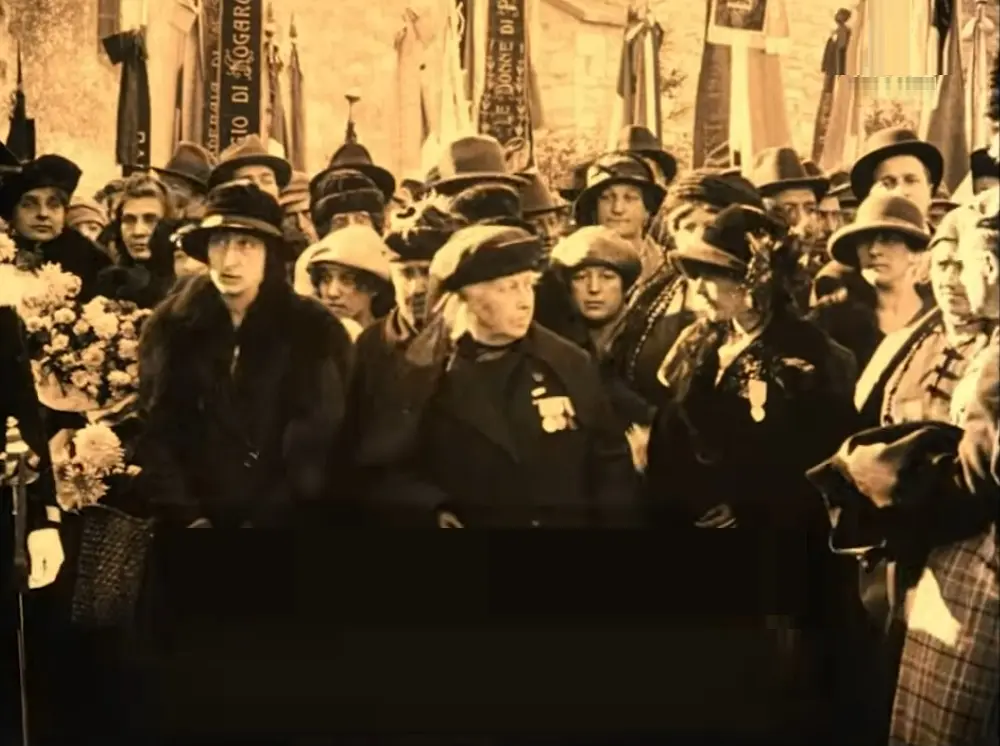
The historical context of Gloria cannot be overstated. Created in the aftermath of a world-altering conflict, the film is a product of a generation grappling with the aftermath of unprecedented loss. The Unknown Soldier, whose identity is deliberately obscured, becomes a symbol of the era’s disillusionment. The film’s unembellished style mirrors the rawness of this period, where traditional narratives of heroism gave way to more nuanced understandings of sacrifice. This thematic depth places it in conversation with Prinzessin Tatjanah, which similarly interrogates the collision of personal and political identity.
Technically, Gloria is a triumph. The operators of the Italian Film Federation achieve a balance between documentary realism and artistic vision. The use of long takes, particularly in scenes of the procession, creates a sense of inevitability, as if the march is both a beginning and an end. The film’s visual language—stark, unadorned, yet deeply expressive—resonates with the aesthetics of Armenian cinema, evident in Armenia, the Cradle of Humanity under the Shadow of Mount Ararat, which similarly uses landscape as a mirror for historical trauma.
In the broader cinematic canon, Gloria occupies a unique niche. It is neither a narrative film nor a conventional documentary but a hybrid form that defies categorization. This ambiguity is its legacy. The film challenges viewers to engage beyond the screen, to connect its imagery with the broader tapestry of human history. It invites comparisons to Nimrod Ambrose, where the personal and the political intersect in similarly unorthodox ways. Yet Gloria’s singular focus on anonymity sets it apart, offering a template for how cinema can honor the unsung.
For modern audiences, Gloria serves as a stark reminder of the costs of war and the enduring need for remembrance. In an age where information is abundant but attention fleeting, the film’s slow, deliberate pace demands patience. It rewards those who grant it with a profound emotional resonance. The final image—the coffin laid to rest in a mausoleum of silence—lingers long after the credits roll, a haunting coda to the human cost of conflict.
To fully appreciate Gloria is to embrace its contradictions. It is a film that is both specific and universal, historical and timeless. Its power lies not in what it shows but in what it omits, in the spaces between the frames where the viewer is invited to dwell. It is a testament to the belief that even in anonymity, there is dignity; in silence, there is memory.

IMDb —
1923
Community
Log in to comment.