DbcultAccessing Vault...
Cult Review
Senior Film Conservator
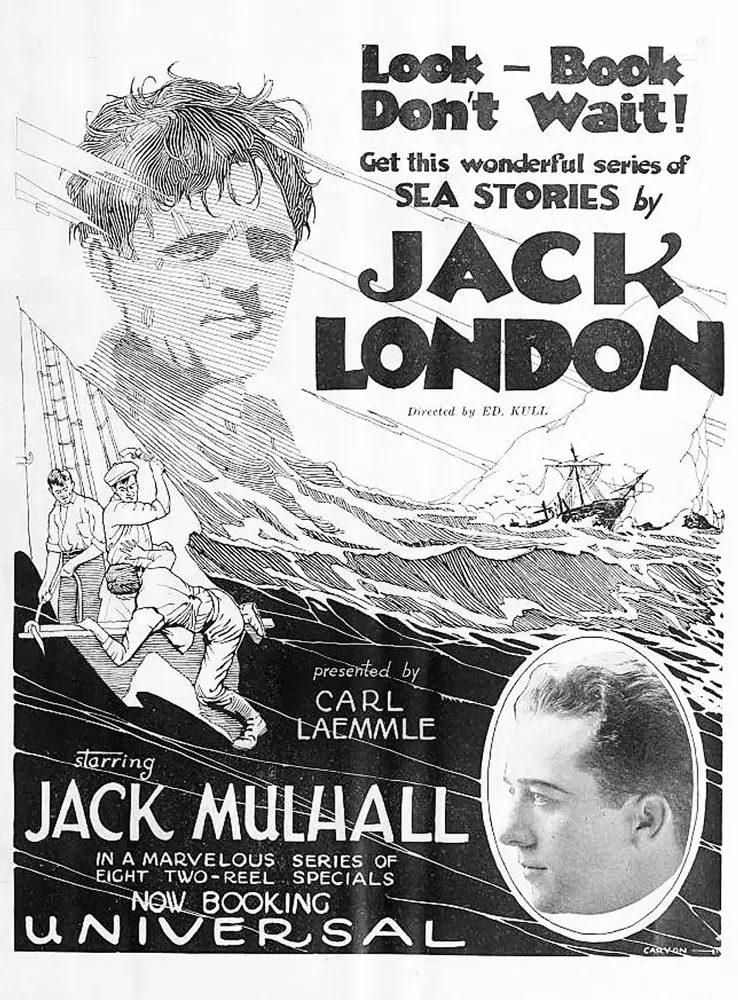
In the grand tapestry of early American cinema, few adaptations capture the raw, unvarnished energy of the maritime frontier with as much localized fervor as the 1918 production of The Yellow Handkerchief. Based on the semi-autobiographical accounts found in Jack London’s Tales of the Fish Patrol, this film serves as a fascinating specimen of the transition from late-Victorian literary sensibilities to the burgeoning visual language of the silent feature. While many films of this era sought refuge in the theatrical confines of indoor sets, this work embraces the unpredictable elements of the San Francisco Bay, a choice that imbues every frame with a sense of verisimilitude often lacking in contemporary dramas like Just a Wife.
The narrative is not merely a chase; it is an ethnographic study of a very specific time and place. The San Francisco Bay of the early 1900s was a melting pot of industrial ambition and desperate survival. The Chinese fishermen, led by the enigmatic figure associated with the yellow handkerchief, are not depicted as mere caricatures of villainy—a common pitfall in films like The Man Beneath—but rather as a highly organized, tactical group navigating a legal system that they perceive as an external imposition on their traditional livelihoods. This creates a moral ambiguity that elevates the film above the standard 'law vs. outlaw' tropes seen in The Broken Trestle.
Jack Mulhall, an actor whose career would span the seismic shifts of Hollywood’s Golden Age, delivers a performance here that is strikingly modern in its restraint. As the Fish Patrol deputy, he avoids the over-gesticulation that plagued many of his peers in the late 1910s. His movements are calculated and rhythmic, echoing the labor of the sailors he pursues. There is a palpable tension in his interactions with Louise Lorraine, who provides a necessary emotional counterweight to the film’s otherwise austere maritime focus. Lorraine, though early in her career, exhibits a screen presence that hints at the versatility she would later display in more fantastical settings like The Island of Desire.
The chemistry between the leads is subtle, often communicated through shared glances against the backdrop of a churning sea. This romantic subplot, while essential for the era's commercial viability, never feels as contrived as the domestic entanglements in Whose Baby Are You?. Instead, the relationship is forged in the crucible of danger, making the stakes feel visceral and earned. James Wang’s portrayal of the primary antagonist is equally noteworthy; he brings a dignity to the role that challenges the xenophobic undercurrents prevalent in 1918 American society, providing a much more nuanced depiction than the stylized orientalism found in Mystic Mush.
Technically, The Yellow Handkerchief is a masterclass in the utilization of natural light and location shooting. The director, working alongside screenwriters Anthony Coldeway and Jack London himself, understands the inherent drama of the horizon line. The camera, often mounted on swaying vessels, captures the kinetic energy of the chase with a fluidity that was revolutionary for its time. The use of wide shots to establish the isolation of the fishing boats against the vastness of the Pacific serves to underscore the themes of man versus nature, a recurring motif in London's oeuvre.
The editing, particularly during the climactic capture of the Chinese fishing band, utilizes a rhythmic cross-cutting that predates the sophisticated montage techniques of the Soviet school. It builds a sense of mounting dread that is far more effective than the static melodrama of Colomba or the stage-bound aesthetics of A csábító. The yellow handkerchief itself is utilized as a focal point in the black-and-white frame—a splash of conceptual color that guides the viewer's eye through the chaotic action. This visual shorthand is an early example of symbolic storytelling that would become a staple of the noir genre in later decades, as seen in the shadowy depths of After Dark.
Beyond the surface-level excitement of the maritime pursuit, the film delves into the complex socio-political landscape of California’s fishing industry. The 'coast laws' mentioned in the plot are not merely background noise; they represent the first wave of environmental regulation that often clashed with the survival strategies of immigrant communities. By focusing on the capture of the Chinese fishermen, the film inadvertently highlights the racialized nature of law enforcement in the early 20th century. Unlike the lighthearted social commentary of Charlie Chaplin's The Idle Class, this film approaches class and racial friction with a somber, almost documentarian lens.
The conflict is framed as a 'debt of honor'—a term that resonates with the themes of The Debt of Honor—where the protagonists are bound by duty to uphold a law that they may personally find burdensome. The fishermen, conversely, are bound by a code of silence and mutual protection. This clash of codes is what gives the film its enduring relevance. It is not a simple story of good versus evil, but a collision of two different worldviews, each justified within its own internal logic. This depth of characterization is a testament to Jack London’s involvement, as his writing always sought to find the 'primitive' truth beneath the veneer of civilization, much like the explorations in The Eyes of the World.
When comparing The Yellow Handkerchief to other contemporary releases like Half a Rogue or Ready to Serve, the film’s superior production value and thematic density become immediately apparent. While many 1918 films were content to remain within the confines of domestic comedy or simple morality plays, this production ventured into the foggy unknown of the San Francisco waterfront. It shares a certain atmospheric kinship with the sprawling urban mysteries of Mysteries of London, yet it swaps the cobblestone streets for the unpredictable currents of the bay.
The legacy of the film lies in its refusal to simplify the maritime experience. The sea is not just a setting; it is an active participant in the drama, a force that dictates the movements of both the hunters and the hunted. The capture of the band is not celebrated with triumphant fanfare but is presented as a grim necessity of a modernizing world. This sobering conclusion sets it apart from the more escapist fare of its day. The yellow handkerchief, once a flag of rebellion, becomes a shroud for a way of life that was rapidly disappearing under the pressure of the 20th century's industrial expansion. It remains a haunting image, a flicker of defiance in a world of grey water and iron law.
Ultimately, the film stands as a monumental achievement in early action cinema. It bridges the gap between the adventurous spirit of 19th-century literature and the burgeoning technical prowess of the motion picture. For the modern viewer, it offers a window into a vanished world, meticulously preserved through the lens of a camera that wasn't afraid to get wet. It is a stark reminder that even in the silent era, the most powerful stories were those that found their voice in the roar of the ocean and the silent, fluttering signal of a single piece of cloth.
IMDb —
1917
Community
Log in to comment.