DbcultAccessing Vault...
Cult Review
Senior Film Conservator
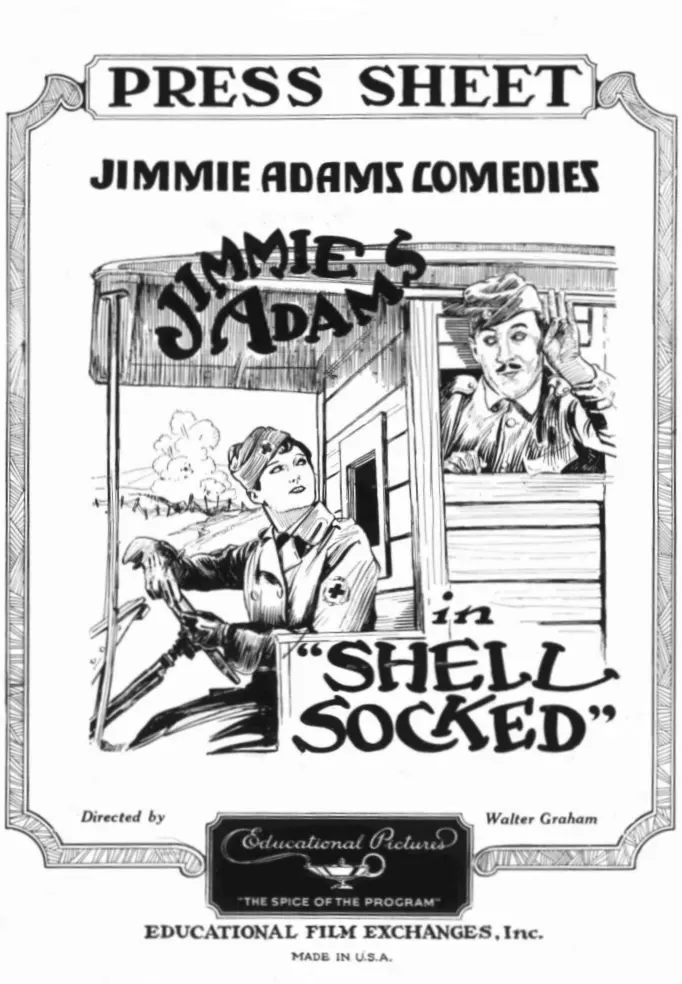
Is 'Shell Socked' worth watching today? Short answer: yes, but with significant caveats. This 1920s silent romantic comedy, while undeniably a product of its era, offers a quaint glimpse into early filmmaking and wartime sentimentality that can be genuinely charming for the right viewer.
However, it is decidedly not for those seeking modern pacing, complex narratives, or a departure from silent film conventions. It’s a delightful historical curiosity for cinephiles and enthusiasts of early cinema, but likely a challenging watch for casual viewers accustomed to contemporary storytelling.
Stepping back into the 1920s to view a film like 'Shell Socked' is less about finding a hidden gem that transcends time and more about appreciating the foundations upon which modern cinema was built. This particular offering, a WWI-set romantic comedy, doesn't reinvent the wheel. Instead, it polishes a familiar narrative with the earnest, often exaggerated, charm characteristic of the silent era. It’s a film that demands patience and a willingness to engage with its historical context, rewarding those who do with a simple, heartwarming tale.
Silent comedies, particularly those rooted in romantic misunderstandings, often struggle to translate their specific brand of humor across a century, yet 'Shell Socked' manages a surprising degree of resilience. Its premise, a love triangle complicated by wartime machinations, remains universally understood, even if its execution feels distinctly antique. This is not a film to be judged by contemporary metrics of sophistication or realism, but rather as a cultural artifact that still manages to elicit smiles.
This film works because: Its simple, earnest charm and the foundational romantic comedy premise remain surprisingly accessible, offering a window into early screen humor and character archetypes. The physical comedy and clear character motivations cut through the century-old silence.
This film fails because: Its reliance on silent film acting conventions, broad physical comedy, and a predictable narrative structure can feel dated and slow to modern sensibilities, often requiring a generous suspension of disbelief. The lack of nuanced dialogue also limits character depth.
You should watch it if: You have a keen interest in film history, particularly the silent era, enjoy lighthearted period romances, or appreciate the foundational elements that shaped comedic storytelling in cinema. It’s also a good pick for those curious about WWI-era entertainment.
At its heart, 'Shell Socked' is a straightforward romantic comedy, albeit one set against the grim backdrop of World War I France. The film centers on Jimmie, a soldier smitten with Vera, a Red Cross girl. This affection, however, is not exclusive, as two of Jimmie's comrades also harbor desires for Vera, setting the stage for classic comedic rivalry. The plot quickly escalates when these rivals, driven by jealousy, conspire to remove Jimmie from the romantic equation by arranging for him to undertake a perilous mission.
The beauty of this narrative, simple as it is, lies in its predictable yet satisfying turn. The rivals' scheme to sideline Jimmie backfires spectacularly when they discover his 'dangerous mission' is, in fact, an escort detail for Vera to meet her father, the commanding general. This revelation instantly transforms their malicious intent into desperate attempts to join the very mission they orchestrated, leading to a scramble that provides much of the film's comedic momentum.
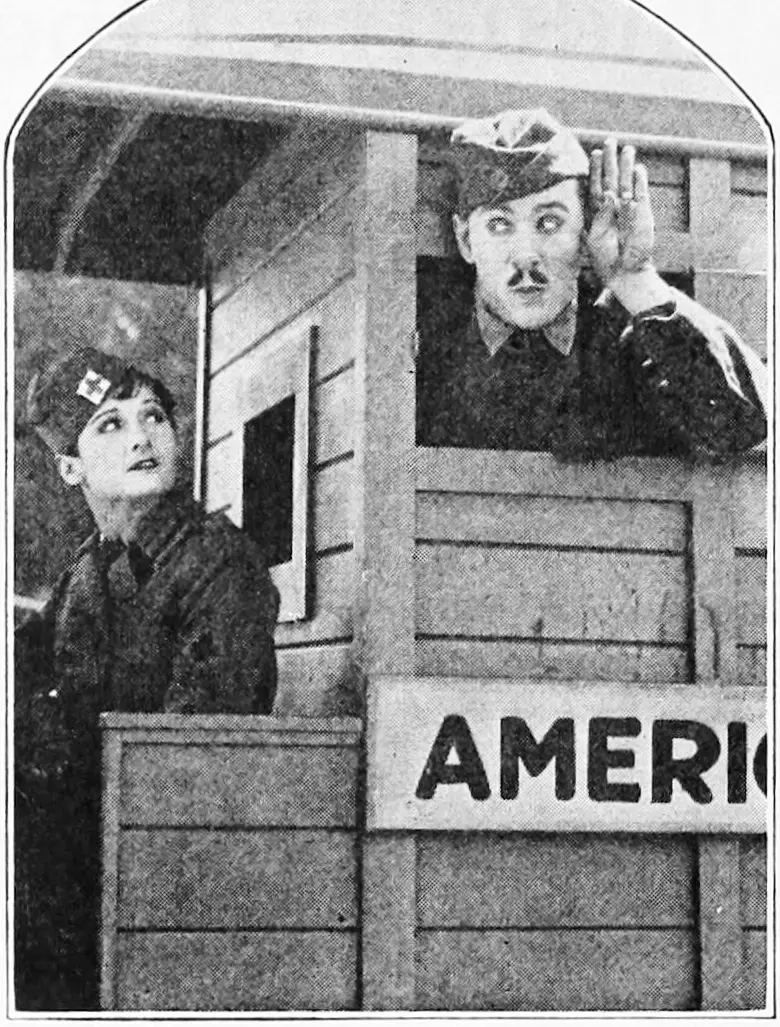
While the plot is thin by today's standards, it is remarkably effective for its time. It relies on clear character motivations – love, jealousy, and self-preservation – that are easily conveyed through silent acting and intertitles. The shift from malicious plotting to frantic backtracking is a well-worn trope, but here it's executed with an endearing naiveté that works within the film's gentle comedic framework. There are no grand philosophical statements or deep character arcs; just a delightful dance of misunderstanding and opportunism.
This narrative structure, while simple, is a testament to the era's storytelling conventions. Films like Behind the Front (1926) similarly leveraged military settings for comedic effect, often focusing on the human elements rather than the brutal realities of war. 'Shell Socked' fits squarely into this tradition, using the war as a stage for lighthearted romantic shenanigans rather than a subject for serious reflection. It’s a choice that allows the film to maintain its buoyant tone, even when dealing with the implied dangers of a battlefield setting.
The film inadvertently serves as a fascinating sociological document, revealing much about gender roles and wartime morale propaganda of its time, perhaps more so than its intended romantic comedy beats. Its portrayal of a Red Cross girl, for instance, is less about her humanitarian work and more about her role as an object of affection and motivation for the soldiers.
The success of any silent film hinges heavily on the expressiveness of its cast, and 'Shell Socked' is no exception. The actors here are tasked with conveying emotion, intent, and humor without the aid of spoken dialogue, relying instead on exaggerated facial expressions, physical gestures, and the occasional intertitle. This style of performance, while a hallmark of the era, can be a hurdle for modern viewers unaccustomed to its theatricality.
Jimmie Adams, as the eponymous Jimmie, embodies the earnest, slightly naive hero. His performance is characterized by wide-eyed sincerity and a physical comedy that often involves flustered reactions or clumsy attempts at heroism. Consider the moment Jimmie receives his 'dangerous' orders; Adams’ wide-eyed apprehension, contrasted with the knowing, mischievous glances exchanged between his rivals, Eddie Baker and William Irving, speaks volumes without a single intertitle. It’s a masterclass in silent comedic timing, where the audience is privy to the conspiracy even as Jimmie remains blissfully unaware.
Vera Steadman, as the Red Cross girl Vera, embodies the archetypal wartime ingenue. Her scenes are often framed to highlight her compassionate demeanor, perhaps a close-up revealing a subtle shift from concern to playful exasperation when dealing with the soldiers' antics. One can almost picture her gentle, reassuring smile as she tends to a 'wounded' soldier, only for her gaze to linger on Jimmie, hinting at her burgeoning affections. Her presence is a calming, often alluring, counterpoint to the boisterous male performances.
Eddie Baker and William Irving, as Jimmie's jealous rivals, deliver performances that are delightfully broad and villainous in a comedic sense. Their conniving looks, furtive whispers (implied through gestures), and eventual panicked scramble to join the mission are the backbone of the film's humor. Their shift from smug satisfaction to desperate pleading is a highlight, showcasing the rapid emotional swings common in silent comedies. George Burton, likely in a supporting role, would have contributed to the ensemble's dynamic, adding another layer to the comedic backdrop.
While the performances are effective within their historical context, they can feel somewhat one-dimensional to a contemporary audience. The subtlety and internal conflict that modern acting often explores are largely absent, replaced by externalized emotions and clear-cut motivations. This is not a criticism of the actors, but rather an observation on the stylistic demands of silent film. Their work here is foundational, demonstrating the power of visual storytelling before sound took center stage.
The direction in 'Shell Socked', likely by an uncredited hand or a collective effort common in early productions, focuses on clarity and comedic timing. The camera work, while not groundbreaking, serves the story effectively, employing standard silent film techniques to guide the viewer's eye and emphasize key emotional beats. Close-ups are used sparingly but effectively to highlight expressions, while wider shots establish the wartime environment and the physical comedy unfolding within it.
One can imagine scenes where the camera holds on Jimmie's face as he processes a new piece of information, or pans across the three rival soldiers to capture their contrasting reactions to Vera. The use of depth of field, though primitive by today's standards, would have been employed to differentiate foreground action from background elements, perhaps showing soldiers milling about in a camp while the main trio plots or schemes. It's functional filmmaking, designed to tell a story efficiently with the tools available.
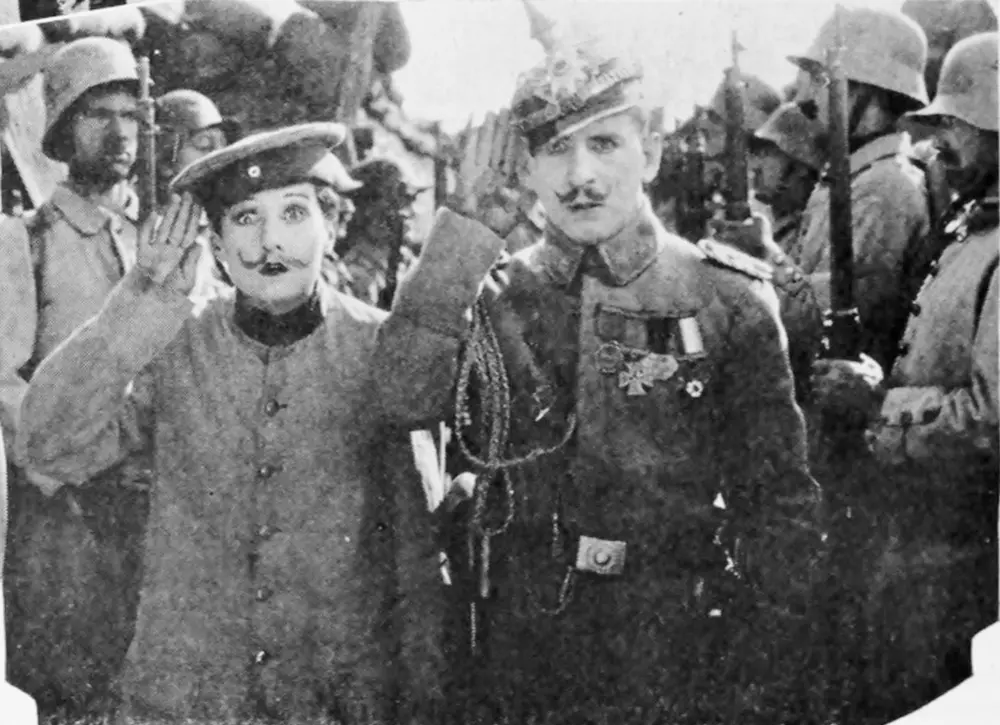
Cinematography, for a film of this vintage, would have been straightforward. Lighting would primarily be practical or broad, designed to ensure visibility rather than artistic mood. The black and white palette, characteristic of the era, lends a timeless quality to the setting, even if the technology itself is dated. The visual language is direct: what you see is what you get, with little room for abstract interpretation. This directness, ironically, can be refreshing in an age of overly complex visual narratives.
The editing would have been largely linear, focusing on scene transitions that maintain narrative flow. Quick cuts might be used for comedic effect, such as the rapid succession of the rivals' faces as they realize the true nature of Jimmie's mission, conveying their sudden shift from glee to panic. While perhaps not as experimental as some of the montage theory being developed in other parts of the world at the time (think Velikiye dni Rossiiskoi revolutsii s 28/II po 4/III 1917 goda), it serves the lighthearted tone of 'Shell Socked' perfectly. It works. But it’s flawed.
The pacing of 'Shell Socked' is typical of early silent comedies: deliberate in its setup, allowing characters and situations to unfold through action and reaction, but capable of quickening for comedic climaxes. Modern viewers might find the initial setup somewhat slow, as the film takes its time to establish the love triangle and the rivals' motivations. This is largely due to the inherent constraints of silent filmmaking, where exposition relies on visual cues and intertitles rather than rapid-fire dialogue.
However, once the central conflict – the dangerous mission that turns out to be an escort for Vera – is introduced, the pace likely picks up. The frantic efforts of the rival soldiers to reverse their scheme would have provided a surge of energy, characterized by physical comedy, hurried movements, and perhaps even chase sequences. This ebb and flow of pacing is a common technique used to build comedic tension and then release it in a burst of activity.
The tone of the film is overwhelmingly lighthearted and comedic, despite its WWI setting. There's a clear intention to entertain and amuse, rather than to dwell on the harsh realities of war. The conflict serves primarily as a backdrop for romantic comedy, much like in films such as The Field of Honor, where personal dramas unfold against a grander, yet often softened, historical canvas. This choice of tone makes 'Shell Socked' an escapist piece, offering a momentary respite from the world, both for its original audience and for contemporary viewers looking for a historical curiosity.
There's an innocence to the humor, a reliance on broad strokes and easily identifiable character types. This is not the biting satire or intricate character study of later war-time comedies; it's a simpler, more direct appeal to laughter. The humor is derived from human folly, jealousy, and the delightful irony of a plan gone awry. It's charmingly naive, and that very naiveté is a significant part of its enduring appeal for those willing to embrace it.
For the casual moviegoer, 'Shell Socked' might prove a challenging watch. Its silent format, exaggerated acting, and deliberate pacing require a different kind of engagement than modern cinema. If you're looking for a quick, easily digestible piece of entertainment, this isn't it. The lack of dialogue, while a defining feature, can be a barrier for those unaccustomed to following narratives solely through visual cues and intertitles.
However, for film historians, silent film enthusiasts, or anyone with a deep curiosity about the evolution of cinematic storytelling, 'Shell Socked' is absolutely worth your time. It offers a valuable window into early 20th-century entertainment, showcasing the foundational elements of romantic comedy and wartime narratives. It's a chance to see how basic storytelling principles were applied before the advent of sound revolutionized the industry.
It also serves as a fascinating cultural artifact, reflecting the social norms and popular entertainment of its time. Watching it is less about being swept away by a thrilling plot and more about appreciating the craft and context. It’s a piece of history, still capable of eliciting a chuckle and a moment of reflection on how far cinema has come. It's charming. But it's also a product of its time.
'Shell Socked' is not a film that will redefine your understanding of cinema, nor will it likely become a go-to rewatch for casual viewing. What it offers, however, is a delightful and historically significant window into a bygone era of filmmaking. It's a charming, if unsophisticated, romantic comedy that uses its World War I setting as a backdrop for human foibles and affections.
For those with an appreciation for film history and the unique artistry of the silent screen, it’s a worthwhile endeavor. You'll find genuine smiles in its simple humor and a quiet satisfaction in witnessing the roots of cinematic storytelling. It’s a quaint journey back in time, one that reminds us that even with limited tools, the power of a good story, however simple, can still resonate. Give it a chance, but adjust your expectations to its historical context.
IMDb —
1917
Community
Log in to comment.