DbcultAccessing Vault...
Cult Review
Senior Film Conservator
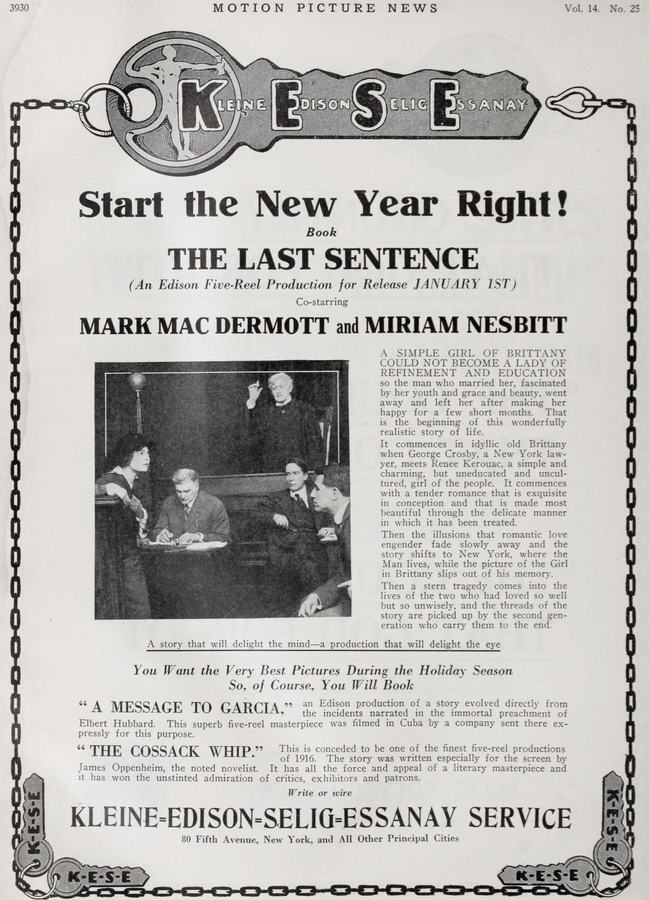
The cinematic landscape, particularly in its nascent stages, frequently grappled with narratives of moral complexity and societal stricture, often presenting protagonists ensnared by their own choices and the inexorable march of fate. 'The Last Sentence' is a potent exemplar of this tradition, a sprawling, melodramatic epic that meticulously charts the downfall of a man whose initial romantic folly metastasizes into a multi-generational tragedy. It is a film that dares to explore the profound consequences of youthful indiscretion, the corrosive power of secrets, and the crushing weight of a patriarchal society's judgment, all culminating in a climax of almost unbearable dramatic irony.
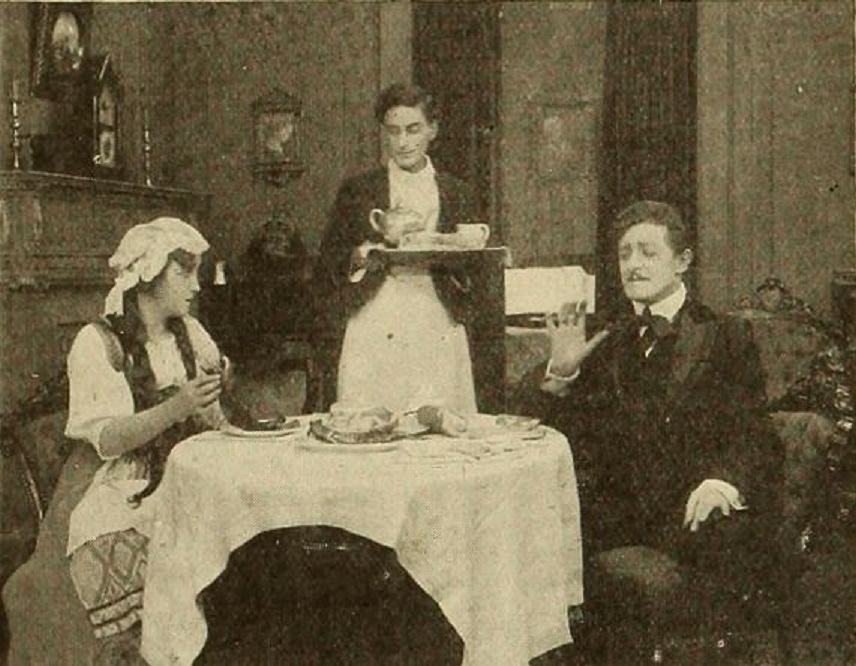
Our journey begins with George Crosby, a figure emblematic of the privileged, yet existentially restless, male protagonist often seen in early 20th-century narratives. A New York lawyer, ostensibly successful but deeply discontented, George yearns for an escape from the prosaic demands of his legal career. His artistic inclinations, specifically a passion for painting, serve as his conduit to a different existence, leading him across the Atlantic to the rugged, picturesque shores of Brittany. This setting, in itself, is a classic cinematic trope: the exotic locale as a catalyst for transformation, a place where societal norms are momentarily suspended, allowing for illicit or unconventional romances to blossom. Here, George encounters Renée Kerouac, a fisher-maiden whose untamed beauty and earthy charm immediately captivate his artistic eye. He sketches her, not merely as a subject, but as a 'Corregan,' a mythical fairy of Breton folklore, known for her destructive allure to men who spurn her love. This initial characterization of Renée as a mythical, almost dangerous figure, subtly foreshadows the tragic trajectory of their relationship, implying a primal force that George, with all his urban sophistication, is ill-equipped to handle.
The intrusion of Hoel Kalloc, Renée's jealous betrothed, forces George's hand, culminating in a hurried marriage designed to protect Renée from Hoel's brutality. This act, seemingly noble, is the first in a cascade of decisions driven more by immediate circumstance and a flawed sense of chivalry than genuine, enduring affection. The honeymoon period, predictably, is short-lived. George, accustomed to the intellectual and social milieu of New York, soon confronts the stark reality of Renée's 'inferiority'—her lack of polish, her unsophisticated manners, her inability to seamlessly integrate into his world. This class disparity, a perennial theme in film, from the likes of Zaza to The Dancing Girl, becomes the insurmountable barrier. George's solution is a chilling act of emotional abandonment disguised as benevolence: he sends Renée to a convent for education, promising to send for her once she has acquired the requisite 'polish.' This decision, rationalized by societal expectations and George's own burgeoning regret, is the fulcrum upon which the entire tragedy pivots. It is a betrayal of trust, a denial of their bond, and a testament to the societal pressures that often dictated marital choices in that era.
Returning to America, George buries his secret marriage, attempting to erase Renée from his consciousness. Yet, the past, as always, has a tenacious grip. A note arrives, shattering his carefully constructed facade: Renée has given birth to a daughter, named after him. This revelation, though briefly unsettling, is soon overshadowed by his burgeoning affection for Cynthia Ford, a woman who embodies the very sophistication and social standing he desires. The news of Renée's and the baby's supposed death in a convent fire provides a convenient, albeit tragic, absolution, paving the way for his engagement to Cynthia. This sequence of events, rife with dramatic irony, highlights George's moral cowardice and his tendency to prioritize social convenience over emotional honesty. The narrative's deliberate manipulation of fate—the 'death' and subsequent 'resurrection' of Renée—intensifies the sense of an inescapable destiny, reminiscent of the narrative twists in films like Der Weg des Todes where characters are relentlessly pursued by their past misdeeds.
The following winter brings the inevitable: Renée reappears, a ghost from George's forgotten past, a living embodiment of his suppressed guilt. His cruel denial of knowing her, a desperate attempt to preserve his new life with Cynthia, seals Renée's tragic fate. Leaving her infant daughter in the care of a landlady, Renée vanishes into the desolate night, her body discovered the next morning in the snow, clutching the crucifix George had given her, inscribed with the single, poignant word: 'pardon.' This image is profoundly powerful, a stark visual representation of Renée's suffering and George's culpability. The landlady's identification of Renée as the baby's mother forces George into a grudging acknowledgment of his paternity, albeit one he immediately attempts to privatize by paying the landlady to care for the child, Georgette, and placing the crucifix around her neck. This act, while providing for the child, is devoid of genuine paternal love, a transaction designed to keep the secret buried. The film here touches upon themes of maternal sacrifice and the plight of the 'unwed mother,' echoing sentiments found in contemporary films like Maternity, albeit with a far more tragic outcome for the mother.
Four years pass, and George and Cynthia welcome their own daughter, Georgianna, into the world, a symbol of their legitimate, untainted union. Meanwhile, Georgette, the hidden truth, drifts further from George's sphere, wandering away from the landlady's home and finding an unlikely adoption by a barge captain. This narrative device, while perhaps stretching credulity, serves to further isolate Georgette from her true lineage, setting the stage for the later, more devastating revelation. The arrival of Raoul Kerouac, Renée's brother and now a French naval officer, searching for his lost sister, injects a renewed sense of urgency and impending doom. His mistaken belief that Cynthia's daughter, Georgianna, is Georgette, forces George to confront his past once more. He writes a confession, a document meant to finally unburden his soul, but Cynthia, in an act of unwavering faith and perhaps deliberate blindness, destroys it unread. Her loyalty, while admirable in its devotion, ultimately contributes to the perpetuation of the secret, delaying the inevitable and intensifying the eventual heartbreak. This highlights a fascinating dynamic: Cynthia's love, intended to protect George, inadvertently prolongs his suffering and sets the stage for future catastrophe.
Sixteen years later, the narrative reaches its chilling crescendo. George Crosby, now a revered Judge Crosby, presides over a courtroom, a figure of authority and impartiality. Georgette, meanwhile, has endured a life far removed from the comforts of her biological father's world. She has secretly married Val, the reprobate son of Mrs. Lewis, in whose home she works as a maid. This union, born of desperation and a need for connection, is fraught with its own challenges, primarily Val's struggle with drink. His mother's attempt to 'cure' him by sending him away leaves Georgette alone, vulnerable, and pregnant. The stage is meticulously set for the ultimate confrontation between past and present, father and daughter, justice and fate. The film's structural brilliance lies in this slow, agonizing build-up, allowing the audience to anticipate the tragic collision with a growing sense of dread.
The climactic courtroom scene is a masterclass in dramatic irony and emotional devastation. A young woman is brought before Judge Crosby, charged with the murder of her baby. Her conviction seems assured, the evidence damning. Among the exhibits, a small, worn crucifix is presented—the very crucifix George had given Renée, bearing the word 'pardon' scratched on its back. The sight of this object, a tangible link to his deepest, darkest secret, triggers a profound, agonizing recognition in Judge Crosby. The realization that the prisoner before him, the woman he is about to condemn, is his own daughter, Georgette, strikes him with the force of a physical blow. Seized with apoplexy, his body betraying the seismic shock to his soul, he pronounces the death sentence. It is 'his last sentence' in more ways than one, a verdict that shatters his moral authority and irrevocably breaks his spirit. This scene rivals the most powerful moments in cinematic history, echoing the Greek tragedies where fate, not human will, dictates the ultimate outcome. The film here explores the devastating irony of justice, where the dispenser of judgment becomes its most tragic victim, a theme powerfully explored in films like Urteil des Arztes.
Amidst the ruins of George's life, Cynthia's love remains a beacon of unwavering devotion. Her faith in George, despite the horrific revelations, endures. She dedicates herself to securing Georgette's freedom, a testament to her profound capacity for empathy and forgiveness. Her relentless efforts finally yield fruit when she manages to get word to Val in the far north, whose response brings a glimmer of hope: the baby is safe with him. This twist, while perhaps a slight narrative convenience, offers a crucial counterpoint to the relentless tragedy, suggesting that even in the darkest of circumstances, love and perseverance can carve a path to redemption. Val's return with the baby, a symbol of innocence and new beginnings, allows for a belated honeymoon to Brittany for him and Georgette, a journey that mirrors George's initial fateful voyage, but with the promise of a more hopeful future.
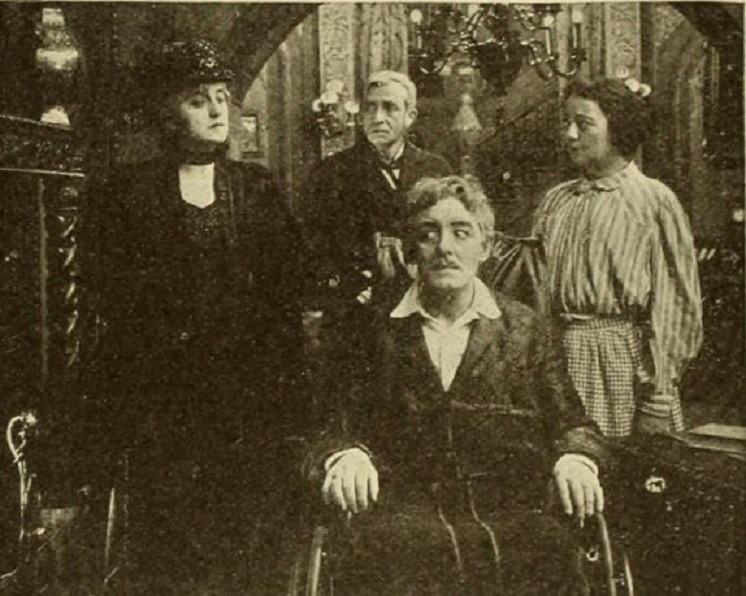
For George, the resolution is bittersweet. His body, distorted with pain from the apoplectic fit, bears the physical scars of his moral torment. Yet, for the first time in years, his heart is lightened. The truth is out, his daughter is saved, and the cycle of secrecy is broken. This ending, while not offering a complete restoration, provides a profound sense of catharsis. It suggests that while one cannot escape the consequences of one's actions, redemption, even in its most agonizing forms, is possible. The film ultimately presents a powerful commentary on the nature of justice, not merely as a legal pronouncement, but as a complex interplay of human choices, societal pressures, and the unpredictable hand of fate. The performances, particularly in an era where acting styles were often more theatrical, must have conveyed the profound emotional weight of this narrative, bringing to life characters caught in a web of their own making, striving for absolution in a world that often demands a heavy toll. 'The Last Sentence' stands as a poignant reminder that the 'sins of the father' can indeed echo through generations, but also that love, in its purest forms, possesses an enduring power to heal and, ultimately, to forgive.
The film's exploration of moral ambiguity and the devastating impact of social stratification resonates powerfully even today. George Crosby is not presented as a purely villainous figure, but rather as a flawed individual, a product of his time and class, whose initial romantic idealism is crushed by societal expectations and his own lack of courage. Renée, the 'Corregan,' becomes a tragic victim, her spirit broken by a world she cannot comprehend and a man who ultimately fails her. Georgette, the innocent offspring, bears the heaviest burden, an unwitting pawn in a game of secrets and lies. The narrative's unflinching portrayal of infanticide, a taboo subject, particularly for its time, underscores the desperation and social ostracization faced by women like Georgette. This unflinching gaze at societal ills, even through the lens of melodrama, grants 'The Last Sentence' a significant place in the history of social commentary in cinema, inviting comparisons to other narratives that dared to expose the harsh realities faced by marginalized women, such as The Man of Shame, which also delves into the societal repercussions of concealed identities and moral compromise. The intricate web of relationships, the prolonged suffering, and the eventual, hard-won peace for George, albeit at a great personal cost, makes this a compelling study of the human condition under duress.
The thematic richness of 'The Last Sentence' extends beyond individual moral failings to critique the very structures of justice and society. Judge Crosby’s pronouncement of a death sentence upon his own daughter is a brutal indictment of a system that can be blind to personal history and context, operating on rigid principles that sometimes lead to profound injustices. The word 'pardon' etched on the crucifix serves as a recurring motif, a plea for forgiveness that haunts George throughout his life, ultimately becoming a symbol of both his guilt and the possibility of grace. The film's conclusion, though physically debilitating for George, offers a spiritual release, a testament to the idea that truth, no matter how painful, ultimately sets one free. The journey of Georgette, from an abandoned child to a woman facing the gallows, and finally to a new beginning with Val, underscores the resilience of the human spirit and the enduring power of love to mend even the most shattered lives. It is a narrative that stays with you, prompting reflection on the choices we make and the long shadows they cast across our lives and the lives of those we love.
IMDb 7.3
1920
Community
Log in to comment.