DbcultAccessing Vault...
Cult Review
Senior Film Conservator
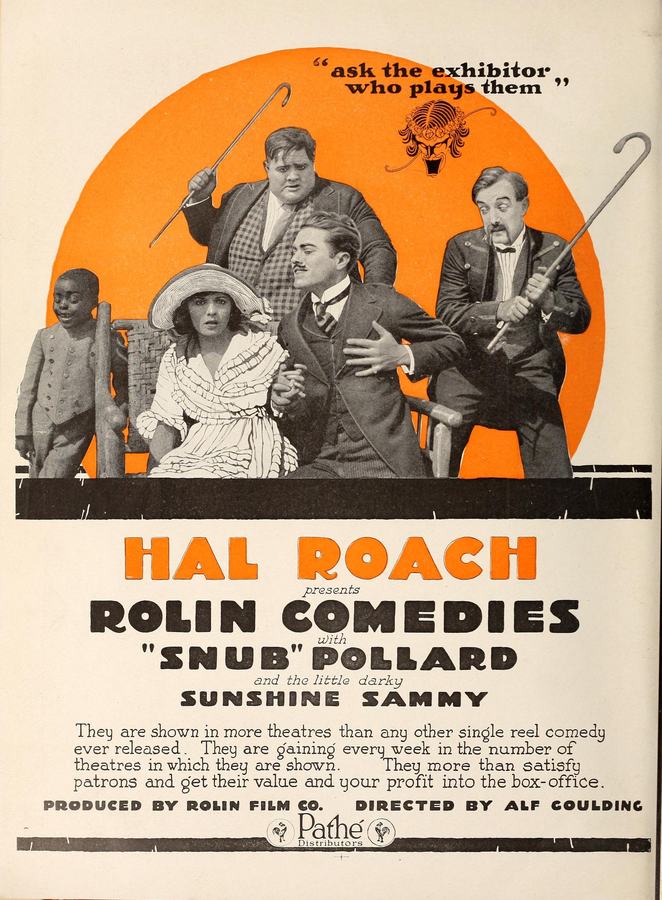
The first thing that strikes you about Go As You Please is the smell of coal smoke that seems to leak off the screen. Hal Roach, still a year away from launching Harold Lloyd into the stratosphere, crams every frame with the acrid perfume of proletarian struggle—locomotives hiss like dragons, and the city’s electric lights buzz like flies around a wound. The film’s title is a taunt: in 1919 America, you may go, but never as you please; the rails, the gates, the frock-coated ushers all insist otherwise. Yet for twelve delirious minutes Roach stages a jailbreak from determinism itself.
George Rowe—face like a collapsed accordion, limbs that unfold like a carpenter’s ruler—plays the archetypal Roach tramp: not the melancholy poet Chaplin would mint, nor the stone-faced daredevil Keaton patented, but something more volatile, a human firecracker whose fuse is lit by mere humiliation. When he steals the cream-colored invitation off a drunk boulevardier, the card becomes both passport and death warrant, a social-security ticket punched by chaos.
Inside the mansion, Roach’s camera suddenly behaves as if it, too, has been served absinthe. It glides up staircases on a crane made of wishes, pirouettes across parquet floors, then crash-zooms into Mosquini’s dimple like a voyeur diving head-first into a champagne flute. The lighting scheme is a fever dream of tungsten and candle: shadows stretch like taffy, then snap back to reveal a butler’s tray of live lobsters that will, in seconds, clamp onto gloved fingers and refuse to let go—an invertebrate revolution against the ruling class.
Class, in fact, is the rubber chicken Roach keeps inflating and popping. Compare the ballroom here to the aristocratic orgies in Les Misérables of the same year: where that literary adaptation grandly moralizes poverty, Roach stages a custard-pie dialectic. The rich don’t suffer—they slip, they topple, they get their tailcoats shredded by ravenous crustaceans. The violence is bloodless yet surgical; every gilded frame ends up dented, but no one is truly hurt except the illusion of caste itself.
The film’s middle passage is a master-class in escalation. Snub Pollard enters wearing a toupée that resembles a startled Pomeranian; when the wig lifts off on the end of a serving fork, it becomes a semaphore of social imposture. Meanwhile, Ernest Morrison—just seven years old—operates the elevator like a demonic metronome, sending dowagers plummeting to the wine cellar and back up again in time to be drenched by a geyser of shaken champagne. The cuts are so rapid they feel like paper cuts on the eyeball: one moment Mosquini is whispering "Your Highness", the next she’s horizontal inside a grand piano as it trundles out the French doors toward a cliff-like driveway.
Sound, though absent on the track, is everywhere implied. You can almost hear the thwock of a glove slap, the glorp of oysters sliding down a waistcoat, the skrrritch of fingernails on a chalkboard as Rowe tries to pass for Serbian royalty by speaking a language composed entirely of sneezes. Contemporary reviewers complained the plot was "as thin as tissue"; they missed the auditory ghost that haunts every intertitle, the synesthetic orchestra Roach conducts without a baton.
And then there is the chase—Roach’s specialty, later perfected in Daredevil Jack and The Clue. Here it is still embryonic, a runaway pram of a sequence that gathers speed by accretion: a waiter, a dog, a constable, a debutante’s parasol, all swept into the same gravitational slipstream. The camera hurtles downhill strapped to the piano’s casters; every pebble on the street looks like a meteor. When the instrument finally splinters against the paddy wagon, the explosion of keys is almost erotic—ivory teeth scattered like confetti at a wedding between chaos and order.
Restoration-wise, the 4K scan from Lobster Films reveals textures that no 1919 audience could have appreciated: the herringbone weave of Rowe’s coat, the shimmer of real silk on Mosquini’s gown, the faint acne scars under powder on Pollard’s cheeks. The tinting—amber for interiors, viridian for exteriors, rose for the flirtation—has been reinstated using surviving continuity notes discovered in a Hal Roach stationery box. The result is a film that looks simultaneously antique and newborn, like a phoenix hatched from a nitrate egg.
Historically, Go As You Please lands the same year as the Palmer Raids and the ratification of the 19th Amendment. Women’s suffrage hovers in the background: Mosquini’s character can vote, yet still needs a fake prince to validate her desirability. Roach doesn’t lecture; he lets the contradiction dangle like a loose thread on a ball gown. One tug and the entire garment of patriarchy might unravel—which, come to think of it, is exactly what happens when Rowe’s trousers are yanked off by a passing carriage hook, leaving him in polka-dotted long-johns sprinting across the finish line of dignity.
Comparisons? Lloyd’s Experimental Marriage would later mine similar terrain—imposture among the upper crust—but with a romantic moralism that Roach sidesteps. Keaton’s The Walls of Jericho builds meticulous cause-and-effect; Roach prefers chain-reaction delirium. And where Pay Me! wallows in noir cynicism, Go As You Please opts for anarchic optimism: the world is rigged, but rigged for laughter.
The performances vibrate at frequencies modern actors rarely dare. Rowe’s eyes flicker between puppyish need and lupine cunning; watch how he modulates his gait—erect while impersonating nobility, then deflating into a Slinky when the jig is up. Mosquini, often dismissed as merely decorative, times her double-takes to the millisecond: she hears the plot twist before the narrative catches up, and her smirk is the flick-knife that severs the last tether of believability.
In the end, the film’s brevity is its stealth weapon. At only twelve minutes, it arrives, detonates, and vanishes, leaving scorched retinae and a hiccup of existential glee. You emerge blinking into daylight convinced that social mobility is just a pratfall away, that identity is a costume you can shrug off like a coat caught on a nail. And when the DVD loops back to the opening shot—Rowe asleep under a newspaper headline screaming "WAR ENDS!"—you realize the joke is on history itself: the Great War may be over, but the little wars of class and chance rage on, forever teetering between tragedy and farce.
Verdict: a miniature comet that sears the sky of silent cinema. Seek it, stream it, let it kidnap your certainties. And if, during the piano’s kamikaze descent, you feel your own class resentments melt into absurdity—well, that’s the Roach touch: he tickles you until the bars of your cage fall open, then dares you to go as you please.
IMDb —
1925
Community
Log in to comment.