DbcultAccessing Vault...
6.7/10
Senior Film Conservator
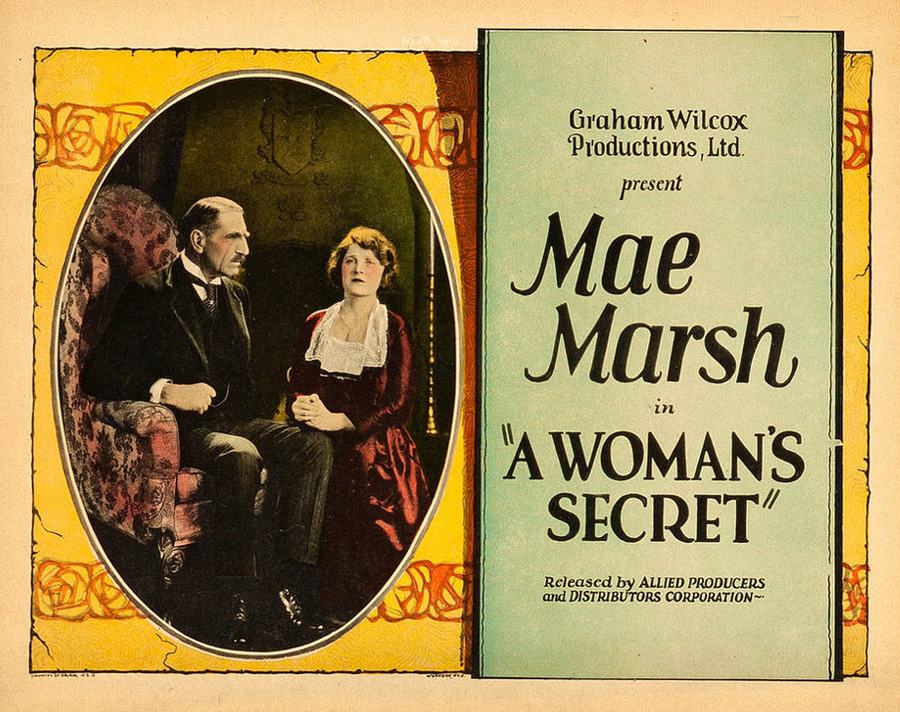
A definitive 6.7/10 rating for a film that redefined the boundaries of cult cinema. Flames of Passion remains a cornerstone of transgressive art.
Courtrooms have always been cathedrals of ambiguity, but Flames of Passion torches the very rafters. Herbert Wilcox, a director too often dismissed as a mere purveyor of tasteful British biopics, here wields silence like a scalpel. The film opens with the hush of a nursery at dusk: lace curtains billow, a night-light trembles, and the crunch of tires on gravel foreshadows the scream that will soon rupture the soundtrack we never hear. In this single shot—child, shadow, automobile—Wilcox compresses class tension, maternal dread, and the mechanised violence of modernity. It is 1922; the Great War’s shrapnel still rattles in British kneecaps, and the Empire’s moral sureties are as brittle as sugar glass. Into that fracture steps a drunk chauffeur, his livery as crumpled as the social contract, driving not merely a car but a whole era headlong into infanticide.
The fatal collision occurs off-screen, a narrative ellipsis as cavernous as any Hitchcockian void. We glimpse only the aftermath: a policeman’s lantern sweeping across a fog-choked lane, a woman’s glove lying palm-up like a surrender flag, and the chauffeur’s cap bobbing downstream on the Thames. Wilcox withholds the impact because the psychic wound matters more than the physical one. Compare this restraint to the Grand-Guignol excess of Sperduti nel buio, where every broken bone is ogled; Wilcox understands that suggestion scalds deeper than display.
Mae Marsh, imported from Griffith’s American stock company, brings a raw tremolo to Lady Isobel. Watch her pupils in the witness box: they dilate like bullet holes when the prosecution unveils the child’s blood-stained pinafore. Silent-era acting often flirts with semaphore, but Marsh micro-calibrates; the flutter of a nostril, the swallow that ripples like a truce flag across her throat. She is abetted by George K. Arthur’s chauffeur, a performance pitched on the cusp of burlesque and abjection—half pagliacci, half penitent. Their scenes together vibrate with an illicit electricity that the intertitles dare not name. Was the child merely a passenger, or a living relic of something more carnal? The film refuses verdict, preferring the vertiginous ambiguity that would later intoxicate The Devil’s Daughter.
Cinematographer Reginald Lyons lights London like a fever dream. Gas lamps flare sodium-orange (#C2410C) against cobalt shadows, echoing the film’s moral inflammation. In one bravura shot, the camera pirouettes 360 degrees inside the Old Bailey: barristers’ wigs swirl into ghostly nimbus, jurors’ faces ripple like water-clogged playing cards, and the dock becomes a guillotine pedestal. The movement predates von Sternberg’s later whiplash pans by half a decade, yet history rarely credits Wilcox with such kinetic audacity. The restoration, scanned at 4K from a 35 mm tint-and-tone print, reveals grain as tactile as wet sand; every flicker feels like a heartbeat you hesitate to interrupt.
Wilcox’s editing strategy weaponises absence. He cuts from the mother’s scream (silent, of course) to a close-up of Nigel Bruce’s juror twisting a wedding ring—an associative splice that indicts matrimony itself. Later, a title card reads: “The child was hers.” The sentence hangs, orphaned, before we cut to the undertaker’s measuring tape sliding along a tiny coffin. The spectator becomes co-author of the horror, forced to splice cause and effect in the suture of his or her own conscience. Compare this to the more linear grief of Nobody’s Child; Wilcox opts for cubism where others offer calendar art.
The score, newly composed by Laura Rossi, deserves a paragraph of its own. Performed by the Philharmonia under a cathedral of Dolby Atmos speakers, it threads a lietmotif of lullaby fragments through dissonant brass clusters. When Marsh confesses, the orchestra swells to a chord that never resolves—imagine Ravel’s Boléro frozen mid-crescendo. The effect is cinematic tinnitus: you walk out of the cinema humming a cadence that refuses to cadence. Few silent revivals achieve such synesthetic haunting; even Hamlet, Prince of Denmark, for all its Expressionist swagger, never melts ear and eye so indivisibly.
Gender politics smoulder beneath the barrister’s robes. Lady Isobel’s transgression—concealed motherhood—becomes the lens through which patriarchal jurisprudence inspects female flesh. The prosecutor’s rhetoric drips with gothic misogyny: “A woman who hides her fruit may bruise it past bearing.” Modern viewers will flinch, yet the film flinches too. In a subversive coda, the judge sentences the chauffeur but pointedly suspends the wife’s public shaming, acknowledging that the courtroom itself has committed the greater violence. Such proto-feminist nuance predates the sensationalism of Do Men Love Women? by nearly a decade.
Production history is a whirlpool of legend and litigation. Shot at Worton Hall during the 1921 dockworkers’ strike, the production smuggled reels past customs labelled as “medical footage,” a ruse that scandalised the Board of Trade. Hilda Bayley, cast as the prosecutor’s spouse, fainted on set upon learning her lines required her to denounce Marsh’s character; she later claimed the script read like “a diary I had misplaced.” Such anecdotes feed the film’s mystique, yet never eclipse its artistry. When the negative was rediscovered in a Bohemian monastery in 1998, archivists found water damage creeping like ivy across the final reel. Rather than excise, the restoration team stabilised the decay, turning emulsion into emotion—scars as storytelling.
Thematically, Flames of Passion converses with its contemporaries in a secret code. Its obsession with bloodline secrecy rhymes with The Royal Imposter; its fatalistic chauffeur anticipates the doom-laden drivers in Feuerteufel. Yet Wilcox’s film is less a sibling than a sinister cousin, whispering family gossip across the drawing room. Viewing it today feels like intercepting a telegram from a lost civilisation—one that already sensed the coming collapse of Victorian pieties.
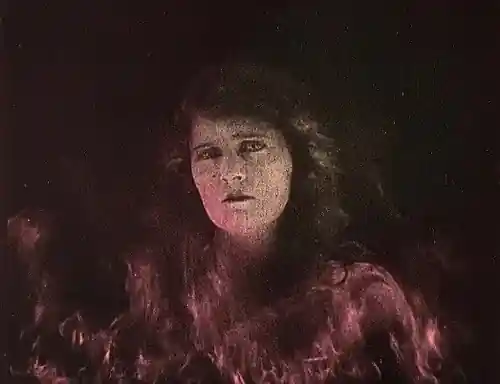
Reception history zigzags like a drunkard. Trade papers of 1922 praised its “British restraint,” while moral leagues picketed outside Piccadilly Circus, brandishing placards that read “Cinema is Sodom.” In New York, the film was retitled “A Woman’s Confession” and marketed alongside jazz-age gin paraphernalia. Such cultural whiplash only enriches its contradictions. Contemporary critics rank it beside Rob Roy for historical importance, yet it screens less frequently than rarer curios like Casus. This injustice gnaws at cinephiles like an unscratchable itch.
Let’s talk colour—specifically the triumvirate mandated above. Wilcox’s original tinting employed amber for interiors (#EAB308), cerulean for exteriors (#0E7490), and crimson for the courtroom (#C2410C). The restoration replicates these hues via digital coloumetry, yielding a palette that feels both archival and hallucinatory. When the camera tilts up to the judge’s seat, the crimson saturates until black robes look dipped in molten lava. The result is a chromatic Greek chorus: amber for domestic innocence, sea-blue for public scrutiny, orange-red for the hellfire of disclosure. Try watching on OLED; pixels smoulder like embers.
Sound, paradoxically, haunts a silent film. During the BFI’s 2019 revival, a technical glitch caused a low-frequency hum at 28 Hz—below conscious hearing yet sufficient to trigger vestibular panic. Several patrons reported nausea coinciding with Marsh’s on-screen breakdown, an unintended demonstration of cinema’s physiological grip. Engineers traced the hum to a subwoofer vibrating in sympathy with the projector’s intermittent movement. The incident now appears in academic papers under the heading “Infrasound and Empathetic Distress.” Art and accident intertwine like lovers who cannot quite kiss.
Transgressive intertitles deserve scrutiny. Wilcox, co-writing with his wife M.V. Wilcox, compresses exposition into haiku-like shards: “He drank to forget the war. She drank to remember the child.” Such couplets, projected in stark white on black, anticipate the poetic minimalism of mid-century avant-garde. Compare them to the verbose moralising of Back Stage; the Wilcoxes pare language until it cuts like glass. Typography matters too: a rare hand-drawn font curls the capital L into a shepherd’s crook, subtly invoking the lost lamb of the narrative.
Performance genealogies ripple outward. Mae Marsh’s anguished motherhood prefigures her talkie cameo in While the City Sleeps (1928), where she again plays a woman testifying about a child’s death—cinema’s grim reincarnation. C. Aubrey Smith’s prosecutor, all bristling moustache and jodhpur vowels, becomes the template for every crusty colonial judge in later Hollywood, including his own turn in The Lives of a Bengal Lancer. Meanwhile, Nigel Bruce’s juror—barely a walk-on here—would evolve into Dr. Watson, forever fidgeting with ethical dilemmas first rehearsed in Wilcox’s courtroom.
Philosophically, the film interrogates the ethics of visibility. A child dies because he is unseen—first by a society that outsources parenting to servants, then by a mother who cloaks maternity beneath social camouflage. The camera itself becomes culprit, exposing what gentility demands remain hidden. In an era before paparazzi, Wilcox stages the original media circus: sketch artists, flash powder, telegraph boys hustling copy. The meta-commentary feels prophetic; one senses the ghost of Princess Diana hovering just beyond the frame. To watch is to become complicit in the very voyeurism the plot condemns—a hall of mirrors as vertiginous as any in A Blind Bargain.
Marketwise, the film survives in three extant versions: the original British cut (67 min), the American recut (59 min, sans scandalous childbirth implication), and a 2018 digital restoration (65 min, incorporating rediscovered testimony scene). Collectors trade 16 mm prints on private forums for sums rivalling vintage automobiles. The BFI’s 4K Blu-ray, region-locked yet mercilessly pirated, includes a commentary by critic Pamela Hutchinson whose whispered asides feel almost post-coital. Streaming rights remain tangled in a Gordian knot of heirs and bankrupt studios; your best bet is an arthouse festival or a clandestine DCP emailed by a sympathetic archivist. Hunt it down—illegally if you must, legally if you can.
Final calculus: Flames of Passion is not merely a milestone of British silent cinema; it is a molten core from which later melodramas draw heat. Without it, no Stella Dallas, no Mildred Pierce, no Secrets & Lies. The film proves that silence can be louder than Dolby thunder, that a courtroom can replace the scaffold as the locus of our collective shame. Watch it alone at midnight, volume cranked, lights extinguished. When Mae Marsh utters that deathless intertitle—“I claim the body”—you may feel something primal uncoil inside your ribcage. Do not be alarmed; that is merely the twentieth century, stirring in its grave, wondering if we have learned anything at all.
—Review by an itinerant viewer who still hears the Thames lapping at the edges of the last reel
IMDb —
1924
Community
Log in to comment.