DbcultAccessing Vault...
7.1/10
Senior Film Conservator
A definitive 7.1/10 rating for a film that redefined the boundaries of cult cinema. Go West remains a cornerstone of transgressive art.
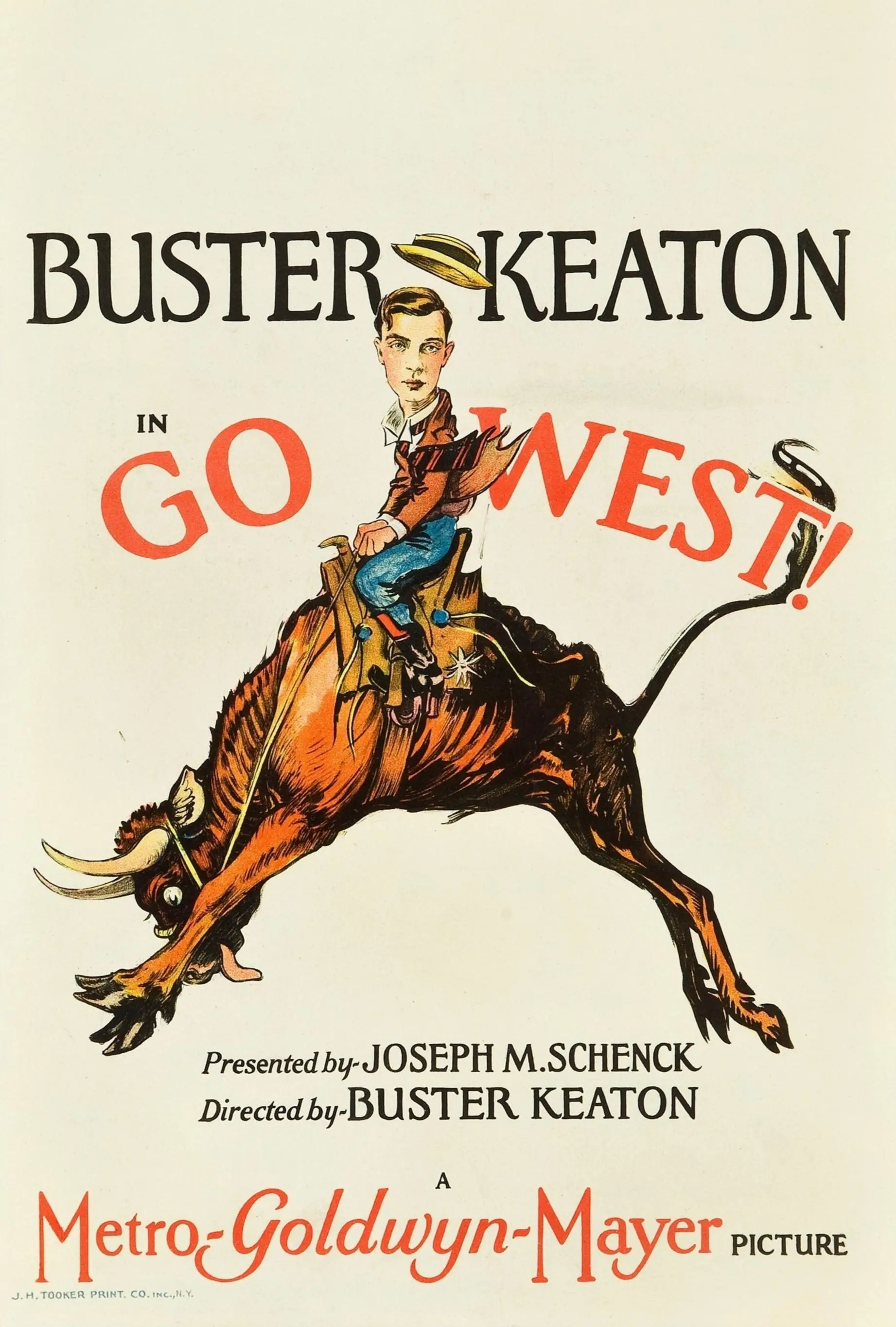
In the annals of silent cinema, few figures command the same reverence and affection as the inimitable Buster Keaton. His 'Great Stone Face,' an enigmatic mask of stoicism that belied a whirlwind of internal and external chaos, became a signature of an era. Among his most cherished works, the 1925 masterpiece 'Go West' stands as a testament to his unparalleled ability to blend audacious physical comedy with a surprising depth of human emotion. It’s a film that transcends its seemingly simple premise, evolving into a profound exploration of alienation, connection, and the relentless pursuit of one's place in an indifferent world. This isn't merely a slapstick romp through the Wild West; it's a meticulously crafted narrative that finds its heart in the most unexpected of places: between a man and a cow.
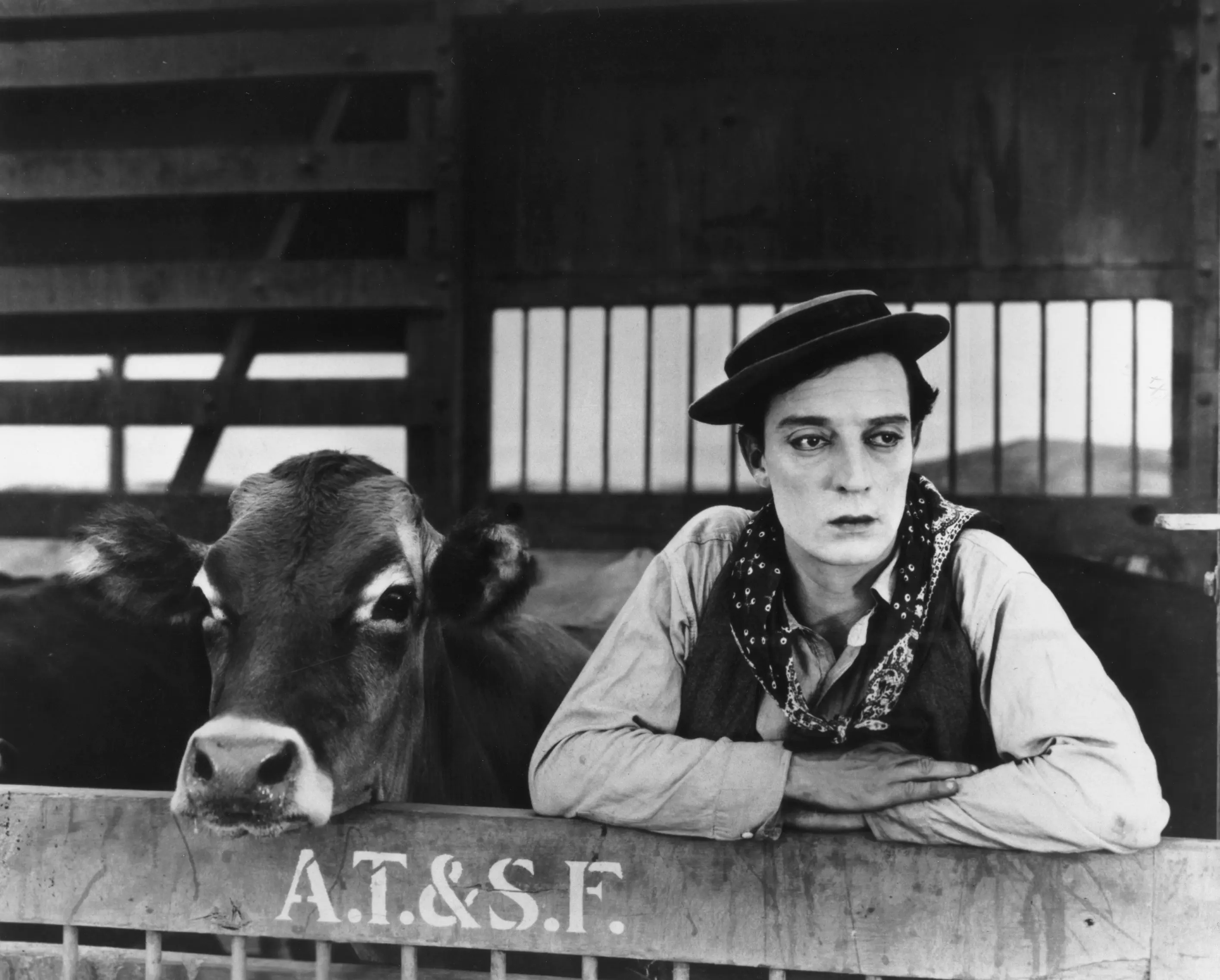
The film introduces us to 'Friendless,' a character so aptly named that it borders on tragicomic. Portrayed, of course, by Keaton himself, Friendless is a man perpetually at odds with the bustling, unforgiving machinery of urban life. His attempts to secure employment in the city are a masterclass in escalating futility, each new endeavor collapsing into an ever more elaborate and hilarious disaster. This early sequence, though brief, brilliantly establishes Friendless's fundamental disconnect from societal norms, setting the stage for his eventual, desperate retreat from the concrete jungle. His decision to 'go west' isn't born of adventurous spirit, but rather a weary resignation, a last-ditch effort to escape the city's relentless churn and perhaps, just perhaps, stumble upon a life that fits him better. This stark contrast between urban disillusionment and the romanticized ideal of the West immediately sets a poignant tone, even amidst the burgeoning gags.
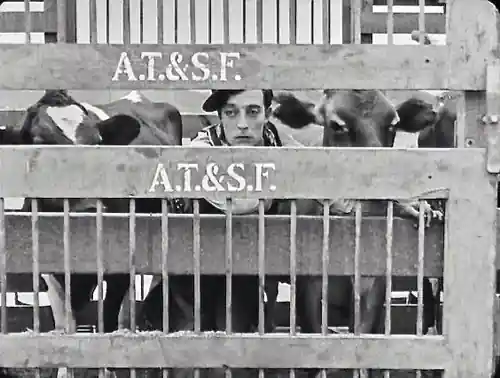
Upon arrival in the country, Friendless's struggles continue, albeit against a different backdrop. The pastoral ideal quickly gives way to the harsh realities of ranch life. He's no cowboy; his attempts at wrangling cattle, milking cows, or even simply existing within this rugged environment are met with the same ineptitude that plagued him in the city. Yet, it is within this crucible of his own inadequacy that a remarkable relationship begins to blossom. Amidst a vast herd of indifferent bovines, Friendless discovers Brown Eyes, a cow as distinct and individualistic as he is solitary. Their initial interactions are tentative, almost awkward, but through shared moments of quiet understanding and mutual vulnerability, an extraordinary bond forms. This relationship, devoid of dialogue yet rich in emotional resonance, becomes the beating heart of the film. Brown Eyes isn't merely a prop or a plot device; she is Friendless's confidante, his companion, and ultimately, his catalyst for growth. She represents the solace and belonging he so desperately sought in a world that consistently overlooked him.
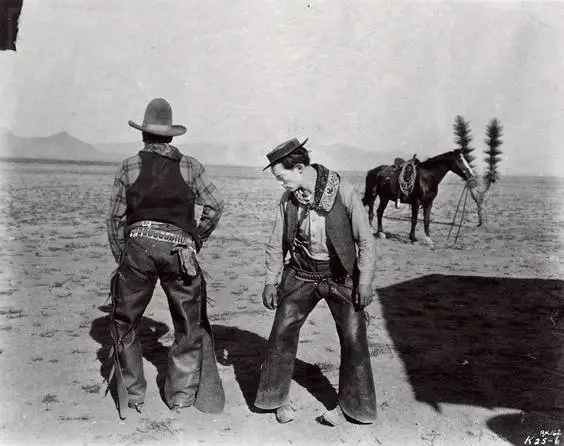
The narrative then pivots dramatically as Friendless, driven by an almost paternal protectiveness for Brown Eyes, finds himself inadvertently thrust into the pivotal role of leading a massive cattle drive to the West Coast. This is where the film truly embraces its epic scope, transforming a personal quest for connection into a grand, sweeping journey across the American landscape. The sheer scale of the cattle drive, with hundreds of animals thundering across vast plains, provides a spectacular canvas for Keaton's comedic genius. He navigates stampedes, confrontations with less-than-friendly cowboys (including characters played by Ray Thompson and Howard Truesdale), and the myriad challenges of the open road, all with that characteristic deadpan expression. The absurdity of a city-bred misfit leading such an undertaking is never lost, yet Keaton imbues Friendless with a quiet determination that makes his improbable success genuinely endearing. It’s a remarkable subversion of the traditional Western hero, offering a protagonist who triumphs not through brute strength or gunplay, but through ingenuity, perseverance, and an unbreakable bond with an animal.
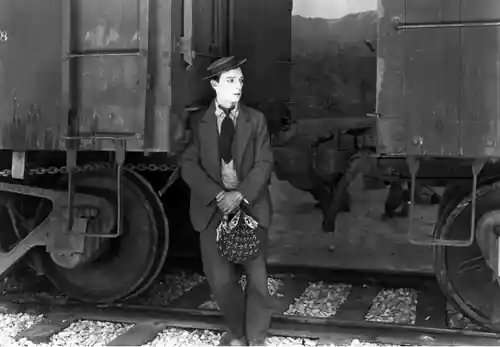
Keaton's directorial hand, evident in every meticulously choreographed sequence, is nothing short of brilliant. Alongside co-writers Raymond Cannon and Lex Neal, Keaton crafted a screenplay that seamlessly blends broad physical comedy with moments of genuine pathos. The film is replete with the kind of elaborate, death-defying stunts for which Keaton was legendary. From his precarious perch atop a runaway wagon to his daring maneuvers amidst a stampeding herd, each physical gag is executed with breathtaking precision and an almost balletic grace. Unlike many of his contemporaries, Keaton's stunts never feel gratuitous; they are always in service of the narrative, propelling the story forward and deepening our understanding of Friendless's character. His ability to convey complex emotions – fear, determination, affection – through subtle body language and the slightest flicker in his eyes, all while maintaining that iconic 'stone face,' is a testament to his extraordinary acting prowess. It's a performance that speaks volumes without uttering a single word, drawing the audience into Friendless's internal world with remarkable efficacy.
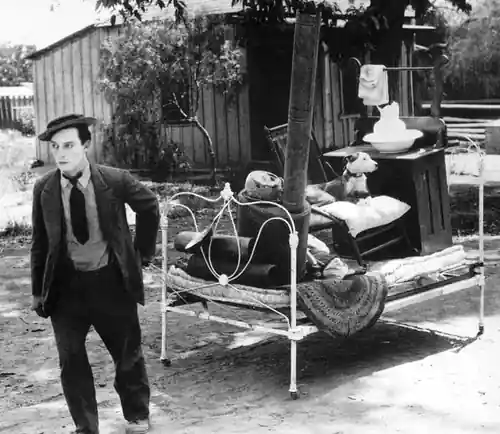
The climactic sequence, a truly epic cattle stampede through the bustling streets of Los Angeles, remains one of the most audacious and memorable set pieces in silent film history. The sheer logistical challenge of coordinating hundreds of live cattle through a major urban center is staggering, a testament to Keaton's unwavering vision and his team's incredible execution. The chaos that ensues, as Friendless desperately tries to control the runaway herd, is a masterclass in escalating comedic tension. It’s a spectacular collision of the wild west and modern civilization, a symbolic climax to Friendless's journey from urban outcast to unexpected hero. This sequence, often cited as one of the greatest gags ever filmed, showcases Keaton's unparalleled ability to orchestrate large-scale destruction for maximum comedic and dramatic effect, culminating in a resolution that is both uproarious and deeply satisfying. The supporting cast, including Kathleen Myers as the rancher's daughter and Gus Leonard, contribute effectively to the comedic tapestry, providing foils and catalysts for Friendless's misadventures, though the spotlight undeniably shines on Keaton and his bovine co-star, Brown Eyes.
What truly elevates 'Go West' beyond mere comedic brilliance is the profound and utterly charming relationship between Friendless and Brown Eyes. This isn't just a running gag; it's the emotional anchor of the entire film. Keaton, with his remarkable sensitivity, manages to imbue their interactions with a genuine tenderness that resonates deeply. The scene where Friendless shares an apple with Brown Eyes, or when he tries to protect her from the slaughterhouse, are moments of raw, unadulterated emotion that transcend the comedic framework. It’s a testament to the idea that companionship can be found in the most unexpected places and that true connection often speaks a language beyond words. This unique bond provides a powerful counterpoint to the loneliness and alienation that define Friendless's initial existence, showcasing the transformative power of empathy and affection. It’s a narrative choice that sets 'Go West' apart, lending it a timeless quality that continues to captivate audiences.
While many Westerns of the era, such as The Lone Star Ranger (1923), focused on traditional heroes and romanticized depictions of frontier life, Keaton’s film offered a distinctly different, more human, and undeniably funnier perspective. He deconstructs the cowboy archetype, presenting a hero who is an everyman, stumbling his way to heroism through sheer force of will and a heartfelt connection. This subversion of genre tropes is a hallmark of Keaton’s work, allowing him to explore universal themes of identity and belonging within familiar cinematic landscapes. The film also features uncredited appearances by silent film legends Roscoe 'Fatty' Arbuckle and Joe Keaton, adding another layer of historical richness to its production.
Nearly a century after its release, 'Go West' remains a vibrant, essential piece of cinematic history. Its humor, though rooted in the physical comedy traditions of the silent era, feels remarkably fresh and accessible. The film’s thematic depth—its exploration of loneliness, the search for purpose, and the unexpected places where one finds companionship—ensures its enduring relevance. It speaks to the universal human experience of feeling like an outsider and yearning for a place to belong. Keaton, a singular talent in front of and behind the camera, crafted a film that is both uproariously funny and genuinely moving, a rare and precious combination.
The meticulous construction of its gags, the understated brilliance of Keaton’s performance, and the sheer audacity of its climactic sequence all contribute to its status as a timeless classic. It’s a film that reminds us of the power of visual storytelling, of the ability of cinema to evoke laughter and tears without the need for spoken dialogue. 'Go West' is more than just a silent comedy; it’s a beautifully rendered fable about finding one’s true north, even if that path is paved with slapstick and shared with a four-legged friend. It encapsulates the very best of Keaton's genius, cementing his legacy not just as a comedian, but as a profound cinematic artist whose work continues to inspire and entertain generations. It's a journey worth taking, again and again, to witness the enduring magic of the Great Stone Face and his unforgettable bovine companion.
IMDb —
1933
Community
Log in to comment.