DbcultAccessing Vault...
4.9/10
Senior Film Conservator
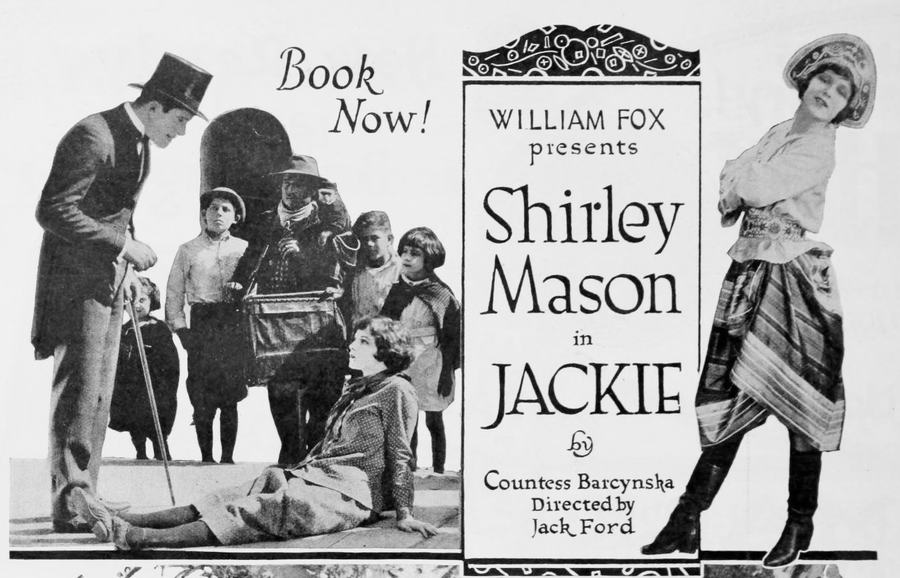
A definitive 4.9/10 rating for a film that redefined the boundaries of cult cinema. Jackie remains a cornerstone of transgressive art.
The 1921 production of Jackie stands as a testament to the evocative power of the silent era, a period where the absence of spoken dialogue necessitated a profound reliance on the semiotics of movement and the architecture of the human face. Directed with a keen eye for social stratification, the film introduces us to Jacqueline, a figure of tragic elegance caught in the crosshairs of history and happenstance. Unlike the more overtly theatrical antics found in The Rival Actresses, Jackie operates with a subdued, almost spectral intensity. The narrative arc, penned by the formidable duo of Dorothy Yost and Helena Buczynska, eschews the typical melodramatic trappings of the time to focus on the interiority of its protagonist.
Shirley Mason delivers a performance that is nothing short of transcendent. As the daughter of a Russian dancer, her every gesture is imbued with a phantom discipline, a skeletal reminder of a high-art heritage that has been discarded by the cruel machinery of fate. When we first encounter Jacqueline in the "cheap dancing school" run by her surrogate French guardian, the environment is palpable in its dinginess. The set design emphasizes the verticality of her struggle; the low ceilings and cramped corridors of the school serve as a physical manifestation of her stifled potential. This is a far cry from the expansive, albeit perilous, landscapes seen in La agonía de Arauco, yet the emotional stakes feel equally monumental.
The screenplay by Yost and Buczynska is particularly noteworthy for its avoidance of the male-savior trope that plagued many contemporary works. While Harry Carter and William Scott provide solid support, the gravitational center of the film remains firmly with Jacqueline. The "French woman" who raises her is not a cartoonish villain but a pragmatic product of her environment—a woman who views dance not as a spiritual calling but as a commodity to be bartered for bread. This tension between the sacred and the profane is the engine that drives the film's second act. We see echoes of this thematic conflict in Adventures of Carol, though Jackie handles the transition from innocence to experience with a darker, more cynical brushstroke.
The cinematography, though limited by the technology of 1921, utilizes shadow and light to delineate the two worlds Jacqueline inhabits. The dance school is often shrouded in a murky, high-contrast chiaroscuro, suggesting a world where secrets and survival go hand-in-hand. In contrast, the moments where Jacqueline remembers her mother or practices her craft in solitude are bathed in a softer, more ethereal glow. This visual dichotomy reinforces the idea that her talent is a light that the world is constantly trying to extinguish. It is a visual strategy similar to the atmospheric tension found in The Devil's Foot, where the environment reflects the psychological state of the inhabitants.
William Scott brings a grounded energy to the production, acting as a foil to Mason’s more flighty, artistic temperament. His presence provides a necessary tether to reality, preventing the film from drifting too far into the realm of pure allegory. Harry Carter, meanwhile, inhabits his role with a gravitas that suggests a deep understanding of the film's underlying pathos. The ensemble, including Georgie Stone and John Cook, creates a vivid backdrop of characters that feel lived-in, rather than merely scripted. They represent the various facets of a society that is indifferent to the individual but obsessed with the spectacle.
In many ways, the supporting cast functions like the chorus in a Greek tragedy, observing Jacqueline’s descent and eventual metamorphosis with a mixture of pity and apathy. This collective indifference is what makes her journey so harrowing. Unlike the more direct confrontations in Robbery Under Arms, the obstacles in Jackie are systemic and quiet. It is the poverty of opportunity, the lack of a voice, and the crushing weight of expectation. Shirley Mason’s ability to convey these complex emotions through her eyes alone is a masterclass in silent acting, rivaling the intensity seen in Black Friday.
One cannot discuss Jackie without mentioning the tactile quality of the production. The costumes, ranging from tattered rags to the ghost-like remnants of ballet tutus, tell a story of their own. Jacqueline’s attire is a visual metaphor for her identity—shredded, repurposed, yet still retaining a hint of its original splendor. The choreography, though necessarily simplified for the screen, captures the essence of the Russian school of dance: the rigid discipline, the impossible lightness, and the underlying steel. It is this steel that Jacqueline discovers within herself as the narrative reaches its crescendo.
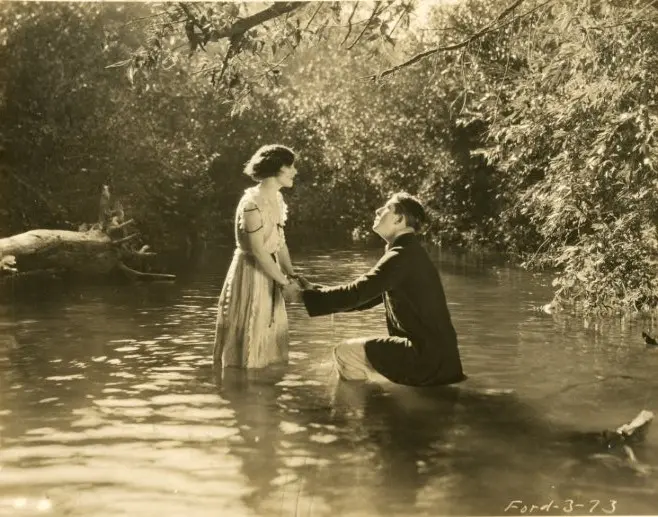
The film’s pacing is deliberate, allowing the audience to sit with Jacqueline’s loneliness. There is a sequence in the middle of the film, where she watches the other girls at the school, that perfectly encapsulates the film's melancholic heart. They move with a mechanical dullness, a stark contrast to her own fluid, instinctive grace. This scene serves as a critique of the industrialization of art—a theme that remains strikingly relevant today. It echoes the concerns of The Book of Nature, where the purity of the natural world is contrasted with the artificiality of human constructs.
Released in a year that saw the world still reeling from the aftermath of the Great War and the Russian Revolution, Jackie’s backstory would have resonated deeply with contemporary audiences. The figure of the displaced Russian aristocrat or artist was a common sight in the capitals of Europe, and the film taps into this collective anxiety about the fragility of status and culture. By grounding the story in the specific milieu of a French dance school, the filmmakers bridge the gap between the monumental shifts of history and the intimate struggles of a single soul. It possesses a narrative weight that is absent in more propagandistic fare like The Kaiser, the Beast of Berlin.
The collaboration between Yost and Buczynska is a highlight of the silent era’s often-overlooked female creative force. Their script is nuanced, favoring character development over cheap thrills. They understand that for Jacqueline, the dance is not a way out, but a way in—a method of connecting with a mother she barely knew and a heritage that has been stripped away. This depth of writing is what elevates Jackie above its peers. It shares a certain DNA with A Girl at Bay, but with a more sophisticated understanding of the intersection between art and trauma.
As we look back at Jackie through the lens of a century, its power remains undiminished. It is a film that demands empathy rather than just attention. The final sequences, which I will not spoil, offer a resolution that is both earned and bittersweet. It does not provide the easy catharsis of a film like Don't Weaken!, but instead leaves the viewer with a lingering sense of the cost of survival. Shirley Mason’s Jacqueline is a character who haunts the memory, a flickering specter of grace in a world of shadows.
The technical restoration of such films is vital, for in the movements of Jacqueline, we see the foundations of modern cinematic language. The way the camera lingers on her hands, the way the editing mimics the rhythm of a heartbeat, the way the silence becomes a character in its own right—all of these elements contribute to a work of art that is as much a poem as it is a motion picture. It stands alongside The Gates of Doom and The Saint's Adventure as a crucial piece of the 1921 cinematic puzzle, offering a glimpse into the soul of an era that was as beautiful as it was broken.
In conclusion, Jackie is a masterwork of restraint and emotional depth. It eschews the bombast of its contemporaries for a more intimate, and ultimately more impactful, story. It reminds us that even in the cheapest of dancing schools, under the harshest of conditions, the spirit of the dance cannot be fully suppressed. It is a vital watch for any serious student of film history and a moving experience for anyone who has ever felt the weight of their own history. The film’s legacy is not just in its plot, but in the indelible image of Shirley Mason, poised on the edge of a world that doesn't want her, yet unable to stop herself from dancing.
"A shimmering artifact of the silent era that captures the intersection of Russian soul and Parisian grit with haunting precision."
IMDb 5.8
1919
Community
Log in to comment.