DbcultAccessing Vault...
Cult Review
Senior Film Conservator
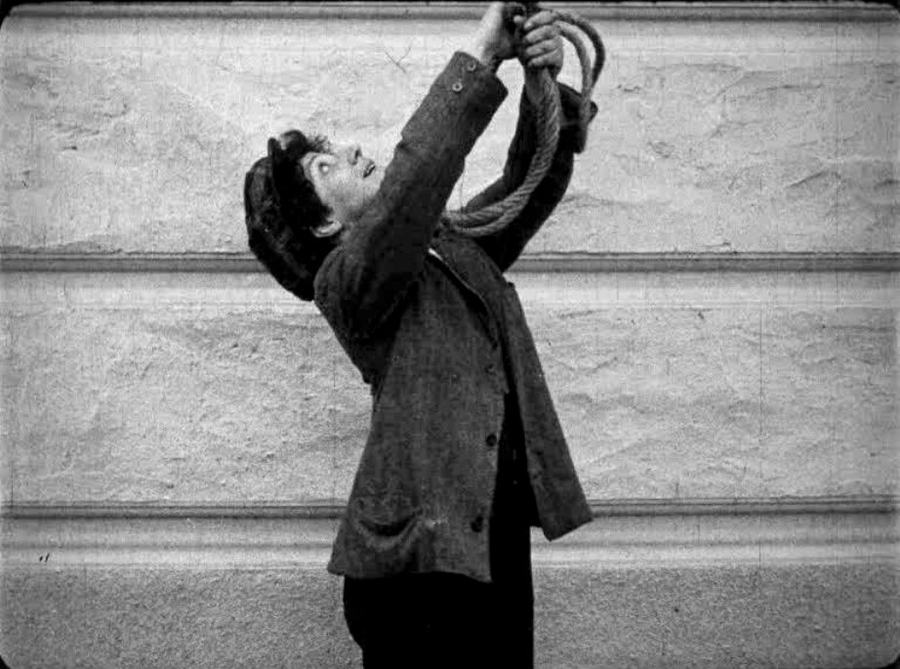
There are films, and then there are experiences. Il giardino del silenzio, or 'The Garden of Silence,' is unequivocally the latter. Emerging from the vibrant, yet often overlooked, crucible of early 20th-century Italian cinema, this cinematic marvel, penned by the evocative Ennio Grammatica, transcends its silent origins to articulate a universal symphony of human suffering, resilience, and the relentless pursuit of truth. It's a testament to the power of visual storytelling, a masterclass in conveying the profound without uttering a single word, relying instead on the eloquent language of gesture, expression, and meticulously crafted mise-en-scène. This isn't merely a historical artifact; it's a pulsating, emotionally resonant narrative that demands to be seen, felt, and pondered.
From its opening frames, the film envelops the viewer in an atmosphere thick with melancholy and mystery. The titular garden, a character in its own right, is initially presented as a verdant labyrinth, its overgrown paths and ancient statuary whispering tales of an indeterminate past. This is the domain of Countess Isabella Valeriano, portrayed with breathtaking intensity by Paola Pezzaglia. Pezzaglia’s performance is a tour de force of silent acting, a nuanced ballet of subtle gestures and piercing gazes that communicate volumes. Her Isabella is not merely a grieving widow but a woman entombed by her own sorrow, a living monument to a tragedy that has calcified her soul. Every movement, every flicker of her eyes, speaks of decades spent in a self-imposed purgatory, a silence born not of peace, but of profound, unaddressed pain. Her reclusiveness isn't a quirk; it's a coping mechanism, a fortress built against a world that once betrayed her.
The narrative, while seemingly straightforward in its premise of uncovering a hidden past, unfurls with the delicate precision of a blossoming rose, each petal revealing a new layer of complexity. The arrival of Marco Rossi, an earnest young architect tasked with restoring the villa’s dilapidated conservatory, serves as the catalyst for this emotional excavation. Ettore Piergiovanni, in the role of Marco, embodies a hopeful idealism that contrasts sharply with Isabella’s entrenched despair. Piergiovanni brings a youthful vigor and an innate compassion to the character, making Marco not just an investigator but a beacon of light in Isabella's shadowed existence. His gentle persistence and genuine empathy slowly chip away at the Countess's formidable defenses, allowing cracks of vulnerability to appear in her stony exterior.
Ennio Grammatica's screenplay is a marvel of economical storytelling, especially considering the constraints of the silent era. He understands that silence can amplify emotion, allowing the audience to project their own understanding onto the characters’ unspoken thoughts. The plot, centered around a decades-old tragedy involving a love affair, a child, and a devastating betrayal, is meticulously constructed. Grammatica avoids cheap melodrama, instead opting for a slow, agonizing reveal that builds tension through implication rather than overt exposition. The clues are scattered like fallen leaves throughout the villa – an old locket, a forgotten letter, a faded photograph – each piece fitting into a mosaic of heartbreak and injustice. The way Marco pieces these together, almost like an archaeological dig into human emotion, is utterly compelling. This meticulous approach to narrative reminds me of the intricate, character-driven revelations found in films like The Martyrdom of Philip Strong, where personal suffering becomes a crucible for profound truths, though Il giardino del silenzio feels more deeply internalized, more about the quiet devastation within.
The visual language of the film is nothing short of poetic. The cinematography, though credited to the era's collective artistic spirit rather than a singular named individual, is breathtaking. Shots of the garden are imbued with a melancholic beauty, the play of light and shadow mirroring Isabella’s internal world. The use of natural light, the framing of figures against sweeping landscapes or within the claustrophobic grandeur of the villa, all contribute to a sense of both epic scale and intimate psychological drama. The director's choice to linger on faces, allowing the actors' expressions to carry the narrative weight, is particularly effective. There’s a scene where Isabella, after a particularly painful recollection, retreats into the depths of her garden, and the camera follows her, not with a frantic chase, but with a mournful, almost elegiac pace, emphasizing her isolation and the crushing weight of her memories. This kind of deliberate pacing is a hallmark of truly artful silent cinema, allowing emotional beats to land with maximum impact, a technique that even contemporary filmmakers could learn from.
The performances of Pezzaglia and Piergiovanni are, quite simply, superb. Pezzaglia’s Isabella is a masterclass in controlled agony. Her moments of vulnerability are all the more impactful because of the stoic facade she maintains for so long. When she finally breaks, the release is palpable, an emotional torrent that feels earned and devastating. Piergiovanni, as Marco, provides the perfect counterpoint. His youthful optimism isn't naive; it's tempered by a genuine desire to understand and to heal. Their chemistry, though largely unspoken, radiates from the screen, a delicate dance between solace and despair. The way Marco's earnest gaze penetrates Isabella's guarded exterior is one of the film's most poignant elements. It's a testament to the power of human connection, even across the chasm of deep-seated pain. One could draw parallels to the nuanced portrayals of internal struggle seen in films like I Don't Want to Be a Man, where characters grapple with profound personal identity and societal expectations, but Isabella's struggle feels even more deeply rooted in the inescapable past.
The thematic richness of Il giardino del silenzio extends beyond mere personal tragedy. It delves into the nature of memory, the corrosive power of secrets, and the possibility of redemption. The garden itself becomes a potent metaphor: a place of beauty that has been allowed to become wild and overgrown, mirroring Isabella’s heart. Marco’s act of restoring the conservatory isn’t just about fixing glass and wood; it’s a symbolic act of bringing light and order back to a place, and a soul, that has been left to decay. The film subtly explores societal expectations and the restrictive roles imposed upon women in that era, hinting at the pressures that might have led to the initial tragedy. Isabella's fate, trapped in her grief, is a silent indictment of a world that offered few avenues for women to recover from scandal or loss with dignity. Her isolation is not just self-imposed; it’s a reflection of the judgment she likely faced.
The supporting cast, though given less screen time, contributes effectively to the film's atmosphere. Their reactions, their furtive glances, and their hushed conversations add to the sense of a community aware of the villa’s tragic history, yet unwilling or unable to intervene. This collective silence, juxtaposed with Isabella's personal one, creates a layered sense of complicity and helplessness. The villain of the piece, revealed through Marco's diligent investigation, is portrayed with a chilling lack of overt malice, making his actions all the more insidious. It’s not a mustache-twirling caricature, but a more insidious, believable form of human selfishness and ambition, which resonates more deeply. This type of nuanced antagonist, whose motivations are rooted in self-preservation rather than pure evil, adds a layer of psychological realism that elevates the drama beyond simple good versus evil, reminiscent of the complex moral quandaries found in The Beloved Traitor, where betrayals cut deeper because they come from within trust.
What truly sets Il giardino del silenzio apart is its enduring emotional impact. Even a century later, the film’s central themes—loss, memory, healing—remain profoundly relevant. It's a powerful reminder that while the technology of filmmaking evolves, the core human emotions and dilemmas that drive compelling narratives are timeless. The final act, a cathartic explosion of truth and tears, is incredibly moving. It’s not a tidy, happily-ever-after ending, but one that offers the fragile promise of peace, of a garden where silence might finally mean solace rather than suffering. The resolution isn't about forgetting the past, but about integrating it, understanding it, and finally allowing oneself to breathe again. This nuanced approach to resolution, acknowledging the lingering scars while celebrating the possibility of moving forward, is a hallmark of truly mature storytelling.
For cinephiles and casual viewers alike, Il giardino del silenzio offers a rare glimpse into the sophisticated artistry of early Italian cinema. It’s a film that speaks volumes without a single spoken word, a testament to the universal language of emotion and visual poetry. It stands as a beacon for the power of storytelling to transcend time and cultural barriers, proving that a well-told story, driven by compelling characters and profound themes, can resonate across generations. It’s a film that forces you to engage, to interpret, to feel, rather than simply observe. And in that engagement, it achieves a profound and lasting connection. This is a film that truly deserves to be rediscovered, celebrated, and studied for its enduring beauty and its timeless articulation of the human condition.
The choice of setting, an old Italian villa with its inherent sense of history and grandeur, amplifies the film's themes. These structures are not just buildings; they are repositories of memory, silent witnesses to generations of human drama. The crumbling conservatory, in particular, becomes a potent symbol of decay and neglect, mirroring Isabella's own spirit. Marco's work on it is not merely physical labor but a metaphorical act of restoration for the Countess's soul. The film's aesthetic leans into the romanticism of its era, but it does so with a raw emotional honesty that prevents it from becoming saccharine. The shadows are deep, the expressions are intense, and the stakes feel genuinely high. Unlike the more overtly propagandistic narratives of films like The Battle Cry of Peace or the more direct social commentary in Chlen parlamenta, Il giardino del silenzio focuses on the deeply personal, allowing the universal to emerge from the individual's journey.
The film's exploration of memory is particularly nuanced. It's not just about recalling events, but about how memory shapes identity, how it can imprison us, and how confronting it, no matter how painful, is essential for liberation. Isabella’s entire existence is dictated by her past, her present a mere extension of her grief. Marco's role is to help her reconstruct a more accurate, less self-blaming version of that past, allowing her to re-contextualize her suffering. This journey from distorted memory to painful truth is handled with immense sensitivity and psychological depth. It's a process of catharsis that is both agonizing and ultimately liberating, much like the emotional journeys in films such as The Debt of Honor, where characters are forced to confront past transgressions to find peace. The film doesn't offer easy answers, but rather a profound understanding of the human capacity for endurance and renewal. The ending, a subtle shift in Isabella's demeanor, a hint of peace finally returning to her eyes, is far more powerful than any grand, dramatic gesture. It's a quiet triumph, perfectly befitting the film's title and its pervasive, eloquent silence.
In an era where cinematic spectacle often overshadows genuine emotional resonance, Il giardino del silenzio serves as a potent reminder of cinema's foundational power: its ability to tell human stories with profound depth and artistry. It’s a beautiful, heart-wrenching, and ultimately uplifting experience that reaffirms the enduring magic of the silver screen. It's a mandatory viewing for anyone interested in the history of film, the art of silent acting, or simply a deeply moving story told with unparalleled grace and intelligence. The lingering images, the haunting score (even if imagined by the viewer), and the indelible performances coalesce into a work that transcends its historical context, speaking directly to the contemporary soul. It's a film that truly embodies the notion that some stories are best told when the world falls silent, allowing the heart to finally speak.
The film's legacy lies not just in its artistic merit but in its capacity to remind us of the universal human yearning for connection and understanding. It challenges us to look beyond the surface, to delve into the unspoken narratives that shape lives. The careful construction of each scene, the deliberate choices in framing and editing, all contribute to a holistic experience that is far greater than the sum of its parts. It is a work that rewards repeat viewings, revealing new subtleties and emotional nuances with each encounter. The enduring power of Il giardino del silenzio is a testament to the timeless appeal of well-crafted melodrama, elevated to art through exceptional performances and visionary direction. It stands proudly alongside other silent era masterpieces, a quiet gem that shines brightly in the annals of film history, proving that true cinematic brilliance is not bound by the spoken word or the passage of time.

IMDb 7.2
1929
Community
Log in to comment.