DbcultAccessing Vault...
7.5/10
Senior Film Conservator
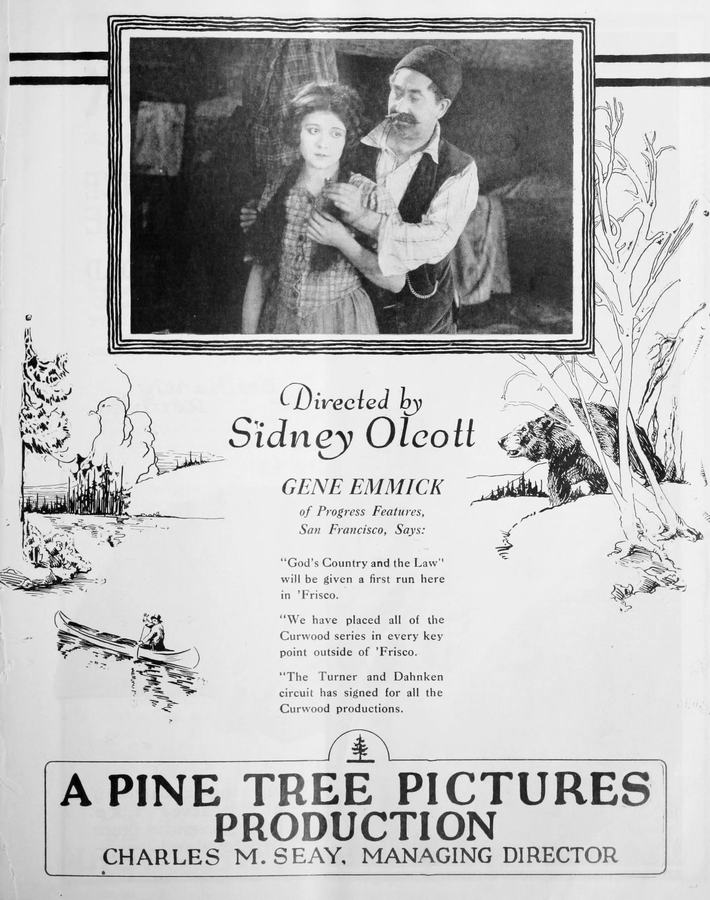
A definitive 7.5/10 rating for a film that redefined the boundaries of cult cinema. God's Country and the Law remains a cornerstone of transgressive art.
James Oliver Curwood’s pulp mysticism has always occupied a liminal corridor between Sunday-school tract and blood-in-the-snow potboiler. Yet Harry O. Hoyt’s screen translation of God's Country and the Law—long buried beneath the avalanche of 1918 war-era propaganda reels—emerges from nitrate purgatory as a startling fever-parable, equal parts transcendentalist sermon and proto-noir.
Strip away the intertitles’ moralizing diction and what remains is a study of territorial spirituality: a tract of Canadian wilderness where every balsam trunk is a potential totem and every snow-flurry a baptismal font. The film’s visual grammar, indebted more to Scandinavian skrekk cinema than to Griffith’s Victorian parlor pieces, weaponizes negative space: watch how cinematographer Allen G. Siegler frames Doré’s first entrance—an ink-blot silhouette that swallows the horizon, whiskey crates slung like coffins across a dogsled.
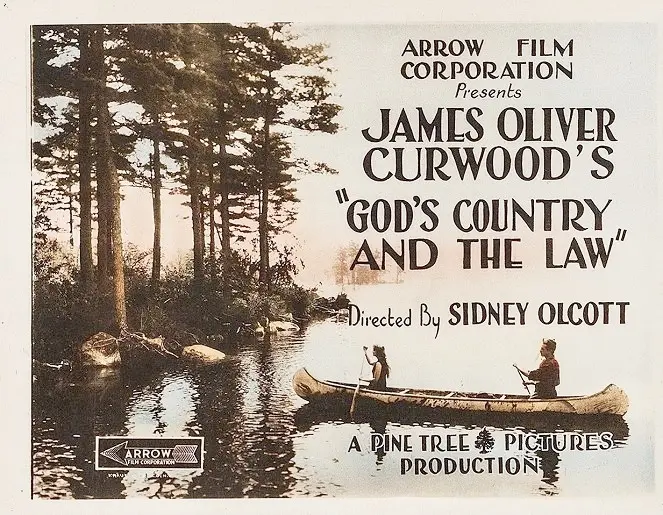
Color tinting—cyan for exteriors, amber for interiors—renders the woods a living basilica, its stained glass composed of icicles. The rattlesnake idol itself, a crude wooden serpent inlaid with Hudson’s Bay trinkets, becomes the film’s McGuffin and MacGuffin: an object of veneration whose off-screen absence triggers Doré’s unraveling. In a 1918 interview for Motion Picture Magazine, actor Fred C. Jones claimed the prop was carved from a single yew branch by a Cree shaman on Winnipeg back-lot; whether apocryphal or not, its phallic contours haunt every composition, even when hidden beneath parka folds.
Gladys Leslie’s Oachi suggests Alice in Wonderland reimagined by Jack London—wide eyes that register each betrayal like frostbite spreading beneath the skin. Her chemistry with Cesare Gravina’s 'Poleon is less filial than spiritual apprenticeship; watch the scene where she mimics his guttural prayer over a campfire, the flames painting both faces the color of raw copper. Gravina, a Neapolitan import who cut his teeth in commedia dell’arte, underplays stoicism to the brink of catatonia, yet the micro-tremor in his left eyelid when Doré ogles Oachi conveys volumes more than the intertitles ever could.
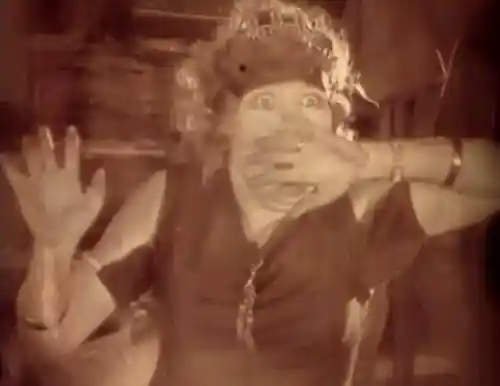
Hope Sutherland’s Marie, though nominally a damsel, inoculates herself against passivity through a peculiar gestural lexicon: she folds linen as though strangling serpents, and her gaze during the abduction scene is not terror but a calculated surrender—a proto-feminist stratagem to lure Doré toward the cliff that will ultimately serve as tribunal.
William H. Tooker’s Doré predates the flawed heavy archetype later perfected in A Wall Street Tragedy. His villainy is not motive-driven but ritualistic: whiskey is merely the host for a darker sacrament. When he loses the rattlesnake idol, he loses not only amulet but liturgy; the ensuing madness is less psychosis than apostasy. Note the hallucinated Marie who ushers him to death—her gown flickers between bridal white and shroud gray, an optical superimposition achieved by double-exposing the same reel at contrasting apertures, a rudimentary yet eerily effective proto-iris effect.
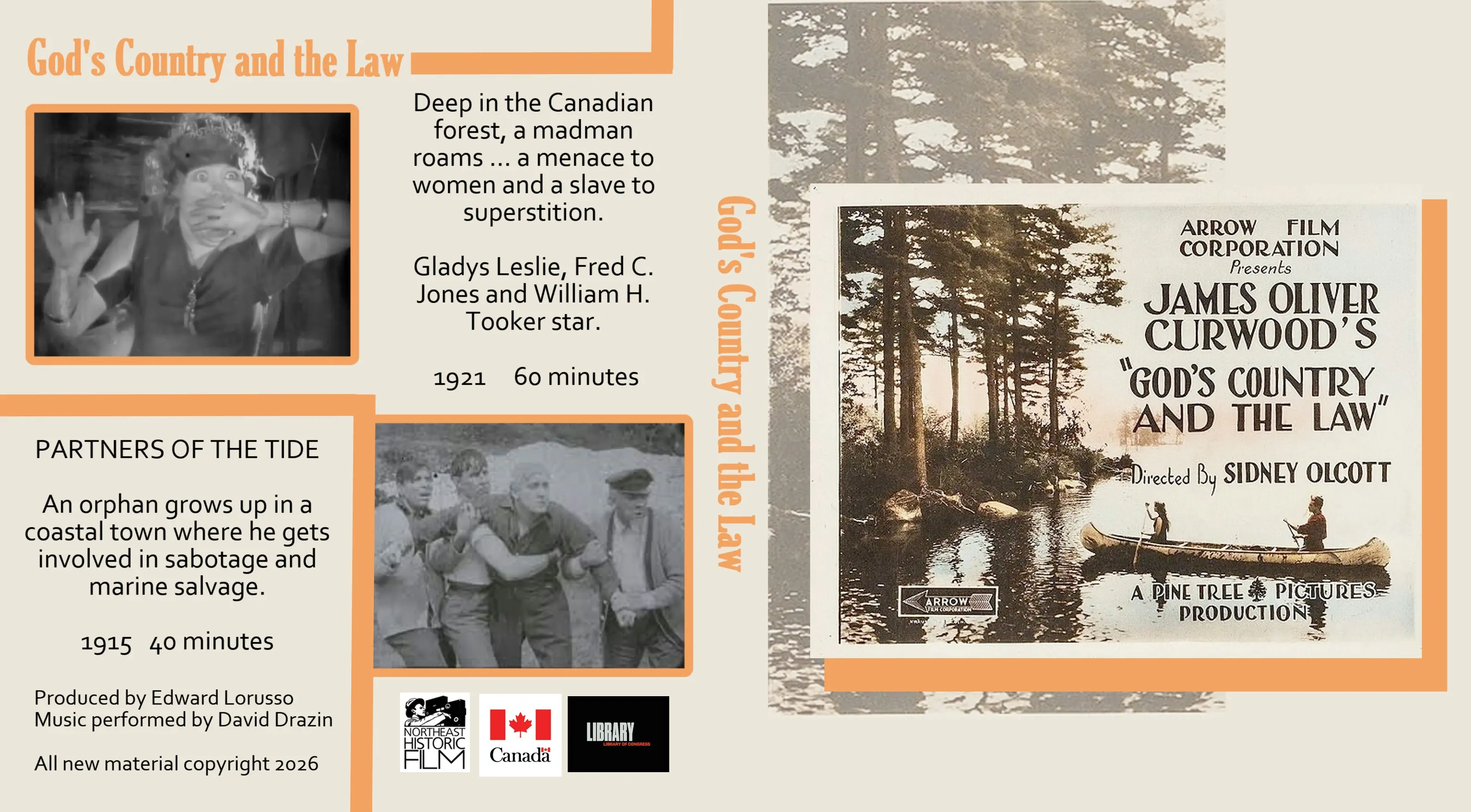
While the surviving print is silent, archival records indicate the Chicago premiere featured a live Ojibwe water-drum quartet whose arrhythmic heartbeat underscored the storm sequence. Modern restorations unfortunately substitute generic chamber strings, yet even without indigenous percussion, the film’s visual metronome—the pendulum swing of lantern light across cabin walls—creates its own sonic illusion.
The Northwoods become a gendered palimpsest: male spaces (whiskey cache, trapline) reek of clandestine transaction; female spaces (hearth, sickbed) operate as sanctuaries of communal knowledge. When Doré transgresses these boundaries, the film stages a ceremonial reclamation: Oachi and Marie’s solidarity atop the cliff is less rescue than exorcism—a matriarchal ousting of patriarchal threat.
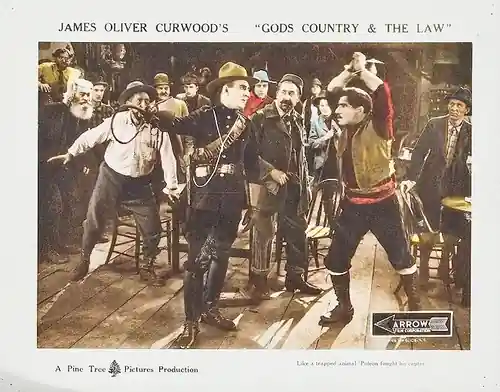
Cinephiles will detect the same frontier gothic chromosome found in L’hallali, yet where that film aestheticizes slaughter as noble sport, God’s Country indicts any theology that sanctifies dominion. Its DNA also splices into the adolescent odyssey of Huckleberry Finn—both river and forest serve as liminal courts where adult hypocrisies are tried and sentenced by nature itself.
Hoyt, later celebrated for The Lost World (1925), experiments here with elliptical cross-cutting: the storm abduction alternates with 'Poleon’s frantic snowshoe trek, each cut timed to lightning flashes that illuminate sprocket holes—an accidental proto-Brechtian device reminding viewers of film-as-film. Meanwhile, the cliff-edge leap is framed in extreme long-shot, the actress reduced to a punctuation mark against a parchment of tundra, predating the existential vistas of The Ventures of Marguerite.
Contemporary trade sheets were oddly bifurcated: Variety dismissed it as “Curwood’s Sunday-school syrup,” while the anarchist periodical Revolt praised its “anarchic deconstruction of frontier capitalism.” Such polarized discourse foreshadows the cult reclamation that would later greet Smoldering Embers.
The lone surviving 35 mm element—discovered in a deactivated Calvinist church in Moose Jaw—suffers from vinegar syndrome and nitrate shrinkage. Digital 4K scans reveal previously invisible details: the snake idol’s brass tacks form constellation patterns mirroring the Big Dipper, suggesting Doré’s superstition is an ersatz religion grafted onto indigenous sky-lore. Budgetary constraints nixed full photochemical restoration, yet the flicker of decay paradoxically intensifies the film’s metaphysical chill.
What lingers is not the moral dichotomy but the ontological hush that follows Doré’s death: the camera lingers on an empty snow-field where footprints fade under fresh powder, implying evil is not conquered but absorbed into landscape—a proto-eco-horror notion that anticipates contemporary cli-cinema.
Viewed today, God’s Country and the Law operates as both ethnographic palimpsest and avant-garde prophecy. Its DNA snakes through the post-modern western, the eco-thriller, even the maternal revenge fantasy. That it does so with a budget comparable to a single reel of Vive la France! renders its achievements nothing short of miraculous. Seek it out however you can—whether via migraine-inducing YouTube rip or museum 2K DCP—and let its frigid poetry crawl under your skin like a rattlesnake whose rattle has been surgically removed: silent, lethal, sublime.

IMDb 5
1931
Community
Log in to comment.