DbcultAccessing Vault...
7.2/10
Senior Film Conservator
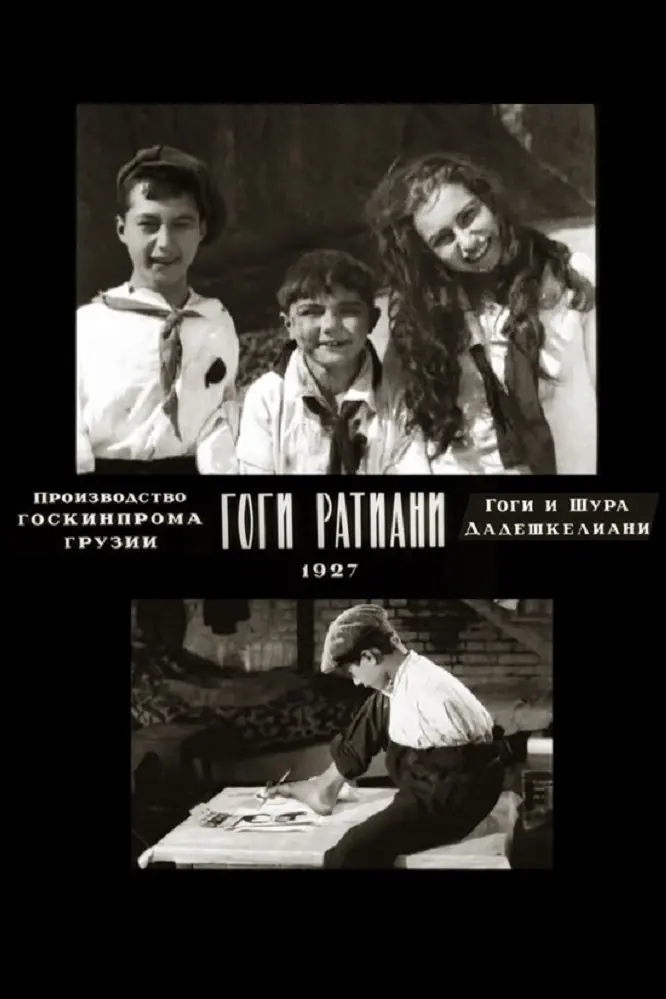
A definitive 7.2/10 rating for a film that redefined the boundaries of cult cinema. Gogi Ratiani remains a cornerstone of transgressive art.
Is Gogi Ratiani worth watching today? Short answer: yes, but with significant caveats. This often-overlooked Georgian drama is a fascinating, if sometimes frustrating, window into early 20th-century filmmaking, best suited for cinephiles and cultural historians, and likely to alienate casual viewers seeking modern pacing or clear narratives.
This film works because of its audacious thematic ambition and the raw, unvarnished performance at its core. It fails because its narrative structure is often opaque, and its technical limitations are starkly apparent to contemporary eyes. You should watch it if you possess a genuine interest in the foundational period of global cinema, particularly the rich, yet often inaccessible, heritage of Eastern European and Caucasian filmmaking, or if you appreciate character studies that demand your patience and interpretive engagement.
This film works because of B. Giorgobiani's mesmerizing central performance, which anchors the film's sprawling thematic concerns with genuine human frailty and resilience. His portrayal of Gogi Ratiani elevates what could have been a simplistic morality play into a nuanced character study, allowing the audience to feel the weight of tradition and the sting of impending change through his eyes. Furthermore, the film’s daring attempt to depict the erosion of cultural identity in the face of modernity is remarkably prescient, offering a depth rarely found in films of its era.
This film fails because its narrative coherence can be severely tested by contemporary viewing habits. The pacing, characteristic of early cinema, is deliberately slow, and the storytelling often relies on visual metaphor and unspoken subtext rather than explicit exposition. This lack of clear narrative signposting can make it a challenging watch for those accustomed to more direct and fast-paced storytelling, leading to moments of genuine bewilderment rather than profound contemplation. The technical aspects, while historically significant, also highlight the nascent state of filmmaking, with occasional jarring cuts and inconsistent sound, if any, further distancing a modern audience.
You should watch it if you are a dedicated student of film history, eager to explore the diverse origins of cinematic art beyond the well-trodden paths of Hollywood or Western European auteurs. It’s also a compelling watch for anyone interested in the social and cultural shifts in early 20th-century Georgia, as the film serves as an unintended historical document. If you appreciate cinema that asks you to lean in, to interpret, and to piece together meaning from subtle cues rather than spoon-fed plots, then Gogi Ratiani will reward your effort.
The film opens not with a bang, but with a sigh. We are introduced to Gogi Ratiani, a figure of patriarchal authority whose presence is as much a part of the landscape as the ancient stones of his village. The initial scenes, though perhaps slow by today's standards, meticulously establish his world: a community bound by rituals, ancestral wisdom, and the unspoken pacts of generations. A. Chumbadze’s writing, even in its minimalist form, hints at a deeper existential struggle beneath the surface of daily life.
As the narrative progresses, it becomes clear that Gogi’s personal struggles are inextricably linked to the broader societal upheaval. The arrival of new ideas, symbolized perhaps by a younger generation’s challenging of age-old customs, acts as a corrosive agent on the established order. This isn't merely a conflict of old versus new; it's a profound examination of how identity, both individual and collective, is forged and fractured under pressure. Nutsa Chkheidze, though given less screen time than Giorgobiani, perfectly embodies the spirit of resilience or perhaps the quiet defiance of a woman caught in these shifting tides.
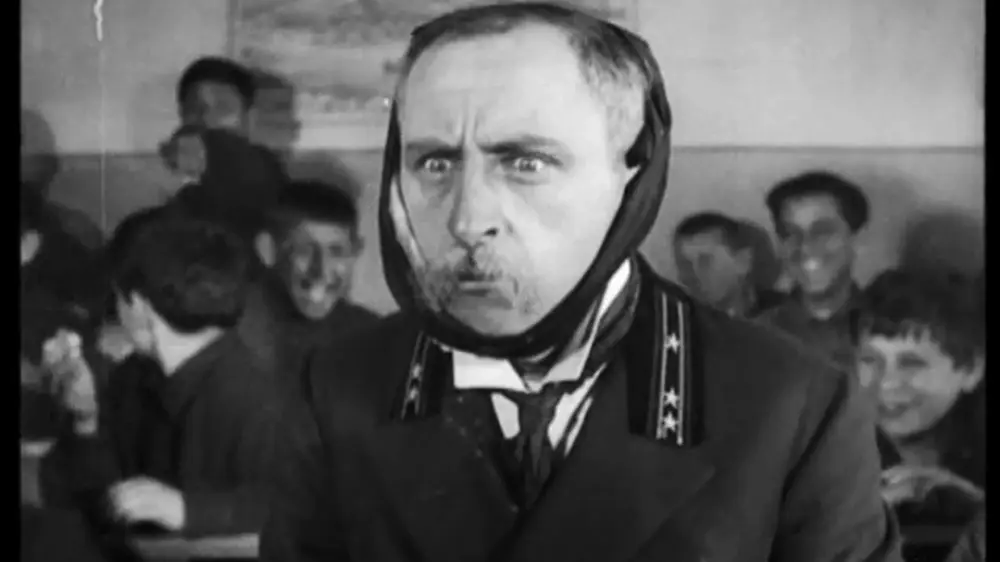
The slow unveiling of a long-buried secret forms the film’s emotional core, a secret that threatens to unravel Gogi’s carefully constructed legacy. This dramatic device, while familiar, is handled with a remarkable restraint that allows the weight of the past to permeate every scene. It’s not about shock value, but about the enduring consequences of actions, the way history casts long shadows over the present. The film effectively argues that some secrets are not merely personal burdens but communal ones, capable of fracturing the very foundations of trust and tradition.
What makes Gogi Ratiani particularly compelling is its refusal to offer easy answers. The dilemmas faced by Gogi and his community are not neatly resolved. Instead, the film concludes with a sense of lingering ambiguity, a testament to the complex realities of life and change. This open-endedness, while potentially frustrating for some, is precisely where its power lies, forcing the audience to grapple with the implications long after the final frame.
The strength of Gogi Ratiani rests almost entirely on the shoulders of B. Giorgobiani. His portrayal of the titular character is nothing short of captivating. He doesn't merely act; he inhabits the role, conveying a lifetime of experience, wisdom, and quiet despair through subtle gestures, the set of his jaw, and the profound sadness in his eyes. It’s a performance that transcends language barriers and temporal distance, speaking directly to the human condition. One particular scene, where Gogi stands alone overlooking the village, perfectly encapsulates his internal conflict without a single word being uttered – a masterclass in non-verbal communication.
Nutsa Chkheidze, though in a supporting role, leaves a lasting impression. Her character, often a silent observer, serves as a powerful counterpoint to Gogi’s more overt struggles. She embodies the quiet strength and enduring spirit of the women in the community, her gaze often conveying more emotion and understanding than any dialogue could. The subtle interplay between her and Giorgobiani, even in brief shared moments, suggests a deep, unspoken history that adds layers to the narrative. Compare her understated power to the more theatrical performances often seen in contemporary films like The Princess of India, and you appreciate the nuanced approach here.
The ensemble cast, including Irine Donauri, Zaali Terishvili, and Aleksandre Takaishvili, while less prominent, contribute significantly to the film’s authentic atmosphere. They portray a believable community, each face telling a story, each interaction adding to the tapestry of village life. Tsetsilia Tsutsunava and Sandro Dadeshqeliani, too, bring a grounded realism to their roles, ensuring that the background figures are never mere props but active participants in the unfolding drama. It’s a testament to the director's ability to elicit genuine performances from the entire cast, crafting a world that feels lived-in and real.
The raw, almost documentary-like quality of the acting style is a stark contrast to the often exaggerated emoting common in early cinema. This choice lends Gogi Ratiani a timeless quality, allowing its emotional resonance to persist despite the aging of its technical elements. The performances are the beating heart of this film, preventing it from becoming a mere historical curiosity and cementing its place as a powerful human drama.
The direction in Gogi Ratiani, while constrained by the nascent technology of its time, displays a remarkable command of visual storytelling. The director, whose identity remains somewhat shrouded by the mists of history, demonstrates an intuitive understanding of how to frame a shot to convey emotion and meaning. Long takes, often focusing on the rugged landscape or the stoic faces of the villagers, create a sense of immersion and timelessness.
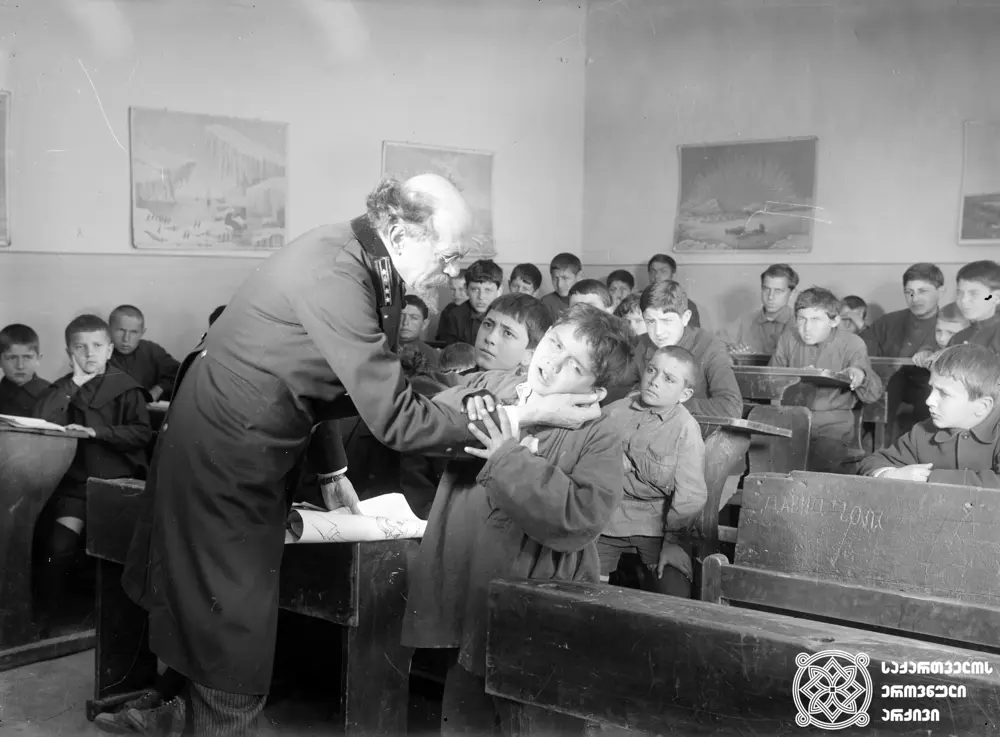
There's a deliberate, almost painterly quality to many scenes, particularly those depicting the village and its surroundings. The use of natural light, combined with carefully composed wide shots, imbues the film with a stark beauty that underscores the harsh realities of the characters' lives. This approach is reminiscent of the early Neorealist movement, even predating it, in its dedication to capturing reality without excessive embellishment. One striking sequence, involving a procession through a narrow mountain path, is masterfully staged, conveying both the physical arduousness of their lives and the collective spirit of the community.
The director also employs an interesting use of close-ups, focusing on faces at critical moments to amplify emotional impact. These moments are sparingly used, making them all the more potent when they occur, drawing the audience directly into the characters' internal worlds. This judicious use of cinematic language speaks volumes about a filmmaker who understood the power of the image beyond mere documentation. It’s a more sophisticated approach than one might expect from a film that likely predates many of the established cinematic conventions.
The blocking of actors within the frame, too, is often symbolic. Gogi is frequently placed alone or at the periphery, visually reinforcing his isolation and the burden of his leadership. Conversely, scenes of communal gathering show a naturalistic clustering, suggesting a deep-rooted sense of solidarity. This subtle visual grammar elevates the storytelling, allowing the film to communicate complex ideas without relying heavily on dialogue, a common necessity in the early sound era or even silent film traditions.
The pacing of Gogi Ratiani is undeniably slow, a characteristic that requires a significant adjustment for modern viewers. This isn’t a flaw, however, but a deliberate choice that contributes immensely to the film's contemplative tone. It allows scenes to breathe, moments to linger, and emotions to slowly build rather than explode. This measured rhythm mirrors the unhurried pace of life in the depicted village, immersing the audience in its specific temporal reality.
The tone is predominantly melancholic, imbued with a sense of impending loss and the quiet dignity of endurance. There are glimmers of hope and human connection, but these are often overshadowed by the weight of tradition and the inevitability of change. This pervasive melancholy is not depressing, but rather profound, inviting reflection on universal themes of heritage, sacrifice, and the passage of time. It's a remarkably consistent tone, maintained throughout the film without succumbing to sentimentality or melodrama, unlike some of its more sensational contemporaries such as Satan's Rhapsody.
This deliberate slowness also allows for a deep appreciation of the film’s visual details. Every frame feels carefully considered, every landscape shot imbued with meaning. The quietude of many scenes forces the audience to pay attention to facial expressions, body language, and the subtle interplay of light and shadow. It’s a film that demands active participation, rewarding patience with a rich, immersive experience. This is a far cry from the rapid-fire editing and constant stimulation of contemporary blockbusters, and that's precisely its strength.
The film’s emotional impact, when it finally culminates, is deeply resonant precisely because it has been earned through this gradual build-up. The revelations, when they come, hit with a quiet force, not a sudden shock. This controlled emotional arc is a testament to the filmmaker’s mastery of narrative rhythm, crafting a story that unfolds like a slowly blooming flower, revealing its beauty and complexity over time. It works. But it’s flawed. The challenge for a modern viewer is to embrace this different kind of cinematic language.
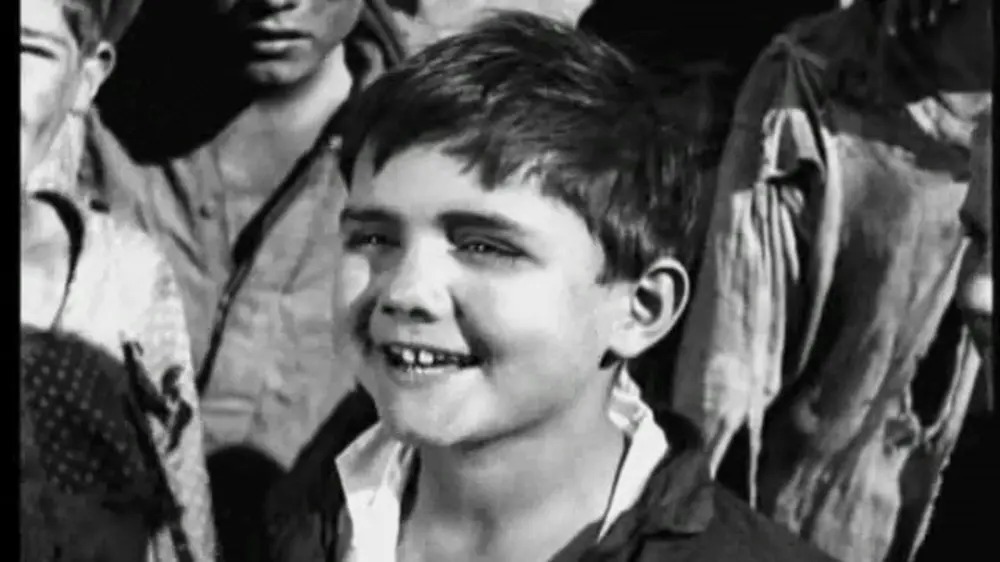
The cinematography in Gogi Ratiani, while technically primitive by today's standards, possesses a raw, unpolished beauty that is deeply evocative. The black and white photography, with its stark contrasts and deep shadows, perfectly captures the ruggedness of the Georgian landscape and the weathered faces of its inhabitants. There's a deliberate choice to use natural light whenever possible, which lends an authentic, almost documentary feel to the visuals. This isn't about gloss; it's about grit.
One can observe a clear intention to use the environment as more than just a backdrop. The mountains, the village homes, the winding paths – they are all characters in themselves, shaping the lives and destinies of the people. The production design, though likely minimal due to budget constraints, feels incredibly authentic. The costumes are simple, practical, and true to the period, while the sets, presumably real village locations, exude a lived-in quality. There's no sense of artifice, only a profound sense of place.
The framing of shots often emphasizes the vastness of the natural world against the smallness of human endeavor. This visual motif reinforces the film's thematic concerns about tradition versus modernity, suggesting that while human societies evolve, the fundamental forces of nature and history remain. Consider the sweeping vistas that often precede or follow intimate character moments; they serve to contextualize the personal drama within a grander, more enduring narrative. This visual storytelling is powerful, even without the aid of sophisticated camera movements or special effects.
While some shots might appear static or compositions less dynamic than contemporary expectations, it’s important to appreciate the constraints and the ingenuity involved. The filmmakers made the most of what they had, crafting images that, despite their age, still resonate with emotional truth and a distinct artistic vision. It showcases a foundational understanding of visual narrative, proving that compelling stories can be told with simplicity and conviction. It stands in stark contrast to the more experimental visuals seen in films like The Lost City, opting for a grounded realism instead.
Yes, for a very specific audience. Gogi Ratiani is a challenging watch due to its age, pacing, and often ambiguous narrative. However, it offers profound insights into early cinematic storytelling and a rich cultural context. It rewards patience and an open mind.
Pros:
- Powerful Central Performance: B. Giorgobiani delivers a masterclass in nuanced, non-verbal acting, carrying the film's emotional core.
- Authentic Cultural Portrayal: Offers a rare, unfiltered glimpse into early 20th-century Georgian village life and traditions.
- Thematic Depth: Explores complex themes of tradition vs. modernity, personal legacy, and societal change with remarkable prescience.
- Artistic Vision: Despite technical limitations, the direction and cinematography demonstrate a clear, compelling artistic sensibility.
- Historical Significance: A vital piece of early global cinema, offering insights into the evolution of narrative film.
Cons:
- Extremely Slow Pacing: Challenges modern viewing habits, potentially leading to disengagement for many.
- Narrative Ambiguity: The plot often relies on subtle cues and subtext, demanding significant interpretive effort from the audience.
- Dated Technical Quality: The limitations of early filmmaking (image quality, sound, editing) are evident and can be jarring.
- Limited Accessibility: Not widely available or easily digestible, restricting its audience to dedicated cinephiles.
- Lack of Immediate Gratification: Rewards patience over instant entertainment, a turn-off for mainstream audiences.
Gogi Ratiani is not an easy film. It demands patience, an open mind, and a genuine appreciation for the history of cinema. Yet, for those willing to meet it on its own terms, it offers a deeply rewarding experience. B. Giorgobiani's performance alone is worth the price of admission (or the effort of discovery), a testament to the enduring power of human expression captured on film. It’s a film that speaks in whispers rather than shouts, but those whispers carry the weight of generations.
While it undoubtedly suffers from the technical limitations of its era and a narrative style that can feel frustratingly opaque, these very qualities contribute to its unique charm and historical value. It stands as a crucial artifact, a window into a cinematic landscape rarely explored, and a powerful reminder that compelling storytelling isn't bound by modern conventions. This isn't a film for everyone, but for the right audience, it’s an essential, unforgettable journey. It is a testament to the fact that sometimes, the most profoundly moving stories are found in the quietest, most unassuming corners of film history. A film like this makes one wonder about other hidden gems, perhaps waiting to be rediscovered, much like The Ticket-of-Leave Man or The Big Adventure.
IMDb —
1920
Community
Log in to comment.