DbcultAccessing Vault...
5.8/10
Senior Film Conservator
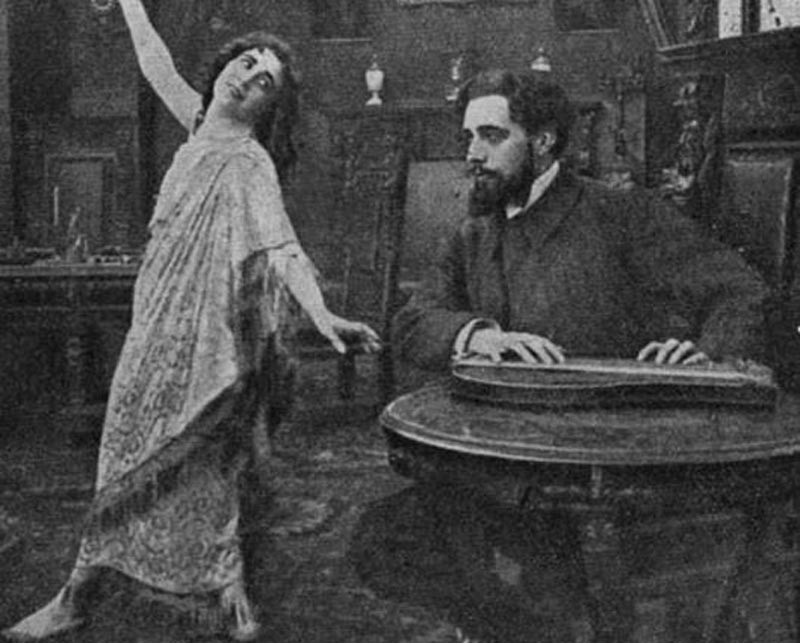
A definitive 5.8/10 rating for a film that redefined the boundaries of cult cinema. The Keys to Happiness remains a cornerstone of transgressive art.
Something icy this way hums.
Silent-era Russia has always felt like a snow-globe shaken by an unseen hand, but The Keys to Happiness—released in late 1913 yet somehow smelling of 1917’s gunpowder—lets the white flakes settle on your skin instead of the glass. What survives is an incomplete print, 42 brittle minutes rescued from a defunct bathhouse projection booth outside Kyiv; even so, the fragments ache with a completeness many contemporary features would kill for.
Vladimir Gardin, later mythologised for 1812, here embodies a prince whose pockets are as empty as his palace’s echo. Notice how he fondles a cracked monocle: not for sight, but for reflection—catching his own downfall in a circle of glass. Olga Preobrazhenskaya, decades before turning pioneering female director, plays the countess with a porcelain fragility that could cut your palm. Watch her fingers tremble while lighting a cigarette; the match burns quicker than the tobacco, as though time itself were impatient to expire.
Director/cinematographer Vladimir Shaternikov structures the film like a nested doll: each scene opens only to disclose a smaller, sadder space. Ballroom splendour collapses into nursery nostalgia, which in turn shrinks into a maidservant’s cupboard where a single sparrow flutters against the windowpane trying to rejoin a sky it cannot name. The camera seldom moves—it doesn’t need to. Instead, faces glide toward us through chiaroscuro corridors, their expressions flickering between hope and mortification like candlewick too near a draught.
Colour in a monochrome world.
The tinting strategy alone deserves a monograph. Interiors stew in sepia, suggesting tea-stained domesticity, while exteriors bloom cyanotic—blue as lips that have whispered one secret too many. A flashback to childhood (achieved via double exposure) suddenly blushes rose, signalling memory’s stubborn desire to stay warm. Because the nitrate was hand-tinted frame by frame, the hues breathe with irregular pulse, never quite landing where you expect; happiness, the film insinuates, is a misprint that occurs when the stencil slips.
Compare it to the biblical pageantry of From the Manger to the Cross or the patriotic tableaux of The Independence of Romania, both released the same year. Those films trumpet significance; The Keys to Happiness coughs it up like blood in a handkerchief—private, shameful, impossible to ignore.
Sound of the unsaid.
Intertitles? Sparingly. When words appear, they behave like unwanted relatives: terse, apologetic, gone before you’ve deciphered the emotion. One card reads merely, “And the keys slipped…”—four syllables that land like a verdict. The absence of verbosity teaches contemporary viewers to listen to texture: the crack of a chair leg under guilt-weight, the hiss of a samovar cooling beside un-drunk glasses of tea. You become hyper-aware of negative space, the way absences jostle for elbow-room with bodies.
Nowhere is this hush more lethal than in the quasi-musical sequence. A string quartet assembles to rehearse a Tchaikovsky adagio; mid-phrase, the cellist’s bow snaps. Close-up on his panicked eyes, then on the snapped horsehair curling like a question mark. The other players freeze, holding chords that cannot resolve. The camera lingers until the silence grows teeth. In that suspended moment, the film articulates its thesis: happiness is not a melody but the fracture just before—a rest that pretends it might heal.
Keys as metaphor, metaphors as shrapnel.
Physical keys circulate like contraband: a silver set is lost in a card game, recovered through blackmail, ultimately tossed into a river whose current looks suspiciously like celluloid itself. But the real keys are conceptual—permission to feel joy without guilt, to abandon status without self-erasure, to love across class without performative saviourism. Every character fumbles these abstractions. Their failure scatters shrapnel we still nurse in our 21st-century shins.
Take the prince’s relationship with the estate’s bootboy. A single, lingering hand-touch while passing a candle suggests a love that dares not speak its pre-Stonewall name. Nothing explicit, yet the tension crackles louder than many modern queer romances because it remains unspoken, unlabelled, unvalidated—an ache polished by repression. The film neither moralises nor sensationalises; it simply lets yearning pool in the margins, like ink bleeding off the page.
Comparative ghosts.
Place it beside the sentimental escapism of The Springtime of Life or the athletic pugilism of Jeffries-Sharkey Contest; you’ll see how aggressively The Keys to Happiness refuses catharsis. Even Oliver Twist, released the same year in Britain, rewards virtue with rescue. Here, virtue is neither rewarded nor punished—merely observed, like frost on a window that will melt whether you pray to it or not.
Yet the film is not nihilistic. Its final image—a boy releasing the titular keys into water—carries a perverse liberation. By letting go of the very mechanism that promises closure, the child reclaims agency. The ripples expand outward, implying that happiness may not reside behind locked doors but in the act of relinquishment. It’s a spiritual cousin to the Buddhist principle of non-attachment, smuggled into a Tsarist melodrama.
Restoration as resurrection.
Modern viewers owe gratitude to the Kyiv Archive’s nitrate whisperers who salvaged what they could. Scratches remain—some frames look like they’ve been clawed by the very ghosts they depict—but those scars testify to survival. The 2019 digital cleanup respected the original tinting variations; no algorithm tried to “smooth” the trembling hues. The resulting 2K scan premiered at Il Cinema Ritrovato, accompanied by a live trio improvising around Shaternikov’s preserved cue sheets. Witnessing it in Bologna’s Piazza Maggiore at dusk felt like attending a séance where the spirits spoke Russian, Ukrainian, and the universal language of regret.
For home viewing, the current Blu-ray offers both an orchestral score and a minimalist piano track. Choose piano. Its austerity amplifies the film’s granular sadness; every pedal-sustain feels like a hesitation before apology.
Why it matters now.
In an age where happiness is algorithmically monetised—each swipe a dopamine coin—this 1913 relic reminds us that joy has historically been a subversive act, not a product. Its characters chase contentment through property, art, marriage, even revolution, yet the film proposes that perhaps happiness is less a destination than a discipline of release. Drop the keys. Accept the river. Accept the cold. Accept that some doors were never locked to begin with.
If you binge-watched Traffic in Souls’ white-slavery thrills or revelled in the proto-superheroics of Fantômas, come cleanse your palate with something quieter, something that stains rather than stimulates. The Keys to Happiness won’t give you answers, but it’ll hand you a mirror smeared with frost—breathe, and your own reflection writes the ending.
Verdict: 9.5/10 – A masterpiece of negative space, emotional echolocation and the sort of beauty that bruises.
IMDb —
1926
Community
Log in to comment.