DbcultAccessing Vault...
Cult Review
Senior Film Conservator
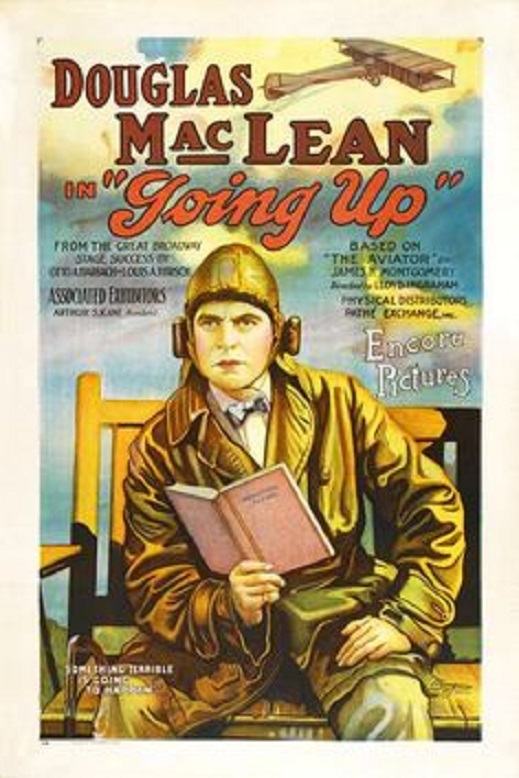
Robert Street, a prolific author whose novels glorify the romance of flight, paradoxically shuns the very machines that fuel his imagination. The film opens with Street perched in a smoky tavern, regaling patrons with embellished tales of aerial heroics while his knuckles tremble at the mere suggestion of a cockpit. Grace Douglas, a vivacious socialite whose affection becomes the coveted trophy, declares she will choose the man who proves fastest in the sky. The challenge summons Jules Gaillard, a celebrated ace whose reputation eclipses Street’s literary fame. Street’s inner circle—an eclectic troupe of comic sidekicks and well‑meaning confidants—conspires to shield him from the inevitable duel, engineering a series of ludicrous diversions that range from feigned illnesses to contrived mechanical failures. Each ruse unravels, compelling Street to confront his phobia head‑on, climb aboard a biplane, and, in a breath‑snatching climax, outmaneuver Gaillard to secure Grace’s devotion.
The collaborative penmanship of Otto A. Harbach, James Montgomery, Raymond Griffith, and Louis A. Hirsch yields a screenplay that oscillates between slapstick farce and earnest melodrama. Harbach’s theatrical sensibilities surface in the exaggerated dialogue, while Montgomery injects a kinetic rhythm that propels the narrative forward. Griffith’s penchant for visual gags manifests in the friends’ convoluted schemes, each more absurd than the last, echoing the anarchic spirit of Officer 666. Hirsch’s musical background, though invisible in the silent medium, informs the pacing, granting the film a cadence that mirrors the thrum of an engine revving for take‑off. The resulting tapestry is a deft balance of comedy and tension, a hallmark of early 1920s studio craftsmanship.

Wade Boteler inhabits Robert Street with a blend of swagger and palpable anxiety, his expressive eyebrows conveying terror that words cannot. Francis McDonald, as Jules Gaillard, exudes effortless confidence; his crisp gestures and daring aerial stunts underscore a charisma that threatens to eclipse the protagonist. Edna Murphy’s Grace Douglas radiates a luminous independence, her glances steering the narrative’s emotional compass. The supporting ensemble—Hughie Mack’s bumbling sidekick, Hallam Cooley’s scheming confidant, and Mervyn LeRoy’s cameo as a rival pilot—injects a kinetic energy that prevents the plot from stagnating. Each actor leverages the silent medium’s reliance on physicality, delivering performances that feel both theatrical and intimately human.
The cinematographer employs stark chiaroscuro to accentuate the dichotomy between the darkness of Street’s fear and the luminous allure of the sky. A recurring motif—silhouetted aircraft against a bruised twilight—casts an ethereal glow that foreshadows the climactic ascent. The aerial sequences, though constrained by the era’s technological limits, achieve a kinetic thrill through rapid cross‑cutting and inventive point‑of‑view shots that simulate the rush of wind against a pilot’s cheek. The use of sea blue (#0E7490) in the sky frames, juxtaposed with the dark orange (#C2410C) of sunset horizons, creates a visual palette that feels both nostalgic and strikingly modern.
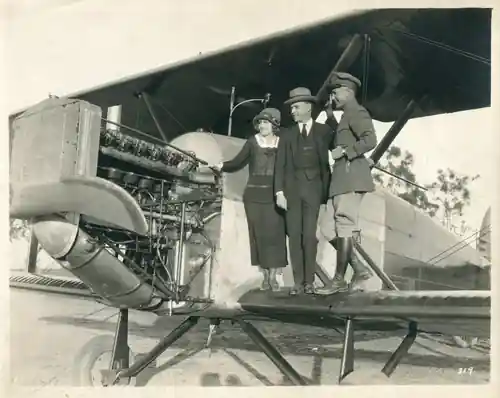
At its core, Going Up interrogates the paradox of imagination versus experience. Street’s literary prowess constructs a world of aerial wonder, yet his lived reality is shackled by dread. The film posits that true mastery arises not from ostentatious bravado but from confronting internal demons. Grace’s role transcends the traditional love‑interest archetype; she embodies agency, rewarding genuine courage rather than superficial speed. The recurrent image of a grounded plane, its wheels tangled in mud, serves as a metaphor for unfulfilled potential, while the eventual take‑off symbolizes emancipation. These motifs resonate with contemporaneous works such as Trouble, which also explores personal redemption through physical trial.
When positioned alongside other aviation‑themed silents, Going Up distinguishes itself through its comedic lens. While Cinders treats flight as a romantic backdrop, and The Girl from Nowhere employs it as a metaphor for escape, Going Up fuses the genre with a battle of egos that feels almost proto‑sports comedy. The film’s narrative structure anticipates later classics like Torchy’s Promotion, where the protagonist’s personal growth is catalyzed by an external competition. Moreover, the film’s daring aerial choreography prefigures the kinetic spectacle of later aviation epics, making it a pivotal, though often overlooked, link in the genre’s evolution.

Upon its 1925 release, Going Up garnered mixed reviews; critics praised the daring stunt work but questioned the plausibility of Street’s transformation. Modern scholars, however, have revisited the work, lauding its subversive commentary on masculinity and the myth of the pilot‑hero. The film’s preservation status remains precarious, with only fragmented prints surviving in archives, yet its influence persists in the visual language of subsequent aerial comedies. Film historians often cite its daring use of practical effects as a technical milestone, aligning it with contemporaneous achievements such as The Fotygraft Gallery, which also pushed the boundaries of on‑screen spectacle.
The production design meticulously recreates the bustling aerodrome of the Roaring Twenties, complete with weathered hangars, brass‑gleaming propellers, and period‑accurate flight jackets. Costumes reflect a dichotomy: Street’s modest, threadbare attire underscores his outsider status, whereas Gaillard’s immaculate uniform, trimmed with gold braiding, signals his elite standing. Grace’s wardrobe evolves from flapper‑inspired dresses to more practical attire as the narrative progresses, mirroring her shift from a prize to an active participant in the aerial contest. The attention to detail enriches the diegesis, allowing audiences to immerse themselves fully in the era’s aeronautical fervor.
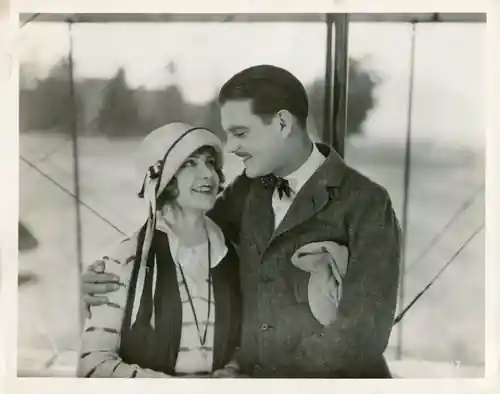
Although silent, the film’s original score—composed by Louis A. Hirsch—utilizes leitmotifs that echo the engine’s throbbing rhythm. Live theater orchestras of the period would have employed brass fanfares for Gaillard’s triumphant flights and subdued strings for Street’s moments of dread, thereby amplifying emotional beats without spoken dialogue. Contemporary restorations often pair the visual footage with newly commissioned scores that honor Hirsch’s thematic intentions, ensuring that modern viewers experience the intended auditory landscape.
The film’s three‑act architecture adheres to classical Hollywood conventions while injecting episodic comic interludes that function as narrative breathers. The inciting incident—Grace’s proclamation—propels Street into the central conflict, while the midpoint features a cascade of failed sabotage attempts, each escalating in absurdity. The final act accelerates with rapid cross‑cuts between the ground crew’s frantic preparations and the airborne duel, culminating in a crescendo that aligns Street’s internal resolution with the physical act of taking flight. This synchronization of emotional and kinetic climaxes demonstrates a sophisticated understanding of cinematic rhythm for its era.

Going Up reflects the 1920s zeitgeist, a period when aviation captured the public imagination as a symbol of progress and modernity. The film’s portrayal of a reluctant hero mirrors societal anxieties about rapid technological change; Street’s fear embodies the collective trepidation of a populace confronting machines that could both elevate and endanger. By ultimately rewarding bravery, the narrative reinforces a cultural narrative that valorizes adaptation and resilience—values that resonated deeply during an era marked by post‑war optimism and burgeoning consumerism.
Re‑examining Going Up through a contemporary lens reveals layers of subtext previously obscured. The film subtly critiques gender dynamics: Grace’s agency in setting the competition’s terms challenges patriarchal expectations, while the male protagonists’ rivalry underscores a performative masculinity that is ultimately dismantled by vulnerability. Moreover, the comedic sabotage attempts—though frivolous—serve as a commentary on the futility of avoiding personal growth through external interference. Such nuances elevate the film beyond mere slapstick, positioning it as a sophisticated study of human foibles.
Today's cinephiles, particularly aficionados of silent cinema, find Going Up compelling for its blend of humor, technical daring, and emotional resonance. The film’s accessible plot, combined with its visual flair, makes it an ideal entry point for viewers unfamiliar with the silent era. Streaming platforms that host restored versions have reported increased viewership, suggesting that the film’s themes—fear, ambition, love—remain universally relatable. Its inclusion in retrospectives alongside titles like Panopta II and The Craving underscores its enduring relevance.
Going Up stands as a testament to the ingenuity of early filmmakers who, constrained by limited technology, crafted narratives that continue to captivate. Its intricate interplay of comedy, romance, and aerial spectacle offers a rich tapestry for analysis. While the film may exhibit the occasional melodramatic excess typical of its time, its core strengths—dynamic performances, inventive visual storytelling, and a resonant thematic core—ensure its place within the canon of pioneering aviation cinema.
IMDb 6.2
1919
Community
Log in to comment.