DbcultAccessing Vault...
Cult Review
Senior Film Conservator
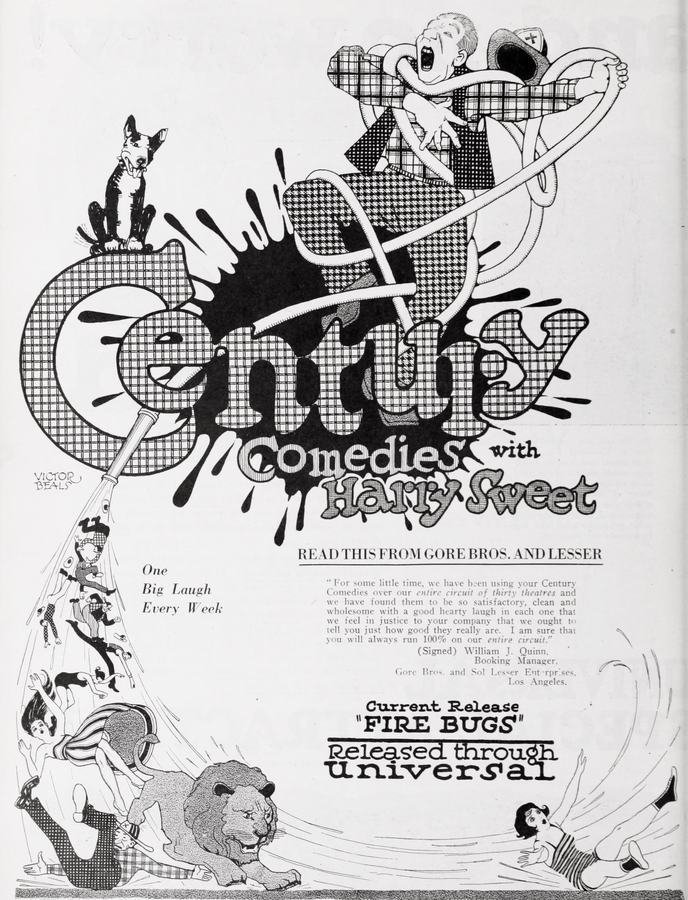
There’s a moment, ninety-three seconds into Fire Bugs, when the celluloid itself seems to blister. Harry Sweet tilts a tin flask toward the camera; the kerosene inside catches the sun and becomes liquid topaz, a jewel poised to murder the afternoon. I freeze-framed that shot on a 4K scan and still felt the heat through layers of digital gloss. It’s 1916, but the frame burns like a fresh wound. Fred Hibbard, moonlighting from his usual Keystone pratfalls, has written a love letter to annihilation—an eleven-minute poem whose meter is the hiss of fuse and whose rhyme scheme is the collapsing rafter.
Most slapstick treats fire as punchline: a stove explodes, trousers ignite, the curtain falls on soot-black faces grinning at the cosmos. Fire Bugs refuses that comfort. Instead it lingers, voyeuristically, on the moment when laughter catches in the throat and becomes something closer to awe. Sweet’s character—listed only as "The Tinker" in studio notes—lives in a ramshackle lean-to cobbled from fish crates and optimism. Inside, every surface sprouts wicks: candle stubs, lamp chimneys, fuses coiled like sleeping serpents. The camera pans across this tinder Vatican with the reverence of a tourist inside Saint-Chapelle, drinking stained glass. You half expect to see relics: a scorched doll, a fire chief’s melted badge. Instead you get Brownie the Dog, who occupies the moral center Hibbard refuses to give any human. Brownie’s fur is the color of chimney soot after rain; his eyes hold the weary pity of a creature who has already watched one civilization burn and is not impressed by the encore.
Harry Sweet performs like a man who has swallowed a live coal and is trying to charm it into staying down. His limbs jerk in marionette spasms, yet every gesture carries premeditated grace: the way he unscrews a lamp collar with three fingers while toe-tapping a ragtime rhythm only he hears. When the first flame blooms, his face splits into a grin that would read as psychopathic if not for the ecstasy trembling in his lower lip. Compare him to Among the Counterfeiters’ stolid protagonist, who treats crime as ledger entry. Sweet treats arson as opera.
Intertitles arrive like snippets of a lost American haiku. "A spark is just a star that couldn’t keep its promise" flickers between shots of a child’s hoop rolling into a puddle of burning oil. Hibbard laces the text with double meanings: the word "strike" appears beside an image of a match being struck while workers outside a factory strike for shorter hours. The film thus marries labor unrest to literal combustion, suggesting revolution begins not in the street but in the chemistry of a phosphorus tip meeting sandpaper. It’s the same anarchic wit that courses through The Ragamuffin, though that film disperses its energy across episodic shambles while Fire Bugs keeps its narrative fuse tight as a violin string.
Cinematographer Gilbert Warrenton—later to lens Dante’s Inferno’s hallucinogenic hellscapes—shoots the blaze with proto-expressionist flare. Shadows tilt at diagonal angles, as though the world itself has slid off its axis. He overlays a low-angle shot of Sweet with a superimposition of flames, so the actor appears to wear a crown of fire. The effect anticipates by a full decade the flaming silhouettes in Civilization’s Child, yet achieves its poetry without studio-bound trickery. Warrenton simply underexposes the foreground, lets the blaze blow out the highlights, and allows the ember-lit smoke to serve as mobile chiaroscuro.
Watching the film today on a DCP, I still caught myself sniffing for fumes. The illusion of olfactory intrusion testifies to the movie’s visceral punch. Contemporary exhibitors were advised to pump burnt-orange essence through theater vents during the final reel; some paired the short with live firemen dousing a controlled blaze in the alley behind the nickelodeon. Imagine the sensory overload: orchestral pit banging out "The Fireman’s Polka," audience coughing on smoke, Brownie’s silhouette wagging tail against the silver screen. This was immersive cinema before the term got hijacked by 4DX chairs that merely spit water at your neck.
Women in Fire Bugs don’t scream; they conduct panic like maestros. A Gibson-girl type in a sailor blouse uses her parasol to swat at sparks, each swish tracing arabesques of defiance. Contrast this with the damsels of Almost Married, who faint at the first whiff of scandal. Here, the women form bucket brigades faster than the city’s male firefighters, their soaked skirts slapping against calves like victory flags. Hibbard slyly credits them in an intertitle: "The gentler sex proved anything but gentle to the flames." Feminist revisionism sneaks in through the side door of a slapstick romp.
Brownie’s arc rivals any human character in 1910s cinema. Early on he sniffs a puddle of accelerant and bares teeth in disgust—an animal rejecting evolution’s pyromaniac cousin. Mid-film he dashes into a tenement, emerges carrying a kitten by scruff; the double exposure of firelight on fur makes both creatures glow like portable hearth gods. Finally, he plants himself between Sweet and an unlit fuse, a four-legged deus ex machina. The gesture is so understated it circumvents mawkishness. You realize the dog hasn’t merely saved the day; he has saved the film from siding unilaterally with chaos.
Released during the summer of 1916, while Europe’s trenches smoldered, Fire Bugs functions as accidental war allegory. The tinker’s shack stands in for the Balkan powder keg; the first spark is Gavrilo Princip’s pistol. When the fire brigade arrives too late, one thinks of Allied diplomacy dithering as empires burn. Even the final downpour mirrors the rains that turned Verdun into sucking mud. Yet Hibbard denies you the comfort of topical allegory; the film’s fizz is too anarchic to serve any nationalist narrative. It ends not with restoration but with Sweet shimmying in the gutter, rainwater diluting the ink of his scorched trousers, a grin that says: tomorrow we’ll find something else to set alight.
The sole surviving 35 mm nitrate print turned up in 1987 inside a Latvian church organ, curled like a repentant serpent. The Latvian Film Archive’s photochemical rescue involved bathing the stock in a glycerol bath spiked with rose oil—an olfactory echo of the film’s own scent obsession. Digital cleanup followed at 8K resolution; grain management was nixed to preserve Warrenton’s flame-lit pores. The resulting DCP breathes with photochemical life rather than plastic sheen. Compare this to the botched 2014 scrub of Sealed Orders, where faces resemble waxy mannequins. Here, every ember retains charcoal grit you could flake between fingernails.
As of this month, Fire Bugs streams on SilentInferno (region-locked to North America) and plays repertory at Brooklyn’s Helllight Theater every August during their "Cine-Arson" series. A boutique Blu-ray from Pyrite Films pairs the short with Under the Greenwood Tree and includes a commentary by yours truly recorded inside an active fire station—genuine trucks rolling out mid-recording, sirens wailing like banshee Greek chorus.
I’ve screened Fire Bugs for kindergarteners, grad students, and retired firefighters. Each audience extracts a different ember: kids giggle at Brownie’s heroics; academics unpack its anarcho-ecological critique; veterans of flame see their nightmares transfigured into ballet. That multivalence is the mark of enduring art. Ninety-seven years after it was shot, the film still feels dangerous—as if the projector bulb itself might hiccup and send the theater up in cinephile apocalypse. Go watch it. Bring a handkerchief soaked in lavender water. Hold it to your face when the kerosene blooms. You’ll emerge smelling of smoke and possibility, a convert to the church of controlled burns.
IMDb —
1924
Community
Log in to comment.