DbcultAccessing Vault...
8.3/10
Senior Film Conservator
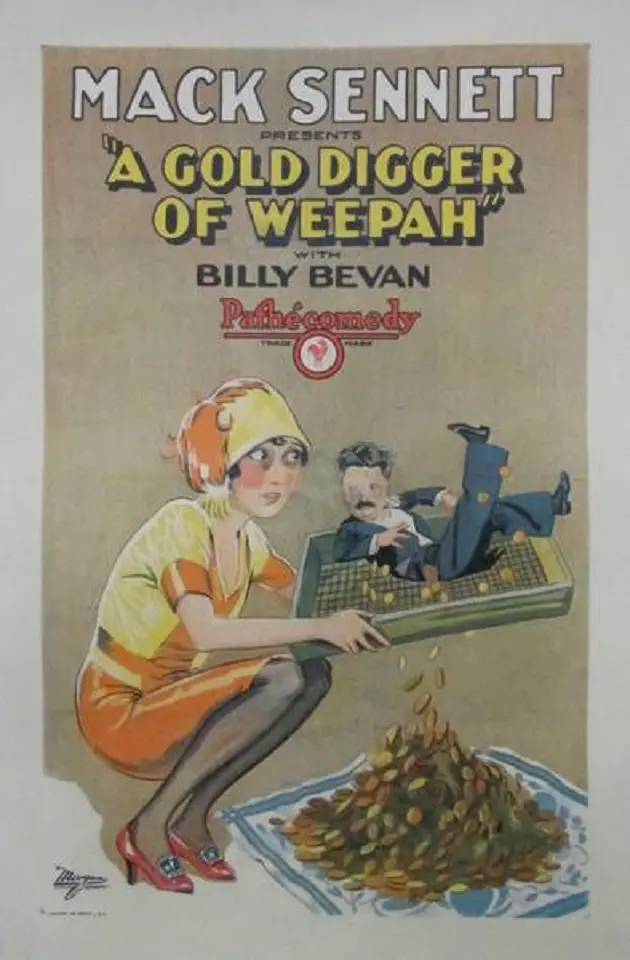
A definitive 8.3/10 rating for a film that redefined the boundaries of cult cinema. Gold Digger of Weepah remains a cornerstone of transgressive art.
Is Gold Digger of Weepah a silent film worth seeking out today? Short answer: yes, but with a significant caveat. This early cinematic offering is a fascinating artifact, a vibrant snapshot of its era's comedic sensibilities and narrative structures.
It’s a delightful diversion for anyone with a genuine interest in the evolution of film, particularly those who appreciate the physical comedy and expressive acting unique to the silent era. However, it is decidedly not for the casual viewer accustomed to modern pacing and dialogue-driven storytelling. If you find the lack of spoken words or the broad gestural performances of early cinema a barrier, this might not be your cinematic goldmine.
The narrative of Gold Digger of Weepah unfolds in a bustling, dust-choked frontier town, a crucible of ambition and fleeting fortune. Into this chaotic tapestry steps Miss Lily Belle, a woman whose striking beauty and sharp intellect mask a very pragmatic agenda. She is not merely passing through; she has arrived with a clear objective: to secure her future, ideally by marrying into the newfound wealth that Weepah so readily promises.
Lily Belle's calculated charm quickly ensnares the attention of several prominent, if somewhat bumbling, bachelors. Her initial interactions are a masterclass in strategic flirtation, each gesture and smile carefully deployed to maximize her prospects. The town, a microcosm of raw human desire, becomes her stage.
Yet, her meticulously laid plans begin to fray with the persistent, earnest presence of 'Lucky' Jim. Jim, a prospector with more grit than gold, represents everything Lily Belle initially seeks to avoid: genuine affection unadorned by financial security. His unwavering belief in her, despite her transparent ambitions, slowly chips away at her carefully constructed facade.
The film then descends into a series of escalating comedic mishaps, involving mistaken identities, a stolen claim, and a frantic chase through the dusty streets. These external pressures force Lily Belle to re-evaluate her priorities. The pursuit of easy wealth, initially her guiding star, begins to dim in comparison to the unexpected warmth of human connection. The journey becomes one of self-discovery, where the 'gold digger' must decide if true riches lie in a bulging purse or a beating heart.
Let’s cut directly to the chase, for those considering a visit to Weepah’s dusty archives.
This film works because of its unabashed commitment to physical comedy and the surprisingly nuanced performances from its ensemble cast, particularly given the limitations of the silent era. The pacing, while initially a product of its time, develops into a delightful comedic rhythm that holds attention.
This film fails because its over-reliance on certain silent film tropes can feel dated to modern eyes, and the resolution, while charming, lacks the deeper emotional resonance that contemporary audiences might expect. The narrative, at times, sacrifices character development for the sake of slapstick.
You should watch it if you have a genuine appreciation for early cinema, enjoy broad comedic performances, and are curious about the origins of romantic comedy tropes. It’s a historical curiosity that still delivers laughs.
The acting in Gold Digger of Weepah is a masterclass in the silent film tradition, where every glance, every exaggerated gesture, and every carefully choreographed movement had to convey narrative and emotion. Jules Hanft, as one of the prominent figures in Weepah, grounds the more outlandish elements with a stoic, often bewildered, presence that is consistently amusing. His reactions to Lily Belle's schemes are a highlight, a silent symphony of exasperation and unwitting complicity.
However, it is the ensemble, particularly the comedic players, who truly shine. Andy Clyde, a veteran of countless two-reelers, delivers a performance that is a delightful blend of physical prowess and understated charm. There’s a scene where his character attempts to discreetly eavesdrop, contorting himself behind a saloon door, that is pure comedic gold. His timing is impeccable, creating laughter through sheer physicality rather than relying on frantic overacting. This kind of precise, almost balletic comedy is often overlooked in contemporary discussions of silent film, but it's vital here.
Carole Lombard, in one of her earlier roles, displays flashes of the star power that would define her later career. While her role might be smaller, her expressive eyes and natural grace hint at the comedic genius she would become. Her ability to convey both innocence and cunning with just a subtle shift in posture is remarkable for an actress of her age and experience at the time. It’s a testament to her innate talent that even in these formative years, she could command attention.
Conversely, some of the supporting performances, while enthusiastic, occasionally veer into the realm of caricature without the necessary grounding. This is a common pitfall of the era, where broad strokes were often preferred for clarity. Yet, the overall effect is one of a lively, if sometimes uneven, cast dedicated to the film's comedic vision. The nuanced interplay between the more subtle actors and the broader comedic types creates a dynamic that keeps the film engaging, even when the plot occasionally meanders.
The directorial hand, guided by the collaborative efforts of Harry McCoy and others, demonstrates a clear understanding of silent film storytelling. The direction prioritizes clarity and visual impact, ensuring that even without dialogue, the audience is never lost. There’s a particular sequence involving a chaotic chase through the town, where the camera, while static by modern standards, is positioned to capture the full breadth of the action. The staging of the various characters, each pursuing their own objective, creates a vibrant, almost theatrical spectacle.
The use of intertitles is effective, not just for dialogue but also for injecting comedic asides and advancing the plot with punchy declarations. They are integrated seamlessly, often appearing at the perfect moment to punctuate a visual gag or to reveal a character's inner thoughts. This careful balance between visual storytelling and textual exposition is a hallmark of well-executed silent cinema, and Gold Digger of Weepah largely succeeds in this regard.
Cinematographically, the film benefits from a straightforward, yet often striking, approach. The outdoor shots of Weepah, presumably filmed on location or on a well-dressed backlot, convey a palpable sense of the frontier. The harsh sunlight, the dust kicked up by horses and feet, all contribute to an authentic atmosphere. There's a wide shot early in the film, capturing the main street of Weepah, that perfectly establishes the town's raw, untamed energy. It's not a shot that aims for artistic grandeur like some of the epic silent films, but rather one that serves the story with practical efficacy.
Interior scenes, while naturally more constrained by the technology of the time, are lit to emphasize character expressions. Close-ups are used sparingly but effectively, often to highlight a moment of realization or a particularly funny reaction. This deliberate choice prevents the film from feeling claustrophobic and instead focuses the viewer's attention on the emotional beats, however broad they might be. It contrasts sharply with the more experimental camera work seen in films like The Song of Love, which pushed boundaries in different ways.
The pacing of Gold Digger of Weepah is surprisingly brisk for a film of its vintage, especially once the initial character introductions are out of the way. The narrative builds momentum through a series of escalating complications, each more absurd than the last. There’s a comedic rhythm established early on that pulls the audience through the various schemes and romantic entanglements. It’s a pacing that understands the need to keep the audience engaged without overwhelming them.
However, this briskness occasionally comes at the expense of deeper character development. While Lily Belle's transformation feels earned by the end, the journey itself sometimes feels rushed, relying on plot contrivances rather than organic growth. This is a common criticism of two-reel comedies, which prioritized rapid-fire gags over nuanced arcs. It's a fundamental difference from the more dramatic, deliberate pacing of something like Reputation, which allowed its characters more room to breathe.
The tone is predominantly lighthearted and comedic, leaning heavily into slapstick and situational humor. Yet, there’s an underlying thread of genuine romance and a subtle critique of the era's obsession with wealth. The film manages to poke fun at the 'gold digger' trope while still investing in the possibility of true love. This balance is tricky to achieve, especially in a silent film where subtle shifts in tone are communicated purely visually. The film navigates this with commendable skill, never becoming too cynical or overly saccharine.
One particularly effective tonal shift occurs during a moment of quiet reflection for Lily Belle, where the bustling comedy briefly subsides. It’s a brief pause that allows the audience to connect with her on a deeper level, before the next wave of comedic chaos ensues. This judicious use of quieter moments prevents the film from becoming a relentless barrage of gags, giving it a surprising amount of heart.
"The true gold in Weepah isn't found in the mines, but in the unexpected warmth of human connection. This film, despite its age, still manages to strike a vein of genuine charm."
Silent comedies like Gold Digger of Weepah occupy a unique space in cinematic history. They are often dismissed as relics, primitive precursors to the 'real' cinema that followed. This is a deeply unfair assessment. These films, far from being simplistic, demanded an incredible level of artistry and ingenuity from their creators. The reliance on visual storytelling, physical comedy, and the expressive power of the human face meant that every frame had to work harder.
The film’s humor, while undoubtedly broad, is surprisingly effective. There's a timeless quality to well-executed slapstick, and the performances here, particularly from the seasoned comedic actors, demonstrate a mastery of the form. The absurdity of the situations, the frantic energy, and the sheer joy of watching characters bumble through life, still resonate. It’s a testament to the universal appeal of laughter, regardless of the era.
However, it’s also important to acknowledge that not all of the humor has aged gracefully. Some of the character archetypes, particularly the more overtly caricatured ones, can feel a little one-dimensional. The relentless optimism, while charming, occasionally glosses over opportunities for deeper emotional exploration. The film, like many of its contemporaries, prioritizes entertainment above all else, which is not a flaw in itself, but it does mean that it doesn’t aim for the profound insights found in later dramatic works.
One could even argue that the very premise of a 'gold digger' being ultimately redeemed by love, while a classic trope, also reinforces certain societal expectations for women of the era. It's an unconventional observation perhaps, but one worth considering: does the film truly challenge the 'gold digger' stereotype, or merely re-package it with a romantic bow? I lean towards the latter, which isn't necessarily a bad thing for a light comedy, but it does highlight the limitations of its progressive messaging.
Watching a silent film in the 21st century is more than just an academic exercise; it's an immersive experience that forces a different kind of engagement. Without the crutch of dialogue, viewers are compelled to pay closer attention to visual cues, body language, and the subtle interplay between characters. It hones a different kind of cinematic literacy.
Gold Digger of Weepah, with its engaging plot and spirited performances, serves as an excellent entry point into this often-overlooked era of filmmaking. It’s not just about appreciating history; it’s about discovering a different language of storytelling, one that is often surprisingly sophisticated and emotionally resonant.
It works. But it’s flawed. Like many films of its kind, it’s a product of its time, showcasing both the brilliance and the limitations of early cinematic art. The film provides a window into the cultural landscape of the 1920s, reflecting anxieties and aspirations through a comedic lens. It’s a cultural artifact that still manages to entertain and inform, offering insights into the evolution of storytelling itself.
Gold Digger of Weepah is far from a forgotten masterpiece, but it is also far from a cinematic footnote. It’s a spirited, often uproarious silent comedy that serves as a delightful time capsule of 1920s filmmaking. For those willing to engage with its unique language, it offers genuine laughs and a charming, if predictable, romantic journey. It reminds us that even in the absence of spoken words, cinema could tell compelling stories and evoke powerful emotions.
While it may not redefine the genre or challenge your perceptions of film, it absolutely earns its place as a recommended watch for anyone looking to dig a little deeper into the rich veins of early Hollywood. It's a film that proves that sometimes, the greatest treasures are found in the most unexpected places, even in the dusty archives of silent cinema.
IMDb 6.4
1935
Community
Log in to comment.