DbcultAccessing Vault...
6.8/10
Senior Film Conservator
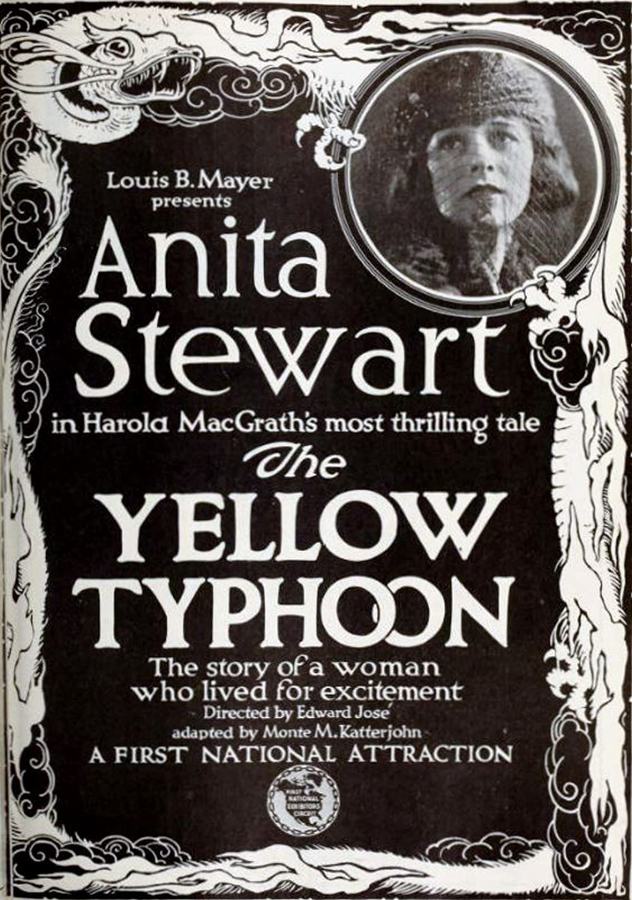
A definitive 6.8/10 rating for a film that redefined the boundaries of cult cinema. The Yellow Typhoon remains a cornerstone of transgressive art.
If identity is a cathedral, The Yellow Typhoon detonates its nave with twin gargoyles carved from the same slab of marble. Anita Stewart—doubling as both Nordstrom sisters—renders each woman not through cosmetic trickery but by modulating breath: Hilda’s lungs swell with patriotic oxygen; Berta exhales carcinogenic intrigue. The camera, starved of spoken syllables, clings to these micro-gestures, turning every eyelash into semaphore. When Berta glides through Shanghai’s lantern-strewn back-alleys, her kimono is less wardrobe than battle flag, proclaiming a crusade of sensual colonial plunder. Conversely, Hilda’s trench coat snaps like a mainsail in Arctic wind, a textile manifesto of moral certitude.
The coveted submarine schematic is never diagrammed for us; we glimpse only the ritualistic veneration of its manila envelope. In an age when dreadnoughts were the planet’s most priapic symbols, the film weaponises secrecy itself. Every character fondles that envelope as though it were the Holy Grail dipped in testosterone. The absence of technobabble is sly—director Katterjohn knows that mystery, not minutiae, seduces. Thus the blueprint becomes a blank cheque the audience writes to its own paranoia.

Cinematographer George Barnes paints the South China Sea in nocturnes of indigo and tangerine, a chromatic oxymoron that anticipates the neon romanticism of Submarines and Simps yet retains the carbon-black menace of The Kaiser’s Shadow. Note the scene where Berta negotiates with Lysgaard beneath a swinging opium-shop lamp: every pendulum sweep obliterates faces, reducing human intrigue to silhouette-puppetry. It’s as if the empire itself refuses to be photographed, opting for shadow as both confession and camouflage.
Where contemporaneous melodramas such as The Woman Under Cover flatten femininity into Madonna-or-Maggd dichotomy, Typhoon revels in the masquerade. Berta’s signature scent—gardenia laced with gunpowder—announces her before she enters frame; Hilda, scentless, infiltrates by withholding olfactory data. Scent becomes silent-film dialogue, a molecular script wafted across salons and bulkheads. When the twins finally occupy the same stateroom, the air itself seems to bifurcate, a gaseous yin-yang.

The battleship is more than a corridor chase; it is a floating panopticon. Officers police the powder stores while stewards police the libidos. Katterjohn stages pursuit through watertight bulkheads that clang shut like iron lungs, each hatch a diaphragm regulating narrative oxygen. The vessel’s belly becomes a Freudian id: the deeper our protagonists descend, the more primitive their motives. In this metallic intestine, even the virtuous Hilda must trade flirtation for information, acknowledging that espionage is prostitution with a flag lapel pin.
Berta’s demise is no mere shoot-out; it’s a danse macabre on the deck of a listing freighter. Stewart performs it in kabuki cadence—each step a fan unfurling, each bullet impact a drumbeat in a Noh drama. When she finally topples into the hold, her kimono billows like a dying jellyfish, inked with her own blood. The camera refuses close-up, instead tracking the garment’s descent into black water—a visual whisper that the empire devours its own seductions.

Donald MacDonald’s Mathison begins as a walking cipher of naval protocol—ramrod posture, eyes like rivet heads. His distrust of Hilda is racialised as much as gendered: how can a woman with Swedish vowels and a penchant for trousers safeguard Yankee technology? The film critiques this paranoia by having Hilda outmanoeuvre saboteurs using embroidery scissors and Morse code tapped with a hairpin. When Mathison relents, the shift is registered not in dialogue but in a single handheld shot that trembles—an earthquake of thawing testosterone.
Katterjohn’s intertitles eschew the telegrammatic staccato of A Modern Musketeer in favour of perfumed paragraphs: "Beneath the lanterns of the Bund, a woman auctioned her reflections to the highest nightmare." Such baroque flourishes verge on purple, yet they pulse with pulp poetry, recalling the decadent captions of Herod while foreshadowing the hard-boiled patter of noir.

Modern viewers may bristle at the Orientalist tropes—opium dens, dragon motifs, the moniker "Yellow Typhoon" itself. Yet the film is cannier than its surface fetish. By letting Berta weaponise these clichés, it exposes them as theatrical armour. She is not Lotus Blossom; she is entrepreneur of fantasy, selling Occident anxieties back to their inventors. The true subversion arrives when Hilda, the WASP-ish agent, must adopt dragon-lady guise to dupe Lysgaard, proving ethnicity as consumable costume long before Luksuschaufføren toyed with class drag.
Trace the double-identity helix from Yellow Typhoon to Hitchcock’s Vertigo to De Palma’s Femme Fatale: each owes a debt to Stewart’s bifurcated performance. The submarine plans morph into microfilm, into flash-drive, into cloud server; what persists is the erotic charge of secrecy, the notion that national security is foreplay for romance. Even Anton the Terrible replays the motif of woman-as-nation, though with more snow and fewer kimonos.

Only fragmented 35 mm reels survive, held by the Library of Congress; a 4K scan circulates in hushed cinephile circles, projected in damp basements that smell of nitrate and ambition. Seek it there, not on algorithmic streaming services that algorithmically bleach history into pastel mush. When the lights go down and the projector clatters like a rivet gun, you will feel the deck plates tremble beneath your soles, the perfume of gardenia and cordite threading your nostrils. And as Hilda and Mathison stride toward the Capitol dome, their silhouettes fused in triumph, you may realise that every modern spy thriller is merely a footnote to this fever dream of silk, steel and sabotage.
"To possess the blueprint is to possess the ocean; to love the spy is to drown in it."
Grade: A- for audacity, B+ for survival; watch it before the last reel dissolves into celluloid dust.
IMDb —
1919
Community
Log in to comment.