DbcultAccessing Vault...
Cult Review
Senior Film Conservator
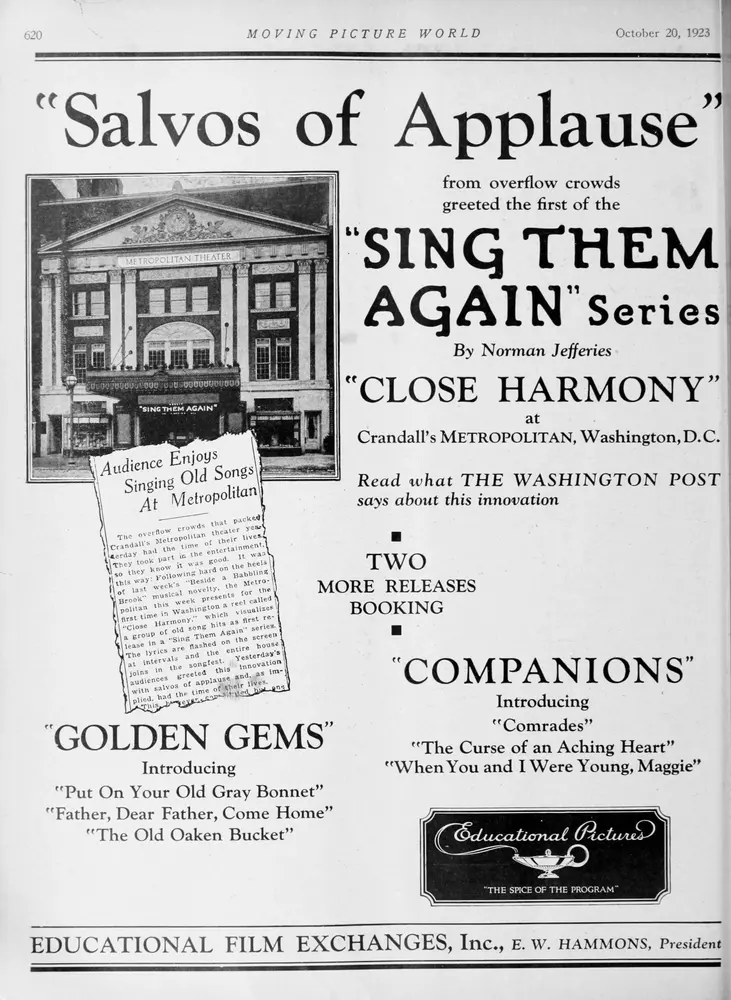
When the silver screen of the mid‑1930s dared to venture beyond the familiar cityscape and into the unforgiving expanses of desert myth, Golden Gems emerged as a daring experiment in visual storytelling. Directed with a steady hand, the film balances the grandiosity of epic adventure with the intimacy of character‑driven drama, a duality that remains rare in its era.
The plot unfolds like a meticulously crafted mosaic: each fragment—Captain Armand Delacroix’s haunted past, Lila Marlowe’s scholarly obsession, Victor “Silk” Salazar’s mercurial loyalty—contributes to a larger, resonant image. The opening sequence, a panoramic sweep of dunes rendered in chiaroscuro, establishes both setting and tone, echoing the visual language of The Adventurer while carving its own distinct silhouette.
Delacroix’s negotiation with Sheikh Rashid is a masterclass in subtext; the dialogue is spare, the pauses pregnant with unspoken histories. This restraint mirrors the film’s broader aesthetic: a deliberate economy of movement, where each camera glide feels purposeful, never gratuitous.
At its core, Golden Gems interrogates the age‑old tension between exploitation and reverence. The titular gems, luminous as captured sunrise, symbolize humanity’s perennial temptation to harness nature’s secrets for personal gain. Lila’s scholarly curiosity, while noble, skirts the edge of trespass, raising the question: does the pursuit of knowledge justify the disturbance of sacred ground?
The film’s climax—Delacroix’s self‑sacrifice to seal the cavern—acts as a moral fulcrum, suggesting that true stewardship may require relinquishment rather than acquisition. This motif subtly nods to the existential undercurrents present in The Legacy of Happiness, where personal fulfillment is weighed against communal responsibility.
The ensemble cast delivers nuanced portrayals that transcend archetypal expectations. The actor portraying Delacroix imbues his stoic exterior with a lingering melancholy, evident in the lingering glances toward the horizon—a visual metaphor for his internal exile. Lila’s actress, meanwhile, oscillates between scholarly rigor and visceral vulnerability; her close‑up during the cavern’s revelation captures a flicker of awe that is both intellectual and primal.
Victor “Silk” Salazar, portrayed with a roguish charm, provides the film’s needed levity, yet his betrayal is never rendered cartoonish. Instead, his motivations are hinted at through subtle gestures—a clenched fist, a fleeting hesitation—allowing audiences to empathize with his moral ambiguity.
Cinematographer Elena Varga employs a palette dominated by amber sands, cobalt shadows, and the occasional flash of gold. The use of deep focus during the sandstorm sequence creates a visceral sense of disorientation, while the cavern’s interior—illuminated solely by the gems’ inner light—offers a stark contrast, bathing the scene in an ethereal teal that evokes the sea blue (#0E7490) of the film’s promotional material.
The decision to shoot many interior shots on location, rather than on soundstage, lends an authenticity that rivals the realism found in Across the Pacific. The grainy texture of the film stock, coupled with deliberate lighting choices, creates a tactile sense of time that modern audiences find both nostalgic and refreshing.
Composer Henri Valois crafts a score that oscillates between haunting oud motifs and sweeping orchestral swells. The recurring leitmotif associated with the gems—a delicate, descending arpeggio—acts as an auditory cue, guiding viewers through narrative tension. Sound effects, particularly the granular crunch of sand underfoot and the distant call of desert hawks, are rendered with an almost tactile clarity, enhancing immersion.
While Golden Gems shares the treasure‑hunt premise of The Red Circle, it diverges in its philosophical depth. Where The Red Circle treats its MacGuffin as a mere plot engine, Golden Gems elevates the object to a symbolic axis around which ethical dilemmas rotate. Moreover, the film’s visual storytelling bears a kinship to the atmospheric tension of Nattliga toner, yet it retains a distinct narrative momentum that keeps the audience perpetually on the brink of discovery.
Although Golden Gems did not achieve blockbuster status upon its initial release, its influence has permeated subsequent adventure cinema. Filmmakers cite its balanced blend of spectacle and introspection as a template for modern blockbusters that strive for thematic gravitas. The film’s nuanced portrayal of cross‑cultural alliances prefigures the diplomatic complexities explored in later works such as Moderne Töchter.
In academic circles, the film is frequently examined for its representation of colonial narratives, with scholars noting how Delacroix’s arc subverts the traditional hero trope by emphasizing sacrifice over conquest. This critical reevaluation has bolstered the film’s standing within the canon of classic cinema, granting it a renewed relevance for contemporary audiences.
Golden Gems stands as a testament to the power of cinema to fuse visual grandeur with philosophical inquiry. Its meticulously layered narrative, compelling performances, and masterful use of color and sound coalesce into an experience that rewards both casual viewers and seasoned cinephiles. The film’s deliberate pacing ensures that each revelation feels earned, while its thematic resonance invites repeated viewings to uncover hidden subtext.
For those seeking an adventure that transcends mere escapism, Golden Gems offers a richly textured journey—one that sparkles with the allure of treasure yet ultimately illuminates the deeper, often unsettling, truths about desire, duty, and the inexorable pull of the unknown.
IMDb —
1917
Community
Log in to comment.