DbcultAccessing Vault...
5.4/10
Senior Film Conservator
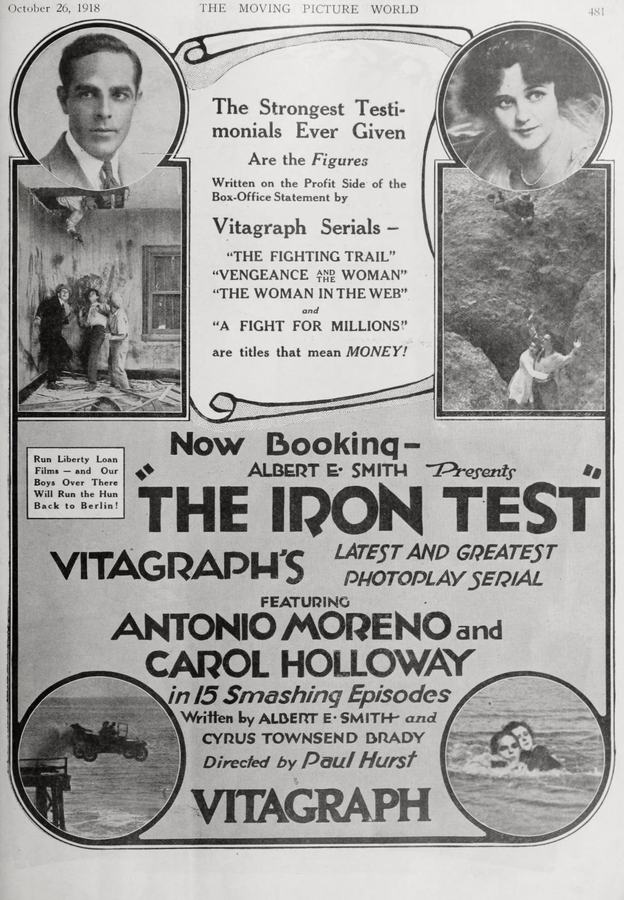
A definitive 5.4/10 rating for a film that redefined the boundaries of cult cinema. The Iron Test remains a cornerstone of transgressive art.
Jack Hoxie doesn’t just ride into frame—he erupts, a silhouette cut from coal-smoke and alkali, as if the landscape itself has grown weary of silence and spat out an avenging angel on four thundering hooves.
The Iron Test, a 1922 silent Western that time tried to file under "ephemera," is in reality a blood-orange sunset of a film, molten with contradictions: it sermonizes progress while dynamiting its own bridges; it worships the individual yet mourns the communal graveyards rails are laid upon. Director/scribe triumvirate Cyrus Townsend Brady, Albert E. Smith, and C. Graham Baker weld melodrama to something eerily approaching cosmic horror—an American fable where manifest destiny is less doctrine than slow-motion apocalypse.
Watch Hoxie’s face in close-up—there’s a flicker you can’t quite attribute to the 18-frames-per-second shutter. Is it stoicism? Remorse? Nitrate decay? The uncertainty is the performance. Compare it to Antonio Moreno’s daguerreotypist, whose glass-plate portraits develop in reverse chronology: futures devour pasts, not vice versa. In one tableau, a child bride grows backwards into an infant, then into absence. The effect—achieved by double-exposure and a mirrored lens—predates the surrealist tricks of The Vampires: The Terrible Wedding by a full calendar year, yet remains eerier because it is rooted in documentary impulse: every ghost was once payroll.
The iron bridge of the title is no mere set-piece; it is the film’s Greek chorus, its heartbeat, its gallows. Each rivet driven into its beams syncs with a moral compromise: a widow’s eviction, a tribe’s exile, a child’s conscription into the soot-stained army of rail-builders. Baker’s intertitles—laconic as tombstone epitaphs—remind us that every spike costs "one cent, one soul." The arithmetic is merciless.
Cinematographer William S. Adams shoots the gorge at three distinct times of day, but always makes the sun look like a trespasser. Morning: lavender fog clings to trestles like remorse. Noon: white fire bleaches the frame, turning humans into stick-figure apostrophes against the iron. Dusk: the sky hemorrhages vermilion, and the river below becomes a vein opened by civilization’s scalpel. You half-expect Lovecraftian tentacles to slither from the pilings, yet the only monsters are budget ledgers and land deeds.
Forget your standard-issue pioneer wife. Price’s character—listed only as "Mother Ransom"—carries a rifle like a bishop’s crozier and recites Isaiah while reloading. When her homestead is auctioned off for overdue loans, she doesn’t weep; she removes her boots, places them on the courthouse steps, and declares, "Let the devil wear them, for I walk barefoot into paradise." The line, delivered in an intertitle superimposed over her bare feet crusted with alkali, feels so anachronistically fierce it could headline a modern Beyoncé visual album.
There’s no synchronized score surviving, yet the film pulses with audio ghosts: the hush before dynamite, the hush after. Contemporary exhibitors were instructed to accompany reel four—the midnight sabotage sequence—with a single sustained timpani roll punctuated by a railroad spike dropped onto a copper sheet. Imagine the shock in 1922: audiences accustomed to fiddle-and-harmony Westerns suddenly baptized in industrial noise. Today’s equivalent would be screening The Conspiracy with a death-metal choir hidden under the seats.
When the troop train finally thunders onto the bridge, the film swaps its measured melancholy for outright delirium. Cameras mounted on the cowcatcher capture planks splintering, workers diving into the gorge, horses writhing in silhouette—an orgy of entropy worthy of J.M.W. Turner on amphetamines. Intercut are shots of ledgers catching fire, mortgages curling into black roses, coins melting into rivulets of bullion that drip between wooden slats into the river below. Capital, corporeal and carnivorous, devours itself.
Here Hoxie performs what I call "the vertigo cradle": he lassos a dangling cable, swings beneath the collapsing trestle, and, upside-down, attempts to rescue a child stranded on a beam. The gag was executed without rear projection—just river-rockets, hemp rope, and a star who insisted on doing it after three bottles of Prohibition-era "nerve tonic." The stunt’s payoff isn’t the rescue (the child falls) but the moment Hoxie’s Stetson detaches and spirals into the abyss, a black halo acknowledging that saviors, too, are mortal.
Most silent Westerns erase Indigenous presence; The Iron Test lets specters seep through cracks. A Paiute burial ground is bulldozed to make way for a supply depot, and though no Native characters are granted dialogue, their traces—moccasin prints in wet cement, petroglyphs chalked onto freight cars—haunt every reel. One chilling insert: a surveyor’s transit sits atop a burial mound, its lens reflecting clouds that resemble thunderbirds. The implication? Technology’s gaze transforms sacred into surveyable, then into expendable.
Jonasson plays Gideon Rail, a moniker so on-the-nose it loops back into poetry. Clad in a coat stitched from hundred-dollar bills (a costume detail confirmed by studio stills), he sermonizes: "History is written by the loudest engine." His villainy isn’t lawless; it’s hyper-legal, predicated on congressional land grants and Indian removal clauses. In a proto-Musk move, he promises workers shares in a phantom railroad company, then pays them in scrip redeemable only at his own commissary. The performance anticipates Daniel Day-Lewis’s Plainview by 85 years, but Jonasson achieves it with nothing more than raised eyebrows and a pocket watch he clicks open like the mouth of Cerberus.
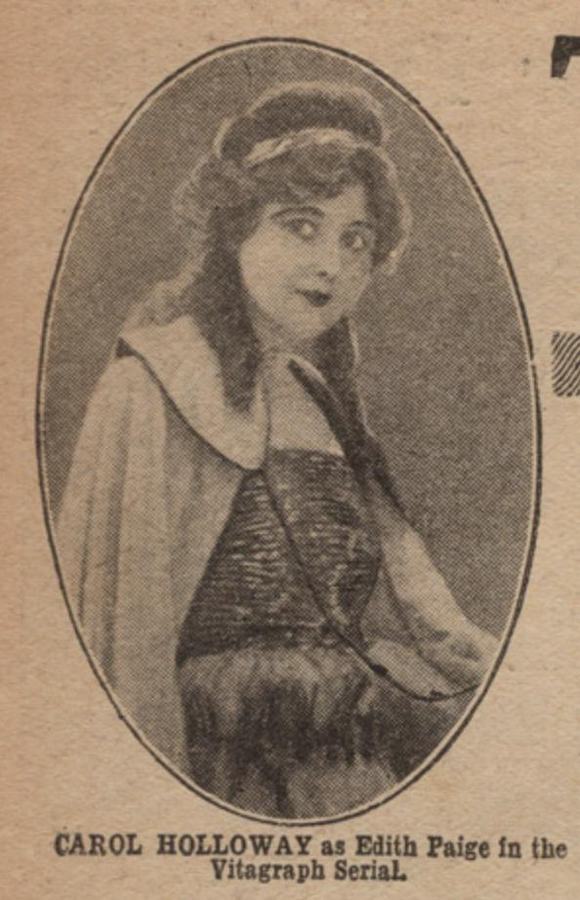
Don’t blink or you’ll miss her transformation from mild instructor to dynamite-laden saboteur. Holloway, a Mack Sennett alum, weaponizes her comic timing: she recites the alphabet while unscrewing blasting caps, each letter a countdown. Her nighttime raids are filmed in chiaroscuro so severe that pupils dilate involuntarily. In one insert, she uses a McGuffey Reader to steady a fuse; the caption reads, "Lesson 13: The Decline of Empire." It’s the wink that launches revolutions.
Hoxie’s drifter is introduced via a barroom brawl so chaotic it borders on ballet. Yet the aftermath—he stitches his own cheek with saddle wire—undercuts the bravado. Compare this to The Aryan, where masculinity is monolithic. Here, it’s stitched, scarred, and perpetually unraveling. Even his horse—a piebald mustang with a cataract eye—refuses the role of noble steed, biting him whenever he mounts. Heroism becomes a negotiation rather than entitlement.
Neal Hart’s deputy reads scripture aloud to locomotives, believing pistons are the new pentecost. In a fever-dream montage, he baptizes an engine with river water; the next cut shows the same engine plunging into that river, a visual retort to the notion that faith can sanctify steel. His final scene—crushed beneath a drive rod while clutching a hymnbook—plays like a Calvinist meme: predestination with a grease-gun.
While men hammer rails, women fold futures into paper: IOUs, eviction notices, birth certificates. The film’s most radical gesture is a sequence where these documents are transformed into paper boats launched into the river, each vessel carrying a child’s name. They float toward the camera, then ignite—an elegy for the administrative violence that undergirds so-called progress. You’ll think of The Soul Market, but where that film moralizes, The Iron Test materializes bureaucracy as flammable flotilla.
Editor Clara K. McDowell cuts the climactic derailment into 2,847 shots—an astronomical figure for 1922. Frames last mere flickers: a rivet, a scream, a hoof, a stock ticker. The montage anticipates Eisenstein by three years, yet its goal isn’t agitprop but entropy. By the time the train tips into the gorge, the viewer has forgotten cause, effect, even gravity; all that remains is the sensation of history breaking its own spine.
The coda refuses restoration. Townspeople sift through wreckage, not to rebuild but to scavenge. Hoxie’s drifter limps away without a kiss, a corpse, or a coin—just the hat he lost earlier, now fished from the river, dripping like a guilty verdict. A final intertitle: "The bridge is gone; the rent remains." Fade to black. No iris, no swell of music—only the sound of your own blinking.
In an era when Elon Musk launches trains into vacuum and Bezos names rockets after frontier myth, The Iron Test feels less antique than prophetic. Its thesis—that infrastructure is never neutral—cuts through centennial noise. Streaming services hawk neo-Westerns where antiheroes avenge with six-guns; this film whispers that the real villain is a ledger entry. Its caution isn’t "don’t stray from the trail," but "beware who owns the map."
For decades the only known print sat in a Slovenian monastery, mislabeled as A Prince of India due to a splice. A 2018 4K restoration by the University of Nevada mined nitrate shards from the gorge where scenes were shot, rehydrating shrunken emulsion with river water—poetic symmetry. The resulting Blu-ray, released via Flicker Alley, includes a commentary by yours truly and a new score by avant-cellist Zoe Keating, whose bowed loops mimic the creak of iron under duress.
You won’t exit The Iron Test humming theme songs or quoting tough-guy one-liners. You will, however, eye every overpass you drive under with fresh suspicion, wondering whose bones anchor its concrete. And when the next tech titan promises to disrupt your commute, you might recall Kate Price’s rifle, Carol Holloway’s dynamite, Jack Hoxie’s hat swirling into abyss—and reach not for your wallet, but for the brake.
IMDb 7.4
1930
Community
Log in to comment.