Summary
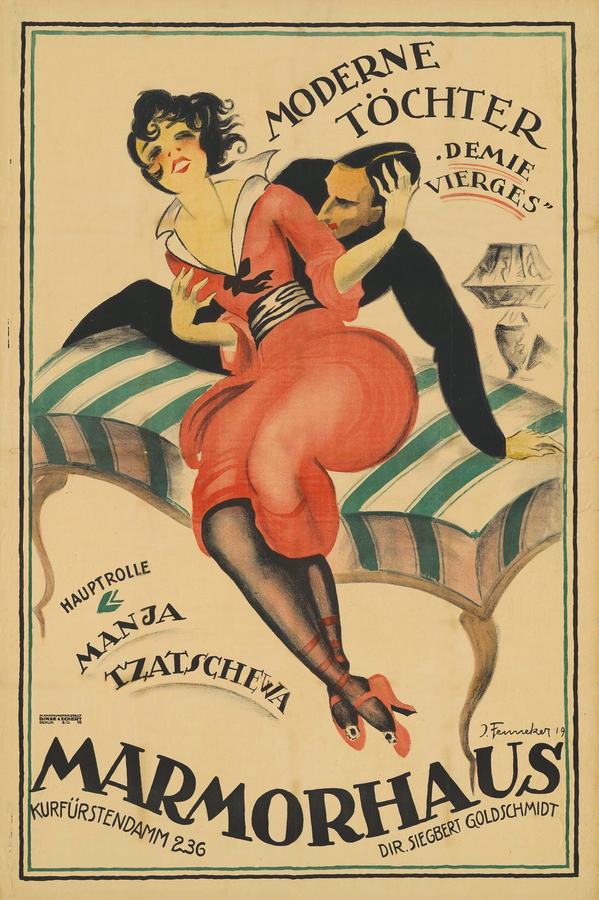
In the vibrant yet restrictive milieu of early 20th-century Berlin, Margarete-Maria Langen's incandescent narrative, "Moderne Töchter," unfurls a poignant diptych of nascent female autonomy against the staunch bulwarks of tradition. At its core are two sisters, each a vibrant testament to the era's evolving spirit, yet diametrically opposed in their pursuit of fulfillment. One, a spirited artist named Helene (Tzwetta Tzatschewa), chafes under the suffocating expectations of a patriarchal society, yearning for intellectual and creative liberty beyond the domestic sphere. Her clandestine artistic endeavors, often dismissed as mere feminine whimsy by figures like the austere industrialist Herr von Graven (Max Laurence), become her quiet rebellion. Conversely, her elder sister, Clara (Olga Engl, portraying a woman burdened by societal expectations rather than age), finds solace, or perhaps resignation, in the prescribed path of marriage and domesticity, envisioning security in a union with the ostensibly respectable, yet subtly controlling, Dr. Ernst Wagner (Meinhart Maur). The film meticulously charts their divergent trajectories: Helene's courageous foray into the bohemian circles of Berlin, where she encounters the enigmatic, forward-thinking journalist Paul Richter (Rudolf Lettinger), whose advocacy for women's suffrage and artistic freedom resonates deeply with her burgeoning ideals, and Clara's gradual disillusionment with the gilded cage of her conventional existence. Their parents, embodied by the formidable Margarete Kupfer and Fritz Hartwig, represent the generational chasm, struggling to reconcile their cherished values with the inexorable tide of modernity. As Helene's artistic voice finds its resonance and Clara confronts the hollowness of her choices, the film culminates in a powerful, albeit often bittersweet, affirmation of individual agency, dissecting the profound sacrifices and exhilarating triumphs inherent in the quest for a self-determined life in a world teetering on the precipice of profound social transformation.
Review Excerpt
"
Moderne Töchter: A Cinematic Clarion Call for Emancipation
In the shimmering, often tumultuous dawn of the 20th century, cinema emerged not merely as a novelty but as a potent mirror reflecting society's seismic shifts. Among the myriad narratives vying for attention, a particular German silent film, Moderne Töchter, stands out as a remarkably prescient and profoundly engaging exploration of the burgeoning feminist spirit. Penned by the insightful Margarete-Maria Langen, this cinematic..."