DbcultAccessing Vault...
6.7/10
Senior Film Conservator

A definitive 6.7/10 rating for a film that redefined the boundaries of cult cinema. Golfo remains a cornerstone of transgressive art.
There is a moment—halfway through Golfo—when the camera simply watches a pair of goats butt heads beneath the Byzantine chapel’s frescoed portico. The clash is soundless; the dust rises like incense. In that suspended second you realize the film has smuggled an entire cosmology into what lesser directors would treat as bucolic filler. The goats are not local color; they are the tragic chorus, blunt-skulled reminders that desire, territorial and carnal, is the oldest religion in these hills.
Konstadinos Bahatoris and Spyridon Peresiadis adapted the venerable 1893 play into a 1955 celluloid fever dream, and the result is less a period piece than a geological event. Cinematographer Thanos Zahos (also playing the village’s mute bell-ringer) shoots Mount Chelmos as if it were a lung: exhaling fog, inhaling grief. Shadows pool so deeply they seem to drown the sound, yet every crunch of gravel under a peasant’s boot is amplified until the landscape itself acquires a heartbeat.
Th. Petsos’s Tasos is not your standard cad. His betrayal arrives with the lethargy of heatstroke; when he abandons Golfo, the camera frames his hesitation in a single take that lasts forty-three seconds—an eternity in silent cinema grammar. You can almost smell the sour wine on his breath as he calculates the cost of fidelity against the weight of dowry coins. It is a portrait of masculine cowardice so microscopic it deserves to be projected in anthropology seminars.
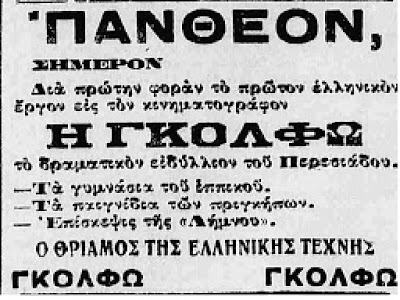
Against this wilted masculinity, Hrysanthi Kondopoulou-Hatzihristou’s Golfo detonates like a comet of repressed luminosity. She speaks little; her eyes—black, enormous—carry the cumulative sorrow of every woman who has ever been told that love is payment enough for existence. When she winds her hair into the loom, weaving strands of herself into the dowry she will never use, the gesture feels less domestic than funereal. She is embalming her own future.
Watch her hands during the foxglove scene: they tremble not from fear but from the sudden, obscene intimacy of choosing the hour of one’s vanishing. The poison is not rebellion; it is accounting—a balance sheet where the only asset left is dignity.
There is no score, only the bells, the wind, and the occasional crack of a whip. Silence becomes a character—call it the tenth muse—whose entrances are so precise they slice. When Golfo’s mother (Olympia Damaskou) wails at the corpse, the sound is ripped from somewhere ancestral; it echoes the biblical lamentations of Herod yet feels closer to the keening in Saints and Sorrows. The audio design refuses to comfort; it implicates.
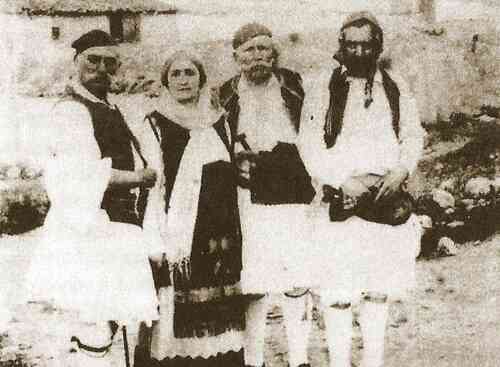
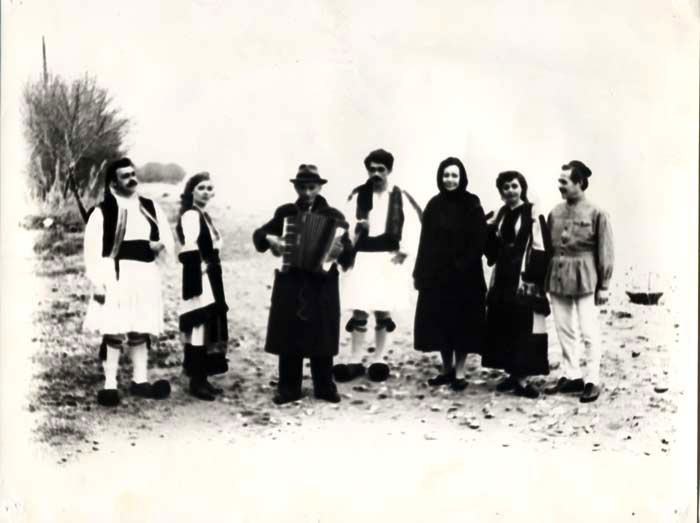
Color stock was scarce in Greek productions of the mid-’50s, so Zahos weaponizes monochrome: the white of bleached wool against the obsidian of shepherd’s cloaks, the silver of olive leaves flickering like fish scales. Each frame could be pinned to a museum wall beside the sepia photographs of Fanchon, the Cricket; yet where that American pastoral leans on whimsy, Golfo opts for lithic fatalism. The camera rarely moves; instead, the world shifts inside the static rectangle—clouds, goats, grief—all passing like rumors.
Take the final long shot: Golfo’s body lies crumpled, a dark comma against limestone. Overhead, vultures circle in a spiral that resembles the ancient symbol for eternity. The mountain doesn’t care; it will outlast every promise ever broken. The image scalds because it refuses closure—no redemption, no learning curve, just the indifferent grandeur of geology.
Cinephiles will detect whispers of För sin kärleks skull in the way rural sacrifice is framed as sacrament, yet Golfo lacks the Swedish film’s Lutheran self-congratulation. It is closer in temperament to Sumerki zhenskoy dushi—both are Slavic-Greek laments where eros is indistinguishable from Thanatos. If you double-bill it with The Great Leap: Until Death Do Us Part, you’ll notice opposite solutions to the same crisis: one leaps, the other sips, both arrive at the same terminus.
Curiously, the film also rhymes with His Majesty, the Scarecrow of Oz in its distrust of fabricated happily-ever-afters. Both narratives pull the rug from under the viewer’s wish for moral arithmetic; only here the rug is woven from goat hair and soaked in toxin.
Some scholars read the foxglove as nationalist allegory: Greece, betrayed by Western promises of prosperity, swallows self-administered extinction. Others see patriarchal critique: a woman denied property rights, education, mobility, converts her bloodstream into the only real estate she still controls. Both interpretations hold water because the film declines to preach; it simply deposits the evidence like silt and walks away.
I would add a third lens: eco-tragedy. Golfo’s death is not merely personal; it is the meadow asserting sovereignty. The mountain reclaims its minerals, the soil drinks the organic compounds of its daughter, and the cycle spins on, indifferent to human ledger-keeping.
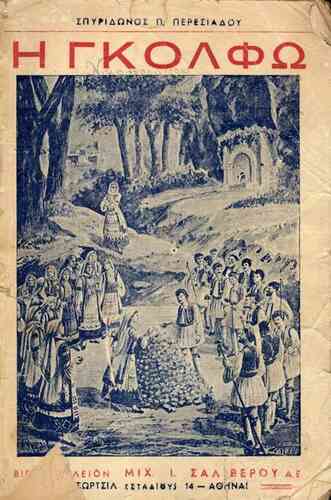
For decades only a 16 mm print with French intertitles circulated among Athenian cine-clubs. In 2018 the Greek Film Archive unearthed a nitrate negative in a defunct monastery wine cellar; the ethanol fumes had mercifully retarded decay. The 4K restoration premiered at the Thessaloniki festival, revealing textures previously lost: the downy nap on Golfo’s woolen vest, the crystalline salt on Tasos’s eyelashes after tears evaporate. Streaming rights remain tangled in bureaucratic brambles, but boutique label Hellas Obscura released a region-free Blu-ray with English subtitles that do justice to the rural idioms (“May your shadow be unscythed by moonlight” is now “May moonlight never shear your shadow”). Track it down; the disc is already out of print and eBay scalpers ask sums that would make a dowry blush.
Great tragedies seldom answer questions; they calibrate the question mark until it becomes a fishhook in the throat. Golfo does not illuminate why men default to treachery or why women are socialized to metabolize agony as virtue. Instead, it lets the hook tug. Long after credits you’ll taste metallic foreboding on your tongue, a premonition that every oath is only as solid as the next temptation wearing silk and smelling of citron blossom. The mountain endures, the bells keep tolling, and somewhere a woman braids basil into her hair, unaware that she is rehearsing her own extinction.
Go watch it—preferably at 3 a.m. when the city outside your window is dumb with sodium haze. Let the film strip you to marrow. Then, at dawn, step onto your balcony and listen: you might hear bells that never truly stopped vibrating through the gorge.
IMDb —
1918
Community
Log in to comment.